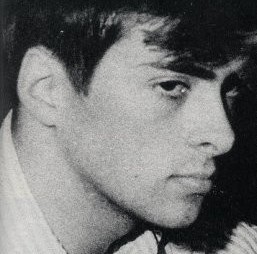
Robert Benjamin Smith
Mass murderer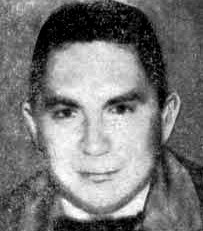 Francisco Paula Gonzales
Mass murderer · USA · 1964
Francisco Paula Gonzales was a passenger on Pacific Air Lines Flight 773. Gonza…
44 victims
Francisco Paula Gonzales
Mass murderer · USA · 1964
Francisco Paula Gonzales was a passenger on Pacific Air Lines Flight 773. Gonza…
44 victims
 Thomas Doty
Mass murderer · USA · 1962
Thomas G. Doty was a passenger on Continental Airlines Flight 11. He was a marr…
44 victims
Thomas Doty
Mass murderer · USA · 1962
Thomas G. Doty was a passenger on Continental Airlines Flight 11. He was a marr…
44 victims
 Julian Andrew Frank
Mass murderer · USA · 1960
6 January 1960 — National Airlines Flight 2511 exploded and crashed 1-1/2 miles…
33 victims
Julian Andrew Frank
Mass murderer · USA · 1960
6 January 1960 — National Airlines Flight 2511 exploded and crashed 1-1/2 miles…
33 victims
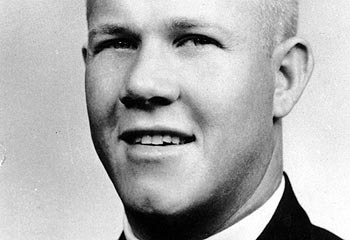 Charles Whitman
Mass murderer · USA · 1966
Charles Joseph Whitman (June 24, 1941 – August 1, 1966) shot and killed 14 peop…
15 victims
Charles Whitman
Mass murderer · USA · 1966
Charles Joseph Whitman (June 24, 1941 – August 1, 1966) shot and killed 14 peop…
15 victims
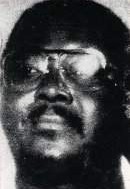 James Edward Pough
Mass murderer · USA · 1971
James Edward Pough (1948 – 18 June 1990) was an American mass murderer. On 18 J…
12 victims
James Edward Pough
Mass murderer · USA · 1971
James Edward Pough (1948 – 18 June 1990) was an American mass murderer. On 18 J…
12 victims
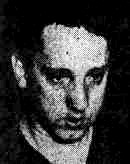 James Ruppert
Mass murderer · USA · 1975
James Ruppert killed his mother, brother, sister-in-law, and eight nieces and n…
11 victims
James Ruppert
Mass murderer · USA · 1975
James Ruppert killed his mother, brother, sister-in-law, and eight nieces and n…
11 victims
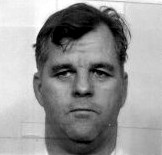 Billie Wayne Coble
Murderer · USA · 1989
Billie Wayne Coble · August 1989 — Coble committed the August 1989 shooting dea…
3 victims
Billie Wayne Coble
Murderer · USA · 1989
Billie Wayne Coble · August 1989 — Coble committed the August 1989 shooting dea…
3 victims
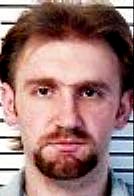 Jackie Lee Willingham
Murderer · USA · 1994
Jackie Lee Willingham was executed by lethal injection in Oklahoma on July 24,…
1 victim
Jackie Lee Willingham
Murderer · USA · 1994
Jackie Lee Willingham was executed by lethal injection in Oklahoma on July 24,…
1 victim
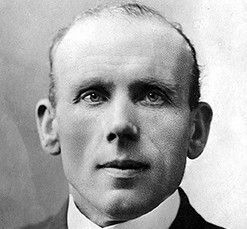 John Henry George Lee
Murderer · United Kingdom · 1884
John Henry George Lee, better known as John “Babbacombe” Lee (1864 – c. 1945),…
1 victim
John Henry George Lee
Murderer · United Kingdom · 1884
John Henry George Lee, better known as John “Babbacombe” Lee (1864 – c. 1945),…
1 victim
 Kevin Cobb
Homicide · 1996
Kevin Cobb, a male nurse, was convicted of manslaughter for the death of nursin…
1 victim
Kevin Cobb
Homicide · 1996
Kevin Cobb, a male nurse, was convicted of manslaughter for the death of nursin…
1 victim
- Gender
- male
- Country
- USA
- Location
- Mesa, Maricopa County, Arizona, USA
- Date of birth
- 1948
- Age at first offence
- 18
- Characteristics
- history of mental illness, motive unknown
- Victim profile
- Joyce Sellers (27), and her daughter Debbie Sellers (3), Glenda Carter (18), Mary Olsen (18), and Carol Farmer (19)
- Method of murder
- Shooting (.22-caliber pistol)
- Date(s) of murder
- November 12, 1966
- Years active
- 1966
- Date of arrest
- Same day
- Status
-
Life imprisonment
Sentenced to death in October 1967; commuted to life in prison without parole because the U.S. Supreme Court declared a moratorium on the death penalty in 1972
Case summary
Robert Benjamin Smith was sentenced to death in October 1967 for first-degree murder. The U.S. Supreme Court later declared a moratorium on the death penalty in 1972, and Smith’s death sentence was commuted to life in prison without parole.
Timeline
- October 1967 — Robert Smith was sentenced to death after being found guilty of first-degree murder.
- 1972 — The U.S. Supreme Court declared a moratorium on the death penalty; Smith’s death sentence was commuted to life in prison without parole.
Background
Robert Benjamin Smith was described as an 18-year-old high-school senior from Mesa, Arizona. He was also described as a studious, reticent student. Smith was said to have been born in 1948 and to have been the son of a Major in the Air Force Reserves. His family moved several times during his childhood.
Smith was described as having average intelligence and below average athletic prowess, with a bland personality and a lack of a sense of humor. He was also described as unremarkable and lacking a winning personality. He was described as having awkwardness and being uncoordinated, including difficulty tying shoelaces and riding a bicycle. Smith was described as antisocial, retreated into books, and rarely left home except to go to school. His classmates elected him to student council.
Smith was described as reading about historical figures such as Caesar, Napoleon, and John F. Kennedy, and focusing on crime and mass murders, serial killers, and murders. After John F. Kennedy’s assassination on November 22, 1963, Smith reportedly began to focus on Lee Harvey Oswald and became more absorbed in assassins, outlaws, and murderers such as John Wilkes Booth, Brutus, Jesse James, and Hitler. He was described as keeping a scrapbook on the assassination.
The family moved to Mesa, Arizona in 1965. Smith was described as a loner who got good grades and was elected to the student council. Neighbors noted he was always alone and rarely talked to anyone. Teachers said he daydreamed in class and seemed annoyed when called on.
Smith’s views in religious and political discussions were described as referring to the “so-called God,” and suggesting using germ warfare to wipe out everyone in Southeast Asia because “they are not important.” He was described as having a mental health diagnosis, with doctors later describing him as schizophrenic, and a court-appointed psychiatrist reportedly stating that “he was like a god, cut out to be come kind of ruler over the people.” The psychiatrist also reportedly said that Smith was almost wholly without feelings for others, including his own family.
Smith had seriously considered killing his father on one occasion by lying in wait for him with a knife.
Smith’s sexuality was described through statements that he entertained fantasies in which women were shot or stabbed. When Smith turned 18 in August 1966, he received a .22-caliber pistol for target shooting from his parents.
The offence
Smith selected the Rose-Mar College of Beauty in Mesa for a planned attack. He brought a brown paper bag containing 200 feet of nylon cord, plastic sandwich bags, two hunting knives, and a .22-caliber single-action six-shooter that his parents had given him. He also planned to bind women and tie plastic bags over their heads, intending to watch them suffocate.
Smith arrived at the beauty school early one morning on Saturday, November 12, 1966. When he entered, he fired a shot into a mirror, then ordered five women and two children into a back room. He forced the victims into a circle resembling spokes in a wheel, with their heads at the center and their feet on the perimeter. Smith then shot each person aiming at the head.
The victims included:
- Mrs. Joyce Sellers, 27, mother of the two children in the circle
- Debra Sellers, 3
- Tamara Lynn Sellers, 3 months
- Mrs. Eveline Cummings, operator of the school (entered after hearing the voice and “funny popping noises”)
- Mary Olsen, 18
- Glenda Carter, 18
- Carol Farmer, 19
- Bonita Sue Harris, 18 (shot twice; pretended to be dead until police arrived)
During the attack, a woman told Smith that there would be 40 people in a few minutes. Smith replied: “I’m sorry, but I didn’t bring enough ammunition for them.” Another woman asked about the situation with a question attributed to her: “Are you kidding?” Smith put his gun to another woman’s head and asked: “Do you think I am?” Another victim prayed, and Smith asked what she was doing. One woman responded: “She’s praying, if you don’t mind.” Smith said: “I do,” and continued firing.
Mrs. Joyce Sellers lured about after being shot, and Smith stabbed her in the back to ensure she was dead. Debra kept squirming despite being shot in the head, and Smith stabbed her with the hunting knife. Tamara Lynn Sellers was shot in the arm but survived; one account said her mother’s body shielded her from Smith’s bullets.
Bonita Sue Harris was shot once in the head and once in the arm, survived by pretending to be dead until the police arrived. Smith later admitted he had not expected to find children at the beauty college but took their presence in stride. When asked why he shot the baby, Smith said: “Well, it was going to grow up and become an adult.” Smith also said: “I would have killed my sister and mother had they been there.” Smith was described as voicing no regret and as saying he felt exhilarated during the killings.
A police arrival quote attributed to Smith described the immediate aftermath: “I shot some people,” he said. “They’re back there. The gun is in that sack.” Another quoted statement attributed to Smith at the time included: “I wanted to get known, just wanted to get myself a name,” and also: “I wanted to get known, just wanted to get myself a name.” An additional quoted statement attributed to Smith included: “I wanted to make a name for myself,” and “I wanted people to know who I was.” Another statement attributed to Smith said: “I would have shot them, too. I wanted to kill about 40 people so I could make a name for myself. I wanted people to know who I was.” Smith also stated after the killings that he “reconstructed his crime before horrified policemen.”
Investigation
When Mrs. Eveline Cummings entered the building, she heard a man’s voice and “funny popping noises” coming from the back room and called the police. Police arrived to arrest Smith while he was still standing near the bodies of his victims.
Arrest
Smith was arrested at the scene. When police arrived, Smith was still standing not far from the bloody bodies. Smith offered no resistance.
Trial
On October 24, 1967, Robert Smith was found guilty of first-degree murder and sentenced to death. A trial length of 32 days was described, and it was stated that a jury took less than two hours to find Smith guilty of five counts of murder in the first degree. Smith also was described as being found guilty of five murders and two attempted murders.
A later account described that Smith was granted a new trial because a judge deemed some testimony from his original trial unreliable. At the retrial, Smith was again found guilty. Another account described that Smith pleaded guilty at the retrial and was sentenced to two 99-year sentences and four life sentences for the murders. Additional sentencing details were also described as keeping him in jail for good.
Sentencing
- On October 24, 1967, Smith was sentenced to death.
- After the U.S. Supreme Court declared a moratorium on the death penalty in 1972, Smith escaped execution.
- Smith’s death sentence was commuted to life in prison without parole.
- Other sentences described for the murders included two 99-year terms and four life sentences.
Outcome
Smith was not executed. His death sentence was commuted to life in prison without parole due to the U.S. Supreme Court’s 1972 moratorium on the death penalty.
Aftermath
Following the murders, an obsession with Richard Speck was described as being found. Smith’s motivation was described in multiple quoted statements where he said he wanted fame and wanted to be known, including “I wanted to get known - to get myself a name,” and “I wanted to make a name for myself.” One account stated that the family delved into details of Smith’s life and described “subtle warning signs for years.” Smith remained behind bars for more than four decades in one account.
Spotted an error, or have more information about this case?