
Rekha Kumari-Baker
Murderer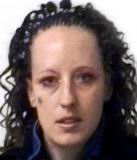 Joanna Dennehy
Murderer · United Kingdom · 2013
Name: Joanna Dennehy · March 2013 — Three murders were carried out in the Unite…
3 victims
Joanna Dennehy
Murderer · United Kingdom · 2013
Name: Joanna Dennehy · March 2013 — Three murders were carried out in the Unite…
3 victims
 Theresa Riggi
Murderer · United Kingdom · 2010
Theresa Riggi was a mother who killed her three young children at their home in…
3 victims
Theresa Riggi
Murderer · United Kingdom · 2010
Theresa Riggi was a mother who killed her three young children at their home in…
3 victims
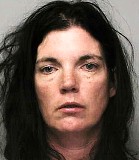 Fiona Donnison
Murderer · United Kingdom · 2010
Fiona Donnison was 45 years old at the time she showed up in front of local aut…
2 victims
Fiona Donnison
Murderer · United Kingdom · 2010
Fiona Donnison was 45 years old at the time she showed up in front of local aut…
2 victims
 Jeyavani Vageswaran
Murderer · United Kingdom · 2014
Jeyavani Vageswaran committed suicide by hanging herself the same day. Jeyavani…
2 victims
Jeyavani Vageswaran
Murderer · United Kingdom · 2014
Jeyavani Vageswaran committed suicide by hanging herself the same day. Jeyavani…
2 victims
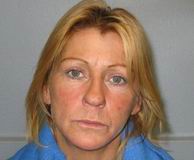 Tracey Van Dungey
Murderer · United Kingdom · 2004
Tracey Antoinette Van Dungey was 43 (16/10/67) and lived on Sugden Way, Barking…
2 victims
Tracey Van Dungey
Murderer · United Kingdom · 2004
Tracey Antoinette Van Dungey was 43 (16/10/67) and lived on Sugden Way, Barking…
2 victims
 Bunthawee Rimmer
Murderer · United Kingdom · 2011
Bunthawee Rimmer was a Thai woman who lived at Castle Lane in Haverhill. Rimmer…
1 victim
Bunthawee Rimmer
Murderer · United Kingdom · 2011
Bunthawee Rimmer was a Thai woman who lived at Castle Lane in Haverhill. Rimmer…
1 victim
 William Scott Smith
Serial killer · USA · 1982
William Scott Smith was a high school dropout and an unemployed fry cook. In 19…
3 victims
William Scott Smith
Serial killer · USA · 1982
William Scott Smith was a high school dropout and an unemployed fry cook. In 19…
3 victims
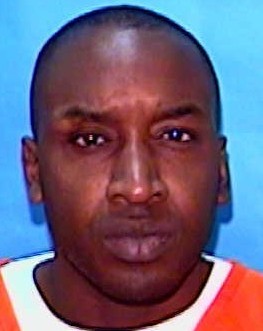 Byron Bryan
Murderer · USA · 1991
Byron Bryan was born 02/20/67 and was tried in the Fifteenth Judicial Circuit,…
1 victim
Byron Bryan
Murderer · USA · 1991
Byron Bryan was born 02/20/67 and was tried in the Fifteenth Judicial Circuit,…
1 victim
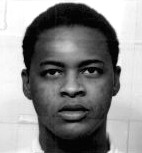 Richard James Wilkerson
Mass murderer · USA · 1983
Richard James Wilkerson (#756) Richard James Wilkerson was executed by lethal i…
4 victims
Richard James Wilkerson
Mass murderer · USA · 1983
Richard James Wilkerson (#756) Richard James Wilkerson was executed by lethal i…
4 victims
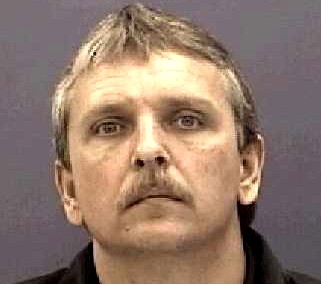 Larry Lee
Murderer · USA · 1986
Name: Larry Lee Larry Lee was sentenced to death on December 10, 1987. His stat…
3 victims
Larry Lee
Murderer · USA · 1986
Name: Larry Lee Larry Lee was sentenced to death on December 10, 1987. His stat…
3 victims
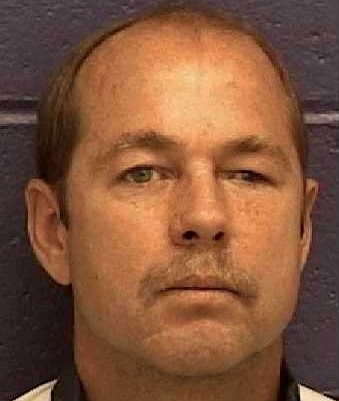 William Lamar Todd
Murderer · USA · 1988
William Lamar Todd was convicted by a jury in Harris County of murder and armed…
1 victim
William Lamar Todd
Murderer · USA · 1988
William Lamar Todd was convicted by a jury in Harris County of murder and armed…
1 victim
- Gender
- female
- Country
- United Kingdom
- Location
- Stretham, Cambridgeshire, England, United Kingdom
- Date of birth
- 1968
- Age at first offence
- 39
- Characteristics
- domestic violence, jealousy
- Victim profile
- Davina, 16, and Jasmine Kumari-Baker, 13 (her daughters)
- Method of murder
- Stabbing with knife
- Date(s) of murder
- June 13, 2007
- Years active
- 2007
- Date of arrest
- —
- Status
-
Life imprisonment
Sentenced to life imprisonment with a minimum tariff of 33 years on September 22, 2009
Case record: Rekha Kumari-Baker
Background
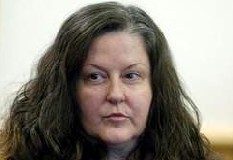
Davina and Jasmine Kumari-Baker were murdered by their mother, Rekha Kumari-Baker, in June 2007 at their home in Stretham, Cambridgeshire, while they slept.
The girls’ father, David Baker, later gave a victim impact statement describing the “incalculable effect” the deaths had had on him. He said:
“Even as I begin to write, I am aware that my words may not be sufficient to express the length and depth of the pain and the loss I feel.
To have them taken from me in such a brutal way and by the woman who was their mother and charged with their care has had an incalculable effect on me.
I suffer from strong feelings of guilt that I didn't see it coming and helplessness that I have not been able to do anything about it.
I remain haunted by the horror of that night and probably will remain so for a very long time.
Rekha Kumari always believed her children were an extension of herself, existing to further her own life ambitions.
She tore them from us all and life can't be the same for those who remain. The ripple effects of their killings stretch out far indeed.
Nothing will ever bring my girls back or undo this monstrous act. I will never see them again in this life though they live in my heart.”
After the killings, David Baker said he struggled to sleep, had lost his job, and was forced to move away from Cambridgeshire to a different location.
The offence
Rekha Kumari-Baker stabbed Davina, aged 16, and Jasmine, aged 13, a total of 69 times with kitchen knives.
Davina was stabbed 39 times all over her body. Jasmine was found dead in her bed and was stabbed 29 times.
The attack took place at around 2.30am on June 13, 2007 in the family home in Stretham, Cambridgeshire.
Rekha Kumari-Baker purchased kitchen knives two days earlier for £12 from ASDA “especially for the task.”
During the trial, the prosecution alleged that Rekha Kumari-Baker “butchered the girls” in a bid to “destroy the happiness” of her ex-husband David Baker, 45.
Investigation
A psychiatrist, Hadrian Ball, told the court that he suspected Rekha Kumari-Baker was suffering from a mild form of depression known as Mixed Anxiety Depressive Disorder (Madd), which he said was common and did not require specialist intervention. He said it could be brought on by troubled circumstances, including a marriage break-up, job loss and financial difficulties.
Another psychiatrist called by Rekha Kumari-Baker’s defence team said she had been in an “abnormal mood state” with a “serious neurotic illness.”
After the verdict, Detective Inspector Jim McCrorie, who led the investigation for Cambridgeshire police, said the case was “the worst he had ever seen” and:
“In 25 years of police service I have never before investigated such an upsetting and sickening crime.”
Arrest and immediate actions
After the killings, Rekha Kumari-Baker got dressed and twice went out in her car before ringing a friend to say: “I have done something terrible.”
A special police constable named Natalie Barford later received a message from her. Detective coverage included a quote from Rekha Kumari-Baker to Natalie Barford:
“I’ve done something terrible Natalie. I’ve killed the kids, the children are dead. ”
The quote continued:
“It’s horrific. I stabbed them with knives from the kitchen. This is terrible - at least the children are safe now. No one else can hurt them.
I’ve been thinking about it for days. I just woke up and decided I was going to do it there and then.”
Shortly before 0630 BST, Rekha Kumari-Baker telephoned Natalie Barford and left an answer-phone message saying: “I've done something terrible Natalie. Please call me.”
After Natalie Barford went to the defendant’s home, Rekha Kumari-Baker was arrested.
When arrested, she told police:
“I killed my two beautiful daughters. Geoff hurt me. I love him so much.
My kids will not be a burden to anyone any more.”
A confession note found at the home, signed “Rekha,” read:
“Sorry doesn't mean anything now.
I've killed my two daughters. I did not want them to get hurt like I did.
Jeff hurt me so much I cannot explain. He found it difficult to compromise at times but I loved him so much.
My kids will not be a burden with anyone any more.”
Trial
Rekha Kumari-Baker denied murdering her two daughters as they slept.
The prosecution said Davina was stabbed 39 times in a “frenzied” attack, and that she attacked her younger daughter in a similar fashion. The court heard a defence would argue diminished responsibility.
During the trial, the judge, Mr Justice Bean, said the defence would argue she had “diminished responsibility” for the killings and that they would claim she was suffering from a “serious abnormality of mind” when the offences occurred.
Prosecutor John Farmer told the jury that after killing the children, Rekha Kumari-Baker got dressed and twice went out in her car before ringing a friend to say: “I have done something terrible.”
The court heard “much contention” between Rekha Kumari-Baker and her ex-husband over the care and custody of their children.
Jurors were told one theory was that Ms Kumari-Baker wanted to “wreak havoc” on her ex-husband by killing the girls.
Mr Justice Bean told her:
“Most people will find it inexplicable that a mother could kill her own children, and you have given no explanation for it,”
“You were certainly upset at the breakdown of your relationship with Jeff Powell. I think this mild depression was probably combined with a wish to retaliate against David Baker and destroy the happiness in his life.
You knew quite well what you were doing and you were not mentally ill. The crimes were, as the prosecution rightly put it, murder, full stop.”
Diminished responsibility / mental health evidence
Rekha Kumari-Baker admitted manslaughter on the grounds of diminished responsibility due to an “abnormality of the mind” and evidence was heard about how she had complained of suffering from depression.
Psychiatrist Hadrian Ball said:
“Mixed anxiety depression disorder is very common in many, many people.
It is not considered to be a form of mental disorder that warrants specialist intervention.”
Hadrian Ball said such disorders were common and did not require specialist treatment, and did not amount to an “an abnormality of mind,” meaning responsibility for the killing was not “diminished.”
At trial, Dr Ball said:
Rekha Kumari-Baker’s defence team presented evidence that she had been in an “abnormal mood state” with a “serious neurotic illness.”
Family, school and agency involvement
The court heard teachers at Davina’s former school, Impington Village College, held meetings with Rekha Kumari-Baker about concerns for Davina.
School vice-principal Stephanie Franklin told police that Rekha Kumari-Baker had been “a volatile woman who frequently showed strange mood swings,” and said:
“I found her behaviour at times extremely erratic. ”
“I recall one particular meeting at the school where she was saying about Davina 'I wish she was dead'. ”
“During the meeting (Kumari-Baker) cried and got upset and said 'I don't want to see Davina again.'”
The court heard that, on one occasion, teachers tracked Davina and her mother down to a local supermarket car park after Davina was taken out of school without permission.
In 2003, her GP diagnosed her as having “reactive stress with mild depressive features” and referred her to a counsellor. Social workers were called in to assess her home arrangements.
In mitigation, defence counsel Richard Carey-Hughes QC said:
“We still do not have an answer to the mystery that lies at the heart of this case.”
“The note written at the time in which she talks of her love for these girls and the fact they will not suffer like her probably provides the most reliable clue.”
“It is impossible to discern or identify any gratification that she might have derived from the brutality of this act.”
“These will be long years for her. Times will be few indeed when she will not wish she had joined her daughters on that night.”
Witness accounts presented at trial
David Baker said there had been “a lot of friction” between Rekha Kumari-Baker and his girlfriend, Kadi Kone. He said she “did not like Kadi.”
David Baker described last seeing the children together when Davina laughed with him about her uniform for her new job at Pizza Hut, and Jasmine came “bounding upstairs the way she always did,” and they then accompanied their mother on a trip to Lakeside shopping centre.
The prosecution alleged the Lakeside trip was to ensure the girls stayed the night at Rekha Kumari-Baker’s home.
David Baker said Davina and Jasmine “got on together fantastically” while living apart, and that they had “very different personalities,” describing Davina as “feisty, outgoing and an extrovert” and Jasmine as “quiet and intellectual and sometimes lived in her sister's shadow.”
Jeff Powell, who was in a relationship with Rekha Kumari-Baker after the marriage ended, told the jury she had been a “good mother,” but said her behaviour became “oppressive” when he tried to end things between them shortly before the girls’ deaths.
Text messages and relationship timeline (as presented in court coverage)
The jury heard text messages in the weeks and days before the killings between Rekha Kumari-Baker and Mr Powell, including messages confessing “undying love” and pleading for him to reconsider.
On June 11, Rekha Kumari-Baker sent a text to Mr Powell saying: “it was the last time he would hear from her.”
After the Lakeside trip, Davina sent her mother a text saying: “Thanks, I really enjoyed myself. I love you with all my heart and always will.”
Sentencing
Rekha Kumari-Baker was sentenced to life imprisonment with a minimum tariff of 33 years on September 22, 2009.
She was given an automatic life sentence and was told she should not be eligible for parole until 2040, when she would be 72. Coverage described the total as 33 years, taking into account two years and 92 days spent on remand. It also stated she would serve a further 30 years and 273 days in prison.
Appeals
No appeal or appeal outcome was included in the provided material.
Outcome
Rekha Kumari-Baker was convicted of murder after a jury took just 35 minutes to reach unanimous verdicts in two counts of murder.
Aftermath
After the killings, a serious case review was launched by the Cambridgeshire Local Safeguarding Children Board to investigate whether social services, teachers, doctors and police could have done anything to prevent the double tragedy.
Board chairman Felicity Schofield said:
“The executive summary of the serious case review will be published... when the review has been completed and evaluated by Ofsted.”
The reports conclusions were postponed to take into account the court’s findings.
An inquiry was launched following Rekha Kumari-Baker’s conviction at Cambridge Crown Court to look at the involvement of individuals and agencies and to highlight any lessons to be learnt in a report.
Timeline
- June 11, 2007 — Rekha Kumari-Baker sent a text to Mr Powell saying it was the last time he would hear from her.
- June 13, 2007 — Rekha Kumari-Baker stabbed Davina and Jasmine at their home in Stretham, Cambridgeshire while they slept.
- Around 2.30am on June 13, 2007 — Davina was killed first in her bedroom and Jasmine was killed while in her bed.
- Two days before June 13, 2007 — Rekha Kumari-Baker purchased kitchen knives from ASDA for £12 “especially for the task.”
- September 8, 2009 — The father of the girls gave evidence to a jury and prosecutors described the case as an attempt “to wreak havoc” on her ex-husband.
- September 16, 2009 — Cambridge Crown Court heard evidence from psychiatrist Hadrian Ball about Rekha Kumari-Baker not being psychiatrically “abnormal” and about her condition described as “mixed anxiety-depressive disorder.”
- September 21, 2009 — Doctors, teachers and social workers involved in the years leading up to the murders were to come under scrutiny in a review.
- September 22, 2009 — Rekha Kumari-Baker was sentenced to life imprisonment with a minimum tariff of 33 years.
- September 23, 2009 — The minimum tariff and sentencing details were described in coverage.
Other details
Rekha Kumari-Baker was described as Indian-born and aged 41 at the time of trial and sentencing.
Davina was aged 16 and was awaiting her GCSE results and had landed her first job as a waitress at Pizza Hut in Cambridge Leisure Centre.
Jasmine was aged 13.
Rekha Kumari-Baker’s defence case involved diminished responsibility due to an “abnormality of the mind,” with evidence she complained of depression. The court heard competing psychiatric views about whether she had clinical depression.
After Monday’s verdict, a serious case review was described as being conducted by the Cambridgeshire Local Safeguarding Children Board, including Cambridgeshire County Council, police and local NHS.
Spotted an error, or have more information about this case?