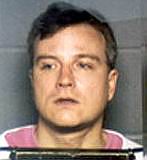
Edwin Snelgrove
Murderer Brian Kevin Rosenfeld
Murderer · USA · 1985
Brian Kevin Rosenfeld Brian Kevin Rosenfeld was sentenced to three concurrent l…
23 victims
Brian Kevin Rosenfeld
Murderer · USA · 1985
Brian Kevin Rosenfeld Brian Kevin Rosenfeld was sentenced to three concurrent l…
23 victims
 Marvin Gray
Murderer · USA · 1975
Marvin Gray was convicted killer who claimed responsibility for 23 slayings and…
23 victims
Marvin Gray
Murderer · USA · 1975
Marvin Gray was convicted killer who claimed responsibility for 23 slayings and…
23 victims
 Yahweh ben Yahweh
Murderer · USA · 1980
Yahweh ben Yahweh was born and legally named Hulon Mitchell Jr. (October 27, 19…
23 victims
Yahweh ben Yahweh
Murderer · USA · 1980
Yahweh ben Yahweh was born and legally named Hulon Mitchell Jr. (October 27, 19…
23 victims
 Russell Ellwood
Murderer · USA · 1991
Russell Ellwood was a former taxi driver. Authorities suspected him of killing…
20 victims
Russell Ellwood
Murderer · USA · 1991
Russell Ellwood was a former taxi driver. Authorities suspected him of killing…
20 victims
 Robert Wayne Harris
Mass murderer · USA · 1999
March 15, 2000 — Robert Wayne Harris masturbated in front of a female customer…
6 victims
Robert Wayne Harris
Mass murderer · USA · 1999
March 15, 2000 — Robert Wayne Harris masturbated in front of a female customer…
6 victims
 Daniel Gonzalez
Spree killer · United Kingdom · 2004
Daniel Gonzalez (1980 - 9 August 2007) was an offender who was sentenced to lif…
4 victims
Daniel Gonzalez
Spree killer · United Kingdom · 2004
Daniel Gonzalez (1980 - 9 August 2007) was an offender who was sentenced to lif…
4 victims
 Vasili Komaroff
Serial killer · Russia · 1921
Vasili Komaroff was a horse-trader who maintained a stable at his home in Mosco…
33 victims
Vasili Komaroff
Serial killer · Russia · 1921
Vasili Komaroff was a horse-trader who maintained a stable at his home in Mosco…
33 victims
 Julianne McCrery
Murderer · USA · 2011
Julianne McCrery was a Texas woman from Irving, Texas, who was 42 years old. Sh…
1 victim
Julianne McCrery
Murderer · USA · 2011
Julianne McCrery was a Texas woman from Irving, Texas, who was 42 years old. Sh…
1 victim
- Gender
- male
- Country
- USA
- Location
- Connecticut, USA
- Date of birth
- August 9, 1960
- Age at first offence
- 23
- Characteristics
- rape
- Victim profile
- Karen Osmun, 23 / Carmen Rodriguez, 22
- Method of murder
- Stabbing with knife - Strangulation
- Date(s) of murder
- December 24, 1983 / September 21, 2001
- Years active
- 1983–2001
- Date of arrest
- —
- Status
-
Released
Sentenced to life in prison on April 15, 2005; released from prison on May 26, 1999 after being sentenced to 20 years in prison on June 24, 1988
Case overview
Edwin “Ned” Snelgrove was born Edwin Fales Snelgrove, Jr. on August 9, 1960. He was convicted of the murder of Carmen Rodriguez in Connecticut and was sentenced to life in prison on April 15, 2005, which state law defined as a term of 60 years. He served a prior prison term in New Jersey and was released on May 26, 1999.
Snelgrove was incarcerated at the Cheshire Correctional Institution in Cheshire, Connecticut. He was scheduled for release October 14, 2063, when he would be 103 years old.
Timeline
- December 24, 1983 — Karen Osmun was found dead in her apartment in New Brunswick, New Jersey.
- August 2, 1987 — Mary Ellen Renard was attacked.
- December 24, 1983 — (From the sentencing letter excerpt) Snelgrove described the aggravated manslaughter of Karen Osmun.
- August 1, 1987 — (From the appeal opinion recitation) Snelgrove met Renard at a bar and left the public setting together before the assault.
- December 24, 1983 — (From the appeal opinion and sentencing letter excerpt) the killing of Karen Osmun occurred.
- June 24, 1988 — Snelgrove was sentenced to 20 years in prison.
- May 26, 1999 — Snelgrove was released from prison.
- September 21, 2001 — Snelgrove arrived at Kenney’s Restaurant on Capitol Avenue in Hartford; he and Carmen Rodriguez spent the evening together and left the restaurant together around midnight.
- October 16, 2001 — A note dated October 16, 2001 was written to Snelgrove’s parents about the Hartford police department suspecting him in the victim’s disappearance and his statement that he did not want to “go through this....”
- October 17, 2001 — Snelgrove was hospitalized after attempting to commit suicide by ingesting a combination of sleeping pills, beer and pesticide.
- October 18, 2001 — Ned agreed to come to the police station; when he failed to appear, Detective Henry Garcia contacted others.
- January 6, 2002 — Carmen Rodriguez’s body was discovered near a dirt road in Hopkinton, Rhode Island.
- February 2002 — Snelgrove was arrested and incarcerated on unrelated charges and was ultimately acquitted.
- October 2003 — Snelgrove was charged with Rodriguez’s murder.
- 2004 — Statements by Hector Lopez and George Jordan were alleged in connection with a third party confession during the murder trial.
- 2005 — The murder case went to trial and Snelgrove was convicted of the murder of Rodriguez.
- April 15, 2005 — Snelgrove was sentenced to life in prison, defined by state law as 60 years.
- January 8, 2008 — The appeal was argued before the Connecticut Supreme Court.
- September 16, 2008 — The Connecticut Supreme Court decided the appeal and affirmed the conviction.
- September 2008 — The Connecticut Supreme Court affirmed Snelgrove’s convictions.
- October 14, 2063 — Scheduled release date; he would be 103 years old.
Background
Edwin “Ned” Snelgrove was an American double-murderer. He was currently serving a 60-year sentence for the murder of a Hartford, Connecticut woman, Carmen Rodriguez.
He had prior convictions in New Jersey involving:
- the 1983 killing of his former girlfriend Karen Osmun, and
- the 1987 attack on Mary Ellen Renard.
The offence
Murder of Karen Osmun (New Jersey)
In 1983, Snelgrove had previously dated Karen Osmun, who was 23 years old. She was a graduate student at Rutgers University studying computers.
On December 24, 1983, Karen Osmun was reported missing by her parents after she failed to show up for dinner in Bricktown, New Jersey. The next day, her body was found in her apartment on her bedroom floor. She had been stabbed with a knife several times to death and was also strangled.
Snelgrove was described as Karen Osmun’s ex-boyfriend and prime suspect. He was not charged until several years later after attacking another New Jersey woman.
In a letter Snelgrove wrote, he stated: “I could not stop my hands from squeezing her throat as hard as I could” about killing Karen Osmun.
Attack on Mary Ellen Renard (New Jersey)
In August 1987, Snelgrove encountered Mary Ellen Renard, a 44-year-old divorcee, at a New Jersey nightclub.
Snelgrove and Mary Ellen conversed over the course of the night. He told Mary Ellen that he was a recent Rutgers graduate working at HP. When Mary Ellen’s car would not start as she prepared to leave, Snelgrove helped her get her car started and offered to follow her home to ensure she arrived safely.
After they returned to Mary Ellen’s Elmwood Park, New Jersey apartment, Snelgrove asked to use her bathroom, and she let him in. After getting into Mary Ellen’s apartment, Snelgrove sexually assaulted and stabbed her several times. Mary Ellen fought back and reached the apartment below her, whose owner called the police. Mary Ellen survived and identified Snelgrove as her attacker. He was later apprehended and charged.
Snelgrove wrote in a 1992 letter about the assault on Mary Ellen Renard: “I botched it up. She didn't die. If she had died, my name wouldn't have even made the suspect list”.
Murder of Carmen Rodriguez (Connecticut)
On the evening of September 21, 2001, between 7 and 8 p.m., Snelgrove arrived at Kenney’s Restaurant (Kenney’s) on Capitol Avenue in Hartford. He was described as a regular customer there.
Approximately one hour later, the victim, Carmen Rodriguez, also a regular customer, arrived and went directly over to Snelgrove. They spent the evening together, were observed playing pool, dancing, drinking, kissing, and leaving the restaurant together around midnight.
When the victim failed to return home that night, her daughter, Jacqueline Garcia, reported her missing to the Hartford police department the next morning. Family members also informed Kenney’s employees that the victim was missing.
In later confrontation evidence, Miguel Fraguada confronted Snelgrove on the sidewalk as he came out of a side door of Kenney’s and asked, “Where is my wife?” Snelgrove told Fraguada that he had taken the victim to eat at a restaurant on the corner of Broad Street and New Britain Avenue in Hartford and then had dropped her off at a gas station on Capitol Avenue. Fraguada responded, “That's a lie, you have her.” Snelgrove then stated, “It's too late,” and ran back into the restaurant.
The next described steps involved Fraguada, Garcia, Hector Gomez (the victim’s nephew), and Jeffrey Malave (a family friend) going into Kenney’s. Snelgrove was offering money to various people in the restaurant to prevent them from coming in. Malave asked Fraguada to go outside. Malave told Snelgrove they knew he was the last person with whom the victim had been seen. Snelgrove stated that the victim had been very drunk and he had offered her a ride home. After they got into his car, the victim asked Snelgrove for money and he then dropped her off at the gas station.
When Malave indicated that the victim was Garcia’s mother, Snelgrove looked at her and stated, “I'm sorry, that was your mom?”
Malave asked Snelgrove to call the police if he had additional information and Snelgrove said he would do so.
On January 6, 2002, the decomposed and partially skeletized body of a woman was discovered near a dirt road in Hopkinton, Rhode Island. The body had been bound with sixty feet of rope and covered with eleven plastic bags that had been taped and stapled together. The body was clothed only in a pair of underwear.
Jennifer Swartz, deputy chief medical examiner in Rhode Island, examined the body and concluded that the cause of death might have been suffocation or strangulation. She could not rule out a penetrating injury to the neck or chest. She determined the woman had died at least two months earlier and could not rule out September 21, 2001, as the date of death.
Police were ultimately able to identify the body as the victim after notification and investigation.
Snelgrove was charged with Rodriguez’s murder in October 2003. The case went to trial in 2005.
The trial judge, Carmen Espinosa, permitted evidence of Snelgrove’s prison letters and past convictions at his murder trial. Snelgrove was convicted of the murder of Rodriguez.
Investigation
Hartford police investigated the victim’s disappearance in the weeks after September 21, 2001. The police went to Kenney’s on several occasions and questioned employees about what had transpired that evening.
Snelgrove learned that police had been asking questions about him in connection with the victim’s disappearance and called Janet Rozman, a bartender at Kenney’s, to ask what she knew about the investigation. Snelgrove told Rozman that after he and the victim left the restaurant, he had dropped her off nearby and told her he had been away in Rhode Island since that night.
During investigations, a man identifying himself as “Ned” called Henry Garcia, a detective for the Hartford police department, on or about October 16, 2001. Ned stated that Don Mancini, an employee of Kenney’s, had told him that the police wanted to speak to anyone with information about the victim. Ned agreed to come to the police station on October 18, 2001. When Ned failed to appear, Detective Garcia contacted Mancini, who told him the defendant’s name and where he worked. Garcia then contacted the defendant’s employer, which told him where the defendant lived.
After the discovery of the body, police searched Snelgrove’s residence in Cromwell, which he shared with his parents, and seized several maps of eastern Connecticut and travel information about Rhode Island.
Snelgrove was employed as a traveling salesman and kept detailed travel records. He voluntarily provided the police with mileage records and gasoline receipts relating to his travels during the months before and after the victim’s disappearance.
Michael O’Shaughnessey, a forensic analyst, testified as an expert for the state. After determining average gas mileage and comparing Snelgrove’s mileage log with gas purchase records, he determined that between September 21 and September 23, 2001, Snelgrove had purchased approximately five and one-half to six gallons of gasoline over the capacity of the car’s gas tank unless the car had been driven approximately 160 miles more than Snelgrove had recorded in his mileage log for those dates. The round trip distance between Snelgrove’s home and the location where the victim’s body was found was described as approximately that distance.
Arrest
In February 2002, Snelgrove was arrested and incarcerated on unrelated charges of which he was ultimately acquitted.
In September 1997, prosecutors and parole systems were described as receiving warnings about Snelgrove, including a letter arguing against freeing him.
A New York Times article described Snelgrove’s arrest in connection with attempted kidnapping and assault of a woman in September (the article referenced Thursday and “last September”). It described Hartford police saying he tried to pull the woman into his car.
Snelgrove was not charged in connection with Carmen Rodriguez’s death at the time of the New York Times description of his arrest; it stated he had not been charged in that death.
Trial
Prior convictions evidence and appeals issues (Connecticut Supreme Court case)
Snelgrove appealed directly to the Connecticut Supreme Court from the judgment of conviction rendered after a jury trial of murder in violation of General Statutes § 53a-54a. He claimed on appeal that the trial court improperly: (1) admitted evidence of prior misconduct, and (2) excluded a third party confession.
The Connecticut Supreme Court affirmed the judgment.
The evidence the trial court admitted related to Snelgrove’s prior convictions in New Jersey for manslaughter and attempted murder. The state sought to introduce testimony by Dennis Watson, chief of detectives in the prosecutor’s office in Middlesex County, New Jersey, concerning the Osmun case. The state also sought to introduce a letter written by Snelgrove to the sentencing judge in the Renard case providing details of the offences against both Osmun and Renard, explaining that Snelgrove was driven by a sexual compulsion to render women helpless by strangling them or hitting them over the head and then to undress them and place them in sexual poses.
The state also sought to introduce excerpts from four letters written by Snelgrove to his friend George Recck. The letters discussed the offences and compared Snelgrove to Ted Bundy. Snelgrove wrote the letters to Recck on June 20, 1988, August 1, 1988, August 25, 1988, and May 5, 1992, while he was incarcerated in New Jersey.
The state also introduced two Hartford Courant articles about serial killers seized from Snelgrove’s residence and photographs of two Styrofoam mannequin heads found in Snelgrove’s residence that had target-like markings on the throat.
The defendant objected to the admission on the ground that it was highly inflammatory and prejudicial and argued the prior misconduct was not sufficiently similar and was too remote in time, and that the photographs and newspaper articles lacked connection.
The court ruled that Snelgrove’s letter to the sentencing judge in New Jersey and Watson’s testimony about the Osmun case were admissible to prove intent, motive, knowledge, common scheme and plan and identity. The court rejected the argument that the prior misconduct was too remote because Snelgrove had been incarcerated during much of the intervening period.
The court concluded that the letters to Recck dated August 1, 1988, August 25, 1988, and May 5, 1992 were probative of a course of criminal activity, common scheme and plan, intent and motive. The court concluded that the June 20, 1988 letter to Recck was admissible because it corroborated the state’s claim that Snelgrove had confessed to Pascual and rebutted Snelgrove’s claim that he would not have made such a confession.
Before the evidence was presented, the trial court instructed the jury it was not being admitted to prove bad character or tendency to commit criminal acts. The jury could not consider it to establish predisposition or general propensity. Instead, it was admitted “solely to show or establish a common plan or scheme in the commission of criminal acts, the existence of the intent, which is a necessary element of the crime charged, the identity of the person who committed the crime, a motive for the commission of the crime, the defendant's knowledge or possession of the means that might have been useful or necessary for the commission of the crime charged or to corroborate crucial prosecution testimony.”
The Connecticut Supreme Court discussed whether the newly adopted rule allowing propensity evidence in sex related cases applied even though Snelgrove was not charged with a sexual offence. The court concluded that it could be applied when the evidence showed the prior misconduct and the present offence were driven by an aberrant sexual compulsion, regardless of whether the prior misconduct or the conduct resulted in sexual offence charges.
The court concluded the prior misconduct was not too remote in time. It discussed that the killing of Osmun in 1983 and attempted murder of Renard in 1987 were about fourteen years before the charged murder in 2001, and that Snelgrove was incarcerated for eleven of those years from 1988 until 1999. It also discussed similarity of circumstances among all three cases.
The court also explained it did not need to address some other claims because it found the evidence properly admissible to establish propensity.
Third party confession exclusion issue (Connecticut Supreme Court case)
At trial, Snelgrove sought to admit testimony of Hector Lopez that Alfredo Quiroga had admitted in 2004 that Quiroga had killed the victim, and testimony of George Jordan that Quiroga had stated in 2004 that the victim “got what she deserved” because she falsely accused Quiroga of sexually assaulting her.
Quiroga had been incarcerated with Lopez and Jordan at the time of the alleged statements. During voir dire on the proposed testimony, Lopez testified that Quiroga claimed to hear voices, took psychiatric drugs, and ultimately hanged himself in jail.
Snelgrove argued Quiroga’s statements were admissible as declarations against penal interest. The state argued Quiroga’s statement to Jordan was not against penal interest because Quiroga never expressly told Jordan that he had killed the victim. The trial court concluded Quiroga’s statement to Jordan was inadmissible as a declaration against penal interest and concluded Quiroga’s statement to Lopez was inadmissible due to issues including remoteness in time, psychiatric problems, whether Lopez was someone Quiroga would naturally confess to, and lack of corroboration.
The Connecticut Supreme Court affirmed the exclusion, concluding the trial court applied the proper legal standard and reasonably concluded the statements were not sufficiently reliable or trustworthy.
The trial court’s judgment was affirmed.
Sentencing
On June 24, 1988, Snelgrove was sentenced to 20 years in prison.
He later filed letters to a former classmate George Recck during incarceration and compared himself to serial killer Ted Bundy, including discussing emulating Bundy’s practice of choosing victims far from his home.
After serving 10 years and 11 months, Snelgrove was released from prison on May 26, 1999 for good behavior.
For Carmen Rodriguez’s murder, on April 15, 2005, Snelgrove was sentenced to life in prison. The record described life as defined by state law as a term of 60 years.
Appeals
Snelgrove appealed his 2005 murder conviction, claiming that his past criminal history should not have been introduced at his 2005 murder trial.
In September 2008, the Connecticut Supreme Court affirmed Snelgrove’s convictions.
Outcome
The Connecticut Supreme Court affirmed the judgment of conviction for murder in violation of General Statutes § 53a-54a.
Snelgrove continued to be incarcerated at the Cheshire Correctional Institution in Cheshire, Connecticut, with a scheduled release date of October 14, 2063.
Aftermath
Snelgrove’s case was profiled on the Oxygen Network series Captured and the Investigation Discovery series On the Case with Paula Zahn.
In both programs, Mary Ellen Renard provided statements about her ordeal with Snelgrove.
A New York Times article dated January 31, 2002 described concerns after Snelgrove’s arrest about missed warnings and communications related to his early release. It described:
- the arrest in Hartford in connection with attempted kidnapping and assault of a woman in the previous September,
- claims about late notice of Snelgrove’s release from prison in May 1999,
- prosecutors’ complaints that law enforcement officials lacked timely notice so they could challenge release in court,
- discussion of a comparison with the Raymond Alves case involving a rapist and release without required 30-day notice,
- statements from Fred Schwanwede about his office receiving notice the day Snelgrove was let out in May 1999 and possible consideration of civil commitment,
- a letter Schwanwede sent in September 1997 arguing against freeing Snelgrove and describing Snelgrove as capable of fooling “all but the very best psychiatrists and social workers,” and writing: “He will present a grave danger of taking another human life,”
- claims that Snelgrove withdrew his parole application and the board never reviewed his case,
- statements that prison officials cut nine years off Snelgrove’s 20-year term based on good behavior, time served in the least restrictive cellblock, and other credits,
- statements that the system’s medical staff examined Snelgrove before his release, found no mental health problems, and declared him at low risk of committing another violent crime,
- statements that the Department of Corrections never saw Schwanwede’s warning and that the Parole Board was not required to share correspondence about inmates with officials in the Department of Corrections,
- explanation that prison’s computer for calculating release dates was antiquated in 1999 and did not constantly update release date to reflect various credits, including that in March 1999 it gave a release date of August 2001 and that on May 21, 1999 it changed to May 26, 1999 with “five days to do what would take several weeks,”
- mention that reforms were ordered after the Alves case, including better technology to calculate release dates and closer communications with county prosecutors about inmates.
The New York Times article also included details about Snelgrove’s admitted 1988 conduct and letters about violent sexual fantasies that started when he was a second grader, including arranging arms and legs in a “seductive pose.” It stated Snelgrove was “now 41” in that article and discussed that he returned to his parents’ home in Berlin, Conn., after release.
Other details
Snelgrove’s note and attempted suicide (Connecticut Supreme Court case)
In a note to Snelgrove’s parents dated October 16, 2001, Snelgrove stated he believed the Hartford police department suspected him of involvement in the victim’s disappearance and he did not want to “go through this....”
The note included the following quoted passage: “Last, but not least, there is a missing persons case in Hartford. The Hartford Police Department will surely be in touch sooner or later. I am supposedly one of the last people to see [the victim], a Spanish girl, when I gave her a ride from Kenney's Restaurant in Hartford to the Shell Station two blocks down Capitol Avenue. This was a month ago.... This girl, reportedly, has not been seen since. I will not go through this, and I will not make you go through this. It's best to just end it now. "I'm sorry to leave you and the rest of the family `holding the bag,' trying your best to answer questions that you really don't know the answers to. I have no answers for the police.”
The note also included: “Last, but not least...”
Snelgrove was hospitalized on October 17, 2001 after attempting to commit suicide by ingesting a combination of sleeping pills, beer and pesticide.
Detective Garcia determined that Snelgrove had the same voice as the person named Ned who called on October 16, 2001. Snelgrove told Garcia he had dropped off the victim on Capitol Avenue after she asked him for money.
Letter excerpts to sentencing judge and to Recck (Connecticut Supreme Court case)
The letter to the sentencing judge, dated April 14, 1988, provided: “The purpose of this statement is to describe what happened in the aggravated manslaughter of Karen Osmun in Middlesex County on December 24, 1983 and the attempted murder of Mary Ellen Renard on August 2, 1987, in Bergen County, [New Jersey]. ”
The letter stated both incidents occurred because of: “a strong sexual arousement I have had since I was in grade school.”
It also stated he imagined: “strangling her or hitting her over the head, carrying her limp body onto a bed, undressing her and arranging her arms and legs in some kind of seductive pose.”
Snelgrove wrote that he held Karen Osmun’s throat, and described strangling and stabbing in detail as part of the letter. He wrote, among other content: “I held Karen's throat, pressing down with my thumbs, for as long as I could, but she was still sputtering...”
He described his actions toward Mary-Ellen Renard in the letter, stating: “pretty much the same thing happened. She had undone the top half of her dress and taken her bra off. She was laying on her back on the couch, and I was on top of her when I could not stop my hands from squeezing her throat as hard as I could.”
In describing leaving the apartment, the letter stated: “she was screaming, and the phone was ringing (it was her landlady calling from downstairs). I tried to leave, but a key was required from the inside to open the front door, so I ran back up the stairs and jumped out the window....”
The excerpt from the letter dated June 20, 1988 provided: “There was something I couldn't tell you or even my parents last winter when I was out on bail. This `incident' last August was not the first time I lost control of myself with a girl.”
It also provided: “You'll never believe what I am about to tell you — I had actually gotten away with murder (it happened in December 1983) until this other thing happened last summer.”
The excerpt from the letter dated August 1, 1988 provided: “Did you watch the Ted Bundy story (`Deliberate Stranger') on TV a couple of weeks ago? ”
The excerpt from the letter dated August 25, 1988 provided: “As for the saleability of my story, don't think in the short term. Wouldn't it be a great story when I pick up right where I left off after doing some significant time, with lots of great characters and anecdotes to offer?”
The excerpt from the letter dated May 5, 1992 included statements about Bundy’s method and Snelgrove’s own actions. It included: “But Bundy was stupid after the act. He kept maps, schedules [and] pamphlets of the hotels, beaches [and] ski resorts he visited. He even purchased gas with credit cards (stupid!). This leaves a documented trail for the police of where you were [and] where you were headed on any given weekend. I'm surprised he didn't keep a diary, with all this other stuff he kept. (I never kept a diary).”
The same excerpt also stated: “But I botched it all up. She didn't die! If she had died, my name wouldn't have even made the suspect list, because she had just met me that night.”
Murder case appellate record: procedural framing and parties
The Connecticut Supreme Court case title was: STATE of Connecticut v. Edwin Fales SNELGROVE, Jr. No. 17467.
The decision included appearance of counsel and court justices: G. Douglas Nash, special public defender, for the appellant (defendant); Harry Weller, senior assistant state's attorney, with whom were David L. Zagaja, senior assistant state's attorney, and, on the brief, James E. Thomas, former state's attorney, for the appellee (state); ROGERS, C.J., and PALMER, VERTEFEUILLE, ZARELLA and SCHALLER, Js.
It noted the appeal was argued January 8, 2008 and decided September 16, 2008.
Kenney’s Restaurant and individuals confronted and identified
The appeal record described Kenney’s Restaurant on Capitol Avenue in Hartford.
It described bartender Janet Rozman and bartender Paula Figueroa.
It described Miguel Fraguada as the victim’s common-law husband, Hector Gomez as the victim’s nephew, and Jeffrey Malave as a family friend.
It also described Jacqueline Garcia as the victim’s daughter.
Forensic and evidentiary items
The appeal record described the police seizure of travel information and maps, including maps of eastern Connecticut and travel information about Rhode Island.
It described the forensic analyst’s testimony comparing mileage log and gas purchase records.
It also described that, during voir dire, Lopez testified about Quiroga hearing voices, taking psychiatric drugs, and hanging himself in jail.
“Ned” and identification to police
The appeal record described that on or about October 16, 2001, a man identifying himself as “Ned” called Detective Henry Garcia of the Hartford police department. The man agreed to come on October 18, 2001 but failed to appear.
Detective Garcia visited Snelgrove in the hospital and determined that Snelgrove had the same voice as the person named Ned.
Unrelated charge acquittal and cellmate testimony
In February 2002, Snelgrove was arrested and incarcerated on unrelated charges and was ultimately acquitted.
Mark Pascual, who was Snelgrove’s cellmate during a portion of his time in jail on unrelated charges, testified at Snelgrove’s murder trial under a plea arrangement allowing Pascual to plead guilty to lesser charges.
The appeal record included that Pascual was incarcerated on charges of capital felony in connection with a murder for hire scheme.
Pascual testified that Snelgrove told him he took the victim to breakfast, drove her to a secluded area near the Berlin fairgrounds, choked her to death, wrapped her body in a plastic bag and a tarp, and disposed of her body in Rhode Island.
The Connecticut Supreme Court addressed challenges to relevancy analysis and stated it found Pascual’s testimony not pertinent to the DeJesus relevancy analysis because it was intended to establish that Snelgrove had killed the victim.
Spotted an error, or have more information about this case?