David Sokolowski
Murderer Brian Kevin Rosenfeld
Murderer · USA · 1985
Brian Kevin Rosenfeld Brian Kevin Rosenfeld was sentenced to three concurrent l…
23 victims
Brian Kevin Rosenfeld
Murderer · USA · 1985
Brian Kevin Rosenfeld Brian Kevin Rosenfeld was sentenced to three concurrent l…
23 victims
 Russell Ellwood
Murderer · USA · 1991
Russell Ellwood was a former taxi driver. Authorities suspected him of killing…
20 victims
Russell Ellwood
Murderer · USA · 1991
Russell Ellwood was a former taxi driver. Authorities suspected him of killing…
20 victims
 Robert Martines Perez
Murderer · USA · 1994
Name: Robert Martines Perez · Other name used in proceedings: Robert Martinez P…
15 victims
Robert Martines Perez
Murderer · USA · 1994
Name: Robert Martines Perez · Other name used in proceedings: Robert Martinez P…
15 victims
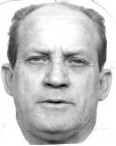 Billy Frank Vickers
Murderer · USA · 1993
Billy Frank Vickers Vickers was executed by lethal injection in Texas on Januar…
14 victims
Billy Frank Vickers
Murderer · USA · 1993
Billy Frank Vickers Vickers was executed by lethal injection in Texas on Januar…
14 victims
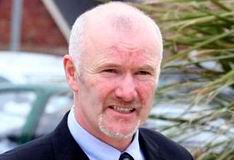 Colin Howell
Murderer · United Kingdom · 1991
Colin Howell (born 14 March 1959) was a Northern Irish convicted double murdere…
2 victims
Colin Howell
Murderer · United Kingdom · 1991
Colin Howell (born 14 March 1959) was a Northern Irish convicted double murdere…
2 victims
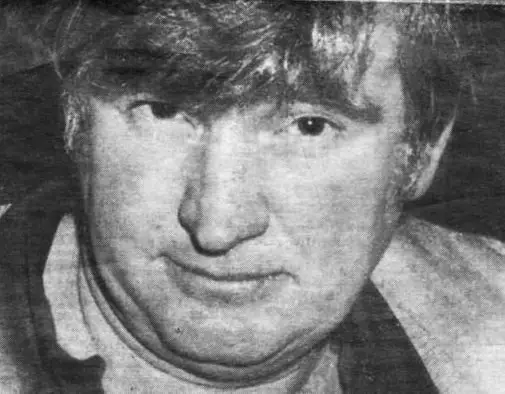 Raymond Edmunds
Murderer · Australia · 1966
Raymond Edmunds Raymond Edmunds was serving a life sentence for the 1966 murder…
2 victims
Raymond Edmunds
Murderer · Australia · 1966
Raymond Edmunds Raymond Edmunds was serving a life sentence for the 1966 murder…
2 victims
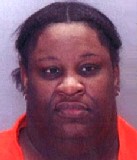 Donetta Hill
Murderer · USA · 1990
Donetta Hill, also referred to as Doneta Hill, was born in 1966. She was a Sout…
2 victims
Donetta Hill
Murderer · USA · 1990
Donetta Hill, also referred to as Doneta Hill, was born in 1966. She was a Sout…
2 victims
 Kevin Weaver
Spree killer · United Kingdom · 1987
Kevin Weaver was sentenced to closed psychiatric confinement on March 28, 1988.…
4 victims
Kevin Weaver
Spree killer · United Kingdom · 1987
Kevin Weaver was sentenced to closed psychiatric confinement on March 28, 1988.…
4 victims
- Gender
- male
- Country
- USA
- Location
- Schley, Orange County, North Carolina, USA
- Date of birth
- 1957
- Age at first offence
- 35
- Characteristics
- mutilation, dismemberment, former mental patient, the bodies were never found
- Victim profile
- Pamela Owens Ellwood, 42 ( his live-in girlfriend) / Rubel “Little Man” Gray Hill, 35 (his neighbor)
- Method of murder
- Shooting ?
- Date(s) of murder
- February/March 1992
- Years active
- 1992
- Date of arrest
- March 9, 1992
- Status
-
Life imprisonment
Sentenced to life in prison in March and October 1994
Case overview
David Allen Sokolowski was convicted of first-degree murder in 1994 for killing his friend, Rubel “Little Man” Gray Hill. After receiving information about a homicide, the Orange County Sheriff’s Office found Sokolowski at his home on Mincey Road burning Hill’s body in his yard.
In a separate trial, Sokolowski was convicted of first-degree murder for killing his live-in girlfriend, Pamela Owens Ellwood. Ellwood’s body was never recovered.
Timeline
- March 1992 — Officers discovered Ellwood’s body parts during searches of Sokolowski’s home and surrounding areas.
- March 5, 1992 — Defendant’s friend Kevin Folmar was at Sokolowski’s house watching television when Sokolowski made an incriminating statement about “Ellwood” and “Hill.”
- March 8, 1992 — Ellwood’s parents came to check on Ellwood after not hearing from her since 9 February 1992.
- March 9, 1992 — Police officers went to Ellwood and defendant’s home, saw a large bonfire, and found remains including a badly burned human head, a separate portion of the torso, and bone fragments.
- March 10, 1992 — Rice took a starter to Sokolowski’s and Ellwood’s home to fix Ellwood’s car and saw that the Citation remained in the front yard afterward.
- October 26, 1994 — A jury found Sokolowski guilty of first-degree murder in the case involving Ellwood; the trial court sentenced him to life imprisonment consecutively with a life sentence imposed in March 1994 for the murder of Hill.
- March 1994 — Sokolowski received a life sentence for the first-degree murder of Rubel Hill.
- December 3, 1999 — The North Carolina Supreme Court case record was filed.
- September 13, 1999 — The North Carolina Supreme Court heard the appeal.
- September 6, 1996 — The North Carolina Supreme Court delivered an opinion in State of North Carolina v. David Allen Sokolowski.
The offence
Murder of Pamela Owens Ellwood (first-degree murder)
The State claimed Sokolowski killed Ellwood, dismembered her body, and burned her body parts in their backyard.
Ellwood mysteriously disappeared in mid-February 1992. The State presented evidence that the last time anyone saw Ellwood alive was 9 February 1992:
- On 7 February 1992, Stanley Hutchins saw Ellwood alive when he met Sokolowski and Ellwood at a grocery store to pay them for construction work they had done.
- Ellwood was also seen by Robert Rice on 7 February 1992 when she bought a Citation car from him.
- On 9 February 1992, Ellwood telephoned Rice to tell him the car would not start. Rice went to Sokolowski and Ellwood’s house. This was the last time Rice ever saw or heard from Ellwood again.
- Sokolowski and Ellwood went to Winston-Salem to visit her parents on 9 February 1992, which was the last time Ellwood’s parents ever saw or heard from her.
- On 10 February 1992, Rice took a starter to fix the car; Sokolowski helped install it. Rice did not see Ellwood that day. When Rice asked about Ellwood, Sokolowski said she was at work.
The State further presented evidence that:
- Sokolowski gave contradictory stories about Ellwood’s whereabouts during February 1992 and early March 1992.
- On 15 February 1992, Keith Wilkerson visited Sokolowski’s home and asked where Ellwood was; Sokolowski responded that she was in Winston-Salem, though both Ellwood’s pickup truck and her car were still in the front yard.
- On 21 February 1992, Charlene Thornton visited and asked if Ellwood was home; Sokolowski told Thornton that Ellwood was in Winston-Salem and would return in a week.
- On 8 March 1992, Ellwood’s parents came to check because they had not heard from Ellwood since they saw her on 9 February 1992. Ellwood’s father felt resistance at the door, and both parents heard Ellwood’s mother talking to someone at the back of the house. When joining her, Ellwood’s father found Ellwood’s mother talking to Sokolowski, who had a pistol and shotgun. Sokolowski told them Ellwood had gone shopping in Durham with a friend named Leann Hill and would not be home until after dark; the parents returned to Winston-Salem without seeing their daughter.
The State also presented evidence intended to contradict Sokolowski’s claim about Leann Hill being with Ellwood shopping:
- Virginia “Leann” Hill testified the last time she saw Ellwood was at the beginning of February 1992 when Ellwood gave Leann a haircut.
- Leann testified she visited the house about twice a month to get hair cut.
- Leann testified that when she returned in late February or early March to get a haircut, Sokolowski told her Ellwood had left and gone to her parents’ house in Winston-Salem, and Leann saw boxes of Ellwood’s items in the living room.
On 9 March 1992, officers observed a large bonfire. Officers also noticed an area under the left side of the house dug out as if construction work was in progress. When they looked into the fire, they saw a badly burned human head, a separate portion of the torso of a human body, and some bone fragments. Sokolowski told officers the remains in the fire were his neighbor Rubel Hill.
A later forensics examination confirmed the remains in the fire were Hill. Officers continued to search the backyard, sifting through contents of a hole near the shed (about three hundred feet from the residence) and finding charred bone and skull fragments.
Officers found two human ears on the deck behind the house under some rugs; these ears were later identified as Hill’s. A medical examiner concluded the ears had been severed from Hill’s head with a sharp object.
Inside Sokolowski’s house, officers found a plastic bag containing female clothing including:
- a blood-soaked bra
- a blood-soaked sweatshirt
- socks
Sokolowski told officers the clothing belonged to “his old lady,” meaning Ellwood. Sokolowski claimed he had been in a fight with Ellwood several weeks before and she had left him. The clothing was covered in human blood; however, the clothing was too putrid to test for blood type. A subsequent review found:
- the shirt had been cut from the hem in the back straight up to the neck
- the bra straps had been cut from the back
- the shirt contained a hole in the back “consistent with an injury resulting from a gunshot wound.”
On 11 March 1992, officers returned for another search and found:
- a third ear in an ice tray in the freezer
- testicles in the refrigerator
- a fourthear inside a hollowed-out gourd on the kitchen table
Forensic examination of the two ears revealed they had also been severed with a sharp object. The left ear had a pierced lobe, and the right ear had a gold pierced earring with a green stone in place. Ellwood’s mother testified the earring belonged to her daughter. Subsequent forensic tests showed both ears were Ellwood’s.
Verbatim incriminating statements and testimony included:
- Defendant looked at Kevin Folmar and said: “[Ellwood's] out there and [Hill's] in yonder. Or vice versa.”
- When Darryl Underwood was questioned by the police on 11 March 1992, Underwood testified that he had been at Sokolowski’s house and asked about Ellwood; Sokolowski responded that he “had [Ellwood] tooken [sic] care of.”
- When Sokolowski met Ellwood’s parents on 8 March 1992, he told them Ellwood had gone shopping in Durham with “Leann Hill,” and “they would not be home until after dark.”
Murder of Rubel “Little Man” Gray Hill (first-degree murder)
The State’s evidence in Sokolowski’s other first-degree murder case showed that the defendant shot and killed Rubel Hill. He then cut the body into several parts and put them in a fire in his backyard.
The crime was discovered when a house guest of the defendant called Major Don Truelove of the Orange County Sheriff’s Department and reported he had seen several body parts in the defendant’s home and had seen the defendant put body parts in the fire.
Major Don Truelove and seven other deputy sheriffs went to Sokolowski’s home and removed a partially burned skull and human torso from the fire. Sokolowski told Major Truelove that the body was that of Rubel Hill. Sokolowski said Hill had tried to shoot him and that he had shot Hill.
Investigation and evidence
Discovery and forensic findings relating to Hill and Ellwood
The State presented evidence of discovery and forensic findings showing dismemberment and burning, including:
- Hill’s charred head and partial torso found burning in a bonfire.
- Hill’s severed head with two ears missing found as part of the fire remains.
- Hill’s two severed ears found at Sokolowski’s house.
- Ellwood’s severed ears found on the deck behind the house under rugs and in a freezer and kitchen gourd, with one ear having a gold pierced earring with a green stone.
- A medical examiner conclusion that ears were severed with a sharp object in a similar manner for Hill and Ellwood.
- A plastic bag of Ellwood clothing including blood-soaked items, with a shirt hole “consistent with an injury resulting from a gunshot wound,” and cut areas “straight up” on the shirt and bra straps “cut from the back.”
- Charred bone and skull fragments in a hole near a shed in the backyard approximately three hundred feet from the residence.
- Defendant’s apparent statements and actions linking locations of body parts to his explanations.
Buildings and bonfires
The State presented evidence that Sokolowski obtained wooden pallets and used them to create bonfires:
- In mid-February 1992, Sokolowski unloaded wooden pallets from a delivery truck and stacked them in piles in his yard.
- A landlord, Robert Strayhorn, saw Sokolowski later using some of the pallets to fuel a large bonfire.
- Sokolowski told Strayhorn he got the pallets because “some boys wanted to repair and sell them,” but Sokolowski got tired of looking at them, and Strayhorn testified defendant was not burning all pallets at that time.
- For the remainder of February 1992 and early March 1992, witnesses described sightings and bonfire activity, and on 8 March 1992 Curtis Bauer later saw Sokolowski pour gasoline onto a pile of wooden pallets, igniting a large bonfire.
- Later, on 9 March 1992, police discovered a second bonfire, connected with the remains found in that fire.
Arrest, custody, and searches
Major Don Truelove response and warrantless search (Hill case)
When Major Truelove received a call about burning a body, the caller also told him Sokolowski was armed and had said he would shoot any law enforcement officer who came on his property. Major Truelove went to the defendant’s home with seven deputy sheriffs.
Upon arrival:
- Sokolowski stood in the driveway with a pistol in his belt.
- Sokolowski reached for his pistol, but after being told not to by the officers, he did not touch his pistol.
- Officers disarmed Sokolowski.
- Officers requested permission to search the house; Sokolowski said, “I don’t care.”
- Sokolowski accompanied the officers during the search.
- While some officers searched, two officers reported to Major Truelove they had found a fire in the backyard with a human head and torso in it.
- At that time, Sokolowski was handcuffed and warned of rights pursuant to Miranda v. Arizona.
- Major Truelove instructed two deputies to get a statement from Sokolowski.
- The deputies took Sokolowski to a patrol car where he signed a consent to search form and a waiver of Miranda rights.
- Sokolowski asked for an attorney, and interrogation ceased.
The court found facts consistent with the evidence and denied motions including suppression. The court held the warrantless search was based upon consent and therefore was valid, including reasoning that the actions were not imprudent or excessive and that officers drew weapons and yelled only when Sokolowski reached for his gun; once disarmed, weapons were holstered. The court also held that Sokolowski twice consented to the search: orally and then in writing. The motion to suppress evidence seized during the warrantless search and evidence obtained via warrants based on it was denied.
Trial
Noncapital trial and verdict (Ellwood case)
Sokolowski was tried noncapitally before a jury in the Ellwood case. On 26 October 1994, the jury found him guilty of first-degree murder.
The trial court sentenced him to life imprisonment to be served consecutively with a life sentence imposed in March 1994 for the first-degree murder of Rubel Hill.
Evidence presented and defense arguments (Ellwood case)
Sokolowski argued on appeal that evidence was insufficient for a reasonable juror to find beyond a reasonable doubt that he committed a premeditated and deliberate murder of Ellwood.
He conceded sufficient circumstantial evidence that Ellwood was dead. He argued there was no direct evidence that Ellwood’s death was caused by a criminal act, and he argued the State failed to prove he killed Ellwood.
The State argued and the court reasoned that:
- “The corpus delecti may be established by direct or circumstantial evidence.”
- The jury could consider evidence relating to disposal of Hill’s body on identity, including similarity in modus operandi.
- Premeditation and deliberation generally must be established by circumstantial evidence.
- Unseemly conduct towards the corpse and concealment of the body were evidence of express malice and premeditation and deliberation.
The court concluded the trial court properly denied the motion to dismiss.
Jury and evidentiary issues (Ellwood case)
Prospective jurors and knowledge of prior conviction
Sokolowski claimed the trial court erred when it refused to excuse five prospective jurors for cause because they had some knowledge about his earlier conviction for the murder of Hill.
The court held that although the jurors said they could set aside knowledge of the prior conviction and decide guilt or innocence based solely on trial evidence, Sokolowski argued they had not known that the State would offer evidence connecting Hill and Ellwood via a common plan or scheme. The court rejected the presumption of partiality argument and concluded Sokolowski did not prove abuse of discretion. The assignment of error was overruled.
Jury instructions on unseemly conduct and concealment
Sokolowski claimed the trial court erred when it instructed the jury it could consider his unseemly conduct toward the victim’s corpse and concealment of her dead body to infer premeditation and deliberation.
The court held such conduct and concealment were relevant as circumstantial evidence and overruled the assignment of error.
Evidence admitted under Rule 404(b) relating to Hill
Sokolowski claimed the trial court erred when it allowed evidence introduced pursuant to Rule 404(b) concerning Hill and his attempt to burn Hill’s body.
The court discussed Rule 404(b) and held the similarities between the deaths, including dismemberment, severing of ears, saving of ears, and building of two bonfires, supported a reasonable inference of a contrived common plan linking both crimes.
Appeals and legal holdings
Ellwood murder appeal
The North Carolina Supreme Court judgment included:
- denial of the motion to dismiss in the trial court as properly denied
- rejection of juror challenge grounds
- rejection of jury instruction challenge relating to concealment and unseemly conduct
- rejection of Rule 404(b) admissibility challenge
- final conclusion: “NO ERROR.”
Other appeal opinion involving Hill murder case
In another North Carolina Supreme Court opinion dated September 6, 1996, the court addressed issues in the Hill murder case including:
- motion for funds to retain experts and a continuance, involving requests for a psychiatrist or psychologist, a forensic pathologist, a firearms and ballistics expert, and a behavioral pharmacologist
- denial of the motion to provide funds for the hiring of experts and denial of the motion for continuance
- denial of motions to suppress evidence from warrantless search and statements
The court held:
- the superior court was not in error by denying the motion to provide funds for the hiring of experts
- the defendant did not need time to confer with experts when the court denied the motion
- warrantless search was based upon consent and valid; evidence was not suppressed
The opinion includes “NO ERROR.”
Other details
People connected to the events and investigations
The following individuals were named in connection with witness testimony and investigative events:
- Rubel “Little Man” Gray Hill (victim)
- Pamela Owens Ellwood (victim)
- Stanley Hutchins (witness)
- Robert Rice (witness; sold Ellwood a Citation car)
- Curtis Bauer (witness)
- Robert Strayhorn (landlord witness)
- Charlene Thornton (witness)
- Keith Wilkerson (witness)
- Virginia “Leann” Hill (witness)
- Kevin Folmar (witness)
- Darryl Underwood (witness)
- Ellwood’s parents (witnesses; mother and father testified)
- Major Don Truelove (Orange County Sheriff’s Department; first responder)
- seven other deputy sheriffs (responders in the Hill case response)
- Curtis Bauer and others were also referenced in connection with bonfire observations
Defendant’s statements and claims
The record included the following claims and statements attributed to Sokolowski:
- He told officers the remains in the fire were his neighbor Rubel Hill.
- He told Major Truelove the body was that of Rubel Hill and that Hill tried to shoot him and he shot Hill.
- He claimed that clothing in a plastic bag belonged to “his old lady,” and that he had fought with Ellwood several weeks before and she had left him.
- He told Ellwood’s parents Ellwood had gone shopping in Durham with “Leann Hill” and they would not return until after dark.
- He made contradictory statements to different people about Ellwood’s whereabouts, including claims she was in Winston-Salem and claims she had left him and moved back with her parents.
- He told Underwood that he “had [Ellwood] tooken [sic] care of.”
- He made the statement to Folmar: “[Ellwood's] out there and [Hill's] in yonder. Or vice versa.”
- In connection with the warrantless search in the Hill case, when asked permission to search, he said, “I don’t care.”
- When warned of rights and asked about consent, the court found he consented orally and in writing and then asked for an attorney, ending interrogation.

Spotted an error, or have more information about this case?