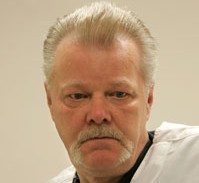
John Spirko
Murderer Ervil LeBaron
Murderer · USA · 1972
Ervil Morrell LeBaron (1925 to August 16, 1981) was the leader of a polygamous…
35 victims
Ervil LeBaron
Murderer · USA · 1972
Ervil Morrell LeBaron (1925 to August 16, 1981) was the leader of a polygamous…
35 victims
 Marvin Gray
Murderer · USA · 1975
Marvin Gray was convicted killer who claimed responsibility for 23 slayings and…
23 victims
Marvin Gray
Murderer · USA · 1975
Marvin Gray was convicted killer who claimed responsibility for 23 slayings and…
23 victims
 Charles Manson
Murderer · USA · 1969
Charles Milles Manson (born November 12, 1934) was an American criminal and mus…
9 victims
Charles Manson
Murderer · USA · 1969
Charles Milles Manson (born November 12, 1934) was an American criminal and mus…
9 victims
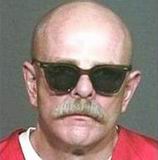 Barry Byron Mills
Murderer · USA · 1979
Barry Byron Mills (born 1948) was a leader of the Aryan Brotherhood (AB) prison…
8 victims
Barry Byron Mills
Murderer · USA · 1979
Barry Byron Mills (born 1948) was a leader of the Aryan Brotherhood (AB) prison…
8 victims
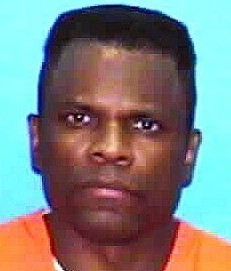 John Errol Ferguson
Murderer · USA · 1977
John Errol Ferguson was sentenced to death and was executed by lethal injection…
8 victims
John Errol Ferguson
Murderer · USA · 1977
John Errol Ferguson was sentenced to death and was executed by lethal injection…
8 victims
 Albert Foulcher
Murderer · France · 1993
Albert Foulcher was described as a former insurance agent and a gun enthusiast.…
5 victims
Albert Foulcher
Murderer · France · 1993
Albert Foulcher was described as a former insurance agent and a gun enthusiast.…
5 victims
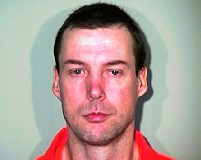 Daniel Wayne Cook
Murderer · USA · 1987
Daniel Wayne Cook worked at a restaurant in Lake Havasu City, Arizona, and shar…
2 victims
Daniel Wayne Cook
Murderer · USA · 1987
Daniel Wayne Cook worked at a restaurant in Lake Havasu City, Arizona, and shar…
2 victims
 Vincent Johnson
Serial killer · USA · 1999
Vincent Johnson was an American homeless crack addict. He was born January 6, 1…
6 victims
Vincent Johnson
Serial killer · USA · 1999
Vincent Johnson was an American homeless crack addict. He was born January 6, 1…
6 victims
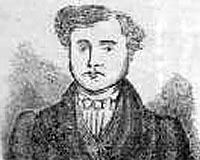 John Mapp
Murderer · United Kingdom · 1867
Name: John Mapp Catherine Lewis was the eldest of the five children of farm lab…
1 victim
John Mapp
Murderer · United Kingdom · 1867
Name: John Mapp Catherine Lewis was the eldest of the five children of farm lab…
1 victim
- Gender
- male
- Country
- USA
- Location
- Kentucky/Ohio, USA
- Date of birth
- J une 13, 1946
- Age at first offence
- 23
- Characteristics
- kidnapping, robbery
- Victim profile
- Myra Ashcraft, 73 / Betty Jane Mottinger, 48
- Method of murder
- Strangulation / St abbing with knife
- Date(s) of murder
- July 3, 1969 / August 9, 1982
- Years active
- 1969–1982
- Date of arrest
- —
- Status
-
Released
Commuted to life in prison without parole in January 2008 after being sentenced to life in prison in Kentucky in 1970 (paroled in 1982) and sentenced to death in Ohio in September 1984
Name and identification
John Spirko
Status and outcome
John Spirko will not be executed for the 1982 murder of Betty Jane Mottinger. Ohio Gov. Ted Strickland commuted Spirko's sentence to life in prison without parole in January 2008, citing the lack of physical evidence in the 1982 murder and what Strickland described as "slim residual doubt" about Spirko's guilt. Strickland said executing the death-row inmate would be "inappropriate."
Timeline
- 1970 — John Spirko was sentenced to life in prison in Kentucky.
- 1982 — John Spirko was paroled in Kentucky.
- August 1982 — Postmaster Betty Jane Mottinger was kidnapped from the Elgin Post Office and stabbed to death.
- six weeks later (August 1982) — Betty Jane Mottinger's decomposed body was found in a soybean field outside Findlay, wrapped in a painter's dropcloth.
- September 1984 — John Spirko was sentenced to death in Ohio for Mottinger's murder.
- January 2008 — Ohio Gov. Ted Strickland commuted Spirko's death sentence to life in prison without parole.
The offence
Postmaster Betty Jane Mottinger was kidnapped from the Elgin Post Office in August 1982 and stabbed to death. Her decomposed body was found six weeks later in a soybean field outside Findlay, wrapped in a painter's dropcloth.
Authorities alleged that Spirko participated in the kidnapping and killing of Mottinger with co-defendant Delaney Gibson.
Investigation
The case rested largely on the testimony of Postal Inspector Paul Hartman and an eyewitness who said she was certain she saw Spirko's best friend, Delaney Gibson Jr., in Elgin the morning of the crime.
Spirko was convicted of the killing based largely on his statements to police and the testimony of the eyewitness who said she had seen Gibson near the post office. No physical evidence tied Spirko to the murder. Authorities said Spirko described details only someone at the scene of the crime could know.
Spirko's attorneys argued that investigators and prosecutors used information that could only come from the killer, including details that included:
- the location of the stab wounds in Ms. Mottinger’s body;
- a description of Ms. Mottinger’s clothing;
- knowledge that a stone had been pried from a ring worn by Ms. Mottinger;
- a description of the ring;
- the type of shroud and specific method used to enwrap Ms. Mottinger’s body after her death;
- a description of Ms. Mottinger’s purse into which the perpetrators placed the fruits of the Post Office robbery; and
- a description of what was stolen in that robbery.
Spirko maintained he wanted to trade false information for leniency for himself on the assault charge as well as for his girlfriend, who had been charged with helping him to attempt a prison escape. Investigators dismissed much of what he told them, but latched onto Spirko's connection with Gibson and several details they said could come only from the killer.
Spirko sought further review of allegations raised by statements Spirko made to a postal investigator. Spirko's attorneys said the statements were full of inconsistencies.
Evidence and DNA testing
DNA results cast doubt on Spirko's guilt. The Ohio Attorney General's office secured multiple delays so that DNA testing on evidence in the case could be conducted. The testing results were negative. None of the biological evidence on items found at the Elgin Post Office where Betty Jane Mottinger was kidnapped in August 1982, or on items from the soybean field outside Findlay where her decomposed body was found six weeks later, contained DNA belonging to Spirko.
The evidence as it existed today was used by Spirko's attorneys to argue for clemency and an outright release from prison, either with or without the condition that Spirko be tried again for the 1982 crime. Spirko's attorney Tom Hill wrote to the governor's office:
"The evidence as it exists today 'can lead only to the conclusion that Mr. Spirko is an innocent man,'"
"Mr. Spirko has already spent 25 long and hard years in prison ... for a crime he did not commit. He is 61 years old, and he cannot, and certainly should not, wait any longer for this injustice to be addressed."
Spirko filed an application for DNA testing in the trial court. He requested DNA testing on “blood or other evidence received from the person of the deceased, Betty Mottinger, or from physical evidence recovered from the area where the body was discovered including blood evidence on tarp and boots.”
On March 10, 2005, the trial court denied Spirko’s request for DNA testing, noting:
- There was no biological material found at the site of the abduction;
- At trial it was never claimed that any of the blood found on or in the area of the victim’s remains was the defendant’s; and
- As to the boots, it was conceded by the prosecution at trial that it could have been Spirko’s blood on the boots.
Thus, the trial court concluded that DNA testing could not exonerate Spirko.
Spirko also sued in federal court to require testing of items including the tarp, a cement block found near Mottinger's body, and duct tape wrapped around her.
Arrest and incarceration background
John Spirko contacted police in October 1982 and offered to trade information about Mottinger's death in exchange for help on unrelated assault charges. Police said Spirko told them details of the killing that the public could not have known.
Spirko had been paroled in Kentucky in 1982 for a separate murder. He returned to Swanton to live with his sister and was soon jailed there on an unrelated assault charge, a parole violation. He was also described as being in a Toledo jail for felonious assault with a shotgun when first implicated in the Mottinger case.
Spirko was on death row following his conviction in Ohio.
People involved
Defendant
John Spirko
Victim
Betty Jane Mottinger, postmaster of the Elgin Post Office
Co-defendant and key witness
Delaney Gibson Jr., described as Spirko's best friend and a co-defendant whose alleged presence near the Elgin post office was central to the prosecution case
Investigators and prosecutors
Postal Inspector Paul Hartman
Van Wert County prosecutor Charles Kennedy (not in office in 1984; could not be reached for comment) Attorney General Marc Dann Leo Jennings, Dann's spokesman Keith Dailey, spokesman Jim Canepa, the state's chief deputy attorney general of criminal justice Attorney General Jim Petro (involved in reprieve requests and statements) Thomas Hill, described as Spirko's Washington, D.C.-based attorney Alvin Dunn, an attorney also representing Spirko Jim Canepa Charles Kennedy
Governor
Ted Strickland, Ohio Governor Bob Taft, then-Governor
Trial and verdict
John Spirko was convicted by a Van Wert County jury and sentenced to death. The conviction and death sentence were described as having been dependent on circumstantial evidence.
Appeals and litigation history
A timeline of legal events included:
- 1991 August — First round of Spirko appeals ended when the U.S. Supreme Court declined to hear the case.
- 1992 — Spirko attorneys renewed appeal and sued the state and federal government for access to investigative files.
- 1997 August — Hartman's files were ordered opened; Spirko attorneys found photos and statements placing Gibson hundreds of miles from Elgin the night before the crime.
- 2004 May — A federal appeals-court panel upheld Spirko's conviction and sentence by a 2-1 vote, stating the verdict rested primarily on what Spirko purportedly told Hartman during a series of jailhouse interviews in 1982.
- 2005 January — The Plain Dealer published a three-part series questioning the case and the credibility of the interviews, including that the interviews were untaped, full of lies, and peppered with details that were inconsistent with the facts or suggested by Hartman. The investigator's notes had also apparently been embellished.
- April (year as stated in timeline after 2005 January; within the appeals period) — Hartman told Spirko's attorneys that he knew before the 1984 trial and told prosecutors that Gibson was nowhere near Elgin on the day of the crime, despite Gibson's alleged presence being pivotal to the case.
- May (year as stated in timeline) — Spirko’s appeals were exhausted, and the Ohio Supreme Court set an execution date for Sept. 20, 2005.
Additional appellate details stated that the U.S. Supreme Court declined to hear Spirko's appeal in March, and the 6th U.S. Circuit Court of Appeals upheld Spirko's conviction and death sentence.
Sentencing and clemency proceedings
Kentucky sentence and parole
Spirko was sentenced to life in prison in Kentucky in 1970 and was paroled in 1982.
Ohio death sentence
In September 1984, Spirko was sentenced to death in Ohio.
Reprieves and parole board proceedings
The governor and parole board actions were described as multiple reprieves to allow DNA testing. Then-Gov. Bob Taft delayed Spirko's execution until Nov. 19 after an unprecedented second hearing. Parole board votes were described as 6-3 against clemency, with three members expressing serious doubts about Spirko's guilt, including questions about the quality of the evidence, fairness of the prosecution, and credibility of Hartman.
Petro asked for and got a second three-month reprieve for Spirko until Jan. 19, 2006, to subject evidence to modern DNA testing.
Spirko was granted reprieves in January (until July 19), June (until Nov. 29), and again in October, setting a new execution date for April 17, 2007.
In 2007, Gov. Ted Strickland ordered reprieves No. 6 in March (until Sept. 18) and No. 7 in July so that DNA testing first ordered in late 2005 could be completed. The seventh reprieve set Spirko's execution date for Jan. 24.
Governor commutation in January 2008
In January 2008, Ohio Gov. Ted Strickland commuted Spirko's sentence to life in prison without parole, describing execution as "inappropriate." Strickland also said he found Spirko's claims of innocence "unpersuasive in the face of the judicial scrutiny" his conviction received.
Quoted statements
John Spirko attorney Tom Hill said:
Spirko attorney Tom Hill said today that Spirko was relieved at the governor's decision to spare him from lethal injection.
Gov. Ted Strickland said:
executing the death-row inmate would be "inappropriate." Strickland noted that state and federal courts had reviewed Spirko's case many times since 1984. Strickland said he found Spirko's claims of innocence as "unpersuasive in the face of the judicial scrutiny" his conviction has received.
Dann's spokesman Leo Jennings said:
"We haven't been asked for one and we haven't made one."
"We haven't been asked for one and we haven't made one," Jennings said.
Spirko attorney Thomas Hill said:
"We are deeply concerned by these allegations," Spirko's Washington, D.C., attorney Thomas Hill said Wednesday. "We are equally concerned that the Ohio Supreme Court would go ahead and set a date knowing these matters were pending before a United States federal judge."
Attorney Jim Canepa said:
"All the swirlings about in recent litigation deal with who was the second person. In my mind, it's a red herring," "Irregardless of who else is involved, Spirko's conviction is not undermined."
Attorney Alvin Dunn said:
"We're looking forward to having this completed and believe it will demonstrate that our client had nothing to do with this crime,"
Petro said:
"I am a proponent of DNA technology," "It is important to accommodate the use of DNA testing where practical and feasible." "Notwithstanding, I believe that to the extent possible, all information should be made available for the parties, courts, and the Governor to use for what purpose they feel necessary," Petro said in the two-page letter to Thomas Hill, a Washington, D.C.-based attorney representing Spirko.
Other details
Victim details
Betty Jane Mottinger was described as 48.
Her body was wrapped in a painter's dropcloth and found six weeks later in a soybean field outside Findlay.
Timing around scheduled execution and delays
At the time of the described events, Jan. 24 was still listed as execution day for the 61-year-old inmate on Ohio's official calendar.
Spirko's lawyers used the DNA results to argue for clemency from execution and for outright release, either with or without the condition that Spirko be tried again for the 1982 crime.
Delaney Gibson dismissal
Capital murder charges against Delaney Gibson were dismissed last year.
The Van Wert County prosecutor dismissed charges against Gibson on May 17, 2004.
Tarp and related claims
Spirko's attorneys described the tarp as important because of a house painter who maintained his former boss on a painting crew was the real killer. The house painter was identified as John Willier. Chemical tests matched the paint to houses the crew worked on, and Spirko's attorneys said Willier told investigators in 1984 that the paint-splattered tarp Mottinger's body was wrapped in was the one his crew was using.
Additional disputed evidence and clemency hearing timing
On Sept. 8, Taft delayed Spirko's scheduled Sept. 20 execution to look into whether prosecutors presented inaccurate information at a clemency hearing in August.
In response, the Ohio Parole Board granted an unprecedented second clemency hearing for Spirko, and on Oct. 19 voted 6-3 to recommend that Taft allow the execution to proceed.
A lawyer for then-Attorney General Jim Petro misrepresented the evidence on several key points during a clemency hearing in August; Petro stood by his staff but suggested a second hearing to undo any damage.
The delay was described as encouraging.
Age references
Spirko was described as 61 in January 2008 and as 58 in 2005.
Relationship and residence
Spirko returned to Swanton to live with his sister.
Attempt to escape and girlfriend
Spirko's girlfriend was charged with helping him to attempt a prison escape. It was also stated that Spirko lied to investigators about having information about the unsolved Mottinger murder, and that he was on death row because he lied to investigators about having information about the unsolved Mottinger murder.
Physical evidence and abduction site
The trial court had found that there was no biological material found at the site of the abduction.
Spotted an error, or have more information about this case?