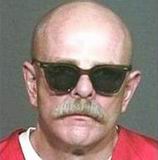
Barry Byron Mills
Murderer Ervil LeBaron
Murderer · USA · 1972
Ervil Morrell LeBaron (1925 to August 16, 1981) was the leader of a polygamous…
35 victims
Ervil LeBaron
Murderer · USA · 1972
Ervil Morrell LeBaron (1925 to August 16, 1981) was the leader of a polygamous…
35 victims
 Brian Kevin Rosenfeld
Murderer · USA · 1985
Brian Kevin Rosenfeld Brian Kevin Rosenfeld was sentenced to three concurrent l…
23 victims
Brian Kevin Rosenfeld
Murderer · USA · 1985
Brian Kevin Rosenfeld Brian Kevin Rosenfeld was sentenced to three concurrent l…
23 victims
 Marvin Gray
Murderer · USA · 1975
Marvin Gray was convicted killer who claimed responsibility for 23 slayings and…
23 victims
Marvin Gray
Murderer · USA · 1975
Marvin Gray was convicted killer who claimed responsibility for 23 slayings and…
23 victims
 Yahweh ben Yahweh
Murderer · USA · 1980
Yahweh ben Yahweh was born and legally named Hulon Mitchell Jr. (October 27, 19…
23 victims
Yahweh ben Yahweh
Murderer · USA · 1980
Yahweh ben Yahweh was born and legally named Hulon Mitchell Jr. (October 27, 19…
23 victims
 Irina Gaidamachuk
Serial killer · Russia · 2002
Irina Viktorovna Gaidamachuk (Russian: Ирина Викторовна Гайдамачук) was born in…
17 victims
Irina Gaidamachuk
Serial killer · Russia · 2002
Irina Viktorovna Gaidamachuk (Russian: Ирина Викторовна Гайдамачук) was born in…
17 victims
 Richard Eberling
Serial killer · USA · 1946
Richard George Eberling (December 8, 1929 - July 25, 1998) was a petty thief an…
5 victims
Richard Eberling
Serial killer · USA · 1946
Richard George Eberling (December 8, 1929 - July 25, 1998) was a petty thief an…
5 victims
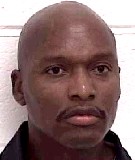 Warren Lee Hill
Homicide · USA · 1985
Warren Lee Hill was 36 when he was sentenced to death in September 1991 in Lee…
2 victims
Warren Lee Hill
Homicide · USA · 1985
Warren Lee Hill was 36 when he was sentenced to death in September 1991 in Lee…
2 victims
 Alan Winterborne
Mass murderer · USA · 1993
Alan Winterborne (33) wanted a job and became involved in a long dispute with u…
4 victims
Alan Winterborne
Mass murderer · USA · 1993
Alan Winterborne (33) wanted a job and became involved in a long dispute with u…
4 victims
- Gender
- male
- Country
- USA
- Location
- California, USA
- Date of birth
- 1948
- Age at first offence
- 31
- Characteristics
- mentally ill, white supremacist
- Victim profile
- John Marzloff / Rober Hogan / Gregory Keefer / Richard Andreasen / Thomas Lamb / Arva Lee Ray (inmates)
- Method of murder
- Stabbing with homemade knife
- Date(s) of murder
- 1979 - 1997
- Years active
- 1979–1997
- Date of arrest
- —
- Status
-
Life imprisonment
Sentenced to life in prison; jury deadlocked in the death penalty phase and jurors were ordered to continue deliberations
Case record: Barry Byron Mills
Background
Barry Byron Mills (born 1948) was a leader of the Aryan Brotherhood (AB) prison gang and was also known as “Barry ‘The Baron’ Mills.”
Mills was a leader of the Aryan Brotherhood prison gang and was serving a life sentence at the United States Penitentiary Administrative Maximum Facility Prison (ADX) in Florence, Colorado, USA.
A federal jury was ordered to keep trying to reach a verdict in the death penalty phase of the trial of two Aryan Brotherhood leaders convicted of murder, racketeering and conspiracy. The same jurors had convicted Barry “The Baron” Mills and Tyler “The Hulk” Bingham in July.
The offence
Mills was convicted under the Racketeer Influenced and Corrupt Organizations law, and of offenses known as Violent Crime in Aid of Racketeering, laws originally passed to target the Mafia.
The so-called VICAR verdicts involved the killings of two black inmates in 1997 and made Mills and Bingham eligible for the death penalty.
Mills and Bingham were convicted of inciting a race riot at a prison in Lewisburg, Pa., by conspiring to send a secret message to Aryan Brotherhood members. Frank Joyner and Abdul Salaam, alleged members of the DC Blacks prison gang, were killed during the riot.
The case included a larger indictment alleging that over 23 years, 32 murders have been ordered, 16 of them successful. The indictment listed 32 murders and attempted murders and was described as one of the largest federal capital punishment cases in U.S. history, with more than a dozen people potentially facing execution.
Mills and Bingham were convicted of a count of murder for the killing of Arva Lee Ray, a prisoner slain at the Lompoc, Calif., penitentiary in 1989.
Mills and Bingham were also convicted of counts of racketeering that included acts of murder and attempted murder.
Mills was serving two life terms for murder after nearly decapitating an inmate in 1979. Bingham was behind bars on robbery and drug charges and was described as having would have been released in 2010.
Investigation
The larger indictment sought to dismantle the violent white supremacist accused of running gambling operations and drug rings from inside some of the nation’s most notorious prisons.
The indictment described a series of murders and assaults throughout the prison system, with communication by notes written in secret code or with invisible ink made from fruit juice or urine.
A government informant made a suggestion in 1984 after Aryan Brotherhood members murdered prison guards at Marion and at another prison in Oxford, Wis., that may be connected to the presence of top gang leaders at ADX. The FBI reported:
“He feels that the murders of the correctional officers will spread like cancer lesions, and the way to stop these murders is to localize the members of the AB and put them all in a single prison.
This will stop the spread of the cancer.”
The Aryan Brotherhood indictment was described as the result of a six-year investigation led by federal Bureau of Alcohol, Tobacco and Firearms agents in California, with participation of every ATF office in the country and of other federal and local law enforcement and corrections departments. Latese Baker, an ATF agent in Los Angeles, said:
“That investigation saw the participation of every ATF office in the country and of other federal and local law enforcement and corrections departments.”
Arrest
No arrest details were stated in the provided material.
Trial
A federal jury determined guilt before the penalty phase that sought death for Mills and Tyler “The Hulk” Bingham.
After jurors were deadlocked in the death penalty phase, defense attorneys asked U.S. District Judge David O. Carter to declare a mistrial, which would have resulted in Mills and Bingham serving life sentences without parole. The defense attorneys complained that ordering jurors to continue deliberations would be “coercive” toward those holding out against a death penalty ruling.
Michael White, one of Bingham’s attorneys, said:
“The giving of the instruction is coercive because it is clearly aimed at those jurors who have voted for life because those jurors know that a hung jury is a verdict for life.”
The jury foreman told the judge it had been two days since jurors made any progress. The panel had deliberated for 3 1/2 days when it announced it was deadlocked. Jurors did not say what the extent of the split was, and federal court rules prohibited their being polled.
In the Lewisburg, Pa., race riot incident, government witnesses testified about a secret note written in invisible ink made from urine that was passed from Bingham’s high-security cell in Florence, Colo., to Lewisburg. The note read:
“War with DC Blacks, TD.”
Prosecutors argued at trial that it was an order to incite a race war at the Pennsylvania facility. Defense attorneys said the note was merely a warning to other gang members after tensions flared between the brotherhood and the D.C. Blacks at a prison in Marion, Ill.
During the guilt phase, the trial exposed long-kept secrets of the brotherhood, including communications from behind bars and between prisons thousands of miles apart.
Some witnesses testified about a plot to kill an inmate who had assaulted the late mob leader John Gotti in prison. Testimony indicated that John Gotti, head of the Gambino crime family, had paid the brotherhood for protection. One witness said Gotti offered to pay $500,000 for the hit; another testified that bullets had been passed to hide until the gang could fashion a zip gun with which to shoot Gotti’s attacker. The hit never occurred, and Gotti died of cancer in prison in 2002.
The indictment and trial included prosecution descriptions of Aryan Brotherhood operations and testimony about communication methods. Assistant U.S. Attorney Michael Emmick told jurors in a courtroom ringed by federal officers and packed with reporters:
“The Aryan Brotherhood ‘is particularly violent, disciplined, fearsome and committed to dominating the prison population through murder and threats of murder,’” “They just kill anyone who shows disrespect and doesn’t follow their rules,” “They succeeded in terrorising the prison population and securing the AB’s position of authority and power.”
Defense counsel Michael White said:
“If (an inmate) thinks they have been disrespected and want to stab somebody, they don’t need word from 2,000 miles away -- they just go ahead and act.”
White also said:
“Despite its name, the Aryan Brotherhood was not a racist organisation and was formed only to protect its members,” “These are guys who got together to survive prison.”
Emmick told jurors that the Aryan Brotherhood, also known as “the Brand,” began at California’s San Quentin state prison in the 196Os and had exclusive membership of only the most violent and loyal inmates, often requiring a prospective member to commit murder before they could join—known as “blood in, blood out” or “making your bones.” Emmick said an inmate marked for death was called “in the hat” and was typically stabbed with a homemade prison knife.
Sentencing
In July, Mills and Bingham were convicted. In a separate proceeding, jurors were asked to determine whether Mills, 58, and Bingham, 59, should be sentenced to death or life in prison without possibility of parole.
After jurors indicated they were deadlocked, jurors were ordered to keep trying to reach a verdict in the death penalty phase.
Mills was described as currently serving a life sentence at ADX in Florence, Colorado, USA.
The two other men who went on trial with Mills and Bingham—Edgar “The Snail” Hevle and Christopher Overton Gibson—were to be sentenced to life in prison.
Appeals
No appeals outcome was stated in the provided material.
Outcome
A federal jury was deadlocked in the death penalty phase and was ordered to keep trying to reach a verdict. Defense attorneys sought a mistrial from U.S. District Judge David O. Carter, arguing that ordering jurors to continue deliberations would be coercive.
Aftermath
The case was described as part of a larger effort to dismantle the Aryan Brotherhood.
The indictment alleged the gang’s leaders could continue running criminal enterprises from inside ADX, with Mills and Bingham incarcerated there.
The government described that after release, Aryan Brotherhood members moved marijuana “by the truckload” across the country, and also shook down drug dealers and other profit-makers on the streets. The indictment described “taxing” profit-making criminal enterprises run by other white inmates from behind prison walls.
The indictment also described partnerships with Asian gangs to import heroin from Thailand, and described the gang as shifting away from the racial animus present at its founding in the mid-1960s, according to government reports.
In an FBI report from 1983, the purpose of the AB was described as power rather than race, and it was described as being aligned with members of the Mexican Mafia and certain motorcycle type inmates. The FBI reported:
“The purpose of the AB is now power and is not a racial organization as it has been deemed in the past,” “The AB’s continue to be aligned with members of the Mexican Mafia and certain motorcycle type inmates.”
Experts suggested the effect of any death penalty outcome would be little or short-term if leadership were removed, and one said:
“It’s not going to be broken up,” “The groups are not going to go away.”
A federal prosecutor, Gregory Jessner, said that unless contact with the outside world were cut off entirely, people would still be able to send surreptitious messages:
“As a practical matter, unless you cut off all contact with the outside world, people have the ability to send surreptitious messages,” “That’s essentially impossible to cut off.”
Kara Gotsch, public policy coordinator for the American Civil Liberties Union’s National Prison Project in Washington, D.C., said:
“Gangs are a huge problem in this country’s prison system, and corrections (officials) just have to work harder to make sure that they’re not running these facilities,” “When you have numerous gangs running the system, we have a major problem.”
She also said the rise of gangs such as the Aryan Brotherhood was ultimate proof that American prisons were failing to rehabilitate their inmates.
Timeline
- July 2006 — Mills and Bingham were convicted.
- September 14, 2006 — Jurors announced they were deadlocked in the death penalty phase; defense attorneys asked for a mistrial and jurors were ordered to keep deliberating.
Other details
Mills and Tyler Davis Bingham (described as 54 and 55 in a separate narrative) were described as having been able to continue running the gang from inside ADX.
The narrative described that John Gotti wanted retribution against a fellow inmate who had attacked him in the federal penitentiary in Marion, Ill., in July 1996, and that he went to the two inmates running the Marion chapter of the Aryan Brotherhood prison gang. The narrative stated that they assigned the job to an Aryan Brotherhood member and told two other men to let the gang’s “Federal Commission” know about the pending hit. It described an oral memo moving slowly west until September 1997 into Marion’s successor institution, the Administrative Maximum Facility in Florence, described as “Supermax.”
ADX was described as opening in 1994 and as holding 414 inmates including “Unabomber Ted Kaczynski” and several of the terrorists convicted of bombing the World Trade Center in 1993.
Ramzi Yousef was named as an inmate described as “the self-professed mastermind of the Trade Center bombing” and as being locked down for 22 1/2 hours a day.
The narrative described that ADX restricted inmates’ ability to communicate, with the hardest cases locked down alone for 22 1/2 hours a day.
The narrative described that an Aryan Brotherhood communique intercepted in 1984 at the U.S. Penitentiary in Leavenworth, Kan., was visible only after being pressed with a hot iron and was written in urine.
The narrative included a claim that Aryan Brotherhood leaders received key help from former ADX guard Joseph Principe, 42. The indictment said Principe filed a false report at the request of Aryan Brotherhood inmates and arranged for gang leaders to meet unobserved by other guards. Principe denied both allegations and said it would have been impossible for him to do so, adding that the ADX system monitors guards as closely as inmates. Principe said:
“That’s out of the question,” and said it at the state Arkansas Valley Correctional Facility in Crowley, where he was an inmate convicted of assault and menacing outside the prison.
The narrative said a lawsuit was filed by ADX inmate John Greschner in U.S. District Court in Denver in 2000 alleging that an H Unit intelligence-gathering operation violated his civil rights. The narrative said Principe described the snitch program as probably the source of prosecutors’ belief he was involved with the gang.
The narrative said ADX Warden Robert Hood declined to comment, and Hood’s executive assistant, Wendy Montgomery, said she couldn’t comment because it was subject to an investigation and refused to talk about how prison officials gather intelligence at ADX or ensure its validity.
Dan Dunn of the Bureau of Prisons said investigators were aware of games inmates play and had ways of verifying intelligence offered by inmate informants.
The narrative described Aryan gang origins in the mid-1960s evolving from the Blue Bird Gang, a collective of white inmates at San Quentin. It described Blue Bird members deciding to change their name and increase their stature after watching black and Hispanic gangs gain prominence across the California state prison system.
It said a significant revenue stream in the federal system came from Gotti’s predecessors in Italian-American organized crime groups, known collectively as La Cosa Nostra. A 1983 report from the FBI in Los Angeles was quoted describing “slice of the pie” arrangements:
“In return, the mobsters were safe while inside the walls and were obligated to offer the AB members a ‘slice of the pie’ on the streets when they were paroled,”
It said that in 1980, with approval from the Aryan Brotherhood leadership in California, members who had wound up in the federal system formed the Federal Commission to run the gang in federal prisons.
It said that in the early 1990s the Federal Commission formed a middle-management “council,” which ran day-to-day operations and freed up Federal Commission members to consider long-term issues, as described in the indictment.
The narrative said that inside prisons, the gang maintained large gambling and extortion operations and oversaw buying and selling of “punks,” described as inmate jargon for sex slaves.
It said the Federal Commission presided over race wars pitting the Aryan Brotherhood against African-American prison gangs such as the D.C. Blacks, described as raged across the federal prison system in the early 1980s and again in the 1990s.
The narrative included that prosecutors were tentatively optimistic about the effect, quoting federal prosecutor Jessner:
“If in fact some of them are given the death penalty and that represents a large portion of the leadership, that will certainly change the Aryan Brotherhood,”
It said the Aryan Brotherhood trial opens in California and that it was the first salvo in a legal war intended to break the gang.
In addition to Mills and Bingham, Christopher Gibson and Edgar “The Snail” Hevle were named in relation to being charged with racketeering and conspiracy and as defendants in the trial.
Spotted an error, or have more information about this case?