Charles Arnett Stevens
Spree killer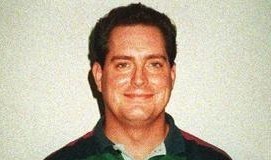 Mark Barton
Spree killer · USA · 1999
Mark Orrin Barton (1955 – July 29, 1999) committed a spree killing in Stockbrid…
12 victims
Mark Barton
Spree killer · USA · 1999
Mark Orrin Barton (1955 – July 29, 1999) committed a spree killing in Stockbrid…
12 victims
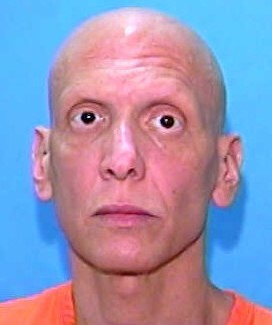 Manuel Pardo
Spree killer · USA · 1986
Manuel Pardo, Jr. was a former police officer who was convicted of nine counts…
9 victims
Manuel Pardo
Spree killer · USA · 1986
Manuel Pardo, Jr. was a former police officer who was convicted of nine counts…
9 victims
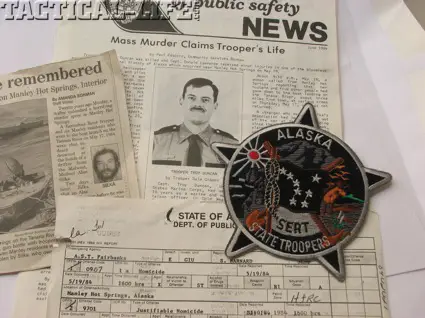 Michael Alan Silka
Spree killer · USA · 1984
Michael Alan Silka was killed during a shoot-out with the police on May 19, 198…
9 victims
Michael Alan Silka
Spree killer · USA · 1984
Michael Alan Silka was killed during a shoot-out with the police on May 19, 198…
9 victims
 Hilton Lewis Crawford
Murderer · USA · 1995
Hilton Lewis Crawford was executed by lethal injection in Texas on July 2, 2003…
1 victim
Hilton Lewis Crawford
Murderer · USA · 1995
Hilton Lewis Crawford was executed by lethal injection in Texas on July 2, 2003…
1 victim
 Nicholas Ncama
Serial killer · South Africa
Nicholas Lungisa Ncama was a South African serial killer who was convicted in 1…
Nicholas Ncama
Serial killer · South Africa
Nicholas Lungisa Ncama was a South African serial killer who was convicted in 1…
 Benjamin Ritchie
Murderer · USA · 2000
Benjamin Ritchie was a defendant in a case involving the death of a law enforce…
1 victim
Benjamin Ritchie
Murderer · USA · 2000
Benjamin Ritchie was a defendant in a case involving the death of a law enforce…
1 victim
 Cristopher Anthony Davis
Murderer · USA · 1995
Defendant: Christopher Anthony Davis (also referred to as Christopher A. Davis)…
3 victims
Cristopher Anthony Davis
Murderer · USA · 1995
Defendant: Christopher Anthony Davis (also referred to as Christopher A. Davis)…
3 victims
 Cavona Flenoy
Murderer · USA · 2010
Cavona C. Flenoy, 20, was sentenced to 25 years in prison for second degree mur…
1 victim
Cavona Flenoy
Murderer · USA · 2010
Cavona C. Flenoy, 20, was sentenced to 25 years in prison for second degree mur…
1 victim
- Gender
- male
- Country
- USA
- Location
- Oakland, Alameda County, California, USA
- Date of birth
- 1969
- Age at first offence
- 20
- Characteristics
- history of mental illness
- Victim profile
- Leslie Ann Noyer, 29 / Lori Anne Rochon, 36 / Laquann Sloan, 16 / Raymond August, 28
- Method of murder
- Shooting ( .357-caliber handgun)
- Date(s) of murder
- April-July 1989
- Years active
- 1989
- Date of arrest
- J uly 27, 1989
- Status
-
Sentenced to death
Sentenced to death in 1993; California Supreme Court upheld conviction and death sentence on June 4
Case record: Charles Arnett Stevens
Background
Charles Arnett Stevens was convicted of murdering four people during a three-month killing spree that ended in 1989. He was 38 years old at the time of the June 5, 2007 account, and he was 20 years old in 1989.
In 1989, authorities described him as an “urban hunter” and a “recreational killer.”
In 1993, Charles Arnett Stevens was sentenced to death.
The offence
Stevens terrorized Oakland during April 3 to July 27, 1989.
The spree included close-range shootings from a semi-automatic handgun. Stevens murdered:
- Leslie Ann Noyer
- Lori Anne Rochon
- Laquann Sloan
- Raymond August
Stevens attempted to kill:
- Karen Alice Anderson
- Janell Lee
- Julia Peters
- Paul Fenn
- Upendra de Silva
- Rodney Stokes
Leslie Noyer and Laquann Sloan were slain while standing on streets near I-580. Lori Rochon and Raymond August were slain as they drove the freeway.
A separate murder that same year was later linked to Stevens:
- Brenda Belvins, 26, was found dead on a porch on the 900 block of 54th Street in North Oakland. The body was found in the morning of April 13, 1989.
Authorities said Stevens was responsible for the Brenda Belvins stabbing and that genetic material found at the scene matched Stevens. Oakland Police said the case had remained unsolved until that DNA match.
Oakland Police also said there “may be a heretofore-unreported sexual aspect” to Belvins’s slaying, but they declined to elaborate.
Investigation
Oakland Police said they were able to connect Stevens to Brenda Belvins’ slaying using DNA evidence found at the scene.
Oakland Police also said detectives found a newspaper clipping on Belvins’ slaying at Stevens’ home, along with clippings on his other crimes, when they searched his home after his July 1989 arrest.
Arrest
Rodney Stokes, 24, was an I-580 motorist at whom Stevens, riding alongside in his own car, had shot but missed moments before. On July 27, 1989, Stokes shut off his headlights and tailed the assailant, who had shot and fatally wounded Raymond August.
Stokes watched the shooter exit the freeway and then park on the opposite side’s onramp to watch police arrive. Stokes pointed the car out to police.
Stevens, 20, was nabbed on July 27, 1989, right there with his .357-caliber Desert Eagle semiautomatic handgun.
Trial
In 1993, the California Supreme Court rejected several appeals, including claims that there were not enough african-americans on his jury, and a claim that the special circumstance of lying in wait was too close to premeditation and shouldn’t exist.
At trial, the jury foreman was Ed Newbegin. He was described as a high school and Little League baseball umpire.
Newbegin described aspects of the trial experience:
- Photographs of Leslie Ann Noyer were covered with Post-it notes because one juror had been a helicopter pilot in Vietnam.
Newbegin described deliberations:
- “It took us an hour and a half to decide what to do, and the only reason it took that long is there was one juror who didn’t quite know how to vote” on punishment.
- He described the deliberation as discussions leading to agreement that they were not the ones sending him to death and that “here was a man who had made decisions that sent him down a road, and at the end of that road is a chair.”
- Their first formal vote was unanimous.
- After the judge dismissed them, the jurors went out to a bar “just sort of like a wake, if you will,” and Newbegin said they were “euphoric and melancholy all at the same time.”
Newbegin later expressed views about the death penalty:
“We knew we weren’t going to be getting together for reunions or anything afterward. We’d been brought together in this little psychological crucible, and now we were free. We were euphoric and melancholy all at the same time.”
“But Stevens was a death-penalty ‘poster boy,’ he said, adding he’s unconcerned that the appeals are 14 years in progress with no end in sight: ‘Let anybody who’s condemned have all the days in court they can have, because some will be exonerated. He won’t be.’”
“From time to time, I’ve wished honestly that I could sit in front of that guy and just ask him, ‘Why, why did you do it?’”
“He didn’t have such a bad life, he had a brain… I still don’t get it, why he felt it was so important to take that gun and go out and kill people, innocent lives, people he didn’t even know.”
Ed Newbegin was also described as a 52-year-old dog sitter and folk singer from Concord.
Sentencing
Stevens was sentenced to death in 1993.
Appeals
The California Supreme Court upheld his conviction and death sentence on June 4. The June 4 decision ruled on the direct, automatic appeal of his 1993 trial.
He still had a habeas corpus case pending before the same court, and he could in the future file a similar case in federal court.
Barry Karl, the Redwood City attorney handling Stevens’ habeas case, was quoted as saying:
“I do think that Mr. Stevens should’ve gotten a more complete defense, and had he got that more complete defense, there is a reasonable likelihood that the jury would not have sentenced him to death,” Karl said.
Karl said Stevens’ trial lawyer:
- never hired an expert to challenge the ballistics evidence
- did not adequately probe Stevens’ childhood sexual and physical abuse
Karl also said:
- on one of the slayings, Clark’s testimony was the only rock-solid link between Stevens and the crime.
Karl said that these and other factors might have convinced jurors to let Stevens live, or might have led to a finding of guilt of a lesser degree of murder making him ineligible for the death penalty altogether.
Karl stated that if the state Supreme Court disagreed, he would file a habeas corpus petition in federal court.
The account also stated that Stevens remained among 665 inmates on death row, including 41 sent by Alameda County, and that the average time from arrival on death row to execution was 17.5 years.
California’s executions were halted for 16 months by a federal judge who ordered prison officials to revise procedures to ensure inmates do not suffer unnecessarily.
It was noted that:
- Of 71 deaths on death row since 1978, 14 have been executions and the rest have been from natural causes or suicides.
Other related criminal matter
In May 1993, Richard James Clark Jr. pleaded no contest to voluntary manslaughter. The plea included an admission that he was with Stevens the night that Leslie Noyer was shot; neither Clark nor Stevens admitted pulling the trigger.
Richard James Clark Jr. was sentenced to 13 years in prison. Karl said Clark served his time and was released.
Karl also said:
- Clark’s lawyer since then had refused to let Karl talk to Clark about Stevens’ appeal.
Karl said he filed his last papers in Stevens’ habeas case in March 2004.
Outcome
The California Supreme Court upheld Stevens’ conviction and death sentence on June 4, as part of his direct, automatic appeal.
Stevens’ death sentence remained in effect after the state’s June 4 ruling.
Aftermath
Oakland Police said Stevens was the prime suspect in the unsolved stabbing death of Brenda Belvins and that genetic material found at the scene matched Stevens.
Oakland Police Sgt. Tim Nolan said:
“We're certain he's responsible for one other murder -- there was evidence at the scene and other evidence uncovered during the investigation into his other spree that links him to this crime very conclusively,” Oakland Police Sgt. Tim Nolan said Friday.
“It's not the same fashion as these other murders, but I'm certain that he's responsible for it.”
Police said Oakland Police Sgt. Nolan and Sgt. Derwin Longmire visited Stevens on death row at San Quentin State Prison recently to interview him about Belvins’ case, and Stevens refused to talk.
It was stated that charges had not been filed yet regarding the Belvins case, and police said they were confident enough to say definitively it was Stevens’ work. Police also said they were still gathering other evidence.
Oakland Police Sgt. Dan Mercado investigated Belvins’ slaying at the time. Mercado retired in 1999 and owned a Martinez landscaping business. Mercado said:
“There wasn't much, we never got much going on the case at all.”
He recalled:
“All we had was a body,” he said, recalling how a canvass of the neighborhood turned up no clues, no witnesses, no leads.
People and victim impacts (as described)
Leslie Noyer, Laquann Sloan, Lori Anne Rochon, Raymond August
The account stated that by the time the spree ended in 1989, four people were dead and at least six others had narrowly escaped death.
The jury heard about Leslie Ann Noyer, 29, shot thrice in the head, point-blank with particularly powerful ammunition on April 3, 1989, on a street near I-580.
Brenda Belvins
Brenda Belvins was found dead in the morning of April 13, 1989, on a porch on the 900 block of 54th Street in North Oakland. She was 26.
Karen Adams, sister of Lori Anne Rochon
Karen Adams of Fairfield was described as Lori Anne Rochon’s sister. She attended Stevens’ trial and vowed to attend his execution. She said:
“Just looking at him, looking in his eyes and at his attitude and the way he moved, I just knew that he probably had done a lot of other terrible, terrible things,” she said.
“He really did not or does not, as far as I'm concerned, have a soul. He just looked like such an evil person.”
Adams also said:
“Murder is a terrible thing for the people who are left behind, and an unanswered murder where you don't know who did it, why, what reason -- it's an unbearable thing to have to live with.”
She hoped knowing Stevens’ name would ease their pain, and she said she was angry that appeals were dragging on for so long. She also said:
“if he did it and they can convict him, I would rather wait for him to go to lethal injection so that the family can have the closure of him being convicted for killing their loved one.”
William August, father of Raymond August
William August was the witness who inspired Newbegin’s revelation about the ripple effects by testifying in 1993 that his own life had ended when his son’s did.
Raymond August was born on Jan. 20, 1961. He was described as an airline mechanical engineer who abhorred violence and refused a BB gun as a child.
William August was described as a 74-year-old retired Alameda postmaster. He had sat in the East Oakland home he and his wife used to share with his son.
William August said:
“My whole life just went on hold, the things I’d planned to do before, they’re not even in the plans anymore, so here I am,” August said recently, sitting in the East Oakland home he and his wife used to share with his son.
William August also said:
“At the rate that we’re executing people in California, I don’t know if we’re going to get to you. … All you’re doing is getting life in prison.”
He said:
“This has been an aching process for me all this time because I don’t know what I can expect — I expect he will die in prison, probably,” he said, adding that’s unfair.
He said:
“There are certain crimes that the death penalty was instituted for, and this is one of those. You have to take those kind of people out of society. They have lost their right to live.”
He visits his son’s grave in St. Mary’s Cemetery every week and attends a support group for murder victims’ families every month. His wife, Geraldine, did not attend the support group and instead had private counseling for a few years.
William August said:
“It was a very frustrating time, and I’m still in a very sad state,” William August said.
“Losing your kid is the worst thing that can happen. You never expect to bury your kid, and I had to do that, and I can’t get over it."
Witnesses and surviving victims described
Paul Fenn
Paul Fenn survived being hit by gunfire while riding in a van on I-580 early on the morning of July 16, 1989. He later e-mailed the newspaper on June 4, asking “Depressing news, is there a date?”
He wrote:
“Depressing news, is there a date?”
When told Stevens probably had years still left, Fenn replied that he was “shocked to read of the case after so long,” and he stated that he was an opponent of the death penalty and that neither Julia nor he was killed. He wrote:
“I am an opponent of the death penalty. Neither Julia nor I was killed. John Cutler was also with us when we were attacked, I married Julia and John is my good friend. Julia was injured.
So I might feel different if one of us were among the man’s fatalities,” Fenn wrote.
“But I oppose the death penalty and would likely say something against the execution of this fellow, as life without parole would solve the problem without killing the man.”
He was later described as executive director.
Fenn initially agreed to be interviewed further but later declined, saying discussing it was “depressing…. It’s hard to get excited about it.”
Julia Peters
Julia Peters survived the July 16, 1989 attack while riding in a van on I-580. She was cut by flying glass and treated at a local hospital.
Julia Peters was described later as managing director of Local Power.
Rodney Stokes
Rodney Stokes, 24, was described as an I-580 motorist who was shot at but missed moments before he followed the shooter and pointed the car out to police. Stokes watched the shooter exit the freeway and park on the opposite side’s onramp.
Stevens’ associates and quoted background material
The account described a high school girlfriend:
- Mia Chatman, an Oakland Technical High School sophomore in 1987 when she noticed Charles Stevens, described as a shy, good-looking senior.
Chatman’s parents said she was too young to date. She described dating as hanging out together at school. She said Stevens seemed shy and had few friends and did not dress nicely and did not have a lot of money. She described offering to go to lunch and said he would say he was not hungry and would not admit he did not have any money.
Chatman said:
“I always remember me doing more of the talking than he did,” Chatman said, and he ran home from school every day “like someone was chasing him,” saying he had duties there.
She said he called furtively and told her:
“If I hang up with you, don’t be upset with me, it’ll be because my dad came home.”
She said he spoke kindly of his mother as if she were still there. She said:
“I remember him talking as if she were still there. … I got the impression that his mother was still alive.”
Chatman said his mother was a violent alcoholic and died in March 1986. She described his embarrassment about his situation:
“It didn’t seem like he was crazy, it just seemed like he was embarrassed by his situation and it didn’t allow him to open up to people,” Chatman said.
Chatman described breaking up after a few months:
“I thought it was just too much — I was trying to have fun and he could not.”
As the I-580 shootings mounted, she described fearing to drive the freeway:
“I remember everyone including myself afraid to drive on the freeway, it was so random,” she said.
She said when she heard it was him:
“And when I did hear that it was him,… it was like, ‘Oh my God.’”
She said she considered writing to him in prison to ask “Why?” but never did. She described her present life as a 36-year-old Stockton mom still wondering, and she said:
“It just makes me sad for him,” she said, starting to cry.
“He was actually a really nice kid.”
Related legal status notes
It was stated that Stevens still had another separate court case pending and had not yet asked federal courts to intervene.
The account also stated that Stevens was on death row at San Quentin State Prison and that attorneys often did not visit unless necessary due to body-cavity searches upon leaving and re-entering their cells for attorney visits. Karl said:
“Karl said Stevens has written to him as recently as about a month ago, but attorney-client privilege precludes him from discussing the letters or Stevens’ condition and state of mind.”
Quotes involving Newbegin and the ripple effects
The account included a quote attributed to ED NEWBEGIN:
“The revelation it led me to is that when something like a murder happens, it’s as if a bomb were dropped by the murderer right there at ground zero where the victim is, but the blast has impact on the people closest to the victim and the murderer and ripples outward to investigators, jurors and everyone else around the case”, Newbegin said.
Another quote described a witness addressing prosecutors:
“I have no life — it ended that day.”
Timeline
- March 1986 — Stevens’ mother, described as a violent alcoholic, died.
- 1987 — Mia Chatman was described as an Oakland Technical High School sophomore who noticed Charles Stevens as a shy senior.
- April 3, 1989 — Leslie Ann Noyer was shot thrice in the head near I-580.
- April 13, 1989 — Brenda Belvins’ body was found in the morning on a porch on the 900 block of 54th Street in North Oakland.
- July 16, 1989 — Paul Fenn and Julia Peters were riding in a van on I-580 and were hit by gunfire; Peters was cut by flying glass.
- July 27, 1989 — Rodney Stokes tailed the assailant after Stevens shot but missed; Stevens was nabbed right there with a .357-caliber Desert Eagle semiautomatic handgun.
- May 1993 — Richard James Clark Jr.
- 1993 — Stevens was sentenced to death.
- June 4 — The California Supreme Court upheld Stevens’ conviction and death sentence for the shootings.
- March 2004 — Karl filed his last papers in Stevens’ habeas case.
- June 5, 2007 — The account described Stevens’ status and the developments regarding Brenda Belvins.
- June 26, 2007 — The account included additional material about ED NEWBEGIN and the ripple effects of the case.
Spotted an error, or have more information about this case?