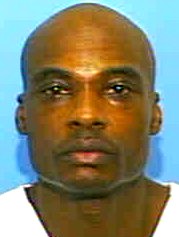
Willie Williams
Mass murderer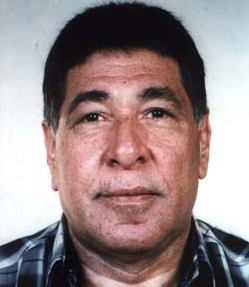 Gameel Al-Batouti
Mass murderer · USA · 1999
Gameel Al-Batouti (also rendered “Gamil ElBatouty” or “El Batouty” in U.S. offi…
216 victims
Gameel Al-Batouti
Mass murderer · USA · 1999
Gameel Al-Batouti (also rendered “Gamil ElBatouty” or “El Batouty” in U.S. offi…
216 victims
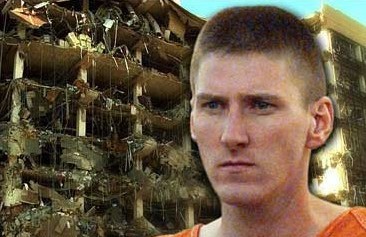 Timothy McVeigh
Mass murderer · USA · 1995
Timothy James McVeigh (April 23, 1968 – June 11, 2001) was a United States Army…
168 victims
Timothy McVeigh
Mass murderer · USA · 1995
Timothy James McVeigh (April 23, 1968 – June 11, 2001) was a United States Army…
168 victims
 Julio Gonzalez
Mass murderer · USA · 1990
Julio Gonzalez was sentenced to 174 twenty-five-year sentences (a total of 4,35…
87 victims
Julio Gonzalez
Mass murderer · USA · 1990
Julio Gonzalez was sentenced to 174 twenty-five-year sentences (a total of 4,35…
87 victims
 David Burke
Mass murderer · USA · 1987
David Augustus Burke (May 18, 1952–December 7, 1987) was an employee of USAir,…
43 victims
David Burke
Mass murderer · USA · 1987
David Augustus Burke (May 18, 1952–December 7, 1987) was an employee of USAir,…
43 victims
 George Jo Hennard
Mass murderer · USA · 1991
George Jo Hennard carried out a mass killing at a Luby’s Cafeteria in Killeen,…
23 victims
George Jo Hennard
Mass murderer · USA · 1991
George Jo Hennard carried out a mass killing at a Luby’s Cafeteria in Killeen,…
23 victims
 Francisco Acevedo
Serial killer · USA · 1989
Francisco Acevedo was a serial killer who avoided detection for 20 years until…
3 victims
Francisco Acevedo
Serial killer · USA · 1989
Francisco Acevedo was a serial killer who avoided detection for 20 years until…
3 victims
 Karen Tobie
Murderer · USA · 2004
Karen Tobie was convicted of paying a man $4,000 to kill her husband, John Cata…
1 victim
Karen Tobie
Murderer · USA · 2004
Karen Tobie was convicted of paying a man $4,000 to kill her husband, John Cata…
1 victim
 John Edward Sansing
Murderer · USA · 1998
John Edward Sansing was convicted in Superior Court (Maricopa) of first-degree…
1 victim
John Edward Sansing
Murderer · USA · 1998
John Edward Sansing was convicted in Superior Court (Maricopa) of first-degree…
1 victim
 Benjamin Tony Atkins
Serial killer · USA · 1991
Benjamin Tony Atkins, also known as the Woodward Corridor Killer, was an Americ…
11 victims
Benjamin Tony Atkins
Serial killer · USA · 1991
Benjamin Tony Atkins, also known as the Woodward Corridor Killer, was an Americ…
11 victims
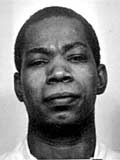 Jeffery Henry Caldwell
Murderer · USA · 1988
Jeffery Henry Caldwell Jeffery Henry Caldwell was executed by lethal injection…
3 victims
Jeffery Henry Caldwell
Murderer · USA · 1988
Jeffery Henry Caldwell Jeffery Henry Caldwell was executed by lethal injection…
3 victims
- Gender
- male
- Country
- USA
- Location
- Mahoning County, Ohio, USA
- Date of birth
- November 9, 1956
- Age at first offence
- 35
- Characteristics
- drug dealer, kidnapping
- Victim profile
- Alfonda Madison, Theodore Wynn, William Dent and Eric Howard
- Method of murder
- Strangulation / Shooting
- Date(s) of murder
- September 2, 1991
- Years active
- 1991
- Date of arrest
- January 12, 1992
- Status
-
Executed
Executed by lethal injection in Ohio on October 25, 2005; Governor Bob Taft denied clemency. Williams declined a special meal and was prepared by the prison execution team before three fluids were injected—sodium pentothal to render him unconscious, pancuronium bromide to stop his breathing, and potassium chloride to stop his heart. Before his death, he winked and blew a kiss to his adult daughter, Jameka, and thanked her and his brother and uncle for being witnesses; he said, "I'm not going to waste no time talking about my lifestyle, my case, my punishment. Y'all stick together. Don't worry about me. I'm OK."
Case record: Willie Williams
Timeline
- 08-13-93 — Received at DOC.
- 09/02/91 — Date of offense.
- 09/1/91 — Williams murdered Alfonda Madison, Theodore Wynn, William Dent and Eric Howard in Youngstown's Kimmelbrooks housing project.
- 09/02/91 — Jessica and Williams fled after another car rammed theirs and the people in the other car shot at them; officers later transported them to the Youngstown Police Department and released them after questioning about the traffic accident.
- 10/15/91 — Williams escaped from jail.
- 11/12/1991 — Indictment.
- 08/12/1993 — Sentence: 08/12/1993.
- early 1992 — Williams surrendered to authorities after being a fugitive.
- 01/12/1992 — Armed Williams and accomplices appeared at the Mahoning County Juvenile Justice Center; after lengthy negotiations, Williams surrendered.
- 09/24/1991 — Dominic turned himself in and gave a statement about the murders.
- 09/1/91 — The murders took place in Youngstown's Kimmelbrooks housing project.
- 10:20 a.m. (date of execution) — Willie Williams Jr. died by lethal injection at the Southern Ohio Correctional Facility.
- October 25, 2005 — Executed by lethal injection in Ohio.
Background
Willie Williams was a Black male born on 11/09/56. He was incarcerated under inmate number 256583 and had been held at Mansfield Correctional Institution before being transferred to the Southern Ohio Correctional Facility for execution.
Williams returned to his hometown of Youngstown in 1991 after serving a prison stint in California for dealing cocaine. He sought to reclaim control of drug sales in a public housing project, and he went to the local police station to try unsuccessfully to gain information about local drug dealers.
The offence
Williams controlled the drug trafficking at the Kimmelbrooks housing project in east Youngstown, Ohio, and after an extended absence he returned to find Alfonda R. Madison, Sr., William L. Dent, Eric Howard, and others had taken over the drug trade. Williams wanted to regain control of the drug business, so he decided to rob and kill Madison and others.
Williams murdered four men:
- Alfonda R. Madison, Sr. (also referred to as Alfonda "Al" R. Madison Sr.),
- William "Lamont" Dent (also referred to as William Dent),
- Eric Howard (also referred to as Eric Howard),
- Theodore "Teddy" Wynn Jr. (also referred to as Theodore Wynn Jr.; recently discharged Air Force sergeant).
The victims had taken over drug sales that Williams used to control in the housing project.
Williams recruited three juvenile accomplices:
- Jessica M. Cherry (Williams’s sixteen-year-old girlfriend),
- Dominic M. Cherry (Jessica’s brother; sixteen- or seventeen-year-old),
- Broderick Boone (Dominic Cherry’s seventeen-year-old “cousin” / best friend).
Planning steps included purchasing walkie-talkies at a Radio Shack store on August 27, 1991, along with batteries and duct tape. Williams drew interior and exterior diagrams of Madison’s house for the accomplices. Williams later ordered Dominic to burn the diagrams, but Dominic burned only one diagram. Williams supplied each accomplice with a gun, and Williams purchased Jessica’s gun from a neighbor.
September 1, 1991 events at Madison’s home
On September 1, 1991, Jessica met with Madison and discussed a drug deal. Later that night, Williams and the three accomplices arrived at Madison’s home by car. Williams armed the three juvenile accomplices with guns and a walkie-talkie and sent them inside while he waited outside with a walkie-talkie.
Once inside, the three accomplices drew their guns on Madison. After receiving word via walkie-talkie that the situation was secure, Williams entered the house armed with a semiautomatic and carrying a duffel bag containing handcuffs, duct tape, and gloves. Williams handcuffed and bound Madison and put tape over his mouth.
Thirty to forty-five minutes later, Theodore Wynn, Jr., a recently discharged Air Force sergeant, came to the door looking for Madison and Howard, who were roommates. Jessica answered the door and told Wynn that Madison was not home and Howard was asleep. As Wynn walked back towards his car, Williams told Jessica to call Wynn back into the house because Wynn could identify them.
Inside the house, Williams held Wynn at gunpoint and handcuffed him. Williams instructed Jessica to call and ask for Dent to lure him to the house. When Dent arrived with Howard, Williams and his accomplices ambushed them and forced them to lie down in the bathroom.
Williams strangled Madison and Wynn, and then instructed Jessica to turn up the stereo. Going from room to room, Williams shot each of the four victims in the head with Madison’s gun.
After the group left Madison’s home, Williams went back in “to make sure they were all dead,” according to Jessica.
September 2, 1991 events after the murders
On the next day, September 2, 1991, Williams and Jessica were driving to pick up Williams’s son in Youngstown when another car rammed theirs and the people in the other car shot at them. Jessica and Williams fled the scene. When Jessica and Williams returned to the vicinity of the accident, officers transported them to the Youngstown Police Department and later released them after questioning them about the traffic accident.
That night, Williams, Jessica, Dominic, and Broderick fled to Pennsylvania. Williams and the three juveniles returned to the Youngstown area and parted company.
Murder-related threats and reward
After returning to Williams’s apartment, Williams embraced his juvenile accomplices and rewarded them with drugs. Williams warned them not to tell anyone what they had done or he would kill them.
Investigation
After the murders, Williams was arrested soon after the slayings. A coroner ruled the victims were variously bound, shot, and strangled.
Shortly after his arrest as a suspect in the murders, Williams escaped from a county jail. During his escape period, he remained a fugitive from justice. While he was a fugitive, a Mahoning County Grand Jury indicted him on four counts of aggravated murder, four counts of kidnapping, and one count of aggravated burglary.
While he remained a fugitive, Williams purchased a police uniform and used deception to gain entry to the Mahoning County Juvenile Justice Center, where the accomplices were held.
Arrest and escapes
Shortly after being arrested, Williams escaped from jail on October 15, 1991.
Juvenile Justice Center hostage incident (January 12, 1992)
On January 12, 1992, armed Williams and two other accomplices, Paul R. Keiper, Jr., and a juvenile named Eric Fields, appeared at the Mahoning County Juvenile Justice Center (JJC). The three deceived a receptionist and were permitted to enter. Once inside, Williams held the receptionist and a deputy sheriff hostage, demanding to see Jessica, Dominic, and Broderick. After lengthy negotiations, Williams surrendered to authorities.
At trial, Keiper testified that Williams planned to kill the three juveniles because he knew that they had made statements to the police regarding the murders.
Trial
Charges
Williams faced charges including:
- Aggravated Murder (4 counts) with specification of aggravating circumstances (purposeful killing of two or more persons),
- Kidnapping (4 counts) with firearm specifications,
- Aggravated Burglary.
A separate indictment included:
- Escape, Having Weapons under Disability, Possession of Dangerous Ordnance, Aggravated Burglary, Aggravated Robbery with firearm specification, Kidnapping (2 counts), and Illegal Conveyance of Weapons into Detention Facility with firearm specification.
The Mahoning County Grand Jury reindicted Williams on twelve counts of aggravated murder, four counts of kidnapping, and one count of aggravated burglary. Each aggravated murder count included two felony-murder death specifications and one death specification for multiple murder, rendering him eligible for the death penalty.
Venue and verdict
On Williams’s motion, the trial court transferred venue from Mahoning County to Summit County. At the guilt phase, the jury found Williams guilty of all charges and specifications. The trial court later merged the twelve aggravated murder counts into four counts and merged the three specifications per count into a single multiple-murder specification per count.
Evidence and witness testimony
The accomplices testified against Williams at trial and pleaded guilty in connection with their involvement.
The Ohio Supreme Court made factual findings that Williams outlined his plan to the accomplices, used walkie-talkies, carried a duffel bag containing handcuffs, duct tape, and gloves, handcuffed and bound Madison, strangled Madison and Wynn, and shot each victim in the head with Madison’s gun.
The court also found that although there were inconsistencies in the accomplices’ testimony, the evidence, including events at the JJC and physical evidence (duct tape and electrical cord recovered from the victims, the recovered murder weapon, slugs removed from the victims, and spent shell casings), was sufficient.
Rulings on other-acts evidence
The prosecution introduced evidence about Williams’s armed entry into the JJC. Williams argued this evidence violated Evid.R. 404(B) and should have been excluded under Evid.R. 403(A). The Ohio Supreme Court held the incident was admissible as evidence of modus operandi and intent to kill the juvenile witnesses, and it rejected the need for a limiting instruction because the entry presented substantive evidence of modus operandi and consciousness of guilt.
The Ohio Supreme Court quoted:
'It is today universally conceded that the fact of an accused's flight, escape from custody, resistance to arrest, concealment, assumption of a false name, and related conduct, are admissible as evidence of consciousness of guilt, and thus of guilt itself.' State v. Eaton (1969), 19 Ohio St.2d 145, 160, 48 O.O.2d 188, 196, 249 N.E.2d 897, 906, vacated on other grounds (1972), 408 U.S. 935, 92 S.Ct. 2857, 33 L.Ed.2d 750, quoting 2 Wigmore, Evidence (3 Ed.) 111, Section 276.
Sentencing
At the penalty phase, the jury recommended death for each count of aggravated murder. The trial judge sentenced Williams to death, and the court of appeals affirmed.
Appeals
Ohio Supreme Court (Direct Appeal)
In State v. Williams, 79 Ohio St.3d 1, 679 N.E.2d 646 (Ohio 1997), the Ohio Supreme Court affirmed Williams’s convictions and death sentences.
The Ohio Supreme Court held the convictions and sentences of death were supported, addressing sufficiency of evidence and other issues raised by Williams. The court concluded that aggravating circumstances outweighed mitigating factors and that the sentence was neither excessive nor disproportionate compared to similar cases.
The Ohio Supreme Court noted a dissent by Chief Justice Moyer, joined by Justice Pfeifer, regarding protection of Williams’s constitutional right to be tried before an impartial jury. The dissent said the trial court failed to adequately protect that right, and it argued:
"Vigilance is required to protect the integrity of the jury from infirmities that may sap and undermine it. Such infirmity is present in the composition of the jury that sentenced Williams to death. I would therefore vacate the conviction and sentence and grant Williams a new trial."
Federal habeas appeal
In Williams v. Bagley, 380 F.3d 932 (6th Cir. 2004), a federal appeals court affirmed denial of habeas relief. The court held that Ohio courts did not unreasonably determine that a juror was not biased and that the district court properly denied Williams’s requests for discovery and an evidentiary hearing. The court rejected Williams’s habeas claims.
Outcome
Williams was executed by lethal injection in Ohio on October 25, 2005. Gov. Bob Taft denied clemency and removed the last legal barrier to execution. Williams did not request clemency and had declined a special meal; he was allowed to eat whatever the prison served for breakfast.
Aftermath
Williams spent his final day at the Southern Ohio Correctional Facility in holding prior to the execution. He met with family members in cell-front visits from about 2:30 to 4:30 p.m., and he was set to meet in contact visits from 4:30 to 7:30 p.m. Visitors included his mother, Joyce Williams, his sister, June Williams, and various children and other family members.
The execution process involved injections of sodium pentothal, pancuronium bromide, and potassium chloride. Williams declined to request a special meal and had asked only for a cup of coffee.
His lawyer, Joe Wilhelm, said Williams requested that he not attend the execution and that no further legal fights were planned.
Spotted an error, or have more information about this case?