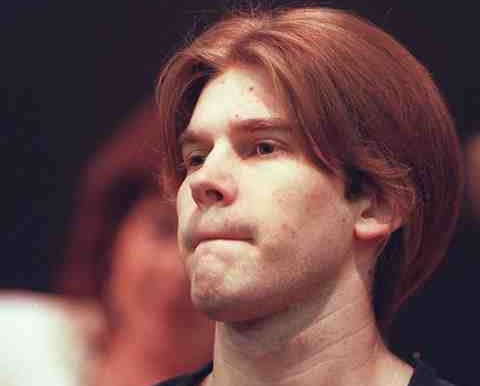
Jeremy Strohmeyer
Murderer Russell Ellwood
Murderer · USA · 1991
Russell Ellwood was a former taxi driver. Authorities suspected him of killing…
20 victims
Russell Ellwood
Murderer · USA · 1991
Russell Ellwood was a former taxi driver. Authorities suspected him of killing…
20 victims
 Robert Martines Perez
Murderer · USA · 1994
Name: Robert Martines Perez · Other name used in proceedings: Robert Martinez P…
15 victims
Robert Martines Perez
Murderer · USA · 1994
Name: Robert Martines Perez · Other name used in proceedings: Robert Martinez P…
15 victims
 Billy Frank Vickers
Murderer · USA · 1993
Billy Frank Vickers Vickers was executed by lethal injection in Texas on Januar…
14 victims
Billy Frank Vickers
Murderer · USA · 1993
Billy Frank Vickers Vickers was executed by lethal injection in Texas on Januar…
14 victims
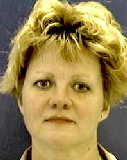 Terri Rachals
Angel of Death? · USA · 1985
Terri Rachals was a nurse in the Surgical Intensive Care Unit of the Phoebe Put…
0 victims
Terri Rachals
Angel of Death? · USA · 1985
Terri Rachals was a nurse in the Surgical Intensive Care Unit of the Phoebe Put…
0 victims
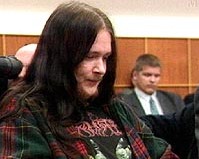 Jarno Elg
Murderer · Finland · 1998
Jarno Sebastian Elg was a Finnish satanist. He was sentenced to life in prison…
1 victim
Jarno Elg
Murderer · Finland · 1998
Jarno Sebastian Elg was a Finnish satanist. He was sentenced to life in prison…
1 victim
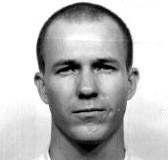 Johnny Dean Pyles
Murderer · USA · 1982
Johnny Dean Pyles (death row inmate; offender number “#724”) was executed by le…
1 victim
Johnny Dean Pyles
Murderer · USA · 1982
Johnny Dean Pyles (death row inmate; offender number “#724”) was executed by le…
1 victim
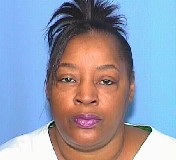 Dorothy Williams
Murderer · USA · 1987
Dorothy Williams was tried and convicted under her birth name, Dorothy Williams…
3 victims
Dorothy Williams
Murderer · USA · 1987
Dorothy Williams was tried and convicted under her birth name, Dorothy Williams…
3 victims
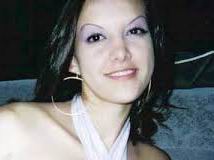 Taiana Matheny
Murderer · USA · 2005
Taiana Matheny was a Tucson woman accused of luring two Omaha, Neb., men to the…
2 victims
Taiana Matheny
Murderer · USA · 2005
Taiana Matheny was a Tucson woman accused of luring two Omaha, Neb., men to the…
2 victims
- Gender
- male
- Country
- USA
- Location
- Primm, Clark County, Nevada, USA
- Date of birth
- October 11, 1978
- Age at first offence
- 19
- Characteristics
- child molester, rape, drug addict, alcohol, torture
- Victim profile
- Sherrice Iverson, 7
- Method of murder
- Strangulation
- Date(s) of murder
- May 25, 1997
- Years active
- 1997
- Date of arrest
- 3 days after
- Status
-
Life imprisonment
Pleaded guilty; sentenced to four life terms in prison without possibility of parole on October 14, 1998
Case information
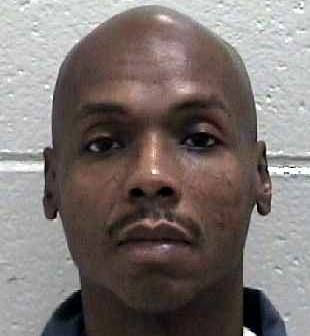
Jeremy Strohmeyer (born October 11, 1978) was a Long Beach, California man who molested and murdered 7-year-old South Los Angeles elementary school student Sherrice Iverson (October 20, 1989 – May 25, 1997) 7 years old at Primadonna Resort and Casino in Primm, Nevada, on May 25, 1997.
Sherrice Iverson’s murder drew national attention focused on the safety of children in casinos and on the revelation that Strohmeyer's friend, David Cash Jr., said he saw the crime in progress but did not stop it.
Timeline
- May 25, 1997 — Jeremy Strohmeyer and David Cash, Jr. were at the Primadonna Resort & Casino at Primm, Nevada, and Strohmeyer repeatedly made apparently “playful” contact with 7-year-old Sherrice Iverson, who was roaming the casino alone.
- May 25, 1997 — Iverson’s body was found seated on a toilet in the women’s restroom at about 5 a.m. after her father discovered she was missing.
- May 28, 1997 — Police began surveillance of Strohmeyer’s home and identified him as the suspect when he sat on the porch to smoke a cigarette.
- May 28, 1997 — Strohmeyer ingested 37 Dexedrine pills in an attempt to die, was taken to a hospital, and then gave a confession to police.
- June 1997 — Three days after the murder, Strohmeyer was taken into custody at his home after classmates identified him after casino security tape footage was released and played on television news.
- September 8, 1998 — Strohmeyer pleaded guilty to four charges: first-degree murder, first-degree kidnapping, sexual assault on a minor with substantial bodily harm, and sexual assault on a minor.
- October 14, 1998 — Strohmeyer was sentenced to four life terms to be served consecutively without possibility of parole.
- October 1999 — Strohmeyer’s adoptive parents filed a $1 million lawsuit against Los Angeles County and its adoption workers.
- 2000 — Strohmeyer’s appeal was unsuccessfully defended by Camille Abate.
- 2001 — The Nevada Supreme Court rejected an appeal by Strohmeyer to cancel his guilty plea.
- January 2006 — Strohmeyer lost a federal court bid to review his case.
The offence
In the early morning hours of May 25, 1997, two men—Jeremy Strohmeyer (age 18) and David Cash, Jr. (age 17)—were at the Primadonna Resort & Casino at Primm, Nevada, near the California border. The two young men arrived at the gambling establishment accompanied by Cash’s father from their homes in Long Beach.
At around 4 a.m., Strohmeyer began repeatedly making apparently “playful” contact with 7-year-old Sherrice Iverson, who was roaming the casino alone. Her father was gambling and drinking. Although security officers asked him several times that evening to keep a closer watch on his daughter, he apparently ignored the admonitions and continued to let Sherrice run around unmonitored.
Strohmeyer followed Sherrice into a women’s restroom. In the restroom, the two began throwing wet paper wads at one another. Sherrice then reportedly tossed a yellow plastic “Wet Floor” sign at Strohmeyer.
David Cash entered the restroom and witnessed Strohmeyer forcibly take Iverson into a stall. When Cash looked in from the adjacent stall, he saw Strohmeyer holding his left hand over Iverson’s mouth and fondling her with his right. Cash left the restroom and was followed 20 minutes later by Strohmeyer, who immediately confessed to him that he had molested and killed the girl.
After police questioning, Strohmeyer stated that he molested Iverson and strangled her to stifle her screams. Before leaving, Strohmeyer noticed Iverson was still alive and twisted her head in an attempt to break her neck. After hearing a loud popping sound, he rested her body in a sitting position on the toilet with her feet in the bowl.
Investigation and evidence
Security cameras showed Iverson entering the restroom near the casino’s video arcade at 3:47, followed by a young man later identified as Strohmeyer.
Strohmeyer was also captured on tape throwing wet paper towels back and forth with Iverson just moments before she entered the restroom.
After investigation of security camera tapes and interviews with casino patrons, police discovered the two suspects were from Long Beach, California. Pictures of Strohmeyer and Cash appeared in the Los Angeles Times and on local news programs.
In the weeks following Strohmeyer’s arrest, Cash told the Los Angeles Times that he did not dwell on the murder of Sherrice Iverson: “I’m not going to get upset over somebody else’s life. I just worry about myself first. I’m not going to lose sleep over somebody else’s problems.”
He also told the newspaper that the publicity surrounding the case had made it easier for him to “score with women.”
Cash also told the Long Beach Press-Telegram: “I’m no idiot ... I’ll get my money out of this.”
Arrest, medical state, and confession
Three days after the murder, Strohmeyer was taken into custody at his home after two classmates in Long Beach identified him after security tape footage captured by cameras at the casino was released by Nevada police and played on television news.
Police began surveillance of Strohmeyer’s home on May 28, 1997 and identified him as the suspect when he sat on the porch to smoke a cigarette. Soon after returning inside, Strohmeyer tried to elude the police, slipping out of the house and running down the street, but he was caught quickly.
Police returned to the home while waiting for a search warrant and were confronted by his tearful mother. She showed officers an empty pill bottle and an apparent suicide note from her son. The note read: “I am so sorry, I just pray that this is enough to finish me off. Please Lord let me die. I'm sorry, mom, I'm sorry dad, heather, all my friends and family. Forgive me for I have sinned. I'm sorry. Please give these things (unidentified objects) to Agnes Lee. Tell her I will always love her.”
Heather was Strohmeyer’s sister and Agnes Lee was a former girlfriend.
Strohmeyer allegedly told Lee he had killed someone, but she thought he was playing a “sick joke” to get her attention.
Strohmeyer ingested 37 Dexedrine pills, a prescription amphetamine he took for attention deficit disorder. Police took him to the hospital, where, according to the police report, a lucid and calm Strohmeyer gave officers a complete confession. The confession described the paper towel “fight” and that he followed Iverson into the restroom to continue the game.
Strohmeyer said Iverson threw a yellow floor sign at him and then began screaming, at which point he covered her mouth, picked her up, and took her into the large handicap stall.
Cash peered over from a neighboring stall and saw Strohmeyer restraining the girl and threatening to kill her if she didn’t stay quiet. Cash told police he tried to get Strohmeyer’s attention by calling his name and tapping him on the head, but gave up and left the restroom after Strohmeyer stared blankly at him.
Strohmeyer described molesting Iverson and strangling her to stifle her screams. Before leaving, he noticed the young girl was still breathing and wanted to “put her out of her misery.” He twisted her head in an attempt to break her neck and, after hearing a loud popping sound, rested her body in a sitting position on the toilet with her feet in the bowl.
When asked about his motive for the crime, he responded: “What I see is death. I wanted to experience death. I never have, I've never been that close.”
After moving from the hospital to the police station, Strohmeyer repeated his confession twice on tape, with no lawyer present.
Strohmeyer’s attorneys tried to have the confessions suppressed, claiming the defendant was illegally denied a lawyer and that the officers took advantage of his medical state after the suicide attempt. The family attorney was not allowed to see him during any of the statements.
Police said Strohmeyer waived his right to have an attorney present during questioning. The police report quoted him as saying: “I know my Miranda rights. I guess I could have an attorney if I wanted to and take that route or just get this thing out in the open.”
He then claimed police told him that a lawyer would drag things out and make it unnecessarily hard on him and his family.
Trial and legal proceedings
Strohmeyer’s trial was scheduled to begin in September 1998.
Strohmeyer’s defense attorney was Leslie Abramson, who represented many high-profile clients, including the Menendez brothers.
Strohmeyer claimed he was high on alcohol and drugs at the time and did not remember committing the crimes.
Abramson planned to argue that Strohmeyer was “disassociated” from the murder because of alcohol, drugs and emotional distress, and therefore was unable to have the intent necessary for first-degree murder.
Strohmeyer said the incident was “like a dream.”
Abramson expected to argue that Strohmeyer had a genetic predisposition to a low tolerance for drug addiction and that, at the time of the murder, he had been addicted to methamphetamine, or “crystal meth”, for six months.
Strohmeyer was adopted at 18 months by his current family. After his arrest, it was revealed his genetic parents both had drug problems and that his mother was diagnosed as a schizophrenic.
Abramson noted that Strohmeyer’s biological father is in prison and his biological mother is in a mental hospital.
According to prosecutors, Strohmeyer hoarded pornography, including pornographic images of children, and admitted fantasizing about sex with young girls. Prosecutors alleged that, before the murder, Strohmeyer wrote in an Internet chat room that: “I fantasize about having sex with 5-and 6-year-old girls all the time”. Abramson claimed prosecutors could not prove the message came from him.
Prosecutors also claimed that Strohmeyer had asked his former girlfriend to dress up as a school girl for him.
Abramson also noted evidence issues involving Strohmeyer’s computer and child pornography. Initially, evidence from the computer was ruled inadmissible, but the Nevada Supreme Court overturned that decision. District Judge Myron Leavitt ruled that the computer files could only be used as rebuttal evidence if the defense argued that Strohmeyer had no intent at the time of the murder.
Leavitt took over the case from Don Chairez, who later stepped off the bench to run for Congress. The timing of Leavitt taking over was after Chairez ruled in favor of the prosecution.
Strohmeyer’s defense planned to contest the nature of Iverson’s injuries, maintaining the cause of death was strangulation rather than a violent twisting of Iverson’s head.
During a press conference after Strohmeyer’s plea bargain, Abramson implicated David Cash. Strohmeyer allegedly told Agnes Lee it was Cash who molested the girl.
Strohmeyer’s plea bargain occurred hours before his trial was to start. Strohmeyer pleaded guilty to four charges on September 8, 1998: first-degree murder, first-degree kidnapping, sexual assault on a minor with substantial bodily harm, and sexual assault on a minor.
During the plea phase, Strohmeyer’s defense sought to suppress confessions. After rulings that allowed the confession statements to be heard during trial, the defense reevaluated its strategy.
Sentencing
On October 14, 1998, Strohmeyer was sentenced to four life terms in prison without possibility of parole. Each life term corresponded to a crime to be served consecutively.
Appeals
Jeremy Strohmeyer appealed his conviction.
In 2000, Camille Abate unsuccessfully defended Strohmeyer.
Strohmeyer recanted his confession and accused Abramson of lying to him and bullying him into pleading guilty in order to cover up misunderstandings about Nevada law. Strohmeyer’s new attorneys also suggested that Abramson wanted him to plead guilty because Strohmeyer’s parents could not afford to pay her additional funds if the case went to trial. Abramson denied all allegations.
Ultimately, his appeal was rejected. In 2001, the Nevada Supreme Court rejected an appeal by Strohmeyer to cancel his guilty plea.
In January 2006, Strohmeyer lost a federal court bid to review his case.
Outcome
Jeremy Strohmeyer remained sentenced to four life terms in prison without possibility of parole after pleading guilty.
Aftermath and related legal/policy impacts
Strohmeyer was initially incarcerated at Ely State Prison, a maximum security prison located north of Ely, Nevada. He was placed in administrative segregation, meaning he was not placed in the general inmate population but rather in his own cell in a special secured section. His prison number was #059389.
He was later reportedly transferred to the Lovelock Correctional Center in Lovelock, Nevada, where he was classified as “medium” custody.
Adoptive parents’ lawsuit
In October 1999, Strohmeyer’s adoptive parents filed a $1 million lawsuit against Los Angeles County and its adoption workers. They claimed that social workers deliberately withheld crucial information that would have stopped them from adopting him as an infant.
They claimed they were never told that Strohmeyer’s biological mother had severe mental problems, including chronic schizophrenia and that she had been hospitalized more than 60 times prior to Strohmeyer’s birth.
They stated they would continue to support their adopted son despite the fact that he would almost certainly spend the rest of his life in prison.
David Cash and reporting/accessory discussions
Sherrice Iverson’s mother demanded that David Cash, Jr. be charged as an accessory. Authorities stated there was not enough evidence connecting him to the actual crime, and Cash was never prosecuted for any offense related to the murder.
Cash was labeled “the bad Samaritan,” and there was a campaign by students who attempted to get him kicked out of UC Berkeley for not stopping the crime. Two local Los Angeles radio hosts held a rally to have Cash expelled from the University of California at Berkeley, but University officials stated they had no basis to remove him since he was not convicted of a crime.
Cash expressed equivocal remorse over Iverson’s death in a radio interview, stating: “I have a lot of remorse toward the Iverson family. It was a very tragic event...The simple fact remains I don't know this little girl ... I don't know people in Panama or Africa who are killed every day, so I can't feel remorse for them. The only person I know is Jeremy Strohmeyer”
He still insisted that he did nothing wrong.
“Sherrice Iverson” bill
Sherrice Iverson’s murder led to the passage of Nevada State Assembly Bill 267. The bill required people to report to authorities when they have reasonable suspicions that a child younger than 18 is being sexually abused or violently treated.
The impetus for the bill stemmed from the inaction of a witness and friend of the murderer, who stood by and did nothing during the commission of the crime.
The “Sherrice Iverson” bill was introduced by Nevada State Assembly Majority Leader Richard Perkins (D-Henderson). The bill provided for a fine and possible jail time for anyone who failed to report a crime of the nature that led to the creation of the bill. The bill was enacted in 2000.
Casino security changes
As a result of the murder, hotels in Nevada increased security in their arcades, often having a security guard even in small arcades.
Jeremy Strohmeyer’s final statement to the court (verbatim)
Strohmeyer made a final statement to the court on Wednesday, October 14, 1998. His statement included the following verbatim text:
“I am sorry. I am sorry for my part in the tragedy that took place that early morning. The tragedy that resulted in little Sherrice's untimely death. I do not know if any apology from me will ever have any worth for Sherrice's family but whether they will be able to accept it or not, I must apologize. Let it be known to Yolanda Manuel, to Leroy Iverson and to every person who ever knew and loved Sherrice Iverson: I am truly sorry. If I were given the opportunity to exchange my life for Sherrice's and bring her back, I would not hesitate, not even for a second, to do so.
Not a day goes by that I don't feel the crushing weight of my guilt and sorrow for her loss. Sherrice would still be alive today if not for me, and I have got to live with that truth for the rest of my life.
I am a condemned man: not only by the state but by my own conscience as well.
I know nothing I am about to say can change the outcome of these proceedings.
Even so, I want this court and anyone who has heard of or read about this terrible crime to know the truth of what happened that devastating morning and why it happened.
Nothing I am going to say about these events is offered as an excuse for my own conduct.
I accept full responsibility for the crimes committed against Sherrice Iverson.
But if people can understand, as I have come to understand, why this happened then, perhaps, a tragedy such as this can be averted and children like Sherrice and myself might avoid the destruction of their lives.”
Strohmeyer’s statement also included: “It is malevolent providence which brought together myself, David Cash, and Sherrice Iverson in that arcade on that tragic morning.”
He stated: “On the morning of May 25, 1997 I was drinking beer and wandering aimlessly through casinos and arcades with David Cash.”
He described forgetting details and said: “I believe I blacked out for a period of time.”
He described what he saw after regaining awareness: “I sat down on her to cover her up from view.”
He stated: “I don't know whether the circumstances of my birth made my fate a foregone thing.”
He stated: “So I ask myself: ³How did I ever get to the point in which I caused a little girl to die?²”
He described his suicide attempt: “On May 28th, I decided to die.”
He described his drinking: “I must get drunk or I'll go mad.”
He addressed his confessions: “I wanted to die, but also wanted to conceal from my parents what I had done ‹ the monster I had become.”
He addressed motive and closeness to death:
He addressed adoption and his beliefs: “The Los Angeles County Adoption agency, which arranged my adoption, concealed the truth of my birth parents' backgrounds from my adoptive parents, on purpose.”
He also stated: “Closed adoptions are dangerous. Mine is only one such example.”
He addressed “kiddy porn” and the internet: “Everybody lies to everybody else on the Internet.”
He also said: “I did it in the depths of my isolation.”
And he addressed what he wanted learned: “In letting the circumstances of my life and how it led to this tragedy be known I'm not seeking sympathy or forgiveness or a lessening of my own guilt.”
Other details
Strohmeyer’s defense counsel was Leslie Abramson, who initially concentrated on getting a second-degree murder conviction and believed an acquittal was impossible.
Strohmeyer’s family attorney was not allowed to see him during any of the statements.
At sentencing, the court imposed four consecutive life terms without possibility of parole.
Strohmeyer’s final statement described his alcohol abuse and dependency on methamphetamine, and he described a drug prescribed for a non-existent condition, which he said caused his brain to go haywire.
Strohmeyer also described alleged closed adoption risks, including genetic risk factors for inheriting mental illness and addiction, and described the difficulty of getting competent help for emotional problems.
He also described a history of attention deficit disorder and that he received Dexedrine after being misdiagnosed.
Strohmeyer described a psychiatric counselor and psychiatrist he met with, and he said a residential alcohol treatment program he expected to enter did not accept him.
He described purchasing speed, the effects of speed, and transitioning to drinking.
He described changes in behavior including becoming an aggressive, violent person and fighting with his parents.
He described that he began to fight more with parents and that a family counselor was involved.
He described that his genetic mother had been hospitalized more than 60 times prior to his birth and had chronic schizophrenia, as referenced in the lawsuit narrative.
He described contact with half brother and brothers, and asked adoptive parents to help his brother by using information his defense team had.
He addressed internet and child porn issues in terms of how he said he received a zip file and how it was stored.
He stated: “Teenagers are curious about weird and taboo things.”
He stated: “I never had and do not have any sexual interest in children.”
He argued that he did not seek out the material and that it was curiosity.
He also described the admissions strategy before trial and changes in evidence rulings.
He stated: “Spending the rest of one's life in prison is far greater than being executed.”
He stated: “I do not plan on withering away inside of a prison cell.”
He thanked his mother, father, and sister in his final statement.
He referred to Sherrice Iverson as “little Sherrice,” and said she was “an innocent child.”
Spotted an error, or have more information about this case?