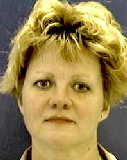
Terri Rachals
Angel of Death?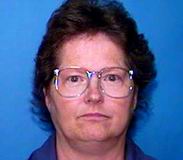 Bobbie Sue Terrell
Murderer · USA · 1984
Bobbie Sue Dudley Terrell was a Pinellas County nurse and worked as the night s…
12 victims
Bobbie Sue Terrell
Murderer · USA · 1984
Bobbie Sue Dudley Terrell was a Pinellas County nurse and worked as the night s…
12 victims
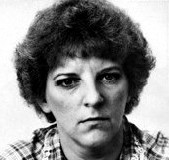 Genene Jones
Serial killer · USA · 1977
Genene Anne Jones (born July 13, 1950) was a former pediatric nurse who worked…
11 victims
Genene Jones
Serial killer · USA · 1977
Genene Anne Jones (born July 13, 1950) was a former pediatric nurse who worked…
11 victims
 Dorothea Puente
Serial killer · USA · 1982
Dorothea Puente was a convicted serial killer. In Sacramento, California, she r…
9 victims
Dorothea Puente
Serial killer · USA · 1982
Dorothea Puente was a convicted serial killer. In Sacramento, California, she r…
9 victims
 Debra Brown
Serial killer · USA · 1984
Debra Denise Brown was an African-American serial killer and the partner-in-cri…
8 victims
Debra Brown
Serial killer · USA · 1984
Debra Denise Brown was an African-American serial killer and the partner-in-cri…
8 victims
 Aileen Wuornos
Serial killer · USA · 1989
Aileen Carol Wuornos was an American serial killer who killed seven men in Flor…
7 victims
Aileen Wuornos
Serial killer · USA · 1989
Aileen Carol Wuornos was an American serial killer who killed seven men in Flor…
7 victims
 Diana Lumbrera
Serial killer · USA · 1976
Diana Lumbrera (1976–1990) systematically suffocated 6 of her own children and…
7 victims
Diana Lumbrera
Serial killer · USA · 1976
Diana Lumbrera (1976–1990) systematically suffocated 6 of her own children and…
7 victims
 Rudi Apelt
Murderer · USA · 1988
Rudi Apelt Cynthia Monkman · Cynthia Monkman was killed. Rudi Apelt and his bro…
1 victim
Rudi Apelt
Murderer · USA · 1988
Rudi Apelt Cynthia Monkman · Cynthia Monkman was killed. Rudi Apelt and his bro…
1 victim
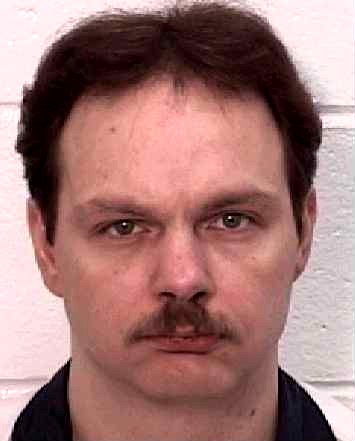 James Randall Rogers
Murderer · USA · 1980
James Randall Rogers was convicted in Floyd County of murder and aggravated ass…
1 victim
James Randall Rogers
Murderer · USA · 1980
James Randall Rogers was convicted in Floyd County of murder and aggravated ass…
1 victim
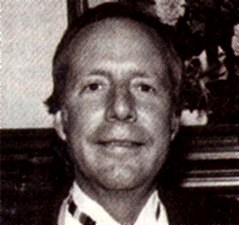 John Eleuthère DuPont
Homicide · USA · 1996
John Eleuthère duPont (November 22, 1938 – December 9, 2010) was an American bi…
1 victim
John Eleuthère DuPont
Homicide · USA · 1996
John Eleuthère duPont (November 22, 1938 – December 9, 2010) was an American bi…
1 victim
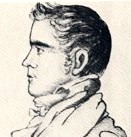 Samuel Green
Serial killer · USA · 1817
Samuel Green was executed by hanging in Massachusetts on April 25, 1822. He was…
Samuel Green
Serial killer · USA · 1817
Samuel Green was executed by hanging in Massachusetts on April 25, 1822. He was…
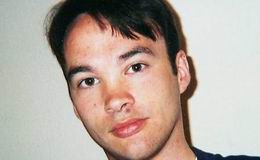 Magnus Gäfgen
Murderer · Germany · 2002
Magnus Gäfgen (born April 11, 1975 in Frankfurt am Main) was a German child mur…
1 victim
Magnus Gäfgen
Murderer · Germany · 2002
Magnus Gäfgen (born April 11, 1975 in Frankfurt am Main) was a German child mur…
1 victim
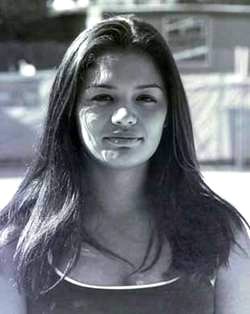 Katrina Sarkissian
Homicide · USA · 2001
Katrina Sarkissian was 17 at the time of the killing of Deanna Maran. Deanna Ma…
1 victim
Katrina Sarkissian
Homicide · USA · 2001
Katrina Sarkissian was 17 at the time of the killing of Deanna Maran. Deanna Ma…
1 victim
- Gender
- female
- Country
- USA
- Location
- Albany, Georgia, USA
- Date of birth
- 1961
- Age at first offence
- 24
- Characteristics
- former mental patient, fugitive, police officer
- Victim profile
- S eriously ill patients
- Method of murder
- Poisoning ( by injecting with a heart-stopping drug)
- Date(s) of murder
- August-December 1985
- Years active
- 1985
- Date of arrest
- March 13, 1986
- Status
-
Released
Found guilty but mentally ill on one count of aggravated assault; sentenced to a 17-year prison term on October 1, 1986; released on April 1, 2003
Background
Terri Rachals was a nurse in the Surgical Intensive Care Unit of the Phoebe Putney Memorial Hospital in Albany, Georgia. Investigators suspected her after an unusual increase in the number of cardiac arrests of patients in the intensive care unit during the latter part of 1985.
At her 1986 trial, Terri Rachals was found guilty but mentally ill on one count of aggravated assault out of twenty counts. A psychiatrist testified that she suffered from chronic depression, a hysteric personality, and a dissociative disorder that caused her to slip in “fugue states” during which she carried out purposeful activities but was not aware of her environment. She gave a taped confession to Georgia Bureau of Investigation agents, but she testified she did not remember injecting the patients and did not believe that she had done so.
The offence
Terri Rachals was accused of killing six patients by administering potassium chloride in lethal doses into patients’ intravenous apparatus. The prosecution also alleged aggravated assault charges arising from incidents involving nine patients. Post-mortem examinations blamed the six deaths on injections of potassium chloride.
Investigation
Administrators at Phoebe Putney Hospital in Albany, Georgia were alarmed by a sudden rash of cardiac arrests in the intensive care unit in November 1985. A review of hospital records showed six suspicious deaths and an equal number of near-misses since late October, and police were notified. Homicide investigators conducted a full-time investigation.
Victims and near-misses (as described)
The first apparent victim was 68-year-old Milton Lucas, pronounced dead on October 19, 1985. Minnie Houck, age 58, was next, dying on November 7. Three days later, 36-year-old Joe Irwin died, and Roger Parker, also 36, died on November 15. Andrew Daniels, age 73, died on November 24. He was followed two days later by three-year-old Norris Morgan.
Survivors included patients Sam Bentley, George Whiting, Frances Freeman, and Jack Stephens, each of whom had suffered one or more unexplained cardiac arrests in the ICU.
By New Year’s authorities were confident of six victims, but “there may have been more.” Investigators were suspicious of three or four other deaths dating back to mid-August. Lee Creech, a 26-year-old jail inmate, had died under treatment on December 21.
By March, investigators’ focus shifted to a 24-year-old nurse, Terri Eden Maples Rachals. On March 13, she reportedly confessed to injecting five patients with lethal doses of potassium chloride.
Arrest
Terri Rachals was indicted on six counts of murder and 20 counts of aggravated assault on March 25, 1986.
Following investigation by the Georgia Department of Human Resources and the Georgia Bureau of Investigation, Rachals was arrested for the various charges of murder and aggravated assault.
Trial
Rachals was tried after her March 25, 1986 indictment. At trial, she was indicted and tried on six counts of murder and twenty counts of aggravated assault, allegedly caused by administration of potassium chloride to patients in the intensive care unit.
The jury returned verdicts of “not guilty” on all murder charges and 19 counts alleging aggravated assault. Rachals was found “guilty but mentally ill” of aggravated assault, with intent to murder, of Sam Bentley, by injecting potassium chloride into a bag of fresh frozen plasma, which was then introduced into Bentley’s body while he was a patient in the ICU.
Confession and trial testimony
Rachals gave a taped statement to Georgia Bureau of Investigation agents. At trial, she testified she did not remember injecting the patients and did not believe that she had. In her recorded statement to GBI Agent Sweat, Rachals told him Mr. Bentley asked her to “let him die.” She said:
“He was ‘very, very ill also. His skin was sloughing off and he was just laying there suffering and he'd just look at you and just ask you to let him die. So when I went to pick up the fresh frozen plasma, I inserted 20 mil equivalents [of potassium chloride] and they hung it and he arrested, but he did not die.’”
Janice Thomas was the primary nurse for Bentley, but Rachals went to the lab and procured the fresh frozen plasma. Thomas did not remember which nurse hung the plasma. After Rachals saw Bentley’s “QRS started widening,” she notified Dr. Calhoun and assisted in stabilizing Bentley. The medical team successfully resuscitated Bentley.
Evidence used to support the conviction for aggravated assault (Bentley)
Dr. Douglas Calhoun was Bentley’s attending physician. At a meeting he received word that Bentley’s heart rhythm and blood pressure did not appear to be stable. He immediately went to his bedside and ordered fresh frozen plasma to be administered. Dr. Calhoun testified that while he was present Bentley exhibited:
“a very bizzare unusual set of things . . . a very spectacular, sudden set of irregular heartbeats and rapidly went into . . . cessation of heart function. . . .”
Nurse Rachals called Dr. Calhoun’s attention to Bentley’s EKG widening, which she described as “indicative of potassium intoxication.” The trial court found the evidence sufficient to authorize a rational trier of fact to find Rachals guilty of aggravated assault beyond a reasonable doubt.
Psychiatrist-patient privilege dispute (appeal issue)
A hearing was held to determine the voluntariness of a statement Rachals made to the investigating GBI agents. Dr. Turner was allowed to testify that when he spoke with Rachals shortly after her confrontation by GBI agents, Rachals appeared able to tell right from wrong. Rachals contended this testimony violated the psychiatrist-patient privilege established by OCGA 24-9-21.
The majority held that no psychiatrist/patient relationship was created because she was not seeking psychiatric care in the usual sense and “no real treatment was given or contemplated.” The record showed that after her statement to the GBI agents, Rachals asked the head nurse to call Dr. Calhoun. She remarked that she would kill herself if she had to go to jail. Dr. Calhoun replied that they would try to get her some help. Dr. Turner was summoned, and after talking with her for a few minutes, asked if she would consent to a voluntary admission into the psychiatric ward, which she readily assented to. She remained in the ward only until the following morning. Upon release in the custody of the police, she never again sought services of Dr. Turner.
Statistical probability evidence (appeal issue)
The trial included testimony by Dr. Adelle Franks, an epidemiologist from the U.S. Center for Disease Control on loan to the Georgia Department of Human Resources. Dr. Franks examined hospital records for the entire year prior to November 1985. She reported that in three months there were no cardiac arrests, and in two months there were four cardiac arrests in each month. She stated that the hospital should have between zero and four cardiac arrests in a normal month.
Dr. Franks testified that in November 1985, eleven cardiac arrests occurred on the 3:00 o’clock to 11:00 o’clock shift. She stated the probability of this occurring “by chance alone is less than one in a trillion.” She also stated that in November, five cardiac arrests had occurred in one day and one patient had a total of eight cardiac arrests in that month. She listed all cardiac arrest patients for the period investigated and the primary nurse on duty with that patient.
Rachals was the primary nurse for 11 cardiac arrest patients in the month of November. Dr. Franks charted 24 nurses for that month and calculated a “rate ratio.” She testified that most nurses had a rate ratio around one, while the rate ratio for Rachals was “26.6,” meaning it was more likely a cardiac arrest would occur while she was on duty than when she was not on duty. She also testified:
“The ‘rate ratio’ show infinitely large and unmeasurable [sic] because all of the cardiac arrests that occurred on the 3:00 o'clock to 11:00 o'clock shift occurred while she was on duty.”
The dissenting view challenged the majority on the basis that the statistical analysis should be treated with caution and discussed privilege issues, though it did not alter the jury’s verdict described.
Trial proceedings mentioned in the record
At trial, in September, the prosecution contended that Rachals “felt like a second-class citizen all her life,” desirous of “power and control” that she ultimately sought “on the dark side of the street,” by murdering her patients. Reference was made to her confessions. Terri Rachals testified on September 23, recanting her statements and denying any memory of the attacks.
On September 26, jurors returned a verdict of guilty but mentally ill on one count of aggravated assault and acquitted Rachals on all other charges.
Sentencing
On October 1, 1986, Terri Rachals was sentenced to a 17-year prison term. The record also reflected three years of probation on release.
Appeals
The case name was Rachals v. The State, 74605, (184 Ga. App. 420) (361 SE2d 671) (1987), decided September 10, 1987, with rehearing denied October 2, 1987, and cert. applied for.
The appellate opinion addressed:
- Admissibility of Dr. Turner’s testimony regarding the voluntariness hearing and psychiatrist-patient privilege under OCGA 24-9-21.
- The taped statement’s admissibility against a hearsay objection.
- Admissibility of epidemiological testimony and statistical probability computations.
- Sufficiency of the evidence for aggravated assault as to Sam Bentley.
- Other enumerations of error being without merit.
Outcome
Terri Rachals was found “guilty but mentally ill” on one count of aggravated assault, with intent to murder, involving Sam Bentley by injecting potassium chloride into a bag of fresh frozen plasma introduced into his body while he was in the ICU.
Aftermath
Terri Rachals served her 17-year sentence and was released from the Savannah Women’s Transitional Center on April 1, 2003.
Other details
The record mentioned that Rachals was a nurse employed in the Surgical Intensive Care Unit at Phoebe Putney Memorial Hospital. It also mentioned that Georgia officials suspected 20 such acts. The dispute in the dissent included that Dr. Turner diagnosed Rachals as “suicidal and very, very depressed,” and the dissent argued that a psychiatrist-patient relationship existed and that communications privilege should apply. The dissent also included an account that Dr. Turner placed Rachals in a psychiatric ward under his care, released her after he concluded she was no longer a threat to herself, and that the record was “silent” as to what treatment or medication Dr. Turner prescribed. The dissent stated that Judge Carley, Judge Sognier, and Judge Pope joined in the dissent.
A quote attributed to the prosecutor Hobart Hind called her the “murderess of the century.” The record also included mention that she was described as a “rare female serial killer,” and that she was released from the Savannah Women’s Transitional Center after completing her 17-year sentence in April 2003.

Spotted an error, or have more information about this case?