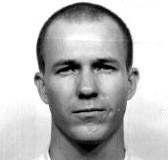
Johnny Dean Pyles
Murderer Ervil LeBaron
Murderer · USA · 1972
Ervil Morrell LeBaron (1925 to August 16, 1981) was the leader of a polygamous…
35 victims
Ervil LeBaron
Murderer · USA · 1972
Ervil Morrell LeBaron (1925 to August 16, 1981) was the leader of a polygamous…
35 victims
 Brian Kevin Rosenfeld
Murderer · USA · 1985
Brian Kevin Rosenfeld Brian Kevin Rosenfeld was sentenced to three concurrent l…
23 victims
Brian Kevin Rosenfeld
Murderer · USA · 1985
Brian Kevin Rosenfeld Brian Kevin Rosenfeld was sentenced to three concurrent l…
23 victims
 Marvin Gray
Murderer · USA · 1975
Marvin Gray was convicted killer who claimed responsibility for 23 slayings and…
23 victims
Marvin Gray
Murderer · USA · 1975
Marvin Gray was convicted killer who claimed responsibility for 23 slayings and…
23 victims
 Yahweh ben Yahweh
Murderer · USA · 1980
Yahweh ben Yahweh was born and legally named Hulon Mitchell Jr. (October 27, 19…
23 victims
Yahweh ben Yahweh
Murderer · USA · 1980
Yahweh ben Yahweh was born and legally named Hulon Mitchell Jr. (October 27, 19…
23 victims
 Russell Ellwood
Murderer · USA · 1991
Russell Ellwood was a former taxi driver. Authorities suspected him of killing…
20 victims
Russell Ellwood
Murderer · USA · 1991
Russell Ellwood was a former taxi driver. Authorities suspected him of killing…
20 victims
 Kathrine Dufresne
Murderer · Canada · 2011
Kathrine Dufresne was the mother of seven-year-old Sophie Fitzpatrick, her adop…
1 victim
Kathrine Dufresne
Murderer · Canada · 2011
Kathrine Dufresne was the mother of seven-year-old Sophie Fitzpatrick, her adop…
1 victim
 Stephen Farrow
Murderer · United Kingdom · 2012
Stephen Farrow (born c. 1964) was an English vagrant who served a whole-life ta…
2 victims
Stephen Farrow
Murderer · United Kingdom · 2012
Stephen Farrow (born c. 1964) was an English vagrant who served a whole-life ta…
2 victims
 John Clayton Smith
Murderer · USA · 1997
John Clayton Smith was executed in Missouri by lethal injection on October 29,…
2 victims
John Clayton Smith
Murderer · USA · 1997
John Clayton Smith was executed in Missouri by lethal injection on October 29,…
2 victims
 Erik Hollie
Murderer · USA · 2009
Erik Hollie was sentenced to death on March 16, 2010, for a capital murder in W…
1 victim
Erik Hollie
Murderer · USA · 2009
Erik Hollie was sentenced to death on March 16, 2010, for a capital murder in W…
1 victim
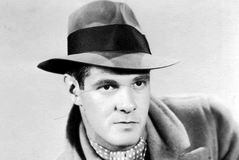 Paul Michael Kelly
Murderer · USA · 1927
Paul Michael Kelly (August 9, 1899 – November 6, 1956) was an American child ac…
1 victim
Paul Michael Kelly
Murderer · USA · 1927
Paul Michael Kelly (August 9, 1899 – November 6, 1956) was an American child ac…
1 victim
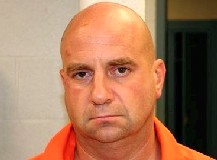 Steven Hayes
Murderer · USA · 2007
Steven Hayes Steven Hayes was sentenced to death in Connecticut on December 2,…
3 victims
Steven Hayes
Murderer · USA · 2007
Steven Hayes Steven Hayes was sentenced to death in Connecticut on December 2,…
3 victims
- Gender
- male
- Country
- USA
- Location
- Dallas County, Texas, USA
- Date of birth
- December 30, 1957
- Age at first offence
- 25
- Characteristics
- robbery, to avoid arrest
- Victim profile
- Ray Edward Kovar, 34 (Dallas County Sheriff's Deputy)
- Method of murder
- Shooting (.38-caliber revolver)
- Date(s) of murder
- June 20, 1982
- Years active
- 1982
- Date of arrest
- Same day
- Status
-
Executed
Executed by lethal injection in Texas on June 15, 1998
Case information
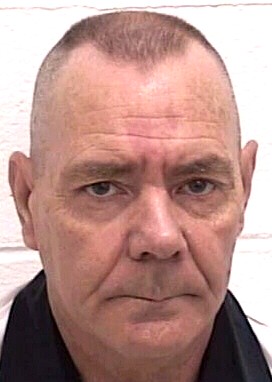
Johnny Dean Pyles (death row inmate; offender number “#724”) was executed by lethal injection in Texas on June 15, 1998.
Last statement
Johnny Dean Pyles delivered the following last statement: “I want to tell you folks there, of a…I have a love in my heart for you. I hope you don’t look for satisfaction or comfort or peace in my execution. Jesus Christ is my Lord and Savior and I want him to be yours. I’m sorry for the pain and heartache I’ve caused your family. Too many years I’ve caused all my family problems and heartache. I’m sorry. I wanted to let you know that the Lord Jesus is my life and I just want to go. I’m gonna fall asleep and I’ll be in his presence shortly. I got reason to rejoice and I pray to see all of you there someday.”
Timeline
- June 20, 1982 — Officer Charles Mitchell noticed a beige Jeep in the parking lot of a small convenience store in the city of Sunnyvale while on routine patrol at 12:50 a.m.; Officer Ray Edward Kovar was fatally shot; Johnny Dean Pyles was captured about 3 hours later and about 2 miles away after being ordered to halt and placed in custody.
- October 14, 1982 — Pyles was convicted of capital murder after a seven-week jury trial.
- October 15, 1982 — After a separate punishment hearing, the jury answered three special issues presented under the version of article 37.071 of the Texas Code of Criminal Procedure in effect at the time of Pyles’s trial in the affirmative.
- June 1, 1988 — The Texas Court of Criminal Appeals affirmed Pyles’s conviction and sentence.
- December 5, 1990 — Pyles filed an application for writ of habeas corpus in state district court.
- July 15, 1991 — The state district court entered an order adopting proposed findings of fact and conclusions of law and recommending denial of Pyles’s application.
- July 19, 1991 — The Texas Court of Criminal Appeals accepted the recommendation and denied Pyles’s application.
- July 22, 1991 — Pyles filed a petition for writ of habeas corpus in federal district court.
- January 24–25, 1996 — An evidentiary hearing was held before a magistrate judge.
- January 16, 1997 — The magistrate judge entered findings and a recommendation that the petition be denied.
- June 16, 1997 — After de novo review, the district court adopted the magistrate’s recommendation and denied Pyles’s petition.
- March 5, 1998 — The case was before the United States Court of Appeals for the Fifth Circuit (appeal from the United States District Court for the Northern District of Texas).
- June 15, 1998 — Execution by lethal injection in Texas.
Background
Pyles was on parole following a second prison term for burglary. He was casing a closed grocery store in the early morning hours of June 20, 1982 when Officer Ray Edward Kovar confronted him. Pyles said he shot Kovar in self defense.
Kovar was an Ennis native and an Air Force veteran, and had been on the force for 8 years.
The offence
At approximately 1:00 a.m. on June 20, 1982, Officer Charles Mitchell, a deputy sheriff with the Dallas County Sheriff’s Department, and other officers responded after a motorist reported seeing someone in the darkened store. Another officer on patrol spotted an empty car outside the store in a rural area east of Dallas.
Mitchell had noticed a beige Jeep in the parking lot of a small convenience store in the city of Sunnyvale while on routine patrol at 12:50 a.m. The store was closed. Mitchell used his patrol car’s spotlight to examine the vehicle and the store as he slowly drove past. Mitchell did not see anyone, but a couple in an automobile flashed their high beams as he drove away, and Mitchell stopped. After a conversation with the couple, Mitchell called for backup and indicated that a white male suspected of criminal activity was in the area of the convenience store. Mitchell then parked behind the Jeep with his high beams and spotlight on the vehicle. Mitchell exited his patrol car and, using a flashlight, inspected all four sides of the convenience store building in search of the suspect. Mitchell did not see anyone and concluded that the store was secure.
Officers Ray Edward Kovar and Dwaine Crain responded to Mitchell’s request for backup. They approached with their emergency lights and siren on, but turned them off when they got close. Mitchell heard the backup unit’s siren before the officers turned them off.
After the three officers again secured the building, they began a search of the area. Mitchell saw Kovar walk around the east side of the building, with a flashlight in his left hand and his pistol in his right hand. Crain took a shotgun and went to the west side of the building to search there. Mitchell and Crain both heard Kovar tell someone, “Halt, get up.” Then a series of gunshots were fired. Mitchell ran to help Kovar and found him lying face down. Kovar had suffered a bullet wound to the chest from which he later died.
Crain heard Mitchell shout that Kovar was down and called in a report to that effect on his radio to his dispatcher before joining Mitchell. Crain noticed that Kovar’s flashlight was turned on. Two police officers unsuccessfully attempted to resuscitate Kovar. Several others searched the scene of the shooting but were unable to locate a suspect.
Pyles later testified that he was not aware at the time of the shooting that Kovar was a police officer and claimed he acted in self-defense. Pyles testified he fired because he saw a flashlight and a gun pointed at him and heard a voice telling him to halt.
Pyles’s statement to officers indicated that he had shot Officer Kovar. Pyles signed a statement admitting that he had shot Officer Kovar with his left hand.
Investigation and arrest
Richard Hart, a reserve deputy sheriff called out to assist in the search for the person who killed Officer Kovar, set up surveillance in an unmarked car almost two miles from the scene of the shooting. Around 4:00 a.m., Hart saw a white male, later identified as Johnny Dean Pyles, walking toward him on Collins Road. Hart radioed a description of Pyles to the dispatcher and then left the car, pointing his flashlight and pistol at Pyles and ordering him to halt. At first, Pyles turned around and took several steps back the way he came. Hart again ordered Pyles to stop, saying, “One more step and that's it.” Pyles turned around and raised his hands.
Pyles told Hart that he was not armed. Hart ordered Pyles to lie face down on the road. Hart noticed that Pyles’s right hand was swollen and that he was bloody and covered with mud. Hart handcuffed Pyles and placed him in the back seat of the car lying face down.
Hart recited Pyles’s Miranda warnings on the way to the Sunnyvale Substation, and Pyles indicated that he understood his rights. The magistrate again read Pyles his rights and advised him that he was being charged with capital murder, a crime punishable by life imprisonment or death. The magistrate asked Pyles if he was in pain and if he wanted to go to the hospital. Pyles did not ask for medical attention and did not complain of being in pain. After a paramedic bandaged and elevated Pyles’s arm, the magistrate asked Pyles if he was up to talking to the police. Pyles responded affirmatively and the magistrate left for a brief period.
The magistrate returned as Pyles was preparing to sign a statement admitting that he had shot Officer Kovar. The magistrate informed Pyles that he did not have to sign the statement, and, according to the magistrate, Pyles replied, “I might as well, Judge. I did it.” Pyles then signed the statement with his left hand.
Afterward, Sergeant Larry Williams of the Dallas County Sheriff’s Office interrogated Pyles, and a second statement was prepared based on the conversation between Pyles and Williams; Pyles signed that statement.
Evidence presented at trial
At Pyles’s capital murder trial, the medical examiner testified that the cause of Officer Kovar’s death was a gunshot wound to his chest. A .38 caliber bullet was removed from Kovar’s body.
An officer explained that a .357 magnum pistol was found where Officer Kovar fell. The weapon contained six spent casings. A .38 caliber pistol, found twenty-seven feet from Kovar, contained four spent casings and one empty chamber. Both weapons had been completely emptied by firing.
Trial
Pyles was convicted of capital murder after a seven-week jury trial beginning before October 14, 1982; the conviction occurred on October 14, 1982.
At trial, Pyles testified on his own behalf. He explained he was not aware at the time of the shooting that Kovar was a police officer and claimed self-defense based on seeing a flashlight and a gun pointed at him and hearing a voice telling him to halt.
A later punishment hearing occurred on October 15, 1982. The jury answered three special issues presented under the version of article 37.071 of the Texas Code of Criminal Procedure in effect at the time of Pyles’s trial in the affirmative. The state district court sentenced Pyles to death.
Kovar’s background included that he was an Air Force veteran and had been on the force for 8 years.
Sentencing
After the jury answered the three special issues in the affirmative on October 15, 1982, the state district court sentenced Pyles to death.
Appeals and post-conviction proceedings
Texas Court of Criminal Appeals
The Texas Court of Criminal Appeals affirmed Pyles’s conviction and sentence on June 1, 1988.
Pyles filed an application for writ of habeas corpus in state district court on December 5, 1990. On July 15, 1991, the district court entered an order adopting proposed findings of fact and conclusions of law set forth in the state’s response and recommending denial of the application. On July 19, 1991, the Texas Court of Criminal Appeals accepted the recommendation and denied Pyles’s application.
Federal habeas corpus proceedings (United States Court of Appeals for the Fifth Circuit)
Pyles filed a petition for writ of habeas corpus in federal district court on July 22, 1991. An evidentiary hearing was held before a magistrate judge on January 24 and 25, 1996. On January 16, 1997, the magistrate judge entered findings and a recommendation that the petition be denied. After de novo review, the district court adopted the recommendation and denied Pyles’s petition on June 16, 1997. Pyles appealed to the United States Court of Appeals for the Fifth Circuit, and the judgment was affirmed.
The Fifth Circuit case was styled: “Johnny Dean PYLES, Petitioner-appellant, v. Gary L. Johnson, Director, Texas Department of Criminal Justice, Institutional Division, Respondent-appellee.”
Pyles appealed denial of the petition for a writ of habeas corpus, and the Fifth Circuit stated it affirmed the district court.
Issues raised in the federal appeal
Pyles contended the district court erred in denying habeas relief because:
- his conviction was based in part upon extrinsic evidence obtained as a result of a juror’s unauthorized visit to the crime scene,
- the state knowingly presented false testimony at his trial, and
- the state withheld exculpatory evidence.
The Fifth Circuit addressed each claim and concluded that habeas relief was properly denied.
A. Juror misconduct claim
Pyles asserted juror misconduct because one juror, Geraldine Sarratt, made an unauthorized visit to the crime scene. Pyles presented two affidavits from Sarratt. Both affidavits stated that during the guilt/innocence phase of Pyles’s trial, Sarratt made an unauthorized visit to the scene of the shooting. The second affidavit stated she made the visit during daylight hours. The affidavits also stated that based on evidence presented at trial (including photographs of the crime scene taken during day and night), Sarratt “was not convinced that Johnny was guilty of capital murder.” The affidavits described how Sarratt perceived the actual crime scene in person to differ from the trial photographs.
The first affidavit stated: “Because I had questions in my mind, I went to the scene of the crime. The lot was much smaller than I pictured from the trial. Although photos were in evidence with officers testifying about the scene, pictures never tell the whole story. The visit to the scene of the crime helped me decide that if there had been a police car and officers in the lot, that anyone hiding in the lot would have known a police officer was present.”
The second affidavit stated: “During the trial, while I was sitting on the jury of Mr. Pyles' capital murder trial and prior to his conviction, I went to the exact scene of the crime. I went to the scene because the photographs and diagrams presented at trial were inadequate for me to understand the dimensions of the area. Most, if not all, of the photographs introduced during the trial were taken of the building and the lot at night. I went to the scene during the day light hours. At that time, I was able to clearly see the dimensions of the area where the crime occurred. The dimensions of the scene in person were very different than the photographs and diagrams shown to the jury during trial. Specifically, the lot was much smaller than the photographs and diagrams indicated at trial. Viewing the area in person, I was able to see that Mr. Pyles and the victim were much closer in proximity to each [other] than any of the photographs and diagrams shown to the jury had indicated. My visit to the scene of the crime surprised me because it looked so much different to me than the photographs and diagrams in evidence. It was only after viewing the crime scene for myself, in person, that I decided that if there had been a police car and police officers in the lot, that anyone hiding in the lot would have known a police officer was present.”
The Fifth Circuit held that Sarratt’s unauthorized visit constituted constitutional error but concluded it was not entitled to habeas relief because it did not have a substantial and injurious effect or influence in determining the jury’s verdict.
In discussing evidence relevant to whether Pyles knew Kovar was a peace officer, the Fifth Circuit stated the physical characteristics evidence was admitted at trial including nineteen photographs (including daytime and nighttime photographs) and a detailed diagram of the lot with the area dimensions. It also referenced other evidence, including Pyles’s first confession that included: “I didn't see the person I shot, but I knew it had to be a police officer.”
The Fifth Circuit also described testimony at trial about lights and a flashlight inspection and about police sirens.
B. Knowing presentation of perjured testimony claim
Pyles asserted that the prosecution knowingly presented false testimony. During trial, Gary LaCour and Robert Banschenbach, former cellmates of Pyles, testified for the state.
LaCour testified that Pyles told him that on the night of the shooting he was trying to burglarize a store and that he saw a police car pull up. Banschenbach testified that he asked Pyles “did you know that it was a copy [sic] you were shooting at?” and that Pyles responded “Yeah, I knew who he was.”
During cross-examination, the state offered evidence that phrases, “Kill All Whie [sic] Pig Ploice [sic]” and “Kill Kill Judge DA,” were scratched into the walls of Pyles’s jail cell. Pyles claimed the phrases were on the cell wall before his arrival. LaCour testified as a rebuttal witness that he saw Pyles scratching an “L” into one of the phrases.
In federal habeas proceedings, the magistrate judge concluded LaCour and Banschenbach testified falsely based on their invocation of their Fifth Amendment privilege against self-incrimination but found he was unable to conclude the prosecutors knew the witnesses were lying. The district court adopted that recommendation.
The Fifth Circuit accepted factual determinations unless clearly erroneous and concluded it could not say the magistrate judge clearly erred in concluding the prosecutors did not knowingly present false testimony.
Winfield Scott, one of the prosecutors involved in Pyles’s trial, testified at the evidentiary hearing that he formed a “suspicion” that the phrases were “probably written by some non-white semi-literate” because some phrases contained misspellings and had racial overtones. Scott also testified: “[T]o this day I don't know whether [LaCour's] testimony is true or false. My only concern was how is it going to impact the jury. I certainly had no, you know, no way of knowing whether his testimony to this day is true or false.”
The Fifth Circuit also addressed LaCour’s affidavit statement that his “entire testimony was untrue and the state knew it” and explained it was not considered because it was hearsay, and it also addressed Pyles’s arguments regarding the invocation of Fifth Amendment privilege by Banschenbach.
C. Withholding exculpatory evidence claim
Pyles contended the government withheld exculpatory evidence regarding LaCour and Banschenbach’s history as informants and regarding assistance the state provided LaCour in exchange for testimony.
The Fifth Circuit explained that suppression of evidence favorable to the accused violates due process if material to guilt or punishment, including impeachment evidence. It analyzed Pyles’s subclaims.
First, Pyles claimed the state failed to disclose that prosecutors promised LaCour they would recommend two-year concurrent sentences for his pending burglary convictions. LaCour testified at trial about the prosecution agreeing to request concurrent sentences with federal time while revoking federal probation, and he indicated hope for a deal that would lead to parole from state prison after finishing the federal sentence, though he testified there was no specific promise. Several months after trial, Gerald Banks recommended concurrent two-year sentences on LaCour’s pending burglary charges. At the evidentiary hearing, Banks testified he had not withheld any portion of the deal negotiated with LaCour in exchange for testimony.
The magistrate judge concluded the state had not withheld information about promises made prior to trial; the Fifth Circuit found no clear error. It also reasoned that even if evidence about such a promise had been withheld, it would have had at best a marginal negative impact on LaCour’s credibility.
During cross-examination, LaCour indicated the self-interest behind his testimony: “Q: Well, you saw a chance, after you talked to Johnny Pyles and learned that he was tried for capital murder of a police officer, you saw a chance to help yourself out with your problems with the law? A: Yes, sir. ... Q: Your [sic] trying to help yourself out in your own problems, aren't you? A: Yes, sir. Yeah, no question.”
Second, Pyles claimed the state withheld evidence of past informant activities by Banschenbach and LaCour. Banks testified he did not disclose information about informant history because he did not consider it exculpatory. The Fifth Circuit concluded any incremental impeachment value from disclosure of additional informant activities did not raise a reasonable probability of a different outcome, citing the substantial body of impeachment evidence already presented at trial.
The Fifth Circuit summarized that LaCour testified he was on unadjudicated probation for burglary, incarcerated for two pending burglary charges for which he intended to plead guilty, and had a conviction for bank larceny. LaCour also testified he was a heroin addict and worked as an informant while on federal probation. It also noted LaCour acknowledged his testimony was motivated in part, if not entirely, by the prospect of help from prosecutors in obtaining a lenient sentence on burglary charges.
For Banschenbach, the Fifth Circuit summarized his prior convictions (robbery, assault, burglary, grand theft, and passing bad checks) and testimony that he previously worked as an informant in a county jail. It also noted the prosecutor acknowledged he had been “[b]een rather busy in [his] life of crime.”
Outcome
The United States Court of Appeals for the Fifth Circuit affirmed the judgment of the district court denying Pyles’s petition for a writ of habeas corpus. Pyles was executed by lethal injection in Texas on June 15, 1998.
Spotted an error, or have more information about this case?