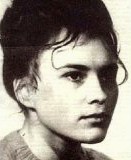
Olga Hepnarová
Mass murderer Priscilla Ford
Mass murderer · USA · 1980
Priscilla Ford was sentenced to death for killing six people and injuring 23 mo…
6 victims
Priscilla Ford
Mass murderer · USA · 1980
Priscilla Ford was sentenced to death for killing six people and injuring 23 mo…
6 victims
 Nasra al-Enezi
Mass murderer · Kuwait · 2009
Nasra Yussef Mohammad al-Enezi, known as Nasra al-Enezi, was the 23-year-old ex…
58 victims
Nasra al-Enezi
Mass murderer · Kuwait · 2009
Nasra Yussef Mohammad al-Enezi, known as Nasra al-Enezi, was the 23-year-old ex…
58 victims
 Francisco Paula Gonzales
Mass murderer · USA · 1964
Francisco Paula Gonzales was a passenger on Pacific Air Lines Flight 773. Gonza…
44 victims
Francisco Paula Gonzales
Mass murderer · USA · 1964
Francisco Paula Gonzales was a passenger on Pacific Air Lines Flight 773. Gonza…
44 victims
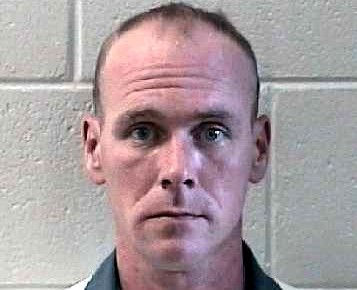 Joseph Martin Barnes
Murderer · USA · 1992
February 12, 1992 — Brown bought a shotgun and Barnes bought a Davis Industries…
1 victim
Joseph Martin Barnes
Murderer · USA · 1992
February 12, 1992 — Brown bought a shotgun and Barnes bought a Davis Industries…
1 victim
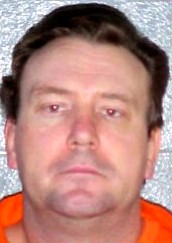 David Hyde
Murderer · USA · 1991
David Hyde was convicted in connection with the murders of John Lee and Ginger…
2 victims
David Hyde
Murderer · USA · 1991
David Hyde was convicted in connection with the murders of John Lee and Ginger…
2 victims
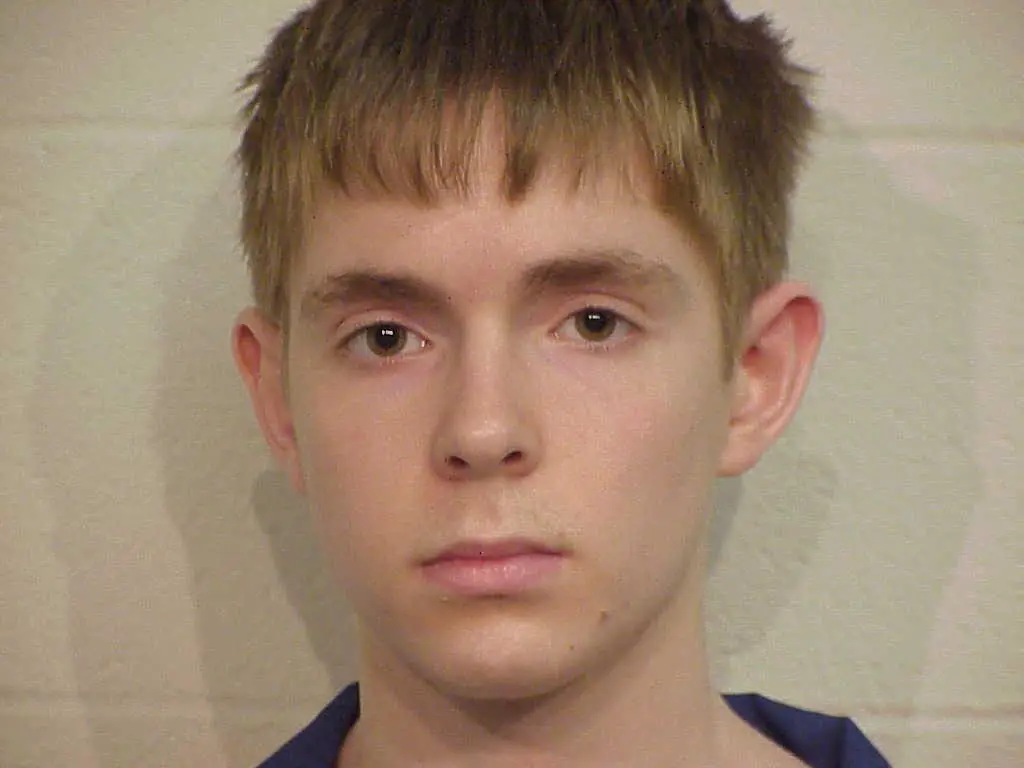 Christopher Dankovich
Homicide · USA · 2005
Christopher Dankovich — defendant; 15-year-old Rochester Hills teenager when he…
1 victim
Christopher Dankovich
Homicide · USA · 2005
Christopher Dankovich — defendant; 15-year-old Rochester Hills teenager when he…
1 victim
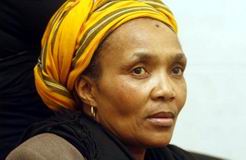 Thandi Maqubela
Murderer · South Africa · 2009
Thandi Maqubela was “humiliated and outraged” by her husband’s infidelities. Th…
1 victim
Thandi Maqubela
Murderer · South Africa · 2009
Thandi Maqubela was “humiliated and outraged” by her husband’s infidelities. Th…
1 victim
 Jessica McCord
Murderer · USA · 2002
Jessica McCord and her ex-husband Alan Bates had a bitter divorce and an even m…
2 victims
Jessica McCord
Murderer · USA · 2002
Jessica McCord and her ex-husband Alan Bates had a bitter divorce and an even m…
2 victims
 Troy Albert Kunkle
Murderer · USA · 1984
Troy Albert Kunkle was convicted of capital murder and sentenced to death for t…
1 victim
Troy Albert Kunkle
Murderer · USA · 1984
Troy Albert Kunkle was convicted of capital murder and sentenced to death for t…
1 victim
- Gender
- female
- Country
- Czechoslovakia
- Location
- Prague, Czechoslovakia
- Date of birth
- June 30, 1951
- Age at first offence
- 22
- Characteristics
- revenge, mentally ill, spree killer
- Victim profile
- People waiting for a tram
- Method of murder
- S he drove a truck into a group of about 25 people waiting for a tram
- Date(s) of murder
- July 10, 1973
- Years active
- 1973
- Date of arrest
- Same day
- Status
-
Executed
Executed by hanging in the Pankrác Prison in Prague on March 12, 1975
Timeline
- June 30, 1951 — Olga Hepnarová was born in Prague.
- 1964 — She attempted suicide by swallowing medication and spent a year in a psychiatric ward in Opařany.
- July 10, 1973 — She drove a truck into a group of about 25 people waiting for a tram in Prague 7.
- April 6, 1974 — She was sentenced for murder to death by the City Court.
- March 3, 1975 — Gustáv Husák refused her mother's plea for mercy and her execution was fixed for March 12.
- March 12, 1975 — She was executed by hanging in the Pankrác Prison in Prague.
Background
Olga Hepnarová (June 30, 1951 – March 12, 1975) was a Czech mass murderer. She was born on June 30, 1951 in Prague. She was the daughter of a bank clerk and her mother was a dentist.
She did well at school but later found it hard to communicate with her parents and classmates. Later, she developed psychiatric problems. In 1964, she attempted suicide by swallowing medication and spent a year in a psychiatric ward in Opařany.
After her teens passed without incident, she became obsessed by feelings of hatred for both her family and society as a whole. She was reported to have heard voices, according to several sources. She later worked in various places but was fired shortly after being hired. She ended up as a truck driver.
The offence
On July 10, 1973, Olga Hepnarová drove a truck into a group of about 25 people waiting for a tram in Prague 7. The street was at the time named "Defenders of Peace" and is later described as renamed after Milada Horáková.
Three victims died immediately, three more died later the same day, and two more died in a few days. All five of those later described as dying had ages between 60 and 79. Six victims were badly injured and six were lightly injured.
Before the murder, she sent a letter to two newspapers, Svobodné slovo and Mladý svět, explaining her action as revenge for all the hatred against her by her family and the world. Due to the slowness of the postal system, the letter was received two days after the murder.
In the letter, she wrote:
"Ladies and gentlemen, it is not just a letter, it is my declaration. I am writing it as I do want you to appreciate what I am going to do. I do not want you to doubt about my sanity... I am going to steal a bus today and run into a crowd of people at full speed. It will happen somewhere in Prague 7. I intend to kill people. I know I will be on trial and punished"
She also wrote:
"It would be easy to leave this world as an unknown self-murderer. The society is too pushy and it is too difficult to judge... Here is my judgment: I, Olga Hepnarová, the victim of your beastliness, sentence you to death by running over."
She also expressed her intent in other quoted statements, including:
".. I am a loner. A destroyed man. A man destroyed by people... I have a choice - to kill myself or to kill others. I choose - TO REVENGE MY HATERS. It would be too easy to leave this world as an unknown suicide. The society is too indifferent, rightly so. My verdict is: I, Olga Hepnarová, the victim of your bestiality, sentence you to death penalty."
She had planned the revenge against society in her head for a long time and included ideas of derailing a train or an explosion.
During the investigation, she confirmed her intention was to kill as many people as possible and expressed no regret. Psychology experts found her fully aware of her actions. She planned her actions by considering a slope leading to the stop, allowing her to gain speed for the maximum death toll. The collision was described as her second attempt, because she felt there were not enough people on her first run.
Investigation
The investigation included her confirmation that it had been her intention to kill as many people as possible. It also included the view that she expressed no regret.
Arrest
She was arrested and told detectives that it was her intention was to kill as many people as possible. She expressed no regret for her actions.
In her statement, she said:
"There were no trams, no cars, nothing was in my way. I said to myself that was the right time to do it. I drove on the pavement, went on and ran into the crowd of people knocking them down."
Trial
She came to trial in 1974 at the Municipal court in Prague. She was represented by an experienced lawyer but refused to cooperate with him, insisting on her sanity. On remand, she was examined by prison psychologists who were not able to diagnose her as legally insane.
During trial proceedings, she tried to make a speech accusing society, including:
"If the society destroys individuals, individuals can destroy the society."
She also said:
"I wanted to take my revenge on the society, including my family, because they are my enemy"
And:
"Knowing that I managed to do it, I felt a kind of release and satisfaction."
On April 6, 1974, she was found guilty of all eight murders and sentenced to death by hanging. She was sentenced for murder to death by the City Court.
Her mother initiated an appeal to the Czech Supreme Court. The appeal was rejected and the sentence confirmed. A judicial review by the Supreme Court of the Czechoslovak Socialistic Republic upheld the lower court’s ruling. The Supreme Court requalified the sentence to public endangerement with the same punishment upheld. After several psychiatric examinations, she was deemed criminally responsible for her actions.
Sentencing
After her conviction, the Prime minister Lubomír Štrougal refused the request for pardon. Her execution was fixed for March 12, 1975.
Appeals
Her mother's plea for mercy was refused by Gustáv Husák, the President of the Czechoslovak Socialistic Republic.
Outcome
She was executed by hanging in the Pankrác Prison in Prague on March 12, 1975. She was described as the last woman executed in Czechoslovakia. She was also described as one of the last women executed by the use of short-drop hanging. She was 23 years, 8 months and 10 days old at the time of execution.
Aftermath
An account attributed to the executioner, recorded by writer Bohumil Hrabal, said that just before the execution Olga Hepnarová collapsed and had to be dragged to the gallows. The executioner later admitted he had to quit his job, saying he felt she made his job disgusting and that she fought, threw up and defecated herself prior to hanging. The reliability of this tale was described as being put in question by the author of a detailed website about Hepnarová.
In the execution room, she was placed on a 32 inch square metal trap doors. A simple noose was tied around her neck, placed around an iron bar projecting from the wall above her. When the hangman pulled the lever, she dropped just a few inches and strangled to death.
In prison before the execution, she told reporters:
"I am not affraid of the death sentence, I do accept it"
Spotted an error, or have more information about this case?