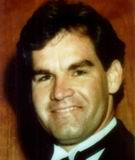
Charles Stuart
Murderer Brian Kevin Rosenfeld
Murderer · USA · 1985
Brian Kevin Rosenfeld Brian Kevin Rosenfeld was sentenced to three concurrent l…
23 victims
Brian Kevin Rosenfeld
Murderer · USA · 1985
Brian Kevin Rosenfeld Brian Kevin Rosenfeld was sentenced to three concurrent l…
23 victims
 Yahweh ben Yahweh
Murderer · USA · 1980
Yahweh ben Yahweh was born and legally named Hulon Mitchell Jr. (October 27, 19…
23 victims
Yahweh ben Yahweh
Murderer · USA · 1980
Yahweh ben Yahweh was born and legally named Hulon Mitchell Jr. (October 27, 19…
23 victims
 Russell Ellwood
Murderer · USA · 1991
Russell Ellwood was a former taxi driver. Authorities suspected him of killing…
20 victims
Russell Ellwood
Murderer · USA · 1991
Russell Ellwood was a former taxi driver. Authorities suspected him of killing…
20 victims
 Robert Martines Perez
Murderer · USA · 1994
Name: Robert Martines Perez · Other name used in proceedings: Robert Martinez P…
15 victims
Robert Martines Perez
Murderer · USA · 1994
Name: Robert Martines Perez · Other name used in proceedings: Robert Martinez P…
15 victims
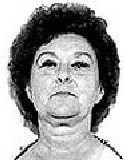 Dorothy Matajke
Murderer · USA · 1985
Dorothy Matajke was a resident of Nevada and Iowa before being in Little Rock,…
3 victims
Dorothy Matajke
Murderer · USA · 1985
Dorothy Matajke was a resident of Nevada and Iowa before being in Little Rock,…
3 victims
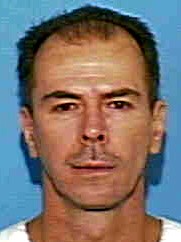 William Dean Wickline
Murderer · USA · 1979
William D. Wickline was executed by lethal injection on March 30, 2004, at the…
3 victims
William Dean Wickline
Murderer · USA · 1979
William D. Wickline was executed by lethal injection on March 30, 2004, at the…
3 victims
 Bernard Bolender
Murderer · USA · 1980
January 7, 1980 — Bernard Bolender and two codefendants, Paul Thompson and Jose…
4 victims
Bernard Bolender
Murderer · USA · 1980
January 7, 1980 — Bernard Bolender and two codefendants, Paul Thompson and Jose…
4 victims
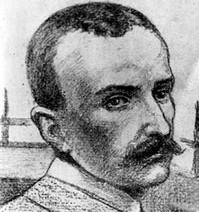 John Alexander Dickman
Murderer · United Kingdom · 1910
John Alexander Dickman was convicted of the murder of John Innes Nisbet. John I…
1 victim
John Alexander Dickman
Murderer · United Kingdom · 1910
John Alexander Dickman was convicted of the murder of John Innes Nisbet. John I…
1 victim
 Stacey Schoeck
Murderer · USA · 2010
Stacey Schoeck was convicted in connection with the murder-for-hire killing of…
1 victim
Stacey Schoeck
Murderer · USA · 2010
Stacey Schoeck was convicted in connection with the murder-for-hire killing of…
1 victim
- Gender
- male
- Country
- USA
- Location
- Boston, Massachusetts, USA
- Date of birth
- December 18, 1959
- Age at first offence
- 30
- Characteristics
- to collect insurance money, drugs, alcohol, history of mental illness, fugitive, mentally ill
- Victim profile
- Carol DiMaiti, 30 ( his pregnant wife )
- Method of murder
- Shooting
- Date(s) of murder
- October 23, 1989
- Years active
- 1989
- Date of arrest
- —
- Status
-
Died in custody
Committed suicide by jumping from the Tobin Bridge to his death on January 4, 1990
Case record: Charles Stuart
Background
Charles Stuart was born in 1959 and died on January 4, 1990. He was described as a Boston man and also as a man from Reading, Massachusetts.
He worked as a furrier and rose to general manager at Kakas Furs on swank Newbury Street in Boston. He was also described as the manager of the upscale Kakas Furs on Newbury Street and as a prominent furrier on Newbury Street. He was portrayed in the 1990 CBS TV movie Good Night Sweet Wife: A Murder in Boston by Ken Olin.
His wife, Carol Stuart (née Carol DiMaiti; March 26, 1959), was described as a pregnant white lawyer. She was also described as having attended St. James School, graduating from Boston College in 1981 and Suffolk University Law School in 1986, and working as a tax lawyer at Cahners Publishing Company in West Newton. She met Charles Stuart in 1980 while they worked at the Driftwood Restaurant in Revere, where he was described as a chef and she as a waitress. They married at St. James Church in 1985.
Their son was named Christopher. The record described Christopher as being delivered by cesarean section and suffering seizures due to oxygen deprivation; Christopher died 17 days later after his father discontinued life support.
Charles Stuart’s background and personal life were also described through multiple family and neighborhood details. Neighbors in Reading remembered the Stuarts as a friendly couple who jogged together and tended flowers, with Charles coaching Little League and helping a neighbor shovel snow. He was described as having kept two big dogs described as Labradors by one neighbor. The couple was portrayed as holding pool parties in the summer and going out for supper with another couple every Friday. A neighbor described him as coming over and taking a shovel after the first snowfall, saying he liked helping his neighbors.
He and his wife were described as having bought a house in Reading about a year after their marriage, and the slate blue house with a pool in the backyard was searched by Boston police, which removed several items of clothing and a large envelope.
His mother, Dorothy, was described as a switchboard operator in a hospital, and his father was described as a retired insurance salesman. One account said Charles was named after his father. Another account described him as having coached Little League in his hometown.
Multiple neighborhood and family accounts described tensions and changes in the later period before the shootings, including complaints that Carol had begun complaining last summer about Charles going out on Friday nights by himself and staying out late, and that Charles became interested in a 22-year-old woman who worked in the Kakas shop, Deborah Allen.
Other people mentioned
- Carol Stuart’s father: Giusto DiMaiti.
- Carol Stuart’s mother: Evelyn DiMaiti.
- Carol Stuart’s relatives and neighbors were mentioned, including Marilyn Sliwinski, Giusto and Evelyn DiMaiti, Carol Stuart’s aunt (unnamed), Lena Guarino, Kathy King, Maureen Vajdic, and others who had interacted with the couple.
- Charles Stuart’s brothers and sister were mentioned across multiple accounts:
- Matthew Stuart (born in 1966 in one account; described as 23 years old in another).
- Michael Stuart (described as 27 years old and a firefighter).
- Charles Stuart’s other siblings were mentioned, including two sisters and additional brothers in one account.
- A person suspected early by police: Willie Bennett (described as 38 years old in one part, and a black man with a criminal record).
- Other law-related and media-referenced individuals included: Newman Flanagan (District Attorney), Paul K. Leary (first assistant district attorney), John M. Julian (Suffolk County District Attorney spokesman), Jack DeCourcy (F.B.I. special agent in Boston), Richard P. Bevilacqua (John Hancock Mutual Life Insurance Company spokesman), Alan R. Fletcher (Travelers Insurance company spokesman), Edward F. Kakas, Jay Kakas, Jay Kakas’s brother Edward Kakas was also mentioned, and Deborah Allen’s lawyer, Thomas E. Dwyer Jr.
- Deborah Allen was described as a graduate student at Babson College who had worked in the fur store and as a 22-year-old woman who worked in the Kakas shop.
The offence
On October 23, 1989, Charles Stuart and his pregnant wife Carol Stuart got into their car after attending childbirth classes at Brigham and Women’s Hospital.
Multiple accounts described what Charles said happened. In one account, after a stoplight incident, a black gunman with a raspy voice forced his way into their car, ordered them to drive to nearby Mission Hill, robbed them, and then opened fire, shooting Charles in the stomach and Carol in the head. Charles then drove away to escape and called 911 using his cell phone.
Carol Stuart died that night, after their son Christopher was delivered by cesarean section. Christopher suffered seizures due to oxygen deprivation and died 17 days later after his father discontinued life support.
Charles Stuart blamed the crime on a black man. The record also described the case as inflaming racial tension in Boston and includes that Stuart’s story led police to pursue black men without probable cause.
Investigation
Boston police searched for suspects matching Stuart’s description of the assailant. Police suspected a man named Willie Bennett and pursued him as a suspect. Stuart picked Willie Bennett out of a lineup on December 28.
The record included details about inquiries into whether Stuart’s wounds could have been self-inflicted. It said officers asked doctors whether Stuart’s wounds could have been self-inflicted and were told this was very unlikely given the severity of the injuries.
The record described that some medical removal of a bullet from Stuart’s body had been avoided because of risk, and later investigators awaited results of ballistics tests on a bullet extracted from Stuart’s body to determine whether it matched a .38-caliber bullet that killed Carol Stuart.
A revolver was later recovered. Divers found a revolver in a river north of Boston that law-enforcement officials believed may have been the gun used to kill Carol Stuart. The revolver was found in the Pines River in Revere.
Investigators also searched for the murder weapon after Stuart’s suicide, and they said the weapon was taken to Washington for ballistics and fingerprint tests by the Federal Bureau of Investigation.
The record described that information about a missing gun from the Kakas & Sons fur shop on fashionable Newbury Street became relevant, and it said co-owners did not report it missing earlier despite storing it in a safe.
The record also described a gap in how the investigation proceeded and said that the investigation would have been much easier and would not have incorrectly identified Willie Bennett if police had known earlier about the missing gun.
An additional detail in the investigation described that items were thrown off a bridge in Revere and were later recovered, and that a handgun and jewelry were thrown off the Pines River Bridge. The record stated that Matthew took the gun and a bag of valuables, including Carol’s wedding rings, and threw them off the Pines River Bridge in Revere; it said the items were later recovered.
Arrest / suspects
Willie Bennett was suspected and was picked out of a lineup by Charles Stuart on December 28.
The record described that the case against Willie Bennett abruptly collapsed when Matthew Stuart identified Charles Stuart as the killer.
The record stated that Matthew admitted that he had driven to meet Charles Stuart that night to help him commit what he had been told was to be an insurance fraud.
The record also included a claim that Matthew had performed a “dry run” with Charles a few days before and that there had been reports from neighbors about an aborted fake burglary at the Stuart house in Reading where Charles may have intended to kill his wife and make it look like a robbery.
In the cultural references and narrative portions, the record also stated that Willie Bennett had been exonerated by the District Attorney, and that leaders of Boston’s black community contended he was a victim of racism by the police and press. The record also included that the police have been described as having a history of stretching the truth to accuse the wrong person when a black man was involved.
Key witness / brother’s role
Matthew Stuart’s role was described in multiple places. The record stated that on the day of Charles Stuart’s death, a lawyer for Matthew said Charles had asked Matthew to meet him near the hospital the night of the shooting, and that Charles passed a bag holding jewelry and a gun to his brother as they sat in their cars.
The record further stated that Matthew identified Charles as the killer, and that Matthew said he had seen that Carol had been shot and that Charles had apparently shot himself to support his story. It said Matthew took the gun and a bag of valuables, including Carol’s wedding rings, and threw them off the Pines River Bridge.
The record also stated that Matthew’s lawyer said Matthew thought Charles was only planning a jewelry insurance scam, and it said police have said Charles offered Matthew $10,000 for his role.
Suicide
On January 4, 1990, Charles Stuart committed suicide by leaping from the Tobin Bridge to his death.
A note was found in Stuart’s car stating that he could not deal with the allegations against him. The record described that he checked into the Sheraton Tara motel in Braintree and requested a wake-up call for 4:30 A.M., and then drove into Boston, stopped on the bottom level of the Tobin Bridge, turned on hazard lights, left a note on the front seat, got out, and propped up the hood. When police found the car around a few minutes before 7, they were not sure until they found his submerged body that this was not another hoax.
The record also described that the police said he became the chief suspect in the slaying of his wife and child as his body was recovered from the water.
Life insurance and alleged financial motive
The record repeatedly addressed life insurance payments and allegations of insurance fraud or a motive to collect insurance money.
It described an article in the Boston Globe alleging that a $480,000 check was issued to Charles Stuart in payment for a life insurance policy on his wife, and that it was later found to be false as no such check was ever found.
Another part described payout and insurance details:
- It stated that the John Hancock Mutual Life Insurance Company spokesman Richard P. Bevilacqua said the company had paid out $82,000 in insurance to Charles Stuart in December for a policy held by Carol Stuart at the publishing company where she worked. It described the payout as being made with unusual speed at the request of Cahners Publishing Company and said the amount was twice her salary because her death was considered accidental.
- It stated that Charles Stuart had applied to cash a $100,000 policy with Travelers Insurance Company and would have been paid in the next week or two.
- It said police believed there may have been more insurance policies in Mrs. Stuart’s name and that it was difficult to check because there was no central registry of insurance policies.
- It also described speculation in the Boston press that Charles Stuart used some of the insurance money to buy a $250 14-karat gold brooch for Deborah Allen, and it described Thomas E. Dwyer Jr. charging that the Boston press still had not learned lessons from last fall in dragging in innocent people.
The record also described that friends and family were baffled and that Charles reportedly complained about his wife’s upper hand in their marriage, refused to get an abortion, and that he was worried she would not return to her job, lowering their income. It also described an account by David F. MacLean that Charles proposed help in killing Carol Stuart.
Medical and forensic details
The record described the child’s condition and death:
- Christopher was delivered two months early by cesarean section.
- The infant suffered seizures due to oxygen deprivation.
- Christopher died 17 days later after Charles discontinued life support.
It also described that doctors did not remove a bullet earlier from Charles’s body because it was lodged in a way that removal would have been risky, and investigators later awaited ballistics results.
Cultural references / portrayals
The record included several cultural references:
- Charles Stuart was portrayed by Ken Olin in the 1990 CBS TV movie Good Night Sweet Wife: A Murder in Boston.
- The record stated that Mark Wahlberg and his former group Marky Mark and the Funky Bunch referred to the story in their song “Wildside.”
- It stated Ed O.G. & Da Bulldogs referred to the story in the song “Speak Upon It” from the album Life of a Kid in the Ghetto.
- It stated the Law & Order episode “Happily Ever After” was based on the Charles Stuart case.
- It stated the plot of Robert B. Parker’s Spenser novel Small Vices revolved around a case where a black man is framed for the murder of a white woman, and that the Stuart case was referred to by name during the novel as an example of blaming a non-existent minority perpetrator to distract the police.
- It stated the play “Drive” by playwright and actor Neal Bell was based on the Stuart murder.
- It stated it was referenced in the Dennis Lehane novel “A Drink Before the War.”
- It stated South Park Season 5, Episode 514, air date Dec 12 2001: “Butters’ Own Episode,” included a plot where Butters’ parents mistakenly thought his mother had murdered him and considered framing a man based on this story.
Outcome
Charles Stuart died by suicide on January 4, 1990, after being implicated in the October 23, 1989 killing of Carol Stuart and after their son Christopher died 17 days later following discontinuation of life support.
Other details
Carol DiMaiti Stuart Foundation
After Carol Stuart’s death, her family established the Carol DiMaiti Stuart Foundation to provide scholarship aid to Mission Hill residents. By early 2006, the foundation had awarded $1.2 million to 220 students. One scholarship recipient, a 24-year-old Mission Hill graduate Imette St. Guillen, was murdered in New York City in 2006.
Statements and quotations included in the record
The record included the following quoted material:
- A funeral message read for the congregation said: “Sleep with the angels, my love...'”
- Another written message attributed to Charles Stuart at Carol’s funeral continued: “Good night sweet wife, my love. God has called you to his side,” and later added: “In our souls we must forgive this sinner because He would too.”
- Giusto and Evelyn DiMaiti were described as being unable to speak and were quoted via a representative statement that said: “We can't comment about Matthew Stuart,” said Mr. Julian.
- The record included: “I make no comment.”
- The record included: “I went over last night to console his mother,” and the same statement continued: “I didn't want to go over, but when I lost my husband, she came over to see me. She seemed just worn out”.
Media and filming details
The record stated that a film crew for the CBS Reality television series Rescue 911 happened to be riding with Boston Emergency Medical Services personnel and captured the scene as police and paramedics assisted Stuart, and that the phone call Stuart made to the dispatcher was broadcast nationwide.
Motel and final movements
In the final days described, the record stated that on the last night of his life, with police looking for him, Charles Stuart checked into the Sheraton Tara motel in Braintree, requested a wake-up call for 4:30 A.M., and then drove to the Tobin Bridge, propped up the hood, and left a note on the front seat saying he could not bear the charges against him but did not make clear his own role.
Bullet, gun, and weapons recovery details
The record described:
- Divers found a revolver in the Pines River in Revere that law-enforcement officials believed may have been the gun used.
- The police had searched for the weapon since Stuart’s suicide.
- Investigators were awaiting results of ballistics tests on a bullet extracted from Stuart’s body to determine whether it matched the .38-caliber bullet that killed Carol Stuart.
- It said Charles Stuart told police the person who shot him used a silver handgun, the same type of weapon recovered.
Insurance and defendant’s employer-given speed of payout
The record included that the payout was made with unusual speed at the request of Cahners Publishing Company, and said the amount was twice her salary because her death was considered accidental.
Relations, funerals, and community reactions
The record stated that Charles Stuart’s family held a funeral, and it described a bouquet of roses decorating the casket, with the casket to be buried sometime next week. It also described the neighborhood’s reactions and that people drove in and out of the driveway and entered through the back door, including Marilyn Sliwinski and others.
Motive as presented in the record
The record stated that after dinner at a restaurant last September, a close friend said Charles complained that he had noticed something about Carol he had never seen before, “that she had the upper hand.” It also described that he was upset that Carol refused to get an abortion and that he worried she would not go back to her job after giving birth, lowering their income. It then described that Stuart asked for help in killing Carol Stuart, as recalled by David F. MacLean.
Spotted an error, or have more information about this case?