Keith Eugene Wells
Homicide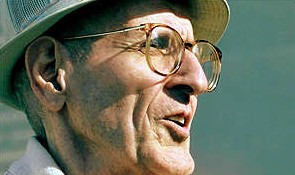 Jack Kevorkian
Homicide · USA · 1990
Jack Kevorkian (born May 26, 1928) was a controversial American pathologist. He…
130 victims
Jack Kevorkian
Homicide · USA · 1990
Jack Kevorkian (born May 26, 1928) was a controversial American pathologist. He…
130 victims
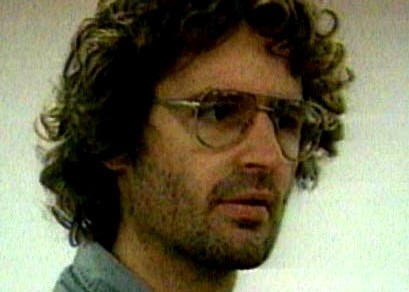 David Koresh
Homicide · USA · 1993
David Koresh (born Vernon Wayne Howell; August 17, 1959 – April 19, 1993) led t…
79 victims
David Koresh
Homicide · USA · 1993
David Koresh (born Vernon Wayne Howell; August 17, 1959 – April 19, 1993) led t…
79 victims
 Todd Hall
Homicide · USA · 1996
Todd Hall was described by neighbors as "mentally slow" and was said to have su…
9 victims
Todd Hall
Homicide · USA · 1996
Todd Hall was described by neighbors as "mentally slow" and was said to have su…
9 victims
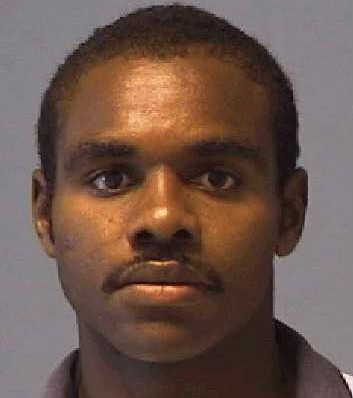 Clinton Bankston
Homicide · USA · 1987
15 August 1987 — Ann Morris (63), her sister Sally Nicholson (59), and Sally’s…
5 victims
Clinton Bankston
Homicide · USA · 1987
15 August 1987 — Ann Morris (63), her sister Sally Nicholson (59), and Sally’s…
5 victims
 Joshua Jenkins
Homicide · USA · 1996
Joshua Jenkins was a 15-year-old American killer who killed five members of his…
5 victims
Joshua Jenkins
Homicide · USA · 1996
Joshua Jenkins was a 15-year-old American killer who killed five members of his…
5 victims
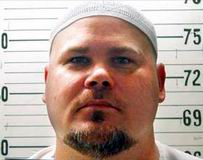 Marlon Kiser
Murderer · USA · 2001
Marlon Duane Kiser was sentenced to death in November 2003 for the 2001 first-d…
1 victim
Marlon Kiser
Murderer · USA · 2001
Marlon Duane Kiser was sentenced to death in November 2003 for the 2001 first-d…
1 victim
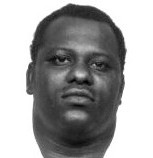 Lawrence Lee Buxton
Murderer · USA · 1980
Lawrence Lee Buxton (also known as Buxton), executed inmate. · Age: 38 (28) · E…
1 victim
Lawrence Lee Buxton
Murderer · USA · 1980
Lawrence Lee Buxton (also known as Buxton), executed inmate. · Age: 38 (28) · E…
1 victim
 Georges-Alexandre Sarret
Serial killer · Franc e · 1925
April 10, 1934 — Georges-Alexandre Sarret was executed by guillotine at Aix-en-…
4 victims
Georges-Alexandre Sarret
Serial killer · Franc e · 1925
April 10, 1934 — Georges-Alexandre Sarret was executed by guillotine at Aix-en-…
4 victims
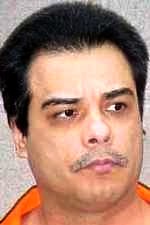 Ernest Valencia Gonzales
Murderer · USA · 1990
Ernest Valencia Gonzales was the defendant. · February 20, 1990 — The Wagner fa…
1 victim
Ernest Valencia Gonzales
Murderer · USA · 1990
Ernest Valencia Gonzales was the defendant. · February 20, 1990 — The Wagner fa…
1 victim
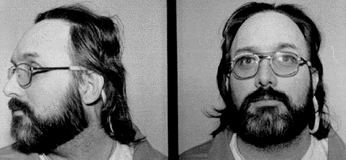 John Albert Taylor
Murderer · USA · 1988
John Albert Taylor (c. 1960) was executed by firing squad in Utah on January 26…
1 victim
John Albert Taylor
Murderer · USA · 1988
John Albert Taylor (c. 1960) was executed by firing squad in Utah on January 26…
1 victim
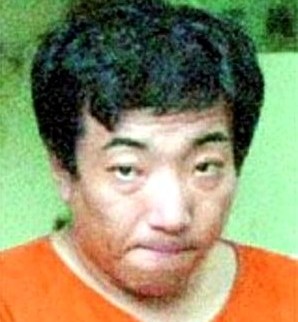 Hiroshi Maue
Serial killer · Japan · 2005
Hiroshi Maeue ( 前上 博 , Maeue Hiroshi ) was born August 8, 1968. He was a Japane…
3 victims
Hiroshi Maue
Serial killer · Japan · 2005
Hiroshi Maeue ( 前上 博 , Maeue Hiroshi ) was born August 8, 1968. He was a Japane…
3 victims
- Gender
- male
- Country
- USA
- Location
- Ada County, Idaho, USA
- Date of birth
- May 11, 1962
- Age at first offence
- 28
- Characteristics
- —
- Victim profile
- John Justad, 23, and Brandi Rains, 20
- Method of murder
- Beating with a baseball bat
- Date(s) of murder
- December 20, 1990
- Years active
- 1990
- Date of arrest
- —
- Status
-
Executed
Executed by lethal injection in Idaho on January 6, 1994
Case record: Keith Eugene Wells
Keith Eugene Wells (May 11, 1962 – January 6, 1994) was convicted of the murders of John Justad and Brandis Rains.
He was executed in 1994 at the Idaho Maximum Security Institution by the state of Idaho by means of lethal injection, only one year and nine months after having been sentenced to death. He became the first, and so far the only, person to be executed in Idaho since 1970 when the death penalty was reinstated and only the tenth since Idaho gained statehood.
He chose not to appeal the death sentence, although it was appealed on his behalf. The United States Supreme Court rejected an appeal filed against his wishes.
In 2006, there were nineteen people on Idaho's death row, and Wells was on parole for armed robbery when he murdered two people at Boise's Rose Pub on December 20, 1990.
The offence
Wells was convicted of killing John Justad, 23, and Brandi Rains, 20, with a baseball bat.
He described himself that night as "a predator on the prowl for prey."
Wells stated: "it was time for them to die".
Investigation
Wells used a bat he had brought with him. He beat John Justad, a patron, as Justad came out of the bathroom, and he turned on Brandi Rains, a tavern employee, when she came to see what was happening.
Arrest
He was on parole for robbery at the time of the murders.
Trial
Wells was convicted of felony murder on October 23, 1991.
The Idaho district court held two hearings to determine Wells' competence to dismiss the petition and concluded Wells was competent to and did knowingly and voluntary waive his right to pursue further post-conviction relief. The Idaho Supreme Court affirmed the dismissal.
Post-conviction proceedings and competence to waive relief
After filing a petition for post-conviction relief in state court, Wells moved on February 22, 1993 to dismiss the petition and his appointed attorneys, Rolf Kehne and John Adams, stating in a written declaration that he desired to waive all rights to further post-conviction relief because "prolonging [his] life through years of appeals will only serve to prolong the pain and grief of not only my family members and loved ones, but that of the victims' families and loved ones as well."
On January 3, 1994, Rolf Kehne filed a petition for a writ of habeas corpus on Wells' behalf.
On January 5, 1994, the district court dismissed the petition on the ground that Kehne lacked standing and denied Kehne's request for a certificate of probable cause.
Kehne sought to appeal the district court's dismissal of the petition for a writ of habeas corpus and requested a certificate of probable cause and a stay of execution as a "next friend" of Keith Eugene Wells. The certificate of probable cause and the application for a stay were denied.
Appeals
Wells’ execution proceedings involved the question of whether Kehne had standing as a "next friend" and whether Wells was mentally incompetent and unable to direct the proceedings.
The United States Court of Appeals for the Ninth Circuit denied the certificate of probable cause and the application for a stay, finding the case controlled by Brewer v. Lewis, 989 F.2d 1021 (9th Cir.1993). The court stated that a certificate of probable cause will issue only if the petitioner presents an issue of substance or makes a substantial showing of a denial of a federal right, citing Barefoot v. Estelle.
The court concluded Kehne had failed to make the required showing to establish standing as a "next friend," because Kehne had failed to show Wells was incompetent.
Medical opinions and the competence determination
Dave Sanford, a court-appointed psychologist, concluded that "There were few indications of faulty judgment and errors in decision making.... Keith is competent to make decisions regarding his life."
Leila Schutt, another court-appointed expert, concluded Wells was in "good physical health" and that no medication "in the psychotropic category" was or had been prescribed.
After repeated questioning by the judge as to whether Wells understood the nature of the proceedings and his decision to waive them, Wells confirmed he desired to waive his right to seek further relief.
Kehne asserted that the state court hearing was inadequate to establish Wells' competence because Dr. Sanford was not cross-examined regarding Wells' delusion, reported by family and friends, that he is possessed by demons that can by driven away only by his death. It was known at the time of Dr. Sanford's evaluation that Wells had been diagnosed with schizophrenia and that he suffered from these delusions. The court concluded Kehne had presented no "meaningful evidence" to cast doubt on the state court's determination of competence and therefore no further evidentiary hearing was required.
The certificate of probable cause and the application for a stay of execution were denied.
Outcome
The United States Supreme Court rejected an appeal filed against Wells's wishes.
Wells had no final statement.
Execution and aftermath
Wells was executed on January 6, 1994 by lethal injection in Idaho at the Idaho Maximum Security Institution.
As the execution of Wells went ahead, inmates pounded on walls and stomped on the floor in protest. Foes of the death penalty staged vigils at the State Capitol and the prison.
A reporter for KTVB-TV, Dee Sarton, said: Mr. Wells called her at home on Wednesday night to ask her to tell his victims' relatives that he was sorry.
In 1994, Wells became the first execution in the nation and Idaho's first since Oct. 18, 1957, when Raymond Allen Snowden, a 35-year-old itinerant laborer, was hanged for the murder and mutilation of a woman he met at a bar.
Idaho reinstated the death penalty in 1977 after the Supreme allowed capital punishment to resume and changed the method of execution to lethal injection in 1982.
Twenty-one people remain on Idaho's death row at the time mentioned in the case material.
Other details
Timeline
- October 18, 1957 — Raymond Allen Snowden was hanged for the murder and mutilation of a woman he met at a bar.
- October 23, 1991 — Wells was convicted of felony murder.
- February 22, 1993 — Wells moved to dismiss his post-conviction relief petition and to dismiss his appointed attorneys, stating he wished to waive further rights to pursue post-conviction relief.
- January 3, 1994 — Rolf Kehne filed a petition for a writ of habeas corpus on Wells' behalf.
- January 5, 1994 — The district court dismissed the petition due to Kehne's lack of standing and denied a certificate of probable cause.
- January 6, 1994 — Wells was executed by lethal injection in Idaho.

Spotted an error, or have more information about this case?