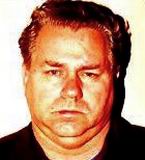
William Lester Suff
Serial killer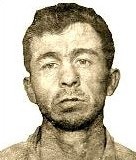 Donald Henry Gaskins
Serial killer · USA · 1969
Donald Henry Gaskins, also known as Donald “Pee Wee” Gaskins, was a serial kill…
200 victims
Donald Henry Gaskins
Serial killer · USA · 1969
Donald Henry Gaskins, also known as Donald “Pee Wee” Gaskins, was a serial kill…
200 victims
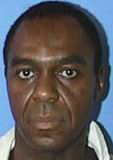 Carl Eugene Watts
Serial killer · USA · 1974
Carl Eugene Watts (born November 7, 1953; died September 21, 2007), also known…
100 victims
Carl Eugene Watts
Serial killer · USA · 1974
Carl Eugene Watts (born November 7, 1953; died September 21, 2007), also known…
100 victims
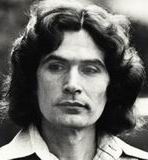 Rodney Alcala
Serial killer · USA · 1977
Rodney James Alcala (born August 23, 1943) was also known as Rodrigo Jacques Al…
100 victims
Rodney Alcala
Serial killer · USA · 1977
Rodney James Alcala (born August 23, 1943) was also known as Rodrigo Jacques Al…
100 victims
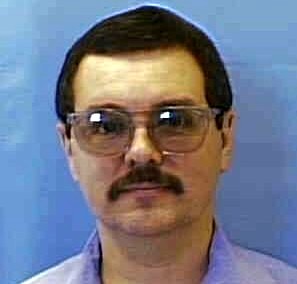 Donald Harvey
Serial killer · USA · 1970
Donald Harvey was known as an American serial killer and a self-professed “Ange…
87 victims
Donald Harvey
Serial killer · USA · 1970
Donald Harvey was known as an American serial killer and a self-professed “Ange…
87 victims
 Donald Leroy Evans
Serial killer · USA · 1975
Donald Leroy Evans (born July 5, 1957) was an American serial killer who murder…
60 victims
Donald Leroy Evans
Serial killer · USA · 1975
Donald Leroy Evans (born July 5, 1957) was an American serial killer who murder…
60 victims
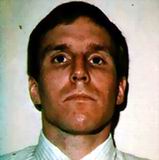 Michael Swango
Serial killer · USA · 1981
Michael Swango (Joseph Michael Swango) was a physician and American serial kill…
60 victims
Michael Swango
Serial killer · USA · 1981
Michael Swango (Joseph Michael Swango) was a physician and American serial kill…
60 victims
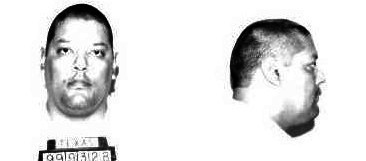 Louis Castro Perez
Murderer · USA · 1998
Louis Castro Perez was listed as a condemned killer with TDCJ Number 999328. He…
3 victims
Louis Castro Perez
Murderer · USA · 1998
Louis Castro Perez was listed as a condemned killer with TDCJ Number 999328. He…
3 victims
 James Vlassakis
Serial killer · Australia · 1997
James Spyridon Vlassakis (born 24 December 1979) was an Australian serial kille…
4 victims
James Vlassakis
Serial killer · Australia · 1997
James Spyridon Vlassakis (born 24 December 1979) was an Australian serial kille…
4 victims
 Miguel Angel Soto
Murderer · USA · 1999
Miguel Angel Soto was a convicted offender who was sentenced to death on August…
2 victims
Miguel Angel Soto
Murderer · USA · 1999
Miguel Angel Soto was a convicted offender who was sentenced to death on August…
2 victims
 Rickey Cummings
Murderer · USA · 2011
Rickey Cummings was recorded with the name Rickey Donnell Cummings, and with TD…
2 victims
Rickey Cummings
Murderer · USA · 2011
Rickey Cummings was recorded with the name Rickey Donnell Cummings, and with TD…
2 victims
 Mark Wesley Bailey
Murderer · USA · 1998
Mark Wesley Bailey was convicted in Virginia for the capital murder of his two-…
2 victims
Mark Wesley Bailey
Murderer · USA · 1998
Mark Wesley Bailey was convicted in Virginia for the capital murder of his two-…
2 victims
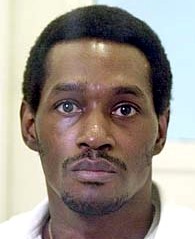 Gary Graham
Homicide · USA · 1981
Gary Graham, also known as Shaka Sankofa (born Gary Lee Graham; September 5, 19…
1 victim
Gary Graham
Homicide · USA · 1981
Gary Graham, also known as Shaka Sankofa (born Gary Lee Graham; September 5, 19…
1 victim
- Gender
- male
- Country
- USA
- Location
- Texas/California, USA
- Date of birth
- August 20, 1950
- Age at first offence
- 24
- Characteristics
- rape, mutilation
- Victim profile
- Janet Suff, his 2-month-old daughter / Michelle Yvette Gutierrez, 23 / Charlotte Jean Palmer, 24 / Linda Ann Ortega, 37 / Martha Bess Young, 27 / Linda Mae Ruiz, 37 / Kimberely Lyttle / Judy Lynn Angel, 36 / Christina Tina Leal, 23 / Daria Jane Ferguson, 27 / Carol Lynn Miller, 35 / Cheryl Coker, 33 / Susan Melissa Sternfeld, 27 / Kathleen Leslie Milne, 42 / Cherie Michelle Payseur, 24 / Sherry Ann Latham, 37 / Kelly Marie Hammond, 23 / Catherine McDonald, 30 / Delliah Zamora Wallace, 35 / Eleanore Ojeda Casares, 39
- Method of murder
- Beating / Strangulation - St abbing with knife
- Date(s) of murder
- 1974 / 1986 - 1991
- Years active
- 1974–1991
- Date of arrest
- January 9, 1992
- Status
-
Sentenced to death
Sentenced to death on August 17, 1995
Case record: William Lester Suff
Background
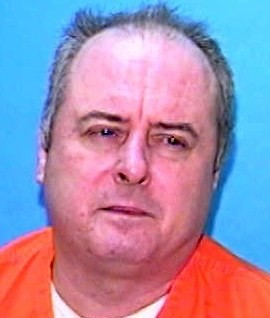
William Lester Suff (born August 20, 1950, as Bill Lee Suff) was known as the Riverside Prostitute Killer and the Lake Elsinore Killer.
Suff worked as a government stock clerk from Riverside County, California. He liked to impersonate police officers, write books, and drive fancy cars, and he volunteered in the county's car-pooling program. Neighbors described him as “a friendly nerd who was always doing things to help people”. He also liked to cook chili, and he had won first prize at a local cook-off for chili recipes. He was also working on a book about wild, lethal dogs and had vanity plates.
Suff had previously spent time in prison in the 1970s in Texas with his wife Teryl, after they were convicted of beating their 2-month-old daughter to death. A Texas Court of Criminal Appeals later reversed Teryl’s conviction but upheld Suff’s in Suff v. State (Tex. 1976) 531 S.W.2d 814, finding insufficient evidence to convict her as either the primary actor or a principal in their baby's murder. Suff was sentenced to 70 years in Texas, and he earned his parole in March 1984 after serving only 10 years.
The offence
Suff later raped, stabbed, strangled, and sometimes mutilated prostitutes in Riverside County. Authorities suspected he may have been responsible for as many as 22 deaths in the local area. The trial evidence resulted in convictions for killing 12 women and attempting to kill another, and a jury recommendation for death on all 12 murder counts.
Investigation
Detectives had been investigating prostitute murders in Riverside County for years, and a task force was formed with an enforcement effort described as the largest assembled in the county. Police suspected a serial killer and worked to identify the person responsible for the murders.
A traffic stop and forensic evidence obtained from inside Suff’s van were described as resulting in convictions for murders. The evidence included blood and hair samples and physical items found in the van, including rope, a bloody knife, and a sleeping bag with fibers matching those found on some victims’ bodies.
Arrest
Suff was arrested on January 9, 1992, after a routine traffic stop. Officer Frank Orta was patrolling an area known for prostitution and drugs when he noticed a van matching the description of an APB make an illegal U-turn. After Orta flashed his lights and siren, a 1989 Mitsubishi pulled over and Orta called for backup. Officers Don Tauli and Duane Beckman arrived. The driver was identified as William Suff. Orta discovered his driver’s license was suspended and his vehicle registration was expired, and Suff was transported to the Riverside police station for questioning.
Trial
Suff’s trial began on March 25, 1995, before Judge W. Charles Morgan in the Riverside Hall of Justice. The jury consisted of seven men and five women.
Prosecutor Paul E. Zellerbach was described as explaining to the jury that detectives had enough evidence to connect Suff to the murders of 13 prostitutes. Zellerbach described Suff as a violent sexual sadist who enjoyed torturing and murdering women.
Suff’s lawyers were described as Randolph K. Driggs and Frank S. Peasly. Driggs described the case as “This is largely a circumstantial case,” and argued that Suff was easygoing and merely in the wrong place at the wrong time.
The trial included testimony by Faye Springer of the state Department of Justice, described as a foremost criminologist on hair and fiber analysis. Springer testified that microscopic samples of hair found at two murder scenes matched Suff’s own hairs. She also testified that fibers from a pillow, blanket, and sleeping bag found inside Suff’s van were similar to those discovered near the bodies of Kim Lyttle and Christina Leal. She stated that a towel covering Lyttle’s naked body contained two fibers similar to the floor carpeting in Suff’s vehicle. Springer also testified that fibers found on Suff’s car seat matched that of a T-shirt and sock found on Leal’s body.
After 54 days of testimony and four days of deliberations, the jury found Suff guilty on 12 of the 13 counts of first-degree murder and one count of attempted murder. The jury also found Suff guilty of multiple murder, use of a deadly weapon, and lying in wait.
Jury recommendation and sentencing
On August 17, 1995, after deliberating for only 10 minutes, the jury returned verdicts recommending death on all 12 murder counts. On October 26, 1995, the trial court followed the jury's recommendations and ordered Suff condemned to death.
Judge W. Charles Morgan set sentencing for Oct. 10, and California condemned prisoners could be executed by lethal gas or lethal injection. Suff was paroled to California in 1984 from Texas, where he served 10 years of a 70-year sentence for beating his baby daughter to death. The New York Times described sentencing testimony and comments, and also stated that one victim was 12 of 13 first-degree murder counts.
Appeals
In March, a lawyer was appointed to represent Suff during the automatic appeal process. District Attorney Paul Zellerbach said: “We were able to try this case, with 13 victims, in about three years after his arrest and it takes five to appoint an attorney? That's outrageous,” and later said: “I'm a firm believer in the appellate court system, especially in death penalty cases, but nearly 15 years? There's no justification for that,” and: “It's unfair to the victims' families and to the taxpayers.”
Gary Schons, senior assistant attorney general in San Diego, described the death-sentence appeal process, including “record completion,” record correction, briefs by appeals counsel and the attorney general’s office, and then hearings by the state Supreme Court. Schons said it was reasonable to expect the process to take about five years.
Outcome
Suff was sentenced to death on August 17, 1995.
Other details
A New York Times report quoted a courtroom statement by prosecutor Paul E. Zellerbach in closing arguments. Zellerbach said:
“I submit to you, Mr. Suff is no longer a member of the human race,”
“By the nature of the crimes he has committed for 22 years, he has no heart, he has no soul and, by God, he has no conscience.”
A New York Times report also quoted a prosecutor description of trial evidence and stated that Judge Morgan did not allow prosecutors to present certain evidence during the guilt phase, calling it too inflammatory.
Suff’s counsel Randy Driggs urged the jury to consider a sentence of life in prison without the possibility of parole. Driggs said:
“Mr. Suff will be living on the edge of the seat for the rest of his life,”
“He will worry about his next step, his next move and who's behind him.”
Bob Creed, the lead Riverside County Sheriff’s Department detective on the case, left the Sheriff's Department in December 1998 to become a senior investigator with the district attorney's office. Creed said:
“We all knew from the very beginning that there would be an automatic appeal to his sentence.”
“Still, even knowing that, justice won't be fully served until he's executed.”
“There is no way these killings can be justified or explained away.”
“I just wish they'd hurry up with the appeal process and continue on with Suff's execution,”
“That's the only way to close the last chapter on this.”
District Attorney Grover Trask said:
“Mr. Suff is the poster child for someone who deserves the death penalty,”
“The sooner the better,”
A spokeswoman for the California Department of Corrections, Margot Bach, said Suff was an exemplary inmate. Bach said: “pretty exemplary inmate,” and described Suff as in generally good health.
A woman identified as Mary, a relative of one of Suff’s victims, said: “(Suff's) guilty as hell and the taxpayers are supporting him,” and added: “It's just a waste of money,” and: “He's not gonna get unguilty.”
Suff continued to maintain his innocence and claimed that police used him as a scapegoat.
The case materials described a rumor that Suff used a victim’s breast in chilies he prepared for the Riverside County employees annual picnic. After the trial, the prosecutor told the foreman and four other members of the jury that they suspected Suff used the breast of one of his victims in his prize winning chili, and the rumor was described as never verified.
San Quentin was described as where Suff resided on death row while awaiting execution. The cell dimensions were described as 11 feet, 3 inches by 4 feet, 5 inches.

Spotted an error, or have more information about this case?