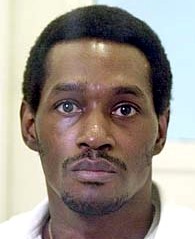
Gary Graham
Homicide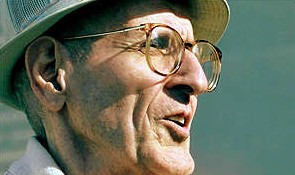 Jack Kevorkian
Homicide · USA · 1990
Jack Kevorkian (born May 26, 1928) was a controversial American pathologist. He…
130 victims
Jack Kevorkian
Homicide · USA · 1990
Jack Kevorkian (born May 26, 1928) was a controversial American pathologist. He…
130 victims
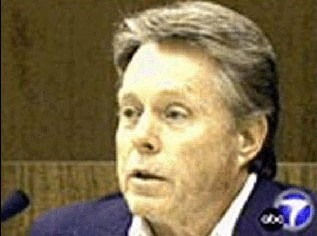 Edward Charles Allaway
Homicide · USA · 1976
Edward Charles Allaway Edward Charles Allaway was found not guilty by reason of…
7 victims
Edward Charles Allaway
Homicide · USA · 1976
Edward Charles Allaway Edward Charles Allaway was found not guilty by reason of…
7 victims
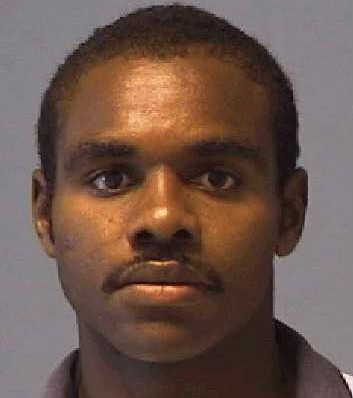 Clinton Bankston
Homicide · USA · 1987
15 August 1987 — Ann Morris (63), her sister Sally Nicholson (59), and Sally’s…
5 victims
Clinton Bankston
Homicide · USA · 1987
15 August 1987 — Ann Morris (63), her sister Sally Nicholson (59), and Sally’s…
5 victims
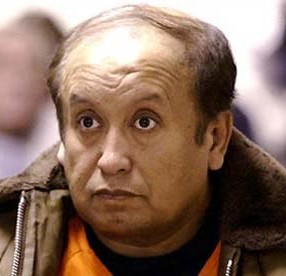 Alfonso Rodriguez
Murderer · USA · 2003
Alfonso Rodriguez, Jr. was sentenced to death on September 22, 2006. Alfonso Ro…
1 victim
Alfonso Rodriguez
Murderer · USA · 2003
Alfonso Rodriguez, Jr. was sentenced to death on September 22, 2006. Alfonso Ro…
1 victim
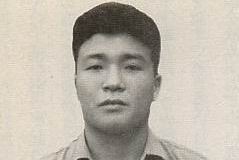 Genzo Kurita
Serial killer · Japan · 1948
Genzo Kurita ( 栗田 源蔵 , Genzo Kurita , 1926 - October 14, 1959) was a Japanese s…
8 victims
Genzo Kurita
Serial killer · Japan · 1948
Genzo Kurita ( 栗田 源蔵 , Genzo Kurita , 1926 - October 14, 1959) was a Japanese s…
8 victims
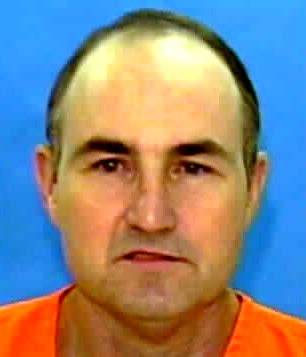 Larry Eugene Mann
Murderer · USA · 1980
Larry Eugene Mann (also known as Larry E Mann and Larry Eugene Mann) was a whit…
1 victim
Larry Eugene Mann
Murderer · USA · 1980
Larry Eugene Mann (also known as Larry E Mann and Larry Eugene Mann) was a whit…
1 victim
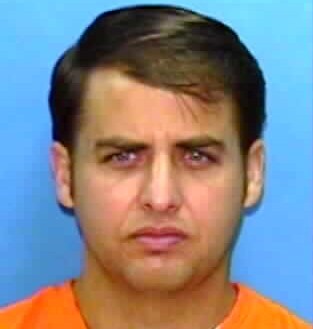 Anthony Braden Bryan
Murderer · USA · 1983
Anthony Braden Bryan was the petitioner and appellant in multiple proceedings,…
1 victim
Anthony Braden Bryan
Murderer · USA · 1983
Anthony Braden Bryan was the petitioner and appellant in multiple proceedings,…
1 victim
- Gender
- male
- Country
- USA
- Location
- Harris County, Texas, USA
- Date of birth
- September 5, 1963
- Age at first offence
- 18
- Characteristics
- juvenile (17), robbery
- Victim profile
- Bobby Grant Lambert (male, 53)
- Method of murder
- Shooting
- Date(s) of murder
- May 13, 1981
- Years active
- 1981
- Date of arrest
- 7 days after
- Status
-
Executed
Executed by lethal injection in Texas on June 22, 2000
Case overview
Gary Graham, also known as Shaka Sankofa (born Gary Lee Graham; September 5, 1963 – June 22, 2000), was convicted of capital murder and sentenced to death. He was executed by lethal injection in Texas on June 22, 2000.
During the period May 14 through May 20 of 1981, Gary Graham robbed some 13 different victims at nine different locations, in each instance leveling either a pistol or a sawed-off shotgun on the victim. Two of the victims were pistol-whipped, one being shot in the neck; a 64-year-old male victim was struck with the vehicle Graham was stealing from him; and a 57-year-old female victim was kidnapped and raped. A total of 19 eyewitnesses positively identified Graham as the perpetrator. Graham’s armed-robbery conduct included a statement during the armed robbery of Richard B. Sanford, in which Graham boasted of having killed six other people already.
He pleaded guilty to and was sentenced to 20-year concurrent prison sentences for 10 different aggravated robberies committed May 14, 15, 16, 18, 19, and 20, 1981. By the time of his execution nineteen years later, he had secured support from anti-death-penalty activists who insisted that he was innocent and that the death penalty was racist, including Danny Glover, Jesse Jackson, and Al Sharpton.
Timeline
- May 13, 1981, 9:35pm — Bobby Grant Lambert was robbed and murdered in a Safeway parking lot in north Houston, Texas.
- May 14, 1981 — Graham began robberies in the period May 14 through May 20, 1981, committing robberies at nine locations against some 13 victims.
- May 20, 1981 — Graham was arrested for the rape and robbery of a taxi driver.
- May 26, 1981 — Bernadine Skillern selected Graham from a photographic display.
- May 27, 1981 — Graham was positively identified as Mr. Lambert’s murderer by Bernadine Skillern (the one eyewitness who clearly saw the killer’s face), during a police station lineup.
- October 30, 1981 — Trial in Harris County, Texas resulted in a guilty verdict for capital murder and a death sentence.
- February 9, 1988 — State district judge Donald Shipley entered findings of fact and conclusions of law adverse in Graham’s first state habeas proceeding.
- July 1987 — Graham filed a state habeas petition.
- February 19, 1988 — The Court of Criminal Appeals denied habeas relief in an unpublished per curiam order.
- January 1990 — The U.S. Supreme Court voted 5-4 against considering the Graham case on the basis of mitigating evidence of his youth and troubled background.
- 1992 — The U.S. Court of Appeals for the Fifth Circuit reinstated the death sentence.
- April 28, 1993 — Texas governor Ann Richards granted Graham a 30-day stay of execution.
- June 3, 1993 — A new execution date was set after the April 28, 1993 stay.
- June 2, 1993 — The Texas Court of Criminal Appeals unanimously granted a new stay pending the outcome of another Supreme Court case.
- August 16, 1993 — The Texas Court of Criminal Appeals granted another stay less than six hours before Graham was scheduled to die by lethal injection.
- 1995 — Graham changed his name from Gary Lee Graham to Shaka Sankofa.
- June 22, 2000 — Graham was executed by lethal injection in Texas.
Background
Gary Graham was convicted and sentenced to death at the age of 18. He was executed at age 36. His nickname used in connection with the case included Shaka Sankova.
His supporters argued that his conviction was based on the testimony of a single eyewitness who said she saw him in connection with the murder of Bobby Grant Lambert. Graham maintained his innocence of Lambert’s murder from the time of his arrest and throughout the nineteen years he spent on death row. At the time of his execution, anti-death-penalty supporters included Coretta Scott King and others along with celebrities including Danny Glover, Kenny Rogers, Lionel Ritchie, Harry Belafonte and Ruby Dee. The legal arguments asserted by supporters included that the jury relied on a single eyewitness and that other eyewitnesses were not heard; supporters also argued there was no physical evidence tying him to Lambert’s murder and that his legal representation was poor.
The offence
Murder of Bobby Grant Lambert
Bobby Grant Lambert was shot and killed. The parking lot murder occurred at night in the Safeway supermarket parking lot in Houston, Texas.
The federal appellate history described the event as follows: about 9:30 p.m. on May 13, 1981, Bobby Lambert was shot and killed by a lone black male who apparently was trying to rob him, and the perpetrator left the scene without being apprehended.
A separate account stated that on the night of May 13, 1981, Graham accosted Bobby Grant Lambert in the parking lot of a Houston, Texas grocery store and attempted to grab his wallet. When Lambert resisted, Graham drew a pistol and shot him to death.
Bernadine Skillern testified that she was sitting in her car in the parking lot. She said that when a man put a pistol to Lambert’s head, she blew her horn, and the gunman turned to look at her. There was a pop, Lambert dropped his bag of groceries, and the other man fled. She followed him in her car until her screaming children made her stop. Skillern said that she got a good look at the killer for about a minute and a half.
In the trial record described for federal review, Skillern was the only witness to identify Graham as Lambert’s killer; two other eyewitnesses, Wilma Amos and Daniel Grady, were unable to identify him because they did not get a good enough look at, or did not sufficiently recall, the perpetrator’s face.
Crime spree and related conduct
The period May 14 through May 20, 1981 involved robberies at nine different locations and some 13 victims. In each instance, Graham leveled either a pistol or a sawed-off shotgun at the victim. Two victims were pistol-whipped; one victim was shot in the neck; a 64-year-old male victim was struck with the vehicle Graham was stealing from him; and a 57-year-old female victim was kidnapped and raped.
The account also described a statement made by Graham during an armed robbery of Richard B.
Investigation
Police firearms testing and lineup procedures were discussed in later proceedings. The federal appellate history described a hearing conducted outside the presence of the jury to determine whether Skillern’s identification was “tainted by [an] illegal lineup.” The trial judge concluded that Skillern’s identification was based solely on her independent recollection of the facts as they occurred on May 13, 1981 and was made independently of any conversation or processes performed by members of the Houston Police Department.
Later discussion referenced that on May 26, 1981, Bernadine Skillern picked Graham out of a photographic display, and on May 27, 1981, she identified him in a police station lineup.
Arrest
Graham was arrested in connection with the rape and robbery of a taxi driver. An account described that five months after Lambert’s murder, Graham was arrested a week later (May 20) for the rape and robbery of a taxi driver.
Another account stated that his arrest occurred after a victim took Graham’s gun and called police, and police arrested him at the scene.
Trial
The trial took place in the 182nd Judicial District of Harris County, Texas. The judge named in the federal appellate history was not repeated as a separate enumerated fact in the trial description, but the federal appellate history described that the case proceeded before a trial judge who conducted the lineup taint hearing outside the presence of the jury.
Guilt phase and identification testimony
At trial, Bernadine Skillern was the only witness to identify Graham as Lambert’s killer. Wilma Amos and Daniel Grady did not identify him due to inadequate opportunity to see or recall.
Before Skillern testified that Graham was the shooter, the trial judge conducted a hearing outside the presence of the jury to determine whether her identification was “tainted by [an] illegal lineup.” During that hearing, Skillern described in some detail how she had picked Graham out of a May 26, 1981 photographic display and a May 27, 1981 police station lineup. Defense counsel raised issues regarding suggestive identification procedures.
The trial judge concluded Skillern’s identification was based solely on her independent recollection of facts as they occurred on May 13, 1981 and was made independently of any conversation or processes by members of the Houston Police Department.
After the hearing, the jury returned, and Skillern testified in open court that Graham was the person she had seen shoot Lambert.
Defense counsel presented no evidence at the guilt-innocence stage. The federal appellate history stated that the guilt phase ended on the day it started and that the jury convicted Graham of capital murder and answered three death penalty special issues in the affirmative. The court sentenced him to death.
Jury special issues
The federal appellate history stated that the jury was asked the following questions and answered yes to all three:
- “Do you find from the evidence beyond a reasonable doubt that the conduct of the defendant that caused the death of the deceased was committed deliberately and with the reasonable expectation that the death of the deceased or another would result?”
- “Do you find from the evidence beyond a reasonable doubt that there is a probability that the defendant would commit criminal acts of violence that would constitute a continuing threat to society?”
- “Do you find from the evidence beyond a reasonable doubt whether [sic] the conduct of the defendant in killing the deceased was unreasonable in response to the provocation, if any, by the deceased?”
After the verdict was read, the defense requested that the jury be polled, and each juror acknowledged that the verdict accurately represented his or her answers.
Statements made by Graham and witnesses
Lisa Blackburn testified that Graham told her, “I have already killed three people, and I’m going to kill you,” and also told her, “I don’t have nothing to lose. If I get caught, I burn, and I’m not getting caught.” In the same context, Graham was described as having told her, “I’ve killed three people, and I’m going to kill you.”
During the trial description, Richard Carter, Jr. described a prior robbery in which Graham forced him to kneel, put a shotgun barrel in his mouth, and threatened, “I'll kill you. Blowing away another white m----- f----- don't mean nothing to me.”
Sentencing
The jury answered affirmatively to the three death penalty special issues and the court sentenced Graham to death.
An additional sentencing outcome was recorded for Graham’s guilty pleas: he pleaded guilty to and was sentenced to 20-year concurrent prison sentences for 10 different aggravated robberies committed May 14, 15, 16, 18, 19, and 20, 1981.
Appeals
State and federal post-conviction proceedings
Graham’s appeal history included a state habeas petition and multiple federal habeas applications.
He filed a state habeas petition in July 1987. The state district judge Donald Shipley held competency and evidentiary hearings, and on February 9, 1988, entered findings of fact and conclusions of law adverse in all respects to Graham.
In January 1990, the U.S. Supreme Court voted 5-4 against considering mitigating evidence of his youth and background, and remanded the case to the Fifth Circuit. In January 1992, the Fifth Circuit reinstated the death sentence. A year later, the U.S. Supreme Court again denied an appeal.
United States Supreme Court case referenced in connection with the matter
The case name “Graham v. Collins (91-7580), 506 U.S. 461 (1993)” was referenced, with a syllabus opinion (white) concurrence (Thomas) and dissents (Stevens and Souter), alongside reference to “hollywood, murder and texas a case study of lies, half-truths an intimidation.” The Supreme Court’s handling of the youth-mitigating evidence issue included that the Texas capital sentencing scheme issue involving the consideration of youth as mitigating evidence was addressed in relation to Penry v. Lynaugh.
Further habeas litigation and AEDPA applicability
A later appellate decision in Graham v. Johnson (No. 99-20014) described Graham’s fourth habeas corpus application as successive. It held that the Antiterrorism and Effective Death Penalty Act of 1996 applied by its terms. It affirmed dismissal of Graham’s fourth federal habeas application and denied his motion for recall of the mandate and his motion for an order authorizing the district court to consider a successive habeas petition.
The appellate decision recounted that Graham’s first federal habeas petition was filed in 1988 and fully litigated on the merits and was twice considered by the Supreme Court.
The appellate decision also addressed the timing and successive nature of his petitions. It concluded Graham was required to obtain an order from the court of appeals before filing a second or successive habeas application.
Outcome
Graham was executed by lethal injection in Texas on June 22, 2000.
Aftermath
Events around the execution
The execution occurred in Huntsville, Texas. Accounts described heavy security outside the Huntsville Unit, known as “The Walls,” and described protests outside the prison and other safety measures.
The Texas Board of Pardons and Paroles denied Graham a 120-day reprieve by a 14-3 vote. The board also voted against commuting his punishment (12-5) and against a pardon (17-0).
The U.S. Supreme Court did not halt the execution; the vote described was 5 to 4. After the Supreme Court’s decision, supporters broke through police lines and six were arrested.
Restraints and final statement
An account stated that Graham resisted and fought guards who took him from death row to the Walls Unit in Huntsville. He refused meals on the night before and on the day of the execution. Extra restraints were used to strap him to the gurney.
A long final statement was delivered before execution. The final statement included the following verbatim segments among other remarks:
- “I would like to say that I did not kill Bobby Lambert.”
- “That I'm an innocent black man that is being murdered.”
- “This is a lynching that is happening in America tonight.”
- “There's overwhelming and compelling evidence of my defense that has never been heard in any court of America.”
- “We recognize that many leaders have died. Malcom X, Martin Luther King, and others who stood up for what was right.”
- “But they're going to keep on lynching us for the next 100 years, if you do not carry on that tradition, and that period of resistance.”
- “This death, this lynching will be avenged. It will be avenged, it must be avenged.”
- “By any means necessary, we keep marching forward.”
- “Make sure that the state does not get my body. Make sure that we get my name as Shaka Sankofa. My name is not Gary Graham. Make sure that it is properly presented on my grave.”
- “Shaka Sankofa. I died fighting for what I believe in. I died fighting for what was just and what was right.”
- “We will gain our freedom and liberation by any means necessary.”
- “Preach the moratorium for all executions. We're gonna stop, we are going to end the death penalty in this country. We are going to end it all across this world.”
- “This is what is happening tonight in America. Nothing more than state sanctioned murders, state sanctioned lynching, right here in America, and right here tonight.”
- “They know I'm innocent. They've got the facts to prove it. They know I'm innocent.”
The final statement also included: “I love you, Mr. Jackson. Bianca, make sure that the state does not get my body. My name is not Gary Graham. Shaka Sankofa.”
Pronouncement of death
An account stated that Gary Graham was pronounced dead at 8:59 p.m.
Funeral and memorial
More than two thousand people attended a June 28, 2000 wake, and two thousand two hundred people attended the funeral the following day. He was buried at Paradise North Cemetery in a gold-colored casket, wearing a turquoise and gold African garment.
Other details
Names used
Gary Graham used the name Shaka Sankova. He was also described as “Shaka Sankofa,” and the account stated he called himself Shaka Sankova since 1995.
Prison and education
In prison, Graham learned to read and write and earned his GED and paralegal certification. He co-founded a prison organization and newspaper, The Endeavor Project, devoted to abolishing the death penalty. By the end of his life, he had written a soon-to-be-published book, The Evolution of Shaka Sankofa.
Family
Graham was survived by his daughter and son, Deidra and Gary Lee Hawkins, ages 19 and 20, at the time of his execution. Graham’s son Gary Lee Hawkins had been arrested at the age of 20 for the murder of his friend, 32-year-old Melvin Pope, on March 28, 2000. On March 27, 2001, he was convicted of the murder and sentenced to life in prison; he maintained his innocence.
Graham was also survived by his granddaughter, stepmother, paternal grandmother, sister, stepsister, and three brothers.
Additional named individuals in connection with statements and support
Proponents and witnesses included:
- Danny Glover, Jesse Jackson, and Al Sharpton
- Coretta Scott King
- bishop Desmond Tutu
- Rev. Jesse Jackson
- Rev. Al Sharpton
- Bianca Jagger
- Bobby Hanners (Lambert’s grandson), Diane Clements, and Rick Sanford
Questions raised in connection with his case
A list of questions associated with expert views included whether a jury should consider a murderer’s youth and background as mitigating, whether a governor should be empowered to grant more than one stay of execution pending further review, whether a “30-day rule” should be revoked, and why Texas performs nearly twice as many executions as other states.
Appellate procedural framing
In the fifth circuit habeas decision involving AEDPA, the court described Graham’s claim as successive and affirmed dismissal of his fourth federal habeas application, denying his motion for recall of the mandate in a prior habeas case, and denying his request for authorization to file a successive habeas corpus petition.
Spotted an error, or have more information about this case?