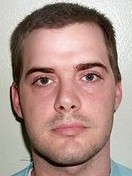
Mark Wesley Bailey
Murderer Russell Ellwood
Murderer · USA · 1991
Russell Ellwood was a former taxi driver. Authorities suspected him of killing…
20 victims
Russell Ellwood
Murderer · USA · 1991
Russell Ellwood was a former taxi driver. Authorities suspected him of killing…
20 victims
 Robert Martines Perez
Murderer · USA · 1994
Name: Robert Martines Perez · Other name used in proceedings: Robert Martinez P…
15 victims
Robert Martines Perez
Murderer · USA · 1994
Name: Robert Martines Perez · Other name used in proceedings: Robert Martinez P…
15 victims
 Billy Frank Vickers
Murderer · USA · 1993
Billy Frank Vickers Vickers was executed by lethal injection in Texas on Januar…
14 victims
Billy Frank Vickers
Murderer · USA · 1993
Billy Frank Vickers Vickers was executed by lethal injection in Texas on Januar…
14 victims
 Andrew Chabrol
Murderer · USA · 1991
Andrew Chabrol was executed by electrocution in Virginia on June 17, 1993. Andr…
1 victim
Andrew Chabrol
Murderer · USA · 1991
Andrew Chabrol was executed by electrocution in Virginia on June 17, 1993. Andr…
1 victim
 Paul Steven Haigh
Serial killer · Australia · 1978
Paul Steven Haigh was an Australian serial killer. · 1978 — After being paroled…
7 victims
Paul Steven Haigh
Serial killer · Australia · 1978
Paul Steven Haigh was an Australian serial killer. · 1978 — After being paroled…
7 victims
 Peter Moore
Serial killer · United Kingdom · 1995
Peter Moore (born 1940) was a Welsh serial killer who murdered four men in 1995…
4 victims
Peter Moore
Serial killer · United Kingdom · 1995
Peter Moore (born 1940) was a Welsh serial killer who murdered four men in 1995…
4 victims
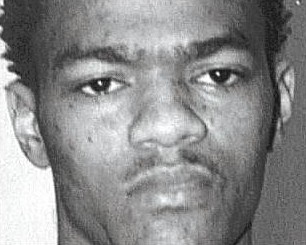 Lance Chandler
Murderer · USA · 1993
February 7, 1993 — Lance Chandler, Geral-dine Fernandez, Dwight Wyatt, and Geor…
1 victim
Lance Chandler
Murderer · USA · 1993
February 7, 1993 — Lance Chandler, Geral-dine Fernandez, Dwight Wyatt, and Geor…
1 victim
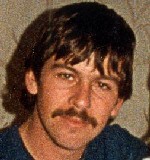 Maddison Hall
Murderer · Australia · 1987
Maddison Hall was born Noel Crompton in 1964. He was an Australian HIV-positive…
1 victim
Maddison Hall
Murderer · Australia · 1987
Maddison Hall was born Noel Crompton in 1964. He was an Australian HIV-positive…
1 victim
- Gender
- male
- Country
- USA
- Location
- Hampton, Virginia, USA
- Date of birth
- May 27, 1970
- Age at first offence
- 28
- Characteristics
- parricide
- Victim profile
- His wife, Katherine, 22, and their son, Nathan, 2
- Method of murder
- Shooting ( .22-caliber pistol)
- Date(s) of murder
- September 10, 1998
- Years active
- 1998
- Date of arrest
- Same day
- Status
-
Executed
Executed by lethal injection in Virginia on July 22, 2004
Case information
Mark Wesley Bailey was convicted in Virginia for the capital murder of his two-year-old son, Nathan Mark Bailey, and the first-degree murder of his wife, Katherine Ester Bailey. He was also convicted of using a firearm in the commission of capital murder and first-degree murder.
Timeline
- December 25, 1993 — Bailey married Katherine, his cousin, in Reno, Nevada.
- March 1996 — Katherine gave birth to the couple’s son, Nathan.
- 1998 — Bailey borrowed a .22-caliber pistol from a friend and purchased ammunition for the pistol.
- September 10, 1998 — Bailey shot Katherine three times in the head while she slept and shot Nathan twice in the head as the child was climbing out of bed.
- December 7, 1998 — A grand jury of the City of Hampton returned an indictment charging Bailey with capital murder of Nathan.
- July 21, 1999 — Bailey was convicted of two counts of capital murder and one count of first-degree murder.
- October 5, 1999 — Bailey was sentenced to death.
- January 11, 2002 — The Virginia Supreme Court denied state post-conviction relief.
- August 30, 2002 — Bailey filed a petition for a writ of habeas corpus in federal district court under 28 U.S.C. § 2254.
- 2002 — The federal district court dismissed Bailey’s habeas corpus petition.
- 2004 — The Court of Appeals affirmed dismissal of Bailey’s habeas corpus petition.
- July 22, 2004 — Bailey was executed by lethal injection in Virginia.
Background
Bailey married Katherine, his cousin whom he had known most of his life and with whom he had been romantically involved for over a year, on December 25, 1993 in Reno, Nevada. In March 1996, Katherine gave birth to the couple’s son, Nathan. After the birth of their son, the couple became emotionally estranged, although they continued living in the same household.
Bailey told co-workers a fabricated account about his wife receiving threatening telephone calls and notes, and he later admitted to police that he invented those stories to divert suspicion from himself when he murdered his wife.
The offence
On September 10, 1998, Bailey awoke about 4:30 a.m. and went to the bedroom where his wife was sleeping. He shot Katherine three times in the head with a borrowed .22-caliber pistol. He then heard Nathan awaking in the next bedroom, went to his son’s bedroom, and shot the child twice in the head as the child was climbing out of bed.
After the shootings, Bailey washed blood off his face and dressed for work. He cut the bathroom window screen with a razor knife and cut the outside telephone line to give the appearance that a break-in had occurred. Bailey then left for work, taking the pistol and razor knife with him.
Before the police discovered the bodies, Bailey reported to work and told his supervisor that his wife had received a threatening note that read "X-U-T" or "X-U-P" and that he believed this meant "Time's up." Bailey repeated this story to Joseph Yount, Moravec’s supervisor. Shortly thereafter, Bailey told Moravec that he had received a telephone call from someone claiming that he "had [Bailey's] wife." Moravec reported these events, and Yount instructed Moravec to call the police. Yount then accompanied Bailey to Bailey’s home.
When Yount and Bailey arrived at Bailey’s home, police had already arrived. An officer emerging from one of the bedrooms stopped the two men in the living room, and Yount suggested that they wait outside. Yount later testified that as they waited Bailey "was stone-faced and cold-looking."
Investigation
Thomas Killilea, a detective with the Hampton Police Department, informed Bailey that his wife and son were dead. Upon hearing this, Bailey lurched forward and appeared to have tears in his eyes.
Bailey told Killilea about the threatening telephone calls and notes that he claimed his wife had received. Killilea asked Bailey to accompany him to the police station, and Bailey agreed. Bailey rode in the front of Killilea’s police vehicle, and Yount rode in the back seat. Bailey was not under arrest at this time.
At the police station, Bailey signed a consent form allowing the police to search his home and consented to take a polygraph test. During his stay at the police station, he was offered food and drink and the opportunity to use the lavatory. He engaged officers in casual conversation and was allowed to step outside to smoke cigarettes. During this time, Bailey wrote a statement detailing the fictitious story of the threats made against his wife.
The polygraph was administered at 12:15 p.m. During the polygraph, the examiner detected deception in Bailey’s response to the question, "Are you intentionally withholding the name of the killer ...?" The examiner asked Bailey if he thought it was time to tell the detectives "what was really going on." Bailey looked at the floor and answered, "[Y]eah."
At 1:42 p.m., Killilea and Detective Jimmy L. Forbes spoke to Bailey in an interview room for a little over an hour. Bailey was mostly unresponsive during this interview. Forbes raised the subject of his own religious beliefs and suggested that Bailey needed to get his "heart right with the Lord and that his soul would not rest until he did." Bailey asked for a soft drink. When Killilea left the room to get the soft drink, Bailey took a legal pad and pen from the table and wrote, "I Mark Bailey do hereby without any coercsion [sic] admit to the murder of my wife and son."
When Killilea returned with the soft drink, Forbes showed him the statement Bailey had written. Bailey then said, "You got what you wanted. I guess I'm not leaving now."
At 3:19 p.m., Bailey was advised of his Miranda rights. The detectives began an interrogation that lasted until 5:45 p.m. During this period Bailey wrote out answers to the detectives’ questions, and a videotape of his confession to the murders was made. During his stay at the police station Bailey never asked to leave, nor did he request an attorney.
At the conclusion of the interrogation, Bailey remarked to Killilea: "You probably think I'm an [expletive deleted] for killing my wife and family--or my wife and son." The detective explained that if he had thought that he would not have treated Bailey with dignity and respect. Bailey agreed he had been "treated well."
Arrest
Bailey was taken to the police station with his supervisor. Bailey was not under arrest at that time. Bailey was later advised of his Miranda rights at 3:19 p.m. and interrogated at the police station.
Charges and legal basis
On December 7, 1998, the grand jury of the City of Hampton returned an indictment charging Bailey with the capital murder of Nathan as part of the same act or transaction as the killing of Katherine, under Code § 18.2-31(7), and/or as the killing of a person under the age of fourteen by a person twenty-one years of age or older, under Code § 18.2-31(12).
In separate indictments, Bailey was also charged with the first-degree murder of Katherine, Code § 18.2-32, and with one count of the use of a firearm in each of the two killings, Code § 18.2-53.1.
During the trial and appellate proceedings, the court addressed Bailey’s convictions for first-degree murder of Katherine and use of a firearm in the commission of capital murder and first-degree murder, in addition to the capital murder of Nathan.
Trial
Bailey was convicted of two counts of capital murder arising from the September 10, 1998 death of his two-year-old son, Nathan, and the first-degree murder of his wife, Katherine. The jury found that Nathan’s death was a "willful, deliberate and premeditated killing" that took place as part of the same act as the killing of Katherine.
The second count was brought under a statute that states capital murder can be charged when the victim is under 14 and the killer is 21 or
Spotted an error, or have more information about this case?