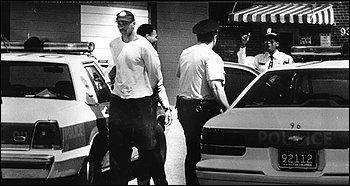
James Edward Swann
Serial killer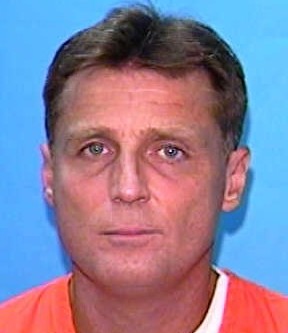 Glen Edward Rogers
Serial killer · USA · 1993
Glen Edward Rogers was a spree killer whose cross-country rampage in 1994-95 le…
70 victims
Glen Edward Rogers
Serial killer · USA · 1993
Glen Edward Rogers was a spree killer whose cross-country rampage in 1994-95 le…
70 victims
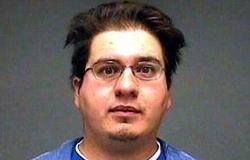 Efren Saldivar
Serial killer · USA · 1989
Efren Saldivar (born 30 September 1969) was an American serial killer who murde…
50 victims
Efren Saldivar
Serial killer · USA · 1989
Efren Saldivar (born 30 September 1969) was an American serial killer who murde…
50 victims
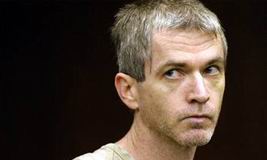 Charles Cullen
Serial killer · USA · 1984
Charles Cullen (born February 22, 1960) was a former nurse and the most prolifi…
45 victims
Charles Cullen
Serial killer · USA · 1984
Charles Cullen (born February 22, 1960) was a former nurse and the most prolifi…
45 victims
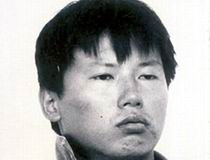 Charles Ng
Serial killer · USA · 1983
Charles Chi-Tat Ng (Chinese: 吳志達/吴志达; born December 24, 1960) was a Chinese-Ame…
25 victims
Charles Ng
Serial killer · USA · 1983
Charles Chi-Tat Ng (Chinese: 吳志達/吴志达; born December 24, 1960) was a Chinese-Ame…
25 victims
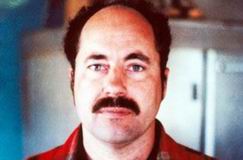 Leonard Lake
Serial killer · USA · 1983
Leonard Lake (October 29, 1945 – June 6, 1985) was an American serial killer. H…
25 victims
Leonard Lake
Serial killer · USA · 1983
Leonard Lake (October 29, 1945 – June 6, 1985) was an American serial killer. H…
25 victims
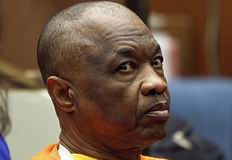 Lonnie Franklin
Serial killer · USA · 1985
Lonnie Franklin was convicted as the “Grim Sleeper” serial killer, a nickname u…
25 victims
Lonnie Franklin
Serial killer · USA · 1985
Lonnie Franklin was convicted as the “Grim Sleeper” serial killer, a nickname u…
25 victims
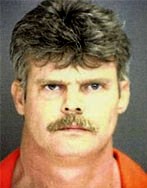 Scott Thomas Erskine
Murderer · USA · 1989
Scott Thomas Erskine was convicted of the murder of two California boys and was…
3 victims
Scott Thomas Erskine
Murderer · USA · 1989
Scott Thomas Erskine was convicted of the murder of two California boys and was…
3 victims
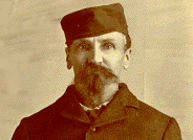 Alfred Packer
Murderer ? · USA · 1874
Alfred Packer was convicted of cannibalism after killing and eating five compan…
5 victims
Alfred Packer
Murderer ? · USA · 1874
Alfred Packer was convicted of cannibalism after killing and eating five compan…
5 victims
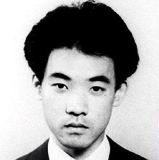 Yasuaki Uwabe
Mass murderer · Japan · 1999
Yasuaki Uwabe (Japanese: 上部康明) was born in Shimonoseki, Yamaguchi. After gradua…
5 victims
Yasuaki Uwabe
Mass murderer · Japan · 1999
Yasuaki Uwabe (Japanese: 上部康明) was born in Shimonoseki, Yamaguchi. After gradua…
5 victims
- Gender
- male
- Country
- USA
- Location
- Washington, D.C., USA
- Date of birth
- 1964
- Age at first offence
- 29
- Characteristics
- the bodies were never found
- Victim profile
- Two men and two women
- Method of murder
- Shooting (20-gauge shotgun)
- Date(s) of murder
- February-April 1993
- Years active
- 1993
- Date of arrest
- April 19, 1993
- Status
-
Acquitted / overturned
Found not guilty by reason of insanity and confined to Saint Elizabeths Hospital in 1994
Case details
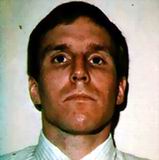
James Edward Swann, Jr., also known as “The Shotgun Stalker,” was an American serial killer whose drive-by shotgun shootings in Washington, D.C. in 1993 earned him that nickname in the press. He had been referred to as the “Shotgun Stalker” in the area of Washington, D.C. in 1993.
Swann was living in Iselin, New Jersey before the attacks. During the eight weeks in which the attacks occurred, he was living in various places in New Jersey, New York and Philadelphia and commuted to Washington to carry out the attacks when voices in his head ordered him to do so.
Timeline
Feb. 23, 1993 — The shootings began when Swann pointed a shotgun out the driver-side window of a small car and fired at a woman walking on Holmead Place NW; the shot missed.
March 23, 1993 — Elizabeth “Bessie” Hutson, 28, was shot while walking her dogs in an alley between 19th Street and Park Road NW.
April 19, 1993 — Swann was arrested after being spotted running red lights; the shotgun in his truck had just been fired, and the shootings ended with his arrest.
1994 — Swann was found not guilty by reason of insanity and confined to Saint Elizabeths Hospital.
The offence
Swann carried out a series of drive-by shotgun shootings in Washington, D.C. in 1993. Each attack followed a standard format: Swann slowed his car down next to a pedestrian and fired a 20-gauge shotgun at the target before driving away. He used a 20-gauge shotgun that he had purchased just under a year earlier at a K-mart in Oxon Hill.
The shootings lasted over two months in 1993 and took place in the Mount Pleasant and Columbia Heights neighborhoods. In total, four people were killed and five were seriously wounded in 14 attacks.
Swann chose his victims without regard to their race or sex. In 13 of the 14 attacks, he was in a car and he either shot at or threatened to shoot pedestrians walking alone. Most attacks were at night, and nearly all occurred in a 10-block radius in the Columbia Heights and Mount Pleasant neighborhoods.
The first target was a woman walking alone on Holmead Place, at Monroe Street, at 8:45 p.m. on February 23, 1993; the shooter missed. As the attacks continued and D.C. police recognized a pattern, detectives investigated the shooting scenes and patrol officers, both in uniform and street clothes, prowled the areas around the clock.
On March 4, two weeks after the first two shootings, Swann returned, shooting another pedestrian on Holmead Place; this victim was a 43-year-old man shot in the head. On March 17, in Mount Pleasant, a woman was hit by shotgun pellets from a passing car. On March 23, precisely four weeks after the first shooting, Swann killed Elizabeth “Bessie” Hutson, 28, as she walked her dogs in an alley between 19th Street and Park Road.
On April 4, the stalker took another shot once again at a woman walking on Holmead Place. On April 10, he returned to Holmead Place and shot at three pedestrians in the area, killing one, a 35-year-old man. On April 19, in broad daylight, he returned to Columbia Heights, taking shots at three pedestrians even as Metropolitan Police Department officers patrolled the area; on 13th Street, a 61-year-old woman was shot dead, described as the fourth homicide in the series.
Investigation
An investigation began after D.C. police recognized a pattern. Squads of detectives sifted for clues at the shooting scenes. Scores of patrol officers prowled Columbia Heights and Mount Pleasant round-the-clock while waiting for Swann to make a mistake.
Police urged residents to stay indoors after dark, and most complied.
Arrest
Swann was stopped and arrested by Metropolitan Police on April 19, 1993 after minutes after 61-year-old Nello Hughes was slain in a daylight drive-by shooting in the 3600 block of 13th Street NW.
Swann was apprehended after he was spotted running a red light. An off-duty police officer, Kenneth Stewart, spotted him running a red light on Sherman Avenue at Kenyon Street and turned to pursue. Swann turned into the Atlantic Plumbing parking lot, and Stewart blocked the exit with his own car, trapping him in the lot on Florida Avenue. The shotgun, lying on the back seat of the now-infamous blue Toyota, tied Swann to the shootings.
Trial
Swann was declared not guilty by reason of insanity after psychiatrists testified about his mental state.
Forensic psychiatrists agreed that Swann was suffering from paranoid schizophrenia at the time of the 1993 attacks in a D.C. Superior Court hearing.
During a videotaped interview played in court, Swann said:
“I hear these voices, and I wouldn't know where they were coming from, and they would command me to hurt people, to kill people.”
Swann also said that the voices commanded him to shoot people in Northwest Washington “in the name of” Malcolm X, described as a slain black nationalist leader.
Swann told psychiatrist Park Dietz that Malcolm X existed as an “evil spirit” and wanted people killed in Northwest Washington because he believed them to be responsible for Malcolm X’s 1965 assassination in New York.
Swann said the voices threatened to kill him and that they “squeezed his heart until he felt it was going to burst” and pressured his rib cage until the pain was nearly unbearable.
Swann described the voices screaming as “the chastisements” and said:
“They would just keep chastising me and chastising me,”
until “it felt like my head was going to explode.”
He said he could not resist when the voices in his head conveyed Malcolm X’s desire that he shoot people.
Sentencing / disposition
Under District law, Judge Colleen Kollar-Kotelly ordered Swann confined indefinitely in St. Elizabeths Hospital, a psychiatric facility. Swann was entitled to a hearing once every six months at which he could ask Kollar-Kotelly to release him. He would have to convince the judge that his mental health had improved and that he was no longer a danger to the public.
After hearing the psychiatrists’ testimony, Kollar-Kotelly ruled that Swann understood that what he was doing at the time of the shootings was wrong, but concluded he was unable to control himself because he feared the voices in his head would kill him if he did not obey them.
Outcome
Swann was found not guilty by reason of insanity and confined to Saint Elizabeths Hospital in 1994.
Other details
Victims and injuries
In the attacks, four people were killed and five were seriously wounded. Among the named victims were:
- a woman walking alone on Holmead Place at Monroe Street who was missed on February 23, 1993
- a 22-year-old man shot in the face and left partially blind in the 1400 block of Oak Street NW
- Elizabeth “Bessie” Hutson, 28, shot while walking her dogs in an alley between 19th Street and Park Road NW
- a 35-year-old man killed on April 10 in the area of Holmead Place
- a 61-year-old woman shot dead on 13th Street on April 19
Nello Hughes, described as the last victim, was slain in a daylight drive-by shooting in the 3600 block of 13th Street NW shortly before Swann’s arrest.
Defence and prosecution statements
The U.S. attorney’s office did not dispute the contention by Swann’s lawyers that his psychiatric disorder was so profound that he could not be held criminally responsible for the attacks.
Prosecutor Daniel S. Friedman said:
“He was plainly not guilty by reason of insanity” under D.C. law.
Friedman said all the doctors agreed and that:
“When all the doctors agree, there's no room for a trial, and justice is served by the fair application of the prevailing legal standard.”
Friedman also said:
“it is entirely another question whether the prevailing legal standard {in the District} is the best,”
and suggested that the city’s insanity-defense law ought to be toughened.
Personal history
Swann moved out of his sister’s apartment after a dispute in early 1993.
He moved to Oxon Hill to live with his sister a few years before the attacks and worked periodically as a security guard. During the eight weeks in which the attacks occurred, Friedman said Swann was living in various places and commuted to Washington.
The psychiatrists said Swann began to show signs of mental illness as a teenager and eventually started talking to himself and bursting into laughter for no apparent reason at work and family gatherings.
Swann was fired from a security guard job because he insisted on walking backward while patrolling the aisles of a drugstore, according to testimony.
Swann said he began to hear voices in his head one morning apparently in early 1993 after waking up in a Harlem hotel in New York.
Swann’s mother, June Swann, said that her son’s mental illness began to show itself and grow worse in the late 1980s and that she and others tried desperately to persuade him to seek professional help. She said:
“we tried desperately”
and: “If there was any way this could have been avoided, I would have done anything possible,”
She said she had been holding the four people’s families up in prayer:
“I hold those four people's families up in prayer every single day. That's all I can say. I've been a wreck since this started.”
Statements by relatives
Thomas R. Hutson, described as the father of Elizabeth “Bessie” Hutson, said later that he had long wanted to ask Swann why he committed the attacks. After watching the videotape, he said:
“there apparently is no rational answer.”
Hutson said:
“I think the phrase would be 'overwhelming impairment,' ”
“Either that or it's an overwhelming con job.”
Procedural note
Swann’s insanity defense was applied under District law, including a standard described as whether Swann was unable to recognize his conduct was wrong because of mental illness, or unable to “conform his conduct to the requirements of the law.”
Names and identifiers
Swann was referred to as James E. Swann Jr. and James Edward Swann, Jr. and was described as “Shotgun Stalker.” He was also described as “a.k.a. ‘The Shotgun Stalker.’” He was described as born in 1964 and as 29 or 30 at different points in the proceedings. He was described as a New Jersey native and as living in Iselin, New Jersey before the attacks.
Spotted an error, or have more information about this case?