
Jesse Morrison
Murderer Brian Kevin Rosenfeld
Murderer · USA · 1985
Brian Kevin Rosenfeld Brian Kevin Rosenfeld was sentenced to three concurrent l…
23 victims
Brian Kevin Rosenfeld
Murderer · USA · 1985
Brian Kevin Rosenfeld Brian Kevin Rosenfeld was sentenced to three concurrent l…
23 victims
 Yahweh ben Yahweh
Murderer · USA · 1980
Yahweh ben Yahweh was born and legally named Hulon Mitchell Jr. (October 27, 19…
23 victims
Yahweh ben Yahweh
Murderer · USA · 1980
Yahweh ben Yahweh was born and legally named Hulon Mitchell Jr. (October 27, 19…
23 victims
 Russell Ellwood
Murderer · USA · 1991
Russell Ellwood was a former taxi driver. Authorities suspected him of killing…
20 victims
Russell Ellwood
Murderer · USA · 1991
Russell Ellwood was a former taxi driver. Authorities suspected him of killing…
20 victims
 Robert Martines Perez
Murderer · USA · 1994
Name: Robert Martines Perez · Other name used in proceedings: Robert Martinez P…
15 victims
Robert Martines Perez
Murderer · USA · 1994
Name: Robert Martines Perez · Other name used in proceedings: Robert Martinez P…
15 victims
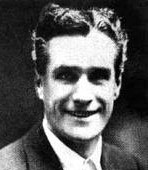 Patrick Mahon
Murderer · United Kingdom · 1924
Patrick Herbert Mahon (also known as Pat Waller), born in West Derby, Liverpool…
1 victim
Patrick Mahon
Murderer · United Kingdom · 1924
Patrick Herbert Mahon (also known as Pat Waller), born in West Derby, Liverpool…
1 victim
 Kathryn Schoch
Mass murderer · USA · 1934
Kathryn Schoch was a trained nurse who killed members of the Dempsey family in…
6 victims
Kathryn Schoch
Mass murderer · USA · 1934
Kathryn Schoch was a trained nurse who killed members of the Dempsey family in…
6 victims
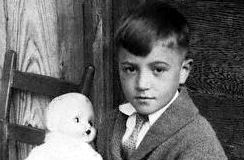 Carl Newton Mahan
Homicide · USA · 1929
Name: Carl Newton Mahan Carl Newton Mahan was described as a 6-year-old from Pa…
1 victim
Carl Newton Mahan
Homicide · USA · 1929
Name: Carl Newton Mahan Carl Newton Mahan was described as a 6-year-old from Pa…
1 victim
 Thomas Paul West
Murderer · USA · 1987
Defendant: Thomas Paul West · Victim: Don Bortle (Donald Bortle / Donald Bortle…
1 victim
Thomas Paul West
Murderer · USA · 1987
Defendant: Thomas Paul West · Victim: Don Bortle (Donald Bortle / Donald Bortle…
1 victim
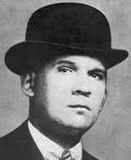 Harry Dobkin
Murderer · United Kingdom · 1941
January 7, 1943 — Harry Dobkin was hanged behind the walls of Wandsworth Prison…
1 victim
Harry Dobkin
Murderer · United Kingdom · 1941
January 7, 1943 — Harry Dobkin was hanged behind the walls of Wandsworth Prison…
1 victim
- Gender
- male
- Country
- USA
- Location
- Los Angeles County, California, USA
- Date of birth
- 1971
- Age at first offence
- 18
- Characteristics
- robbery, rape?, convicted rapist
- Victim profile
- Cesar Cardenas, 22
- Method of murder
- Shooting
- Date(s) of murder
- May 11, 1989
- Years active
- 1989
- Date of arrest
- March 27, 1990 (surrenders)
- Status
-
Sentenced to death
Sentenced to death on October 30, 1991
Case record: Jesse Morrison
Status and procedural history
Jesse Morrison was sentenced to death on October 30, 1991. The California Supreme Court upheld the death sentence in a home invasion robbery and murder case, rejecting a defense contention that evidence suggesting the crime was actually related to drug dealing should have been allowed.
Background
Cesar Cardenas was an Olympic aspirant in boxing and a self-employed printer. He lived with his mother, sister, and infant niece in the Wilmington home where he was killed. Lourdes Cardenas was Cesar Cardenas’ sister.
The offence
Morrison and others broke into the Wilmington home a little after midnight. Witnesses testified that Morrison, brothers Michael Berry and Shawn Berry, and a teenager broke into the house. The group had visited the house a few hours earlier to ask Cesar Cardenas about a printing job. The Cardenases knew the Berrys; they had been neighbors in Carson before the Cardenas family moved to Wilmington.
The robbers demanded money from Cesar Cardenas. Morrison ordered Cesar Cardenas to go into his bedroom and lie down on his bed. Cesar Cardenas was shot twice in the head at close range through a pillow. After the shots were fired, Morrison came out of the room and began firing at Lourdes Cardenas. Lourdes was severely wounded during the crime.
Lourdes Cardenas held her 4-month-old daughter while Morrison shot her in the face and breast as she held the child. Lourdes testified that she suffered bullet wounds in her neck and chest and spent two months in the hospital. At the time of trial, she still had a bullet in her lung.
The robbers fled with the family’s minivan and $2,000 in cash and jewelry.
Investigation
The day after the murder, police received information from a confidential informant claiming that Alex Cardenas had left $75,000 in cash in a red suitcase at a Wilmington residence. Police went there and found $31,600 in a burgundy-colored athletic bag. Two detectives later testified that the bag appeared to be the same one they had observed at the Cardenas home after the crimes. They testified that Lourdes Cardenas knew nothing about the money. The prosecution ultimately concluded that the money was in the Cardenas home at the time of the crimes and that it could not be tied to any illegal activity, so it was released to Lourdes Cardenas.
Arrest and surrender
Morrison and Michael Berry surrendered to Rockville, Md., police on March 27, 1990, a day after an “America’s Most Wanted” segment detailed a manhunt for the pair. Morrison was convicted of robbing and shooting to death Cesar Cardenas in Cardenas’ home and of the attempted murder of his sister, Lourdes Cardenas, in May of 1989.
Trial
Witness identification and evidence
Lourdes Cardenas testified that she awoke to voices in the hallway outside her bedroom and saw Morrison, Michael Berry, and the teenager armed with guns demanding money from her brother. She testified that Michael Berry said:
“Give us the money. Give us what we want.”
Lourdes Cardenas identified Morrison at trial. Morrison was convicted on the basis of a witness ID and a fingerprint at the victim’s home.
Morrison “scored 76 on an IQ test.” His conviction was tied to the witness identification and the fingerprint at Cesar Cardenas’ home.
Defence position and rulings on evidence
The defense contended that Morrison had been misidentified, perhaps intentionally. Lourdes Cardenas testified that the prosecution requested money from her brother and that she gave $2,000 and some jewelry. The defense argued on cross-examination that Lourdes Cardenas lied by claiming she had no idea what Michael Berry meant when he said “Give us the money. Give us what we want.”
Los Angeles Superior Court Judge Gary Ferrari ruled the defense did not show that the evidence was relevant, that Cardenas lied, or that the prosecution committed misconduct by not “correcting” the testimony.
Supreme Court evidentiary ruling and quotations
In the Supreme Court appeal, Justices rejected the defense contention that evidence suggesting a drug-dealing connection should have been allowed. Justice Marvin Baxter wrote for a unanimous court.
The Supreme Court described the proposed offer of proof as follows:
“The offer [of proof] consisted at most of a vague claim of evidence ‘floating around’ of a ‘possible drug connection’ on the part of Alex Cardenas, who was living in Nevada,”
Justice Baxter wrote that trial counsel offered no explanation for how Alex’s alleged drug involvement could prove or disprove disputed material facts:
“Trial counsel offered no explanation as to how Alex’s alleged drug involvement had any tendency to prove or disprove any disputed material fact in the case, or what evidence was even available to establish Alex’s drug connection and its relevance to the instant crimes.”
Justice Baxter also stated that even if relevant, the proffered evidence would have been inadmissible hearsay:
“Even if relevant, the proffered evidence of Alex Cardenas’ alleged drug activities would have been inadmissible hearsay,”
On credibility and the $31,600 cash, Justice Baxter wrote:
“Nor did the discovery of the cash necessarily undermine Lourdes Cardenas’ credibility,”
He further wrote:
“Defendant’s conclusion that Lourdes must have known what Michael Berry specifically had in mind when he demanded, ‘Give us what we want ...does not inevitably or necessarily follow from the mere fact that the police released $31,600 to her after the crimes,”
Justice Baxter also wrote:
“Although it arguably may be inferred from Lourdes’s receipt of the money that she might have at least suspected Michael Berry to have had some knowledge of the money, her testimony to the contrary was not physically impossible or demonstrably false.”
Participants and accomplices
Witnesses testified that the group included Morrison, brothers Michael and Shawn Berry, and a teenager. The teenage accomplice was identified only as Nathan L., and was 15 years old at the time. The teenager was committed to the California Youth Authority by a juvenile court judge.
Michael Berry went to prison for life without parole. Shawn Berry was sentenced to four years in state prison after pleading guilty to a reduced charge of residential burglary. One unarmed accomplice was sentenced to four years in state prison.
Michael Berry was “10 years older and a role model for Morrison.”
Sentencing
Morrison was sentenced to death on October 30, 1991.
Michael Berry was sentenced to life imprisonment without possibility of parole.
Shawn Berry received a four-year sentence in state prison after pleading guilty to a reduced charge of residential burglary.
The teenager, Nathan L., was committed to the California Youth Authority by a juvenile court judge after being convicted of first-degree murder in juvenile court and serving a term in CYA.
Appeals
The California Supreme Court upheld Morrison’s death sentence in a home invasion robbery and murder case. The court rejected the defense contention that evidence suggesting the crime was actually related to drug dealing should have been allowed.
Outcome
The death sentence imposed on Morrison was upheld by the California Supreme Court.
The case is People v. Morrison, 04 S.O.S. 6368.
Other details
Morrison turned himself in after seeing his case featured on “America’s Most Wanted.” Morrison was convicted of robbing and shooting to death Cesar Cardenas, and of the attempted murder of his sister, Lourdes Cardenas, in May of 1989. Attorneys who argued in the Supreme Court were John Dodd of Irvine, by court appointment, for the defendant, and Deputy Attorney General Juliet Swoboda for the prosecution.
Spotted an error, or have more information about this case?