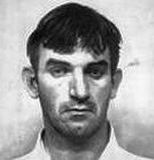
Robin Reid
Murderer Christopher Flannery
Murderer · Australia · 1979
Christopher Dale Flannery (1949 - missing and believed murdered ca. May 9, 1985…
12 victims
Christopher Flannery
Murderer · Australia · 1979
Christopher Dale Flannery (1949 - missing and believed murdered ca. May 9, 1985…
12 victims
 Bevan Von Einem
Murderer · Australia · 1979
Bevan Spencer von Einem (born c.1945), also known as Bevan von Einem (with the…
5 victims
Bevan Von Einem
Murderer · Australia · 1979
Bevan Spencer von Einem (born c.1945), also known as Bevan von Einem (with the…
5 victims
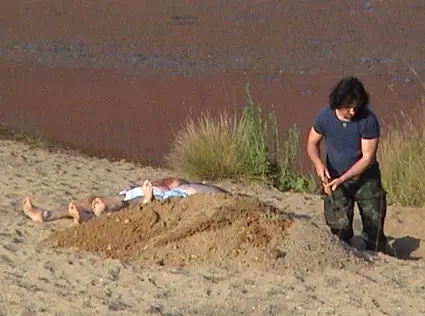 Joseph Schwab
Murderer · Australia · 1987
Joseph Schwab was a German man who murdered five tourists in the Northern Terri…
5 victims
Joseph Schwab
Murderer · Australia · 1987
Joseph Schwab was a German man who murdered five tourists in the Northern Terri…
5 victims
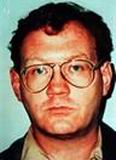 Lindsay Robert Rose
Murderer · Australia · 1984
Lindsay Robert Rose was sentenced to five consecutive sentences of life impriso…
5 victims
Lindsay Robert Rose
Murderer · Australia · 1984
Lindsay Robert Rose was sentenced to five consecutive sentences of life impriso…
5 victims
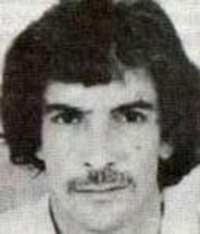 Keith Faure
Murderer · Australia · 1976
Keith George Faure was born in June 1951. He was an Australian career criminal…
4 victims
Keith Faure
Murderer · Australia · 1976
Keith George Faure was born in June 1951. He was an Australian career criminal…
4 victims
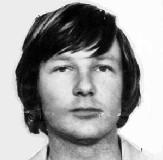 Samuel Leonard Boyd
Murderer · Australia · 1982
Samuel Leonard Boyd was sentenced to 5 consecutives sentences of life imprisonm…
4 victims
Samuel Leonard Boyd
Murderer · Australia · 1982
Samuel Leonard Boyd was sentenced to 5 consecutives sentences of life imprisonm…
4 victims
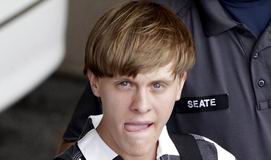 Dylann Roof
Mass murderer · USA · 2015
Dylann Storm Roof (born April 3, 1994) was an American suspected of perpetratin…
9 victims
Dylann Roof
Mass murderer · USA · 2015
Dylann Storm Roof (born April 3, 1994) was an American suspected of perpetratin…
9 victims
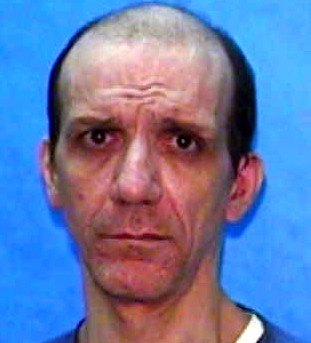 Francisco del Junco
Serial killer · USA · 1995
Francisco del Junco came to Miami in the 1980 Mariel boat lift. He was describe…
4 victims
Francisco del Junco
Serial killer · USA · 1995
Francisco del Junco came to Miami in the 1980 Mariel boat lift. He was describe…
4 victims
 Debra Lynn Baker
Murderer · USA · 1990
Debra Lynn Baker was convicted of Jerry Sternadel’s murder. She received 10 yea…
1 victim
Debra Lynn Baker
Murderer · USA · 1990
Debra Lynn Baker was convicted of Jerry Sternadel’s murder. She received 10 yea…
1 victim
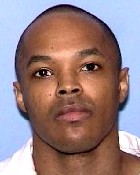 Terry Darnell Edwards
Murderer · USA · 2002
Name: Terry Darnell Edwards TDCJ Number: 999463 Date of birth: 08/10/1973 Gende…
2 victims
Terry Darnell Edwards
Murderer · USA · 2002
Name: Terry Darnell Edwards TDCJ Number: 999463 Date of birth: 08/10/1973 Gende…
2 victims
 Reinaldo Dennes
Murderer · USA · 1996
Reinaldo Dennes was born in Havanna, Cuba, on 2/9/56. His family came to the US…
1 victim
Reinaldo Dennes
Murderer · USA · 1996
Reinaldo Dennes was born in Havanna, Cuba, on 2/9/56. His family came to the US…
1 victim
- Gender
- male
- Country
- Australia
- Location
- Queensland, Australia
- Date of birth
- October 20, 1948
- Age at first offence
- 34
- Characteristics
- kidnapping, rape, torture
- Victim profile
- Peter Aston, 13
- Method of murder
- Buried alive
- Date(s) of murder
- May 4, 1982
- Years active
- 1982
- Date of arrest
- 2 days after
- Status
-
Life imprisonment
Sentenced to life in prison on November 26, 1982
Case record
Status and sentence
Robin Reid was sentenced to life imprisonment on November 26, 1982.
In prison, Robin Reid was kept in protective custody for his own safety.
Reid applied for a re-determination of his sentence on 26 November 1998 and was re-sentenced to life imprisonment with a non-parole period of 24 years, meaning he would be eligible for parole in 2006. In March 2010, Reid had his third parole application rejected.
People
- Robin Reid — Australian criminal; born in Hampshire, England, on 20 October 1948.
- Peter Aston — 13-year-old Brisbane schoolboy; kidnapped, sexually assaulted, tortured and murdered in 1982.
- Terry Ryan — Brisbane schoolboy; kidnapped and subjected to sexual assault and prolonged torture; later cooperated with police.
- Paul Luckman (later known as Nicole Louise Pearce) — fellow Australian military personnel and accomplice; born in Melbourne on 1 November 1964; convicted alongside Reid and sentenced to life imprisonment.
Additional individuals mentioned:
- Michael (Peter Aston’s brother) — made threats involving a rifle; was involved in events during the committal hearing context.
- Belita Ryan — Terry Ryan’s mother.
- Sergeant Wayne King — Queensland Criminal Investigation Branch.
- Detective Senior Constable Robert Guteridge — Queensland Criminal Investigation Branch.
- Senior Constable Mark Ferguson — local detective.
- Police officers at Glen Innes: Sergeant Jack Harvison and Senior Constable Goodall.
- Constable Vincent Towns — Tenterfield Highway Patrol.
- Detective Sergeant Bob Jackson — detective; searched rooms and later described aspects of evidence.
- Detective Ian “Spiro” Spiers — Murwillumbah Police.
- Detective Superintendent Mark Jackson — Brisbane Homicide Squad.
- Detective Sergeant Peter Dunston and Mark Ferguson — interviewed Reid.
- Detective Sergeant Eric Strong and Detective Eric Grimmond — interviewed Luckman.
- Magistrate Brian Hanrahan — presided over the committal hearing.
- Mr. Justice Adrian Roden — presided over the trial.
- Crown Prosecutor David Shillington QC — prosecution.
- Detective Spears — referenced in the account of room search.
- Private Robert Ponzetti — Enoggera Army Camp; car theft victim and captive during the escape.
- Private Paul Luckman — named as part of the escape attempt (in some sections he is identified as Paul Luckman / Luckman).
- Corporal Robin Reid — named as part of the escape attempt.
- Peter Hoskins — young soldier who came forward with information about a conversation on the night of 18 April, a fortnight before Peter Aston was murdered.
- John Bruce (named as John Andrew Bruce in one account) — a hitchhiker picked up by Reid and Luckman two days before Peter Aston was murdered.
- Dr. John Follent — performed a post-mortem on Peter Aston at the Tweed Heads District Hospital.
- Professor Paul Wilson — Dean of Bond University and criminologist.
- Tactical Response Group — called to monitor everyone entering the courthouse.
- Nicole Louise Pearce’s psychiatrist/visiting psychiatrist — referenced as assessing her gender-related needs in prison.
- William placeholders appear only in sample identification strings for hair samples (e.g., “Bill W pubic”, “Bill W guts”), and “Derek H … under arms” appears as a printed sample identification string.
Timeline
- 4 May 1982 — Brisbane schoolboys Peter Aston and Terry Ryan were kidnapped on the Gold Coast, QLD.
- 4 August 1982 — Committal hearing was held at Tweed Heads Court.
- 8 November 1982 — Trial began.
- 26 November 1982 — Jury delivered verdict of guilty for both accused; Robin Reid and Paul Luckman were sentenced to life imprisonment.
- 26 November 1998 — Robin Reid applied for a re-determination of his sentence; he was re-sentenced to life imprisonment with a non-parole period of 24 years.
- March 2010 — Reid’s third parole application was rejected.
- 26 October 1999 — Nicole Louise Pearce was released from the Kirkconnell Correctional Centre.
Background
Robin Reid was born in Hampshire, England, on 20 October 1948 and immigrated to Australia with his family in 1961, where they settled in Queensland.
Reid worked in laboring and sales and developed an interest in various knives, bows and arrows.
Reid joined the Army in 1972 and was stationed at Enoggera, where he met his future accomplice, 17-year-old Paul Luckman. The two became close, sharing interests in weapons, violence, sexual torture fantasies, Satanism and homosexuality. Reid was given the army base nickname "Head-job Bob".
Paul Luckman was born in Melbourne on 1 November 1964. He grew up in a broken home and had little or no relationship with his parents or step-parents. He did not meet his real mother until he was 13, having been raised by his father and a stepmother. His mother lived with a violent alcoholic who bashed her constantly. Luckman left school at 16, went on the dole, and supported his income by prostituting himself to men. He also enjoyed dressing in women’s clothing. Luckman joined the army at 17 and within three months was transferred from Melbourne to Enoggera Army Camp. Upon arrival at Enoggera, Luckman was sent to Corporal Robin Reid for allocation of accommodation and moved in with him. The pair became inseparable.
A conversation described by Peter Hoskins involved abduction and torture. Hoskins reported that Reid had said that he would like to kidnap a couple of ‘coons” and torture and sacrifice them on a stone altar, and that he would inflict lots of pain before killing them. Hoskins reported that Reid had wanted to bury bodies in shallow bush graves where they wouldn’t be discovered for up to 20 years. Hoskins reported Reid produced a medical book, pointed out how and where he would cut victims, and believed that cutting and burning them with cigarette butts would be the most effective method of torture without actually killing them. Hoskins reported that Reid produced two knives and held Luckman in a headlock to demonstrate the technique to Hoskins.
It was also revealed that Reid and Luckman had picked up another young hitchhiker, John Bruce, two days before they murdered Peter Aston. Reid said:
I still had control of my reality and emotions in relation to John. We still had to abduct him and I thought we would terrorize him, okay, and we wouldn’t take him to the police and my fantasies were being got at this stage. We set out to kill John Andrew Bruce but I couldn’t and we let him go. But when we came to Peter (Peter Aston) it was getting stronger. Lack of sleep, other things, were building up within me. The fantasies had got to me at this stage but … there was no feeling, there was no satisfaction or feeling in me when I set out to kill Peter.
The offence
On the morning of 4 May 1982, Brisbane schoolboy Peter Aston decided to hitchhike to his hometown of Melbourne to join his brother. Peter’s school friend, Terry Ryan, agreed to keep him company until he reached the Gold Coast and then planned to go back home.
The two caught the train to Beenleigh and bought some clothes, then proceeded to hitchhike south down the Gold Coast highway. After a short while, they came across a yellow 4WD Daihatsu and its occupants Reid and Luckman, who offered to give the boys a lift down the coast.
Not long on the road, the two boys were threatened at knife and gunpoint. Reid and Luckman drove the car over the Queensland/New South Wales border to the beach-side town of Kingscliff, where they forced the two boys out of the car and down a secluded beach track.
Reid and Luckman then bound, sexually assaulted and savagely beat the two boys. Terry Ryan was forced to bash and assault his friend Peter. Peter Aston was stabbed, tortured and ultimately buried alive.
When Terry Ryan reasoned with the attackers, Reid and Luckman agreed to drive him home. Terry later told police that Reid and Luckman told him they were Satan worshippers and they had to do it [kill Peter Aston] for the sacrifice. Terry Ryan told police:
"They got everything they had, put it in the car and drove off, and me too, and they drove me back home. While we were driving they told me that they were Satan worshippers and they had to do it [kill Peter Aston] for the sacrifice."
In another account of Terry’s evidence, he described being taken with Reid and Luckman into bushland, being sexually assaulted as part of the torture, and describing actions including stabbing, shaving and burying Peter.
Terry Ryan told the detectives:
“We met at a place called the Sands at about 8.30 that morning. It’s a place in the bush and it’s got sand and a little creek. From there we went to the nearby lake and played on the Tarzan swings.
“At about 10.30am we went down to the Kingston Railway Station and caught the train into Brisbane and got off at the Brunswick Street Station. We went into Myers and got some shoes, jeans and a shirt each. From there we caught the train to Woodridge and Peter went into K-Mart and got a carton of Winfield 25s – the red ones.
“From there we caught a train down to Beenleigh and went into Coles and bought a jacket each. By then it was early afternoon and we walked down to the Gold Coast Highway and started hitchhiking while we walked south. Not far down the highway we came across a yellow 4WD Daihatsu with the hood up and a bloke with his head under the bonnet and another bloke sitting in the passenger seat.
“We asked them if they would give us a lift down to the coast and the bloke under the bonnet told us to hop in and that they were leaving now as he had fixed what was wrong with the car.
“They were both casually dressed in jeans and jumpers and told us that their names were Bob and Paul. Paul was much younger than Bob – who was driving – and Peter got in alongside him while I sat in the back next to Paul. I told them our names were Peter and Terry and we took off heading south.”
Terry Ryan stated regarding threats with a rifle:
“They were both wearing jeans and jumpers and told us that their names were Bob and Paul… Paul produced a rifle from beneath a blanket on the floor and held it at Terry’s head. Bob pulled the car over to the side of the road, and Paul warned Peter that if he moved he would ‘make a bullet in the head or the back.’”
Terry Ryan described a threat regarding killing someone tonight:
“We are going to kill someone tonight. If not, it will be you.”
Terry Ryan described events at Kingscliff, including being made to witness torture:
“Then they dragged both of us along the ground toward the beach. They were very rough with us and threw us around a lot. Then they made us lay on the ground with our legs apart and our arms out straight and took off all of Peter’s clothes. He struggled against them but it was useless.”
Terry Ryan described hearing a crack from the rifle butt and events that followed:
“Then I heard something crack. It was the rifle butt. Paul told Peter to ’shut up’ and then swung the rifle as hard as he could and hit him [Peter] in the jaw with it and then Peter fell to the ground. He hit him so hard that the rifle butt broke.”
Terry Ryan described being punched and then being told to participate in sexual acts:
“Then Bob came over to me and punched me in the face while I was on the ground and it made my nose bleed.”
He also described being made to suck Peter off and eat pubic hairs:
“Bob made me lean over Peter and suck him off. Bob just said, ’Go on.’ Then they made me eat his pubic hairs. The hairs from his privates. Bob cut some of the hairs off Peter’s privates and stuffed them in my mouth and made me eat them. He said, ‘Eat them.’”
Terry Ryan described burying Peter and returning to get clothes:
“When they dropped me off Bob got out, opened up the back and let me out. Bob shook my hand and made me promise I wouldn’t [tell anyone] . He said, ‘If you do the same thing will happen to you.’”
Terry Ryan described returning home and telling his mother:
“I ran home. Along the way I went into the bush and took all the clothes off and I had my T-shirt and shorts on when I went home. I told my mother straight away what had happened and she called the police.”
Investigation
Reporting and initial police response
Terry Ryan immediately told his mother and Belita Ryan drove him to the police station to report the kidnapping and murder of his friend.
In the early hours of May 5, Terry retold his story to Sergeant Wayne King and Detective Senior Constable Robert Guteridge of the Queensland Criminal Investigation Branch. At approximately 4:45 that morning, the detectives drove Terry and his mother into New South Wales to Tweed Heads Police Station, where they joined Senior Constable Mark Ferguson.
On the boy’s instructions, they first drove to and examined the contents of a garbage bin in nearby Foux Park and then examined the sink, walls, urinal and cubicle of a local public toilet. They then proceeded along the Coast Road to a bush track leading east toward the ocean. The trail petered out to nothing on the first investigations. The fourth track investigation found fresh tire tracks.
The detectives came across a grave-sized mound of earth off to the north-east, covered with small tree branches and twigs broken from nearby trees. The raised soil contained spots of blood in the sand and a large, wet, blood-soaked section. At the gravesite they found a dark sock and a knife in a sheaf, along with numerous chewed matchsticks.
A post-mortem was performed later that day by Dr. John Follent at the Tweed Heads District Hospital.
Post-mortem findings
Dr. John Follent reported:
- multiple lacerations to the top of his head, and areas of the hair on his head that had been cut short,
- a deep cut to the back of his head and bruising to the left side of his head,
- a depressed fracture of his skull with underlying brain damage,
- leather punch marks and bruising on his left ear, plus lacerations to the front and back of the same ear,
- bruising to his mouth, lips and chin,
- lacerations to his right eye area and cheek,
- a partial dislocation between his second and third cervical vertebrae, plus fractures of his vertebrae,
- a large stab wound to the right side of his throat, and severing of the internal jugular vein and external arteries,
- cigarette burns to the front of his chest,
- stab wounds to his left shoulder and severe bruises to his left wrist,
- a stab wound to the left side of his abdomen,
- shallow lacerations over his right loin and flank, plus bruising to his left buttock, scrotum and penis, and hair missing from his pubic area,
- stab wounds to his left and right legs below the knees and under the toes,
- 15 more laceration wounds and 14 other types of abrasions, lacerations and bruises,
- the presence of sand in his nose, mouth, trachea and bronchial tract, most likely caused by inhalation.
Dr. Follent said that Peter Aston could have died from the skull fracture. Dr. Follent said it was likely that, after he had been bashed and tortured, Peter Aston was buried alive and died of asphyxiation due to the sand in his nose, mouth, trachea and bronchial tract.
Evidence collection at the army base
After Terry’s disclosure and subsequent events, police searched the room that Robin Reid shared with Paul Luckman.
Police took possession of several of Reid’s swords, spears and counted 37 knives of different shapes and sizes. Further search among books of gay literature and Satanism revealed a photograph album containing clusters of men’s pubic hair taped onto each page. Police found a notebook with handwritten essays about leading a boy down a bush track at knifepoint and then holding him in a headlock with a knife at his throat while he undressed him.
Detective Sergeant Bob Jackson later described the room:
“The room was untidy and divided into four sections with beds occupying the two front sections near the door. This area had two large wooden lockers which acted as a petition, leaving the back section as one large room. From papers found in this section it was apparent that it was the area occupied by Robin Reid. Evidence Inspector Jackson and I searched this section and took possession of 37 knives of different shapes and sizes which were on display in various parts of that room as well as eight swords, one cutlass, one spear head and two scalpels which were on display on the walls and in the cupboard. We then conducted a search of the front area of the room and from the personal material found there it was obvious that this was the part occupied by Paul Luckman. We removed a pair of bone colored jeans and a red and white floral shirt of which both were bloodstained. I noticed a pair of steel crutches next to the bed.”
Bob Jackson stated that they inquired about the crutches and that it transpired Luckman’s foot was severely bruised and swollen from repeatedly kicking Peter.
Jackson described further evidence:
“A further search among the books in Reid and Luckman’s room revealed a photograph album containing clusters of what appeared to be human hair taped onto each page. Written on the page at the top of each sample was its identification, such as “Bill W pubic”, “Bill W guts”, “Derek H … under arms”, and so on. In the same catalogue were pictures cut from magazines of naked and semi-naked youths either tied up or in bondage positions. Among the many homosexual books found was one in which the models had been cut out and pasted onto each other to create sexually suggestive positions.”
Jackson continued:
“Bob Jackson continued: We had no idea what to expect when we went into that room but it didn’t take long to realize that we had a couple of really strange bastards on our hands. On top of the arsenal of knives, the piles of homosexual books with the cutouts pasted on top of one another and the scrapbook with pubic hair samples, we also discovered dozens of books on Satanism. Some of the titles were the Devil’s Prayer Book , the Satan’s Bible and the History of Witchcraft . In a note book one of them had handwritten essays about leading a boy down a bush track at knifepoint and then holding him in a headlock with a knife at his throat while he undressed him. There wasn’t much doubt that these blokes could help us with our investigations.”
Escape attempt, detention and arrest details
Early in the morning of May 6, about 24 hours after Terry Ryan took police to the grave, Private Robert Ponzetti was awakened by someone shaking his leg in his room at the Enoggera Army Camp.
The account described 17-year-old Private Paul Luckman and 34-year-old Corporal Robin Reid. Ponzetti knew Reid well as he had shared a room with him before.
Ponzetti described being forced with a knife across his throat and being taken to another vehicle. Ponzetti was threatened during the escape attempt and the stolen car was used. Luckman turned to Ponzetti and said:
“That kid that was killed on the Gold Coast. That was us.”
Reid conceded:
“We just did it for kicks,” Reid conceded.
Ponzetti described Reid’s response:
“It was a mistake. We just wanted to explore.”
There were additional statements during the escape, including:
“Most of this is a load of crap. The other 13-year-old kid, he helped.”
When questioned about dropping Ponzetti off, Luckman and Reid made statements about leaving the car and leaving a note to notify an insurance company. Reid said they would park the car in a no-standing place so the police would find it:
“We are going to park the car in a no-standing place so the police will find it,” Reid said.
Reid said:
“We are going to leave a note to notify your insurance company.”
The police later issued a notice to be broadcast over the New South Wales Police Network for all officers to be on the lookout for a mustard-colored Daihatsu 4WD, describing the occupants as armed and dangerous, with the names Bob and Paul.
A squad of New South Wales and Queensland detectives searched and then arrested the suspects. A roadblock and subsequent arrest occurred, and Robin Reid and Paul Luckman were apprehended without resistance at the location described in the narrative.
Arrest and detention
Robin Reid and Paul Luckman were arrested on the New England Highway after a police roadblock. Reid came out with his hands in the air while Luckman was found cowering on the front seat.
They were refused bail and taken into custody.
Trial
A committal hearing was held at Tweed Heads Court on 4 August 1982 before Magistrate Brian Hanrahan.
The case was transferred to the Sydney Supreme Court. The trial began on 8 November 1982.
In the trial:
- Paul Luckman pleaded 'not guilty'.
- Robin Reid pleaded 'not guilty by reason of insanity'.
The prosecution elected not to show photographs of the deceased to the jury. Mr. Justice Roden agreed with the strategy and told the court that he believed it would be in everyone’s best interests if the jury were spared the visual horror of what happened to Peter and instead heard it from the witnesses.
The Crown Prosecutor was David Shillington QC.
The jury was described as consisting of three women and nine men. The trial proceeded with evidence against both accused, with the focus on which of the defendants played the major role.
Among allegations discussed in trial context:
- Luckman claimed he was forced to participate due to a direct threat on his life by Reid, alleging Reid said: “We are going to kill someone tonight. If not, it will be you.”
- Reid defended on insanity, claiming bisexuality put him under much stress because of fear of discharge from the army, and that his job in the Ordinance Corps put him under constant pressure and his obsession with the occult caused him to hear voices.
Sentencing and outcome
On 26 November 1982, the jury delivered a verdict of guilty for both accused.
Mr. Justice Roden sentenced Reid and Luckman to life imprisonment.
Mr. Justice Roden said:
“one of the most brutal and callous crimes ever to come before the courts in this state.”
After sentencing, the prisoners were taken away to begin their sentences in separate jails.
Appeals
Reid applied for a re-determination of his sentence on 26 November 1998. He was re-sentenced to life imprisonment with a non-parole period of 24 years, making him eligible for parole in 2006.
In March 2010, Reid’s third parole application was rejected.
Aftermath
Prison for Nicole Louise Pearce (Paul Luckman)
Paul Luckman considered himself to be female. In the early nineties, she was confined at Cooma near the Snowy Mountains in Southern New South Wales in a jail for male sex offenders. While there, she was known by the name Pearce and was treated as a woman but still had a penis at that time.
On 26 October 1999, she was released from the Kirkconnell Correctional Centre, a minimum security male-only facility in inland New South Wales.
The narrative described that if surgery was ever carried out, it was done after confinement at Cooma, probably after confinement at Kirkconnell.
Nicole Louise Pearce changed her name by deed poll to Nicole Louise Pearce in 1990, grew long hair and commenced daily hormone treatment to grow breasts, and a full sex-change operation occurred in prison. On 20 October 1993, Nicole had her sentence re-determined to a maximum of 24 years and a minimum of 16 years.
Protective custody and parole eligibility for Robin Reid
Since imprisonment, Robin Reid was kept in protective custody for his own safety.
Quotes from statements and interviews (verbatim)
Robin Reid’s statement to police included:
“The boys told us that they’d stolen some cigarettes, I think 20 packets and the clothes that they were wearing were stolen. We proceeded to get rid of him (Peter Aston). I remembered that I had hit him, I don’t know how many times or how severe but I only used my hand. I am not normally a violent person. Nothing was said about the little one (Terry Ryan) but I think I hit him once. The little one asked us if he could join us. We said, “Yes”. The little one helped us. He burned the big one (Peter Aston) with a lighted cigarette. He put a hole in the big one’s ear. He also kicked him. I can’t remember a lot but I have a strong feeling that I stabbed the big one once because although they didn’t like him, I didn’t want to see him in agony. Paul hit him with a shovel I think to quiet him and stabbed him. All three of us helped bury him because we were told to get rid of the body. That’s as far as I can remember at this stage. Can I say at this stage that I deeply regret doing it. It’s not something that I’m proud of and I am very sorry for my actions in this murder. It’s murder, isn’t it? I’ll say murder.”
Paul Luckman’s statement to police included:
“Peter went down then Bob shaved Peter around his genitals and told him (Terry Ryan) to go down and suck him off. While he was doing that Bob cut Peter’s hair then he took Terry off and Terry turned around and said, “Can I join in?” and Bob said, “Yes”. And Bob and Terry walked about 20 meters inland with a shovel to go and dig a grave. Whilst they were gone Peter said to me, “What are you going to do with me?” I did not answer. Bob and Terry returned and Peter got up and ran inland. Terry and I ran after him to catch him. We caught him and took him back. Then Bob started crushing his genitals again then Terry grabbed a can of Aeroguard and matches and lit it towards Peter’s hair on his head and to his genitals. Then Bob put the thumb cuffs on Peter’s big toes and told him not to run or he’d kill him. So Peter did and the thumb cuffs came undone. Terry and me ran after him and caught him and took him back. Then I said to Bob, “It’s time we left.” Then Bob said, “You go first.” Then I cut his throat approximately four millimeters deep and stabbed him in the left or right shoulder. Then Bob stabbed him a few times, one in the back of the throat. Then Peter fell down on the ground and started spitting out blood and was dead I think. Then Bob dug a shallow hole and put Peter in there and covered him up.”
Detective Sergeant Bob Jackson said later:
“Spiro (Detective Spiers) and I drove down to Glen Innes that night, taking with us the exhibits that we had taken from the suspect’s room at Enoggera to use in the interviews if necessary. On arrival at Glen Innes both of the alleged offenders were being formally interviewed, Reid by Detective Sergeant Peter Dunston and Mark Ferguson, and Luckman by Detective Sergeant Eric Strong and Detective Eric Grimmond from Casino.”
Detective Sergeant Bob Jackson said:
“It looks like we ' ve got the bastards, Spiro.”
He also said in describing Reid’s scene tour:
“The sick bastard was enjoying his 15 minutes of fame.”
Other details
Terry Ryan’s life after the trial
The narrative said that Terry Ryan suffered as a result of involvement in the crime laid bare during the trial. He became a pariah, was assaulted and spat upon, and attended the Wilson Youth Hospital for psychiatric assessment after the trial.
It said he had been in and out of prison for offences including assault and car theft. It said that it was documented that he showed anti-authoritarian behavior, lacked anger management, and suffered from alcohol and drug abuse. His mother said he still suffered from nightmares and flashbacks.
Media depiction
The murder of Peter Aston was depicted in the Crime Investigation Australia episode "Buried Alive: Luckman and Reid".
Publication references included
The narrative included references to:
- “Paul Luckman & Robin Reid: Australian Child Killers by Paul B. Kidd”
- “An Astonishing Sto ry”
Professor Paul Wilson comment about release
Professor Paul Wilson commented on Paul Luckman’s release in 1999, stating:
“I had severe reservations about him then, being released this early. Although it has been 15 years since I have seen him, my view then was that it was very unlikely he would change. Not so much the pedophilic tendencies, more the psychopathic tendencies that worried me. He was someone that was easily manipulated and enjoyed violence.”
Spotted an error, or have more information about this case?