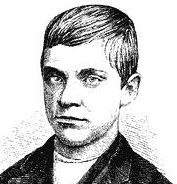
Jesse Pomeroy
Homicide Troisville Sykes
Homicide · USA · 1883
Troisville Sykes. Kate Townsend was Troisville Sykes’s mistress. She owned a ho…
1 victim
Troisville Sykes
Homicide · USA · 1883
Troisville Sykes. Kate Townsend was Troisville Sykes’s mistress. She owned a ho…
1 victim
 Edward Brian Capetillo
Homicide · USA
Edward Brian Capetillo was a Latino male who was 17 years of age at the time of…
1995 victims
Edward Brian Capetillo
Homicide · USA
Edward Brian Capetillo was a Latino male who was 17 years of age at the time of…
1995 victims
 Jack Kevorkian
Homicide · USA · 1990
Jack Kevorkian (born May 26, 1928) was a controversial American pathologist. He…
130 victims
Jack Kevorkian
Homicide · USA · 1990
Jack Kevorkian (born May 26, 1928) was a controversial American pathologist. He…
130 victims
 David Koresh
Homicide · USA · 1993
David Koresh (born Vernon Wayne Howell; August 17, 1959 – April 19, 1993) led t…
79 victims
David Koresh
Homicide · USA · 1993
David Koresh (born Vernon Wayne Howell; August 17, 1959 – April 19, 1993) led t…
79 victims
 Nathaniel Gordon
Homicide · USA · 1860
Nathaniel Gordon (c.1834 – February 21, 1862) was the first and only American s…
29 victims
Nathaniel Gordon
Homicide · USA · 1860
Nathaniel Gordon (c.1834 – February 21, 1862) was the first and only American s…
29 victims
 Sabine Hilschenz
Murderer · Germany · 1988
Sabine Hilschenz was a German woman convicted of infanticide involving eight of…
9 victims
Sabine Hilschenz
Murderer · Germany · 1988
Sabine Hilschenz was a German woman convicted of infanticide involving eight of…
9 victims
 Eddie Leroy Trice
Murderer · USA · 1987
Eddie Leroy Trice Eddie Leroy Trice was an Oklahoma state prisoner sentenced to…
1 victim
Eddie Leroy Trice
Murderer · USA · 1987
Eddie Leroy Trice Eddie Leroy Trice was an Oklahoma state prisoner sentenced to…
1 victim
 Adam Moss
Mass murderer · USA · 2001
Adam Moss Adam Moss killed Leticia Aguilar, 31; her five children, and Ron Fish…
7 victims
Adam Moss
Mass murderer · USA · 2001
Adam Moss Adam Moss killed Leticia Aguilar, 31; her five children, and Ron Fish…
7 victims
 Cyril Darville
Serial killer? · The Bahamas · 1990
Cyril Darville was convicted for a murder committed in 1990. He had a prior rec…
9 victims
Cyril Darville
Serial killer? · The Bahamas · 1990
Cyril Darville was convicted for a murder committed in 1990. He had a prior rec…
9 victims
- Gender
- male
- Country
- USA
- Location
- Boston, Massachusetts, USA
- Date of birth
- November 29, 1859
- Age at first offence
- 15
- Characteristics
- juvenile (14), child abuse, torture, kidnapping, rape?, rapist
- Victim profile
- Katie Curran (female, 10) / Horace Millen (male, 4)
- Method of murder
- St abbing with knife
- Date(s) of murder
- March 18/April 22, 1874
- Years active
- 1874
- Date of arrest
- April 24, 1874
- Status
-
Life imprisonment
Died in prison on September 29, 1932; sentenced to death on two counts in 1876; commuted to life to be served in solitary confinement in 1876; commuted to life imprisonment in 1917
Overview
Jesse Pomeroy was sentenced to death on two counts in 1876. His sentence was commuted to life to be served in solitary confinement in 1876, and was later commuted to life imprisonment in 1917. He died in prison on September 29, 1932.
Jesse Pomeroy was born in 1860 and died in 1932. He was described as having a hairlip and one completely white eye. He was considered a juvenile offender, and he was 14 years old at the time of the murders described in the case summary.
Background
Jesse Pomeroy was born in South Boston in 1860. He was raised by his mother in South Boston. He had a hairlip and one eye that was completely white. He suffered from a form of retardation described in the material.
The material described Jesse Pomeroy as being raised by his widowed mother, a dressmaker. It also described his brother Charles, who was reported to be a year older, and the material reported that Charles sold newspapers and later had a paper route and ran a newspaper stand outside the dress shop.
It also described a period in which Jesse was sent to a reform school and later released early based on good behavior.
The offence
Torturing and attacks on boys
In the winter/fall of 1871, Jesse Pomeroy trapped and attacked seven younger boys. He took them to a hidden spot, stripped them, and tied them up. The material described severe beatings of earlier victims and the subsequent use of a knife, including poking pins into flesh.
The material also described the investigation and identification of Jesse because of his appearance, including the completely white eye and hairlip.
Murder of Katie Curran
In March 1874, the material described the kidnapping of a little girl and her death. In one account the girl was identified as Katie Curran, described as a 10-year-old from South Boston. The material described her disappearance and later described the body found in the basement of the house after the mother moved.
The material included Jesse Pomeroy’s reply when asked if he killed the little boy and stated that he replied, “I suppose I did.” The material also included that Pomeroy later confessed to the Katie Curran murder and admitted he wanted to see how she would act.
Murder of Horace Mullen/Millen
A month later, the material described the kidnapping of a four-year-old boy identified as Horace Mullen/Millen. It described that Pomeroy took the child to marshland outside of town, where the child was slashed repeatedly, and that the head was almost decapitated.
Police found the body, and the material described injuries including repeated slashing and stabbing. The material also described that Pomeroy carried a bloodstained knife and had mud on his shoes that matched the murder scene, and that when asked if he killed the boy he replied, “I suppose I did.”
Confessions and additional alleged victims
The material stated that Pomeroy confessed to the murder of Mary Curran/Katie Curran and to the murder of 27 other victims, and that when officers dug around the home where he grew up they discovered the remains of twelve other bodies. It also described the material claim of victims between 14 and 29.
The material additionally asserted that during the investigation the police placed Jesse as the apparent killer and that his mother and brother were taken into custody as accessories to murder, though later legal outcomes for them were not included in the provided text.
Investigation
The material described the police investigation after the murders. It stated that police placed Jesse as a potential suspect quickly, and described how when he was approached by police they found him carrying a bloodstained knife and that his shoes had mud matching the crime scene.
The material described that during questioning Pomeroy first denied involvement and later confessed when confronted with evidence. It also described an inquest in which Pomeroy was denied the right to counsel in one account, and in another part described a coroner’s inquest.
It also described the evidence-gathering process involving tracking prints, plaster casts, and matching the prints to Jesse Pomeroy’s shoes.
Verbatim quote included:
- Jesse Pomeroy replied to police when asked if he killed the child: “I suppose I did.”
Arrest
The material described Jesse Pomeroy’s prior arrest after attacks on children and his placement in a reform school. It also described the later arrest after the murder of Horace Mullen/Millen, where he was taken into custody after police ordered officers to pick him up following the identification of his name and after his parole release.
The material described that he was brought before authorities and questioned. It also described that after hours in a cell and questioning, police threatened him with a 100-year jail term unless he admitted his crimes, which led to confession in one account.
Trial
Court proceedings for murder
The material stated that the case Commonwealth v. Pomeroy was heard in the Massachusetts Supreme Judicial Court on December 9 and December 10, 1874. It described that the Attorney General argued for a verdict of guilty in the murder of first degree, and that the closing arguments urged an alternative charge of murder with extreme atrocity, which Massachusetts law treated as first degree murder but differing in premeditation requirement.
The material stated that Pomeroy was pronounced guilty on December 10, 1874, with the jury’s recommendation of mercy on account of his youth. It also stated that Pomeroy’s attorney, Charles Robinson, filed two exceptions which were overruled in February 1875.
Jury and sanity discussion
The material included a discussion of a legal insanity defence and described the concept of McNaughton Rules. It stated that the trial involved examination of alienists, including Dr. John Tyler and Dr. George T. Choate, and discussed conflicting opinions about insanity and responsibility.
The material stated that the jury found Jesse Pomeroy guilty of first-degree premeditated murder and that the sentence for such a crime was mandatory: death by hanging. It also stated that the jurors requested clemency on account of his age.
Judge’s sentencing remarks
The material stated that sentencing was delayed several weeks because of post-trial motions, and that in mid-February 1875 Judge Horace Gray urged the boy to:
“turn your thoughts to an appeal to the Eternal Judge of all hearts, and a preparation to the doom which awaits you.”
Sentencing
Death sentence and legal outcome of the execution warrant
The material stated that Pomeroy was sentenced to hang until dead in February 1875. It also stated that the Governor had to sign the death warrant and assign a date for execution. It described that Governor William Gaston refused to comply with this executive responsibility and that the only legal means of sparing Pomeroy’s life was through the Governor’s Council, requiring a simple majority vote to commute the death penalty.
The material described that the Council voted three times over the next year and a half: the first two votes upheld execution and Governor Gaston refused to sign the death warrant each time. The material then described that in August 1876, the Council took a third vote anonymously and Pomeroy’s sentence was commuted to life in prison in solitary confinement.
Solitary confinement and later commutation
The material described that on the evening of September 7, 1876, Pomeroy was transferred from the Suffolk County Jail to the State Prison at Charlestown and began his life in solitary. It stated that he was 16 years and 10 months old at the time of transfer.
The material also stated that in 1917 Pomeroy’s sentence was commuted to allow the privileges afforded to other life prisoners.
The case header/status fields additionally stated:
- He was commuted to life in 1876 to be served in solitary confinement.
- He was commuted to life imprisonment in 1917.
Appeals
The provided material did not specify a separate appeal outcome. It did state that Pomeroy’s attorney filed two exceptions which were overruled in February 1875.
Outcome
Pomeroy died in prison on September 29, 1932, at the age of seventy-two in the later prison-history accounts. The material also described that he spent 41 years in solitary confinement before gaining contact with other inmates.
Aftermath
The material described that Pomeroy wrote about his crimes and produced selections from his writings. It also described that his autobiography was written by himself, and it described multiple attempts to escape during incarceration. The material stated that he made attempts including stopping up the gas line in his cell to try to blow up the door and succeeding in getting out of his cell.
It also described that he died at Bridgewater Hospital for the Criminally Insane in 1932.
Other details
Names and dates appearing in the material
The material included a dated Supreme Judicial Court hearing for Commonwealth v. Pomeroy on December 9 and December 10, 1874. It described post-trial overruled exceptions in February 1875.
It described a third vote by the Governor’s Council in August 1876 and Pomeroy’s transfer to state prison on the evening of September 7, 1876.
It described Pomeroy’s commutation in 1917 and his death on September 29, 1932.
Additional named individuals and referenced roles
- Ruth Pomeroy (mother; described as a dressmaker and as the mother who spoke in defense of her son)
- Charles Robinson (Pomeroy’s attorney)
- Governor William Gaston (refused to sign the death warrant)
- Alexander Rice (described in the material as becoming governor after a campaign; described as commuting the sentence to life in solitary in August 1876)
- Dr. John Tyler (alienist described in the material as closer to Jesse during interviews)
- Dr. George T. Choate (prosecution’s appointed alienist)
- Detective James R. Wood (described writing about the case involving plaster casts)
- Captain Henry Dyer (described in the material as a police captain)
- Detective Adams (described visiting the shop during the Katie Curran search)
- Thomas Tobin (identified in the material as proprietor of Tobin’s General Store)
- John Millen (described as going to police station at 5:30 p.m. regarding missing Horace Millen)
- Katie Curran (10-year-old girl described as Mary Curran/Katie Curran in different parts of the material)
- Horace Mullen/Millen (four-year-old boy described as Horace Mullen/Millen)
- Mary Curran (also referred to as Katie Curran in different parts of the material)
- Rudolph Kohr (a sometime employee who ran errands for the Pomeroys in one described sequence)
- Horace Millen’s case witnesses were described, including two witnesses described by their roles rather than full names in parts of the material
- Prosecutor John May (prosecutor described during the trial narrative)
- Judge Horace Gray (sentencing judge)
Physical description and mental illness references
The material described:
- a hairlip
- one eye completely white
- “light mental retardation”
- epilepsy-like shaking episodes
- “addicted to dreaming extravagant dreams” as attributed in the material to testimony reported via Schechter
- legal insanity concepts under McNaughton Rules
Verbatim quotations included (non-exhaustive)
- “I suppose I did.”

Spotted an error, or have more information about this case?