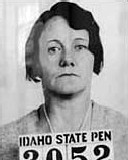
Lydia Trueblood
Murderer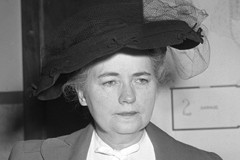 Louise Peete
Murderer · USA · 1912
Louise Peete (born Lofie Louise Preslar; September 20, 1880; Bienville, Louisia…
3 victims
Louise Peete
Murderer · USA · 1912
Louise Peete (born Lofie Louise Preslar; September 20, 1880; Bienville, Louisia…
3 victims
 Martha Wise
Murderer · USA · 1924
Martha Wise (born 1885; died June 28, 1971), also known as “the Borgia of Ameri…
3 victims
Martha Wise
Murderer · USA · 1924
Martha Wise (born 1885; died June 28, 1971), also known as “the Borgia of Ameri…
3 victims
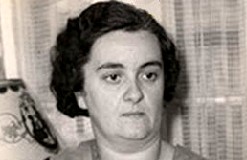 Mary Frances Creighton
Murderer · USA · 1923
Mary Frances Creighton (c. 1898 - July 16, 1936) was a housewife and was execut…
3 victims
Mary Frances Creighton
Murderer · USA · 1923
Mary Frances Creighton (c. 1898 - July 16, 1936) was a housewife and was execut…
3 victims
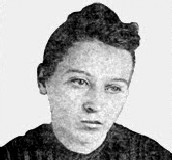 Mary Farmer
Murderer · USA · 1908
Mary Farmer was convicted of murdering Sarah Brennan and was executed by electr…
1 victim
Mary Farmer
Murderer · USA · 1908
Mary Farmer was convicted of murdering Sarah Brennan and was executed by electr…
1 victim
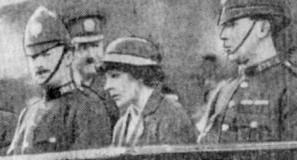 Susan Newell
Murderer · USA · 1923
Susan Newell (1893–1923) was convicted in Glasgow of the murder of newspaper bo…
1 victim
Susan Newell
Murderer · USA · 1923
Susan Newell (1893–1923) was convicted in Glasgow of the murder of newspaper bo…
1 victim
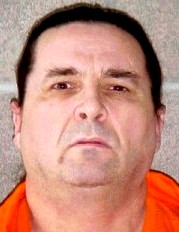 Bobby Lee Tankersley
Murderer · USA · 1991
Bobby Lee Tankersley lived in a hotel in Yuma, Arizona, in the same place as th…
1 victim
Bobby Lee Tankersley
Murderer · USA · 1991
Bobby Lee Tankersley lived in a hotel in Yuma, Arizona, in the same place as th…
1 victim
 Michael Lee McBride
Murderer · USA · 1985
Michael Lee McBride was a bartender and moved to Lubbock to be close to Christi…
2 victims
Michael Lee McBride
Murderer · USA · 1985
Michael Lee McBride was a bartender and moved to Lubbock to be close to Christi…
2 victims
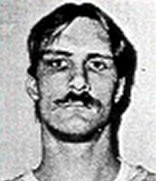 Douglas Gretzler
Serial killer · USA · 1973
Douglas Gretzler was executed by lethal injection in Arizona on June 3, 1998. ·…
17 victims
Douglas Gretzler
Serial killer · USA · 1973
Douglas Gretzler was executed by lethal injection in Arizona on June 3, 1998. ·…
17 victims
 Sean Mercer
Homicide · United Kingdom · 2007
Sean Mercer was convicted of murdering Rhys Milford Jones. Mercer was described…
1 victim
Sean Mercer
Homicide · United Kingdom · 2007
Sean Mercer was convicted of murdering Rhys Milford Jones. Mercer was described…
1 victim
- Gender
- female
- Country
- USA
- Location
- Montana/Idaho, USA
- Date of birth
- October 16, 1892
- Age at first offence
- 23
- Characteristics
- poisoner, financial gain
- Victim profile
- Her fourth husband, Edward Meyer (She was suspected of killing her brother-in-law, four husbands and a daughter)
- Method of murder
- Poisoning (arsenic)
- Date(s) of murder
- 1915 - 1920
- Years active
- 1915–1920
- Date of arrest
- May 1921
- Status
-
Died in custody
Sentenced to a term of 10 years to life in Idaho in 1921; paroled on October 3, 1941; died on February 5, 1958
Background
Lydia Trueblood was born in 1915. She was convicted in Idaho in 1921 and died on February 5, 1958.
The offence
Lydia Trueblood killed four spouses, a brother-in-law, and her own child by poisoning in Pocatello, Idaho. Doctors examining the last victim found suspiciously high traces of arsenic. The deaths had been presented as typhoid fever or influenza.
Investigation
Twin Falls County Prosecutor Frank Stephan began an investigation and exhumed the bodies of three of Lydia’s husbands, her 3-year-old daughter, and her brother-in-law. Traces of arsenic were found in some bodies, while other bodies were suspected of arsenic poisoning based on how well they were preserved.
Investigators and chemists studied the deaths and discovered that Ed and Bob Dooley had been murdered by arsenic poisoning. State's Attorney Frank I. Stephan was notified after an arsenic discovery related to Ed Meyer.
Arrest
Lydia fled after Edward F. Meyer’s death and was later arrested in Honolulu. V. H. Ormsby, a deputy sheriff of Twin Falls, Idaho, described the return of Lydia under arrest at Honolulu. She denied the charges and said she could satisfactorily explain the deaths of her former husbands.
Trial
Lydia was placed on trial on October 3, 1921, in Twin Falls, Idaho. Only Meyer’s death was at issue. The state contended that Lydia fed Meyer doses of arsenic extracted from flypaper. Lydia denied.
On November 4, 1921, the jury returned a verdict finding Lydia guilty of second-degree murder. The judge sentenced her to the state penitentiary at Boise for a term of ten years to life. She also was described as being eligible for parole.
A caller at the prison met Lyda recently and described her as “plump and cheerful,” doing fancy work and selling articles to visitors. The caller said Lyda was only 19 when she became the wife of Robert C Dooley, and that a daughter named Lorraine was born.
Verbatim quotations
Deputy Sheriff V. H. Ormsby described her: “She swept the men of her choice off their feet—courted them so persistently that they could not escape.” Deputy Sheriff Ormsby also described her denials and explanation: “He was the woman’s fourth husband. In 1920 he was running a little ranch out near Twin Falls when Lydia came home after Harlem Lewis. Husband No. 3, had died in Montana and she had collected $5,000 in insurance.” Deputy Sheriff Ormby said the following: “She rigged herself out fit to kill, bought a long mink coat and a closed car. Everybody in town was talking about the way she ran around to dances.” Ormsby added: “She courted Ed right off his feet.” Ormsby further stated: “She talked around town that she wasn’t in love with Ed, but she wanted a home, and she said that sometime she might learn to love him.” Ormsby stated: “Well, in August she and Ed were married after he took out a $10,000 insurance policy. In September Ed died.” Ormsby added: “The townfolks weren’t just satisfied. They started a lot of talk and the insurance company held up payment on the policy. The matter got into politics and folks wanted to know what the candidates for sheriff would do about Lydia.” Ormsby said: “But Lydia didn’t seem to ho worrying. After she left for California the town got more dissatisfied than ever and in January I was assigned to the case.” Ormsby stated: “I’ve had the bodies of the men dissatisfied and examined. Three chemists each working separately, reported to me that they found arsenic.” Ormsby continued: “I interviewed the doctors who attended he husbands and obtained statements from them that enabled me to build a strong case against her.” Ormsby stated: “After Lydia left Twin Falls late 1920 she met Southard at a dance. Later they were married and when Southard was transferred from San Francisco to Honolulu he took his bride along, he’s still loyal to his wife.” Lydia denied the charges and stated: “typhoid carrier.” Ormsby said: “Take poor Ed Myers for example,” and then described Meyer’s situation.
Sentencing
Lydia Trueblood was sentenced to ten years to life imprisonment in the Old Idaho State Penitentiary in Boise.
Appeals
No appeal information was provided in the source.
Outcome
Lydia’s legal status after sentencing included parole and later death. She was paroled on October 3, 1941. She died on February 5, 1958.
Aftermath
Lydia escaped from prison on May 4, 1931. An investigation after the escape found that David Minton visited Lydia in the woman's ward two nights before the escape and tossed love notes to her over the wall. David Minton was paroled from the men's prison only three weeks before the escape.
Lydia was found in Denver, Colo., on July 2, 1932, based on information from Minton. Lydia was then found in Topeka, Kansas, twenty-eight days later. She disguised her appearance by dyeing her brown hair black and replacing two front teeth with gold ones. Lydia said, “I expected to be caught.”
In 1933, an exposé of prison conditions revealed that Lydia received extraordinary favors, including visiting her sick mother out of prison, being left unguarded five hours, being given automobile rides, permitted all-day outings at a nearby resort, and attending picture shows in Boise. George F. Rudd, who had succeeded Thomas as warden, admitted allowing Lydia certain liberties but insisted she had not betrayed the trust placed in her. The investigation was followed by Warden Rudd’s resignation.
Other details
Lydia was described with multiple names in different periods, including being referred to as “Anna Shaw” and “Anna McHaffie.” She was also described as known as Anna Shaw at the time of her death.
She married Robert Dooley on March 17, 1912. She had a daughter, Lorraine, in 1914, and the daughter died in 1917. Edward Dooley died in August 1915; his death was ruled ptomaine poisoning. Robert Dooley died on October 12, 1915, of typhoid fever.
She married William G. McHaffle in June 1917; he died on October 1, 1918. She married Harlen C. Lewis in March 1919; Lewis died in July 1919. She married Edward F. Meyer in August 1920; Meyer died on September 7, 1920.
Lydia was married for a fifth time to Navy petty officer Paul Southard, also referred to as Paul Vincent Southard. She married again to Harry Whitlock in March 1932. The source also mentioned Hal Shaw as possibly divorced and listed Paul V. Southard (?, divorced) and Hal Shaw (possibly divorced). Lydia married George Rudd’s involvement was described through investigations into prison conditions rather than as a marriage.
A description in the source said Lydia was in her middle forties when met at the prison and doing fancy work sold to visitors. Another narrative described Lydia as only 19 in March 1912 when she became the wife of Robert C Dooley, and described her as having been in Keytesville, Missouri, with her father William Trueblood about two miles from town, before moving to the Twin Falls area.


Spotted an error, or have more information about this case?