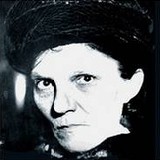
Martha Wise
Murderer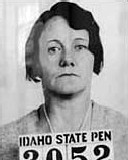 Lydia Trueblood
Murderer · USA · 1915
Lydia Trueblood was born in 1915. She was convicted in Idaho in 1921 and died o…
6 victims
Lydia Trueblood
Murderer · USA · 1915
Lydia Trueblood was born in 1915. She was convicted in Idaho in 1921 and died o…
6 victims
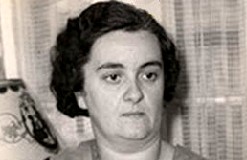 Mary Frances Creighton
Murderer · USA · 1923
Mary Frances Creighton (c. 1898 - July 16, 1936) was a housewife and was execut…
3 victims
Mary Frances Creighton
Murderer · USA · 1923
Mary Frances Creighton (c. 1898 - July 16, 1936) was a housewife and was execut…
3 victims
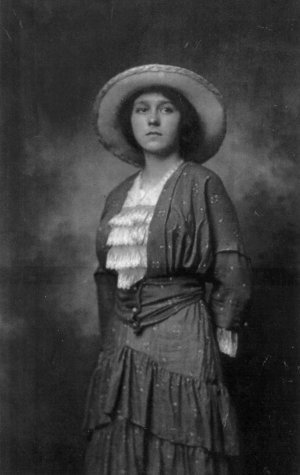 Inez Palmer
Murderer · USA · 1926
Inez Palmer — defendant; lived at the Stout farmhouse and pleaded guilty to a f…
2 victims
Inez Palmer
Murderer · USA · 1926
Inez Palmer — defendant; lived at the Stout farmhouse and pleaded guilty to a f…
2 victims
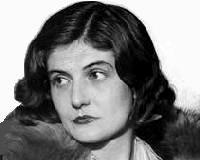 Winnie Ruth Judd
Murderer · USA · 1931
Winnie Ruth Judd (January 29, 1905 – October 23, 1998) was a Phoenix, Arizona m…
2 victims
Winnie Ruth Judd
Murderer · USA · 1931
Winnie Ruth Judd (January 29, 1905 – October 23, 1998) was a Phoenix, Arizona m…
2 victims
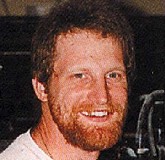 Terry Driver
Murderer · Canada · 1995
Terry Driver was known as the “Abbotsford killer.” He was a convicted Canadian…
1 victim
Terry Driver
Murderer · Canada · 1995
Terry Driver was known as the “Abbotsford killer.” He was a convicted Canadian…
1 victim
 Kristen Gilbert
Serial killer · USA · 1995
Kristen Gilbert (born November 13, 1967 as Kristen Strickland in Fall River, Ma…
4 victims
Kristen Gilbert
Serial killer · USA · 1995
Kristen Gilbert (born November 13, 1967 as Kristen Strickland in Fall River, Ma…
4 victims
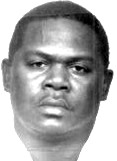 Tony Lee Walker
Murderer · USA · 1978
Tony Lee Walker was convicted of capital murder for the killing of Virginia Sim…
3 victims
Tony Lee Walker
Murderer · USA · 1978
Tony Lee Walker was convicted of capital murder for the killing of Virginia Sim…
3 victims
- Gender
- female
- Country
- USA
- Location
- Medina County, Ohio, USA
- Date of birth
- 1884
- Age at first offence
- 40
- Characteristics
- poisoner
- Victim profile
- Sophie Hasel (her mother) / Fred and Lily Geinke ( her uncle and aunt)
- Method of murder
- Poisoning (arsenic)
- Date(s) of murder
- December 12, 1924 / February 1925
- Years active
- 1924–1925
- Date of arrest
- —
- Status
-
Died in custody
Sentenced to life imprisonment in May 1925; died in prison on June 28, 1971
Martha Wise
Martha Wise (born 1885; died June 28, 1971), also known as “the Borgia of America,” was a widow from Ohio.
Other details
Wise was called a poisoner. She was described as “the Borgia of America.” She was also labeled the “poison widow of Hardscrabble” and a “poison fiend.”
Wise was said to have given poison to 17 people, and her poisonings resulted in the deaths of three family members.
Wise later pleaded insanity in her defence at trial, and Walter Johns helped with testimony. In the grand jury proceedings, she told the grand jury that she was “irresistibly attracted to attending funerals,” and that when there were not enough funerals in the community, she was driven to create them by killing.
During questioning, Wise confessed to the murders and other attempts, and she also confessed to burning down a church that expressed a reluctance to carry out the marriage ceremony.
Background
Wise was a widow who was about 40 years old when her husband Albert Wise died. She lived alone on a farm near Medina, Ohio.
Wise married Albert Wise after meeting him in 1906 at a box social. Their marriage was not happy, and she moved onto Albert’s 50-acre farm. She was forced to do farm work and household chores.
Their first child, Albert, died in infancy; four others—Everett, Gertrude, Kenneth, and Lester—survived.
Wise’s source of diversion during this period was funerals, and she seldom missed visits to funerals held in or near the town. When questioned, she said she liked funerals.
Albert Wise died suddenly in 1923, leaving Wise a 40-year-old widow with four children. Wise’s odd behavior and fixation on funerals became more noticeable, and she began openly crying and lamenting at funerals no matter who had died.
Within a year of Albert Wise’s death, Wise started a relationship with Walter Johns, a man who worked as a farmhand on property adjacent to her farm. The relationship was frowned upon by Wise’s family, including Wise’s mother, Sophie Hasel, and Wise’s aunt, Lily Gienke, who made no secret of their desire for Wise to end the relationship. By the end of 1924, Wise ended the relationship. Johns moved to Cleveland and the couple lost contact.
The offence
Wise devised a plan to poison her family members one-by-one, using arsenic. She killed three family members before other members became suspicious and reported her to authorities.
The plan began with poisoning Wise’s mother and then poisoning additional family members, including Wise’s uncle Fred Gienke and his wife Lily Gienke.
Wise was convicted of first-degree murder for the murder of Lily Gienke.
Investigation
After the deaths of the Gienkes, authorities investigated the cluster of deaths.
County sheriff Fred Roshon discovered that Wise had signed at a local drug store for purchases of large quantities of arsenic.
An autopsy on Lily Gienke confirmed arsenic in her digestive tract.
When brought in for questioning by the sheriff, Wise first claimed she had obtained the arsenic to kill rats, but she eventually confessed that she used it to poison family members by putting it in water buckets and coffee pots the family drank out of.
Arrest
Wise was brought in for questioning by sheriff Fred Roshon.
Walter Johns was arrested after Wise implicated him as the person who convinced her to murder her family, but authorities could find no evidence to support Wise’s assertion.
Trial
Wise was indicted on a charge of first-degree murder on April 7, 1925.
Wise pleaded not guilty to the charge of murdering Lily Gienke in front of a grand jury on March 23, 1925.
Wise’s trial for murder began on May 4, 1925. She was represented by Joseph Pritchard and prosecuted by Joseph Seymour.
Wise’s defence included claims that she was criminally insane and that she was ordered to commit the murders by her former lover, Walter Johns.
Setbacks plagued the defence, including the May 6 suicide of Wise’s sister-in-law, Edith Hasel, and the collapse of her husband, Fred Hasel, after Edith Hasel’s death. Another setback was the recantation of testimony by Frank Metzger, who told the prosecution on cross-examination that the defence had asked him to perjure himself to support claims that Wise was insane. Wise also chose to take the stand on her own behalf.
Family members including Wise’s son, Lester, and three of the Gienkes’ children testified against her.
Wise was found guilty of first-degree murder after one hour of jury deliberation.
When Wise was questioned, she gave an explanation involving funerals, saying she was “irresistibly attracted to attending funerals,” and that when there were not enough funerals in the community, she was driven to create them by killing.
On her own confession, Wise said:
“It was the devil who told me to do it. He came to me while I was in the kitchen baking bread. He came to me while I was working in the fields. He followed me everywhere.”
Wise also said:
“I like fires,” and she also explained: “They were red and bright, and I loved to see the flames shooting up into the sky.”
In her account of what she had been told, she said:
“Oh, God, yes I did it. The Devil told me to.”
Wise testified that she was driven to create funerals by killing when there were not enough funerals in the community.
Walter Johns helped with testimony that Martha had “barked like a dog” during sex.
Sentencing
The jury urged mercy in sentencing, and the judge sentenced Wise to a life sentence in prison, under the terms that she could only be freed by executive clemency.
Wise was sentenced to life imprisonment in May 1925.
Appeals
No appeals were provided in the material.
Outcome
Wise remained incarcerated and later died in jail.
She died in prison on June 28, 1971.
Aftermath
In 1962, Ohio governor Michael DiSalle commuted Wise’s sentence to second-degree murder and Wise was paroled at age 79.
Her parole and the commutation of her sentence were revoked because she returned to prison within three days, lacking anywhere else to go after her family refused to take her in and rest homes declined residency.
Wise was featured in a 1930 Toledo News-Bee article series profiling “[w]omen who are paying the price for folly, women who gambled against society and lost”.
A 1962 issue of the St. Joseph Gazette called the Wise case “one of Ohio’s most publicized crimes of the era”.
Wise’s case was covered in a 2008 episode of the Investigation Discovery network series Deadly Women.
A headline included:
“Brain monster warps souls of Medina killer,” dated March 19, 1925, right after the confession.
Timeline
- 1906 — Martha Hasel met Albert Wise at a box social; they married.
- 1923 — Albert Wise died suddenly; Wise was left a 40-year-old widow with four children.
- 1924 — Several members of Wise’s family, including Sophie Hasel, fell ill with a severe stomach ailment after Thanksgiving evening.
- December 13, 1924 — Sophie Hasel died.
- New Year’s Eve of 1925 — Fred Gienke, his wife Lily, and several children began suffering stomach pains similar to Sophie Hasel’s illness.
- By February 1925 — Lily and Fred were both dead.
- March 23, 1925 — Wise pleaded not guilty to the charge of murdering Lily Gienke in front of a grand jury.
- April 7, 1925 — Wise was indicted on a charge of first-degree murder.
- May 4, 1925 — Wise’s trial for murder began.
- May 6, 1925 — Wise’s sister-in-law, Edith Hasel, died by suicide.
- June 28, 1971 — Wise died in prison.

Spotted an error, or have more information about this case?