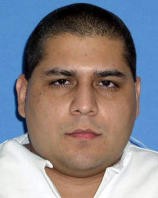
Robert Madrid Salazar
Murderer Russell Ellwood
Murderer · USA · 1991
Russell Ellwood was a former taxi driver. Authorities suspected him of killing…
20 victims
Russell Ellwood
Murderer · USA · 1991
Russell Ellwood was a former taxi driver. Authorities suspected him of killing…
20 victims
 Robert Martines Perez
Murderer · USA · 1994
Name: Robert Martines Perez · Other name used in proceedings: Robert Martinez P…
15 victims
Robert Martines Perez
Murderer · USA · 1994
Name: Robert Martines Perez · Other name used in proceedings: Robert Martinez P…
15 victims
 Billy Frank Vickers
Murderer · USA · 1993
Billy Frank Vickers Vickers was executed by lethal injection in Texas on Januar…
14 victims
Billy Frank Vickers
Murderer · USA · 1993
Billy Frank Vickers Vickers was executed by lethal injection in Texas on Januar…
14 victims
 Jack Howard Potts
Murderer · USA · 1975
Jack Howard Potts was sentenced to death in March 1976 in two counties, Forsyth…
1 victim
Jack Howard Potts
Murderer · USA · 1975
Jack Howard Potts was sentenced to death in March 1976 in two counties, Forsyth…
1 victim
 John Paul Phillips
Serial killer · USA · 1975
John Paul Phillips was a convicted murderer who was sentenced to death in 1986…
3 victims
John Paul Phillips
Serial killer · USA · 1975
John Paul Phillips was a convicted murderer who was sentenced to death in 1986…
3 victims
 James Canham Read
Murderer · United Kingdom · 1894
James Canham Read was a middle-aged married bookkeeper at the London Docks. He…
1 victim
James Canham Read
Murderer · United Kingdom · 1894
James Canham Read was a middle-aged married bookkeeper at the London Docks. He…
1 victim
 Robin Ligus
Serial killer · United Kingdom · 1994
Robin Stanislaw Ligus was a father-of-three who was serving a life term for the…
3 victims
Robin Ligus
Serial killer · United Kingdom · 1994
Robin Stanislaw Ligus was a father-of-three who was serving a life term for the…
3 victims
 Johnile DuBois
Murderer · USA · 1991
Johnile DuBois was executed by lethal injection in Virginia on August 31, 1998.…
1 victim
Johnile DuBois
Murderer · USA · 1991
Johnile DuBois was executed by lethal injection in Virginia on August 31, 1998.…
1 victim
 Sergey Martynov
Serial killer · Russia (from Vladimir Region to Yekaterinburg) · 1992
Sergey Martynov (also spelled as Sergei Martynov, born in 1962) was suspected o…
9 victims
Sergey Martynov
Serial killer · Russia (from Vladimir Region to Yekaterinburg) · 1992
Sergey Martynov (also spelled as Sergei Martynov, born in 1962) was suspected o…
9 victims
- Gender
- male
- Country
- USA
- Location
- Lubbock County, Texas, USA
- Date of birth
- October 24, 1978
- Age at first offence
- 19
- Characteristics
- abuse
- Victim profile
- Adriana Gomez, 2 (his girlfriend's daughter)
- Method of murder
- Beating
- Date(s) of murder
- April 23, 1997
- Years active
- 1997
- Date of arrest
- Next day
- Status
-
Executed
Executed by lethal injection in Texas on March 22, 2006
Case record: Robert Madrid Salazar
Background
Robert Madrid Salazar was a Black male described as 27 years old at the time of execution. He was a laborer. His hair color was Black, his eye color was Brown, and his height was 5 ft 07 in with a weight of 190.
The case involved the girlfriend’s two-year-old daughter, Adriana Gomez (described as Hispanic). Raylene Blakeburn was Adriana’s mother. Robert Salazar was described as Adriana’s baby-sitter and the boyfriend of Adriana’s mother.
The offence
On the night of April 23, 1997, Raylene Blakeburn left her two-year-old daughter, Adriana Gomez, with her boyfriend, Robert Salazar, while she went to work.
When Blakeburn returned home from work, she found Adriana in bed and unconscious, breathing abnormally with blood in her mouth. Salazar was not there because he and a friend had gone to buy beer. After returning from the store, Salazar and his friend saw an ambulance at Blakeburn’s house. They did not stop and instead continued on to Salazar’s mother’s house to drink the beer they had purchased.
When paramedics arrived, they noted that the back of Adriana’s head was caved in. They also observed marks and bruises all over Adriana’s body, including bruises covering her neck, ankles, and chest. Suspecting child abuse, the paramedics contacted the police. Adriana died later that evening (roughly 7:45 p.m. in one description).
Salazar later gave a written statement to police. He admitted he had been with Adriana while her mother was at work. He claimed that while giving Adriana a shower he became angry because she would not stop crying, and he had used the back of his hand to push her down in the bathtub, causing her to fall down and hit her head. Salazar also claimed he had abandoned Adriana because he was scared.
A pathologist testified that Adriana’s cause of death was multiple blunt force trauma and that the manner of death was ruled a homicide. The pathologist testified that Adriana’s injuries were not consistent with Salazar’s version of the facts, but rather indicated repeated blows of severe force to Adriana’s head, chest, and stomach. The pathologist testified that Adriana’s injuries included bruising to her neck, that several of her ribs were broken, and that her injuries were consistent with some type of sexual penetration. The pathologist testified that Adriana suffered such severe shaking injuries that “she would have been blind” had she survived, and that her heart was so severely damaged that it would have ruptured.
The autopsy described at least three life-threatening injuries inflicted within 48 hours of Adriana’s death. A blow to the head resulted in a posterior basal skull fracture consistent with Adriana’s skull being slammed into a hard surface. The location of smaller skull fractures was consistent with her being struck multiple times. A major blow to the chest bruised Adriana’s lungs, diaphragm, and heart, with injuries surpassing those seen in automobile accident injuries. The blow to the stomach pushed Adriana’s abdomen against her backbone, crushing tissues between. Injuries to Adriana’s tongue and mouth were described as indicative of a blow to her face, and injuries to her vagina were described as consistent with sexual penetration.
The State also showed that in January 1997, Adriana suffered either a broken collarbone or a dislocated shoulder. When asked about the injury by a neighbor, Adriana replied that Salazar had done it.
During trial, prosecution evidence included that Salazar had committed minor thefts and had been involved in several assaults, including one on the mother of his two children.
Investigation
Paramedics contacted the police because they suspected child abuse after finding Adriana unconscious with abnormal breathing and blood in her mouth and after observing the caved-in back of her head and widespread marks and bruises on her body.
Soon after Blakeburn discovered Adriana, she called Salazar at his mother’s house. Salazar told her not to tell the police that he had been watching Adriana.
A lab analysis of a bloodstain on Salazar’s pants revealed that the stain was consistent with Adriana’s DNA.
Arrest
Salazar later gave a written statement to police in which he admitted being with Adriana while her mother was at work and described pushing Adriana with the back of his hand while they were taking a shower together.
Trial
On April 30, 1997, a Lubbock County grand jury indicted Salazar for capital murder for intentionally or knowingly causing the death of a two-year-old child.
On March 9, 1999, a jury found Salazar guilty of capital murder. On March 12, 1999, the jury answered special issues resulting in a sentence of death. The trial court denied Salazar’s motion for new trial on May 19, 1999.
During punishment, evidence was presented that Salazar committed minor thefts and had been involved in assaultive offenses, including an assault on the mother of his two children. Soon after being placed in the Lubbock County Jail, Salazar threatened to kidnap someone and escape, and he also threatened to commit suicide.
During trial, a neighbor reported Adriana’s prior shoulder injury response that Salazar had done it. A pathologist testified about injuries and the incompatibility of Adriana’s injuries with Salazar’s account of a fall in the bathtub.
At sentencing, Salazar presented evidence that if sentenced to life in prison he would probably be placed in administrative segregation, and he argued this would lower the risk that he would present a future danger. The prosecution presented rebuttal evidence about administrative segregation within prison and also about Salazar’s history of violence, including an assault incident in which he choked the mother of his two children (a woman other than Blakeburn).
Salazar requested that the trial court instruct the jury that he would be eligible for parole after forty years if sentenced to life in prison rather than death; the trial court declined to give the instruction.
Appeals
Direct appeal (Texas)
On January 17, 2001, the Texas Court of Criminal Appeals affirmed Salazar’s conviction and sentence.
A separate legal summary described that on automatic direct appeal, the Court of Criminal Appeals held that:
- evidence was legally sufficient to support the jury’s affirmative answer at the penalty phase to the special issue of “future dangerousness”;
- denial of Salazar’s motion for new trial predicated on allegations of juror misconduct during penalty deliberations was not an abuse of discretion;
- denial of a motion for change of venue was not an abuse of discretion;
- photographs of internal organs removed during autopsy were not substantially outweighed by danger of unfair prejudice; and
- evidence that the victim, three months prior to the charged murder, responded that “(defendant) did it” when a neighbor asked who had caused injury to her shoulder was admissible under the excited utterance exception to the hearsay rule.
The opinion stated that the judgment of the trial court was affirmed.
Federal habeas (initial)
On October 13, 2000, Salazar filed a state writ of habeas corpus application raising 6 claims.
On June 6, 2001, the Texas Court of Criminal Appeals denied habeas relief.
On October 1, 2001, the U.S. Supreme Court denied certiorari review of the Texas court’s decision.
On September 20, 2002, Salazar petitioned a federal court for writ of habeas corpus relief raising 8 claims. On August 27, 2003, the federal district court denied the writ and issues final judgment. On April 1, 2004, Salazar applied to the 5th U.S. Circuit Court of Appeals for a certificate of appealability.
On November 30, 2004, the 5th Circuit granted a COA on one claim and ordered additional briefing. On July 29, 2005, the 5th Circuit affirmed the district court’s denial of habeas relief. On September 28, 2005, Salazar’s petition for rehearing was denied by the 5th Circuit.
A legal summary stated that after denial of his state court petition for federal habeas relief, he filed a federal habeas petition under 28 U.S.C. § 2254, which was denied by the United States District Court for the Northern District of Texas, and he appealed. The appellate court affirmed dismissal on grounds that due process claims were adjudicated on the merits by the state habeas court and that the state habeas court’s decision did not violate clearly established federal law.
Execution date scheduling
On October 28, 2005, the trial court scheduled Salazar’s execution for Wednesday, March 22, 2006.
Successive habeas and mental retardation claim
On December 27, 2005, Salazar petitioned the U.S. Supreme Court for certiorari review of the 5th Circuit’s opinion.
On February 15, 2006, Salazar filed a successive state writ application raising a claim that he is mentally retarded such that his execution is prohibited. On February 17, 2006, Salazar amended his successive state writ application to raise a claim that he was entitled to an evidentiary hearing.
On March 9, 2006, the Texas Court of Criminal Appeals dismissed Salazar’s successive habeas application. On March 10, 2006, Salazar asked the Court of Criminal Appeals to reconsider its decision.
On March 17, 2006, the 5th U.S. Circuit Court denied Salazar’s motion for leave to file a successive federal habeas opinion.
A legal summary further stated that the Court of Appeals held Salazar’s mental retardation claim lacked sufficient possible merit to warrant authorization to file a successive habeas petition.
Timeline
- 04/23/1997 — Raylene Blakeburn left Adriana Gomez with Robert Salazar; Blakeburn later found Adriana unconscious, breathing abnormally, with blood in her mouth.
- 04/30/1997 — A Lubbock County grand jury indicted Salazar for capital murder.
- 03/09/1999 — Salazar was convicted of capital murder.
- 03/12/1999 — The jury’s answers resulted in Salazar being sentenced to death.
- 05/19/1999 — The trial court denied Salazar’s motion for new trial.
- 10/13/2000 — Salazar filed a state writ of habeas corpus application raising 6 claims.
- 01/17/2001 — The Texas Court of Criminal Appeals affirmed Salazar’s conviction and sentence.
- 06/06/2001 — The Texas Court of Criminal Appeals denied habeas relief.
- 10/01/2001 — The U.S. Supreme Court denied certiorari review.
- 09/20/2002 — Salazar petitioned a federal court for writ of habeas corpus relief raising 8 claims.
- 08/27/2003 — The federal district court denied the writ and issued final judgment.
- 04/01/2004 — Salazar applied to the 5th U.S.
- 11/30/2004 — The 5th Circuit granted a COA on one claim and ordered additional briefing.
- 07/29/2005 — The 5th Circuit affirmed the denial of habeas relief.
- 09/28/2005 — Salazar’s petition for rehearing was denied by the 5th Circuit.
- 10/28/2005 — The trial court scheduled Salazar’s execution for Wednesday, March 22, 2006.
- 12/27/2005 — Salazar petitioned the U.S.
- 02/15/2006 — Salazar filed a successive state writ application raising a mental retardation execution claim.
- 02/17/2006 — Salazar amended the successive state writ application to raise a claim for an evidentiary hearing.
- 03/01/2006 — Salazar petitioned for clemency with the Texas Board of Pardons and Paroles.
- 03/06/2006 — The U.S. Supreme Court denied certiorari review of the 5th Circuit’s affirmation.
- 03/09/2006 — The Texas Court of Criminal Appeals dismissed Salazar’s successive habeas application.
- 03/10/2006 — Salazar asked the Court of Criminal Appeals to reconsider its decision.
- 03/17/2006 — The 5th Circuit denied Salazar’s motion for leave to file a successive federal habeas opinion.
- 03/20/2006 — The Texas Board of Pardons and Paroles voted to deny Salazar’s request for commutation and denied his request for a reprieve.
- 03/22/2006 — Salazar was executed by lethal injection in Texas.
Sentencing
Salazar was sentenced to death on March 12, 1999. The trial court sentenced him based on the jury’s answers to special issues.
At the time of Salazar’s trial, Texas law provided that a criminal convict sentenced to life in prison would not be eligible for parole until forty years had been served. Salazar requested the trial court instruct the jury that he would be eligible for parole after forty years if sentenced to life in prison rather than death; the trial court declined to give the instruction.
Outcome
Salazar was executed by lethal injection in Texas at the Texas State Penitentiary in Huntsville, Texas on March 22, 2006. He was pronounced dead at 6:20 p.m., seven minutes after the lethal dose began to flow (as described in one account).
Salazar’s last words were:
"To everybody on both sides of that wall, I want you to know that I love you both. I am sorry that the child had to lose her life, but I should not have to be here. Tell my family I love them all and I will see them in heaven"
His last meal included: a dozen tamales, six brownies, refried beans with chorizo, two rollo candies, six hard shell tacos with lettuce, three big red sodas, ketchup, hot sauce, six jalapeño peppers, tomatoes, cheese, and extra ground beef.
Aftermath
The Texas Board of Pardons and Paroles voted to deny Salazar’s request for commutation and denied his request for a reprieve on March 20, 2006. A pending item was described as Salazar’s motion to the 5th Circuit Court for leave to file a successive federal habeas petition.
A legal and media description stated that Salazar had continued to deny beating to death Adriana Gomez. It also stated that his mother was handling burial.
Other details
Salazar began dating Raylene Blakeburn in the fall of 1996. Blakeburn went to work in the morning on April 23, 1997, leaving Adriana in Salazar’s care.
Roger Torres testified that around 4:00 p.m. on April 23, 1997, he was walking home when Salazar drove up and asked if he could take a look at Salazar’s fan belt. Torres testified that Adriana was not with Salazar at the time. Shortly thereafter Torres examined the fan belt, and just after 5:00 p.m. the two men drove to a nearby store and purchased some beer. Torres noticed Salazar’s shirt had small stains that appeared to be blood. After returning from the store, they saw the ambulance outside Blakeburn’s residence, did not stop, and continued on to Salazar’s mother’s house. At his mother’s house, Salazar changed his shirt, and the two men drank beer. Blakeburn called Salazar at his mother’s house and told him that Adriana was injured. Salazar told Blakeburn not to tell police that he had been watching Adriana, and he also told Torres to be quiet and that the matter was none of his business.
In trial-related legal analysis, it was stated that during trial Salazar pleaded not guilty and that the evidence showed injuries inflicted within 48 hours and described the autopsy findings as acute injuries.
A legal summary of subsequent federal habeas proceedings described that Salazar argued his due process rights were violated by allegedly erroneous speculation by jurors as to parole consequences of not imposing capital sentence and sentencing him to life in prison, and that state evidentiary rules barred admission of evidence of jury deliberations necessary to support the due process claim; the appellate court affirmed denial.
A legal summary of successive habeas authorization described that Salazar asserted he was mentally retarded under Atkins v. Virginia, and the court denied his motions for authorization to file a successive habeas application and for a stay of execution because he failed to establish a prima facie case of mental retardation.
A media description included that a lethal injection process consists of three doses: a narcotic causing the inmate to fall into a coma, a muscle relaxant causing collapse of the diaphragm and lungs, and finally potassium chloride administered to stop the heart, with the whole process taking about seven minutes.
A legal and media description included a quoted statement by Rusty Ladd, identifying him as someone who helped prosecute the case:
"Salazar destroyed that little girl's body, just destroyed it"


Spotted an error, or have more information about this case?