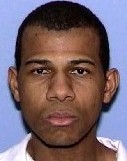
Dale Scheanette
Murderer Russell Ellwood
Murderer · USA · 1991
Russell Ellwood was a former taxi driver. Authorities suspected him of killing…
20 victims
Russell Ellwood
Murderer · USA · 1991
Russell Ellwood was a former taxi driver. Authorities suspected him of killing…
20 victims
 Robert Martines Perez
Murderer · USA · 1994
Name: Robert Martines Perez · Other name used in proceedings: Robert Martinez P…
15 victims
Robert Martines Perez
Murderer · USA · 1994
Name: Robert Martines Perez · Other name used in proceedings: Robert Martinez P…
15 victims
 Billy Frank Vickers
Murderer · USA · 1993
Billy Frank Vickers Vickers was executed by lethal injection in Texas on Januar…
14 victims
Billy Frank Vickers
Murderer · USA · 1993
Billy Frank Vickers Vickers was executed by lethal injection in Texas on Januar…
14 victims
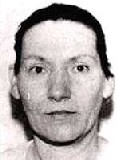 Judy Buenoano
Serial killer · USA · 1971
Judy Buenoano was executed by electrocution in Florida on March 30, 1998. Judy…
3 victims
Judy Buenoano
Serial killer · USA · 1971
Judy Buenoano was executed by electrocution in Florida on March 30, 1998. Judy…
3 victims
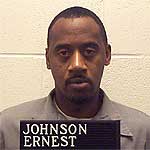 Ernest Lee Johnson
Murderer · USA · 1994
Name: Ernest Lee Johnson Case style: State of Missouri v. Earnest Lee Johnson C…
3 victims
Ernest Lee Johnson
Murderer · USA · 1994
Name: Ernest Lee Johnson Case style: State of Missouri v. Earnest Lee Johnson C…
3 victims
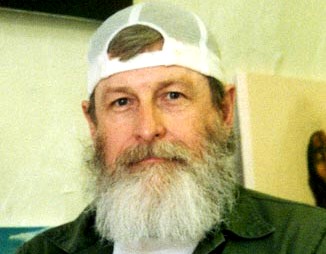 Thomas Manning
Murderer · USA · 1981
Thomas Manning Thomas Manning was born to a Boston postal clerk. He shined shoe…
1 victim
Thomas Manning
Murderer · USA · 1981
Thomas Manning Thomas Manning was born to a Boston postal clerk. He shined shoe…
1 victim
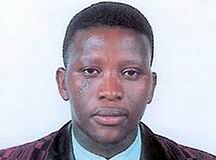 Norman Afzal Simons
Serial killer · South Africa · 1986
Norman Afzal Simons was a former teacher. He later converted to Islam in 1993,…
22 victims
Norman Afzal Simons
Serial killer · South Africa · 1986
Norman Afzal Simons was a former teacher. He later converted to Islam in 1993,…
22 victims
 Chiang Kuo-ching
Innocent · Taiwan · 1996
Chiang Kuo-ching (江國慶) A military court acquitted Chiang Kuo-ching in a posthum…
0 victims
Chiang Kuo-ching
Innocent · Taiwan · 1996
Chiang Kuo-ching (江國慶) A military court acquitted Chiang Kuo-ching in a posthum…
0 victims
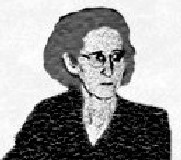 Earle Dennison
Murderer · USA · 1952
Earle Dennison was a widow and worked as a surgical nurse. She worked at the We…
2 victims
Earle Dennison
Murderer · USA · 1952
Earle Dennison was a widow and worked as a surgical nurse. She worked at the We…
2 victims
- Gender
- male
- Country
- USA
- Location
- Tarrant County, Texas, USA
- Date of birth
- May 7, 1973
- Age at first offence
- 23
- Characteristics
- serial rapist
- Victim profile
- Christine Vu, 26 / Wendie Prescott, 20
- Method of murder
- Strangulation
- Date(s) of murder
- September 17 /December 24, 1996
- Years active
- 1996
- Date of arrest
- Summer 2000
- Status
-
Executed
Executed by lethal injection in Texas on February 10, 2009
Case record: Dale Scheanette
Background
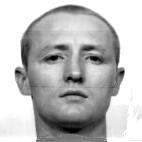
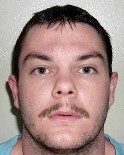
Dale Devon Scheanette was born as a male identified as Hispanic. He was described as 35 years old at execution and as having 12 years of education. He worked as a machine operator, warehouseman, forklift operator, and laborer.
The case involved the murder of two women and the rape of multiple women linked to Scheanette. The killings occurred in Arlington, Texas, at an apartment complex in which the victims were found in half-filled bathtubs, strangled, raped, and bound with duct tape.
In the punishment phase of Scheanette’s trial, the State linked him to five brutal sexual assaults and one other capital murder committed both before and after the Prescott murder.
Scheanette’s sister filed a three-page handwritten motion seeking a reprieve from the U.S. Supreme Court. The motion was turned down less than an hour before he was taken to the death chamber. Scheanette acted as his own lawyer in late appeals.
During the execution, when asked if he wanted to make a last statement, he paused and then said:
"My only statement is that no cases ever tried have been error free. Those are my words. No cases are error-free."
He did not acknowledge the six witnesses who attended on behalf of his victims. The lethal injection was then started, and he was pronounced dead at 6:21 p.m.
In addition, while incarcerated awaiting trial, jail guards found concealed in Scheanette’s cell a triangular piece of plexiglass that could have been used as a weapon and which was prohibited under jail rules.
Texas Board of Pardon and Paroles voted unanimously against asking Gov. Rick Perry to commute Scheanette’s death sentence.
Fort Worth attorney Richard Alley represented Scheanette on appeal and said he had not been his attorney for more than a year, stating: “I was withdrawn at his request,” and adding, “I was the lawyer on deck. Then he took over from there.”
A witness statement attributed to Detective Tommy Le Noir included the following:
“I will tell you this, without reservation, that the right person is in this position, that the person who took the lives of these two ladies, I have absolutely no reservation that the person responsible is Dale Scheanette.”
People involved
Defendant
- Dale Devon Scheanette (male; Hispanic; executed; death sentence)
Victims
- Wendie Prescott (22; described as a black female; arrested for discovery by family; found dead in a partially filled bathtub; strangled, sexually assaulted)
- Christine Vu (26; described as a 26-year-old teacher; found dead in a half-filled bathtub; strangled, drowned; sexual assault)
- An unnamed female Dallas police officer (sexual assault; DNA matched Scheanette)
- An unnamed woman attacked at her Lancaster apartment (sexual assault; DNA matched Scheanette)
- An unnamed college student (sexual assault; attacked after going to bed; DNA matched Scheanette)
- An unnamed woman (sexual assault; after she had gone to sleep in her apartment; DNA matched Scheanette)
Family members and other named individuals connected in testimony or investigation
- Norman Norwood (Wendie Prescott’s uncle; went to Prescott’s apartment)
- Brenda Norwood (Wendie Prescott’s aunt; commented on hopes and forgiveness)
- J.R. Molina (trial attorney)
- Greg Miller (Tarrant County district attorney)
- Tommy LeNoir (Arlington homicide detective who investigated the slayings)
- Richard Alley (Fort Worth attorney who represented Scheanette on appeal)
- Rick Perry (Gov.)
- Michael Graczyk (Houston Chronicle)
- Debra Dennis (Dallas Morning News)
- Michael Graczyk’s byline appeared with an execution account
The offence
Murder of Wendie Prescott
On December 24, 1996, Norman and Brenda Norwood became worried when their niece, twenty-two-year-old Wendie Prescott, failed to show up for a planned shopping trip with her sister.
When Prescott had not called or appeared by 11 that evening, the Norwoods went to Prescott’s apartment in Arlington and found Prescott’s naked body lying face down in a partially filled bathtub. Her neck was wrapped in duct tape which trailed down behind her back to her wrists and ankles, which were also wrapped in duct tape.
An autopsy revealed that Prescott had been manually strangled. The medical examiner opined that Prescott’s hands had been bound behind her back prior to her death.
A sexual assault examination occurred, and sperm samples were collected and preserved for DNA testing.
Investigators recovered a fingerprint in the dust on the television stand in the living room of Prescott’s apartment. The fingerprint was submitted to DPS and the FBI for comparison, but no match was returned. In the summer of 2000, the print was resubmitted to the FBI computer system using new technology, and an FBI analyst concluded it matched the known print of Dale Scheanette.
Murder of Christine Vu
Scheanette was connected to the September 17, 1996, rape and murder of 26-year-old Christine Vu. Her body was found lying face down in a half-filled bathtub in her home at the same apartment complex where Prescott lived. Like Prescott, Vu was naked, with her hands, ankles, and neck wrapped with duct tape. An autopsy revealed that Vu had been strangled and drowned.
Scheanette was charged with Vu’s murder but was not tried.
Sexual assaults linked in punishment phase
During the punishment phase of Scheanette’s trial, the State linked him to five brutal sexual assaults committed both before and after the Prescott murder.
Scheanette was connected to:
- September 21, 1998: rape of another woman in her apartment; DNA evidence collected from a sexual assault investigation matched Scheanette’s DNA samples.
- October 2, 1998: sexual assault of a female Dallas police officer after she arrived home from work; Scheanette’s DNA matched evidence DNA samples, and the officer lived yards away from the residence of the woman sexually assaulted the prior month.
- December 18, 1998: sexual assault of a woman at her Lancaster apartment; Scheanette’s DNA sample matched DNA samples collected as evidence.
- February 23, 1999: a fourth sexual assault against a college student attacked after going to bed for the night; DNA evidence matched samples taken from Scheanette.
- October 26, 1999: sexual assault of a woman after she had gone to sleep in her apartment; DNA evidence from the sexual assault examination matched Scheanette’s DNA sample.
Investigation and evidence
A fingerprint was found in the dust on the television stand in Prescott’s apartment. Initial comparisons returned no match. In the summer of 2000, the print was resubmitted to the FBI computer system, where new technology led an FBI analyst to conclude that the print found in Prescott’s apartment matched the known print of Dale Scheanette.
Scheanette was arrested later that day, and fingerprints taken at the time of arrest matched the print found in Prescott’s apartment.
DNA evidence linked Scheanette to the Prescott murder. DNA samples taken from Scheanette matched semen samples obtained from an autopsy of Wendie Prescott, including a statistical certainty stated as “one in 763 million.”
The fingerprint and DNA evidence also matched the samples taken from Christine Vu’s murder.
In addition to the fingerprint and DNA evidence, testimony was introduced about contraband plexiglass in Scheanette’s cell while he was incarcerated awaiting trial. The plexiglass piece was described as triangular and could have been used as a weapon and was prohibited under jail rules.
The State also introduced evidence of a previous burglary conviction from 1999.
Arrest
Scheanette was arrested later on December 24, 1996, after the fingerprint match was returned using new technology through the FBI system. Fingerprints taken at the time of arrest matched the print found in Prescott’s apartment.
Trial
Scheanette was convicted by jury and sentenced to death.
In January 2003, a Texas jury deliberated for an hour and a half before convicting Scheanette of capital murder and sentencing him to death for the murder of Wendie Prescott while in the course of committing or attempting to commit sexual assault on her.
The conviction occurred in a Tarrant County state district court, Criminal District Court No. 4, and the trial judge was Mark Kent, J.
During the punishment phase, the State introduced testimony from five women who described being beaten, threatened, and raped by Scheanette. Greg Miller described the testimony as therapeutic for the women, and said:
“I am convinced that testimony of those five women was very therapeutic for them,”
and:
“It was a pretty moving event. ... It was a miracle he didn't kill any of the other women.”
Miller also stated:
“I've been doing this 35, 36 years. I've had others who have killed and done bad things. But he's at the top of the list.”
The defense attempted to present an argument that the evidence was insufficient to convict Scheanette. J.R. Molina, his trial attorney, said:
“We brought in his family to show he had a pretty good family unit and that he got along well,”
and:
“The DNA evidence, the fingerprint evidence that came in, were very strong. Several other instances of burglary, break-ins and rapes that he committed, that was pretty strong evidence to show to a jury.”
During the punishment phase, various family members and a chaplain testified on Scheanette’s behalf.
Specific punishment-phase witness accounts
One woman testified that the sound of breathing in her Grand Prairie apartment in October 1999 awakened her, and she testified that a man raped her at gunpoint. She testified: “I was pregnant,” and added “I prayed for God not to forsake me.” She testified that after the attacker was leaving, she asked why he raped her, and she testified he said:
“I don't know. I'm mad at the world,”
Another woman testified about a brutal rape at her Lancaster apartment in December 1998. She testified that she fought back, which enraged her attacker enough that he kicked down her bedroom door. She testified that her 2-year-old son pleaded with the man, “Let my mom go!” as he slapped the man’s legs.
A police officer testified about being assaulted by Scheanette, including statements attributed to her about Scheanette befriending her at a gas station in 1995 or 1996 and speaking by phone over the next six months, and that she “had a bad vibe.” She testified Scheanette often referred to himself as a “jack of all trades.” She testified that after Scheanette used her handcuffs to restrain her, she asked how he got into her apartment, and he said he was a “jack of all trades,” and she testified:
“When I heard that, I thought, 'Was that him?' "
She testified that she later told authorities about the connection.
Sentencing
Pursuant to the jury’s answers to the special issues set forth in Texas Code of Criminal Procedure Article 37.071, §§ 2(b) and 2(e), the trial judge sentenced Scheanette to death. Article 37.071, § 2(g) was referenced for the sentencing.
In January 2003, the trial court sentenced Scheanette to death.
Appeals
Direct appeal
On automatic direct appeal, the Texas Court of Criminal Appeals affirmed Scheanette’s conviction and sentence.
The Texas Court of Criminal Appeals affirmed the conviction on September 15, 2004.
Scheanette v. State, 144 S.W.3d 503 (Tex. Crim. App., 2004) (Direct Appeal) included holdings that:
- The defendant was not entitled to ask prospective jurors during voir dire whether they could consider and give full deliberation to parole board requirements for release on parole.
- Jury instruction on punishment telling jury to consider all the evidence when considering mitigation was error.
- The error was harmless.
- The defendant was not entitled to jury instruction linking findings on future dangerousness to findings on mitigation.
- Record was insufficient to support claim of ineffective assistance of counsel.
The U.S. Supreme Court denied Scheanette’s petition for writ of certiorari on January 10, 2005.
State habeas developments
On September 23, 2004, the trial court entered findings of fact and conclusions of law recommending the denial of state habeas.
On April 13, 2005, the Texas Court of Criminal Appeals remanded Scheanette’s case to the trial court for development of additional facts regarding his ineffective assistance of counsel claims.
The Texas Court of Criminal Appeals denied all relief on November 9, 2005, and reformed its opinion on December 14, 2005.
Federal habeas and subsequent Rule 60 motions
While his state application was pending before the Texas Court of Criminal Appeals, Scheanette filed a federal habeas petition on March 14, 2005 in the Eastern District of Texas. The case was transferred to the Northern District of Texas, Fort Worth Division on August 2, 2005.
The federal district court granted the state’s motion to dismiss without prejudice so Scheanette could exhaust all available state court remedies.
The federal district court denied Scheanette’s federal habeas petition on April 10, 2006, and his request for a certificate of appealability on April 11, 2006.
The Fifth U.S. Circuit Court of Appeals denied Scheanette’s request for COA on March 26, 2007.
An execution date was set for November 27, 2007, but was withdrawn on October 8, 2007, in light of a stay of execution issued by the Texas Court of Criminal Appeals in In re Heliberto Chi.
Almost two years after the federal district court’s April 10, 2006 denial, Scheanette filed a motion seeking relief from that court’s judgment pursuant to Rule 60 of the Federal Rules of Civil Procedure. The district court denied this motion on March 19, 2008.
Scheanette filed a second Rule 60 motion, which the district court denied on April 18, 2008.
The district court denied his third motion on May 23, 2008.
On June 3, 2008, Scheanette filed a notice of appeal from the denial of his Rule 60 motion and from all judgments and orders entered by the district court, and requested a certificate of appealability to appeal in the Fifth U.S. Circuit Court of Appeals. The district court denied his request for COA.
Scheanette filed a fourth motion for relief from judgment, which the district court again denied on July 9, 2008.
A further notice of appeal and request for COA were denied on July 15, 2008.
Scheanette currently had three appeals pending before the Fifth U.S. Circuit Court of Appeals seeking COA of the district court’s denial of his Rule 60 motions. All had been consolidated and were being considered together.
After numerous delays in filing attributed to Scheanette, the court gave him until January 26, 2009 to refile a petition for COA compliant with page and word limitations for briefs filed in the Fifth Circuit.
COA related federal appellate disposition
A Fifth Circuit decision denied a motion for a certificate of appealability. It stated that reasonable jurists could not debate the district court’s decisions regarding Scheanette’s multiple alleged constitutional errors, and denied the application.
Outcome
Scheanette’s direct appeal was affirmed by the Texas Court of Criminal Appeals on September 15, 2004.
The U.S. Supreme Court denied certiorari on January 10, 2005.
Federal habeas relief and subsequent requests for certificates of appealability were denied, including denial by the federal district court on April 10, 2006 and denial of COA requests on April 11, 2006 and March 26, 2007.
The execution was carried out by lethal injection in Texas on February 10, 2009.
Timeline
- December 24, 1996 — Norman and Brenda Norwood found Wendie Prescott’s naked body in a partially filled bathtub in her Arlington apartment; her neck, wrists, and ankles were wrapped with duct tape; Prescott was manually strangled.
- September 17, 1996 — Christine Vu’s body was found in a half-filled bathtub at her Arlington apartment; her hands, ankles, and neck were wrapped with duct tape.
- September 21, 1998 — DNA evidence linked Scheanette to rape of another woman in her apartment.
- October 2, 1998 — Scheanette’s DNA was linked to the sexual assault of a female Dallas police officer after she arrived home from work.
- December 18, 1998 — Scheanette was linked by DNA to a sexual assault of a woman at her Lancaster apartment.
- February 23, 1999 — Scheanette was linked by DNA to a sexual assault of a college student attacked after going to bed for the night.
- October 26, 1999 — DNA linked Scheanette to a sexual assault of a woman after she had gone to sleep in her apartment.
- January 2003 — A Texas jury convicted Scheanette of capital murder and sentenced him to death.
- September 15, 2004 — The Texas Court of Criminal Appeals affirmed Scheanette’s conviction.
- September 23, 2004 — The trial court entered findings of fact and conclusions of law recommending denial of state habeas.
- January 10, 2005 — The U.S. Supreme Court denied Scheanette’s petition for writ of certiorari.
- April 13, 2005 — The Texas Court of Criminal Appeals remanded Scheanette’s case for development of additional facts on ineffective assistance of counsel claims.
- August 2, 2005 — The federal habeas case was transferred to the Northern District of Texas, Fort Worth Division.
- November 9, 2005 — The Texas Court of Criminal Appeals denied all state habeas relief.
- December 14, 2005 — The Texas Court of Criminal Appeals reformed its opinion.
- April 10, 2006 — The federal district court denied Scheanette’s federal habeas petition.
- April 11, 2006 — The district court denied Scheanette’s request for a certificate of appealability.
- March 26, 2007 — The Fifth U.S. Circuit Court of Appeals denied Scheanette’s request for COA.
- October 8, 2007 — An execution date set for November 27, 2007 was withdrawn in light of the stay of execution issued by the Texas Court of Criminal Appeals in In re Heliberto Chi.
- March 19, 2008 — The district court denied Scheanette’s motion seeking relief under Rule 60.
- April 18, 2008 — The district court denied Scheanette’s second motion for relief.
- May 23, 2008 — The district court denied Scheanette’s third motion for relief.
- June 3, 2008 — Scheanette filed a notice of appeal from the denial of his Rule 60 motion and from all judgments and orders; he requested COA.
- July 9, 2008 — The district court denied Scheanette’s fourth motion for relief from judgment.
- July 15, 2008 — Another notice of appeal and a request for COA were denied.
- January 26, 2009 — The court set a deadline for Scheanette to refile a COA petition compliant with page and word limits.
- February 10, 2009 — Scheanette was executed by lethal injection in Texas.
Other details
Prison, contraband, and related information
Scheanette violated jail rules by possessing a triangular piece of plexiglass that could have been used as a weapon.
According to a TDCJ website reference in the case material, Scheanette had no prior prison record.
The State introduced evidence of a previous burglary conviction from 1999.
Additional named individuals and quoted statements
Brenda Norwood said she hoped Scheanette had come to terms with his crimes and accepted responsibility, and she said:
“I hope he asks God to forgive him to save his soul,”
and:
“I had to forgive because I can't live with that. I can't hate him for what he did because that would not bring Wendie back. You have to move on.”
Norwood also described Wendie Prescott’s work and studies, and said:
“Wendie was a beautiful young lady,”
“She was always hugging people,”
and:
“She was very affectionate. She loved people, not things. She treated people the way she wanted to be treated.”
Norwood said she had no plans to attend Scheanette’s execution and stated:
“I have no desire to go down and witness that because that will not enhance my life at all,”
and:
“You have to let the law of the land prevail.”
Vu’s sister Dr. Kim Kuo said she planned to witness the execution and stated:
“Most of us, we have had closure,”
“We've accepted [Christine's death], but I will go mainly to bear witness for her.”
Kuo also stated:
“She loved children,”
and:
“I wished she had had a chance to have her own kids.”
At the time of execution scheduling and last-statement reporting, Scheanette did not speak with reporters as his execution date neared.
Pen-pal / personal statements included in material
A letter described as a pen-pal request from Dale Devon Scheanette said:
“Hello,My name is Dale Devon Scheanette, 29 years old. I’m an Acadian (aka Cajun) from Monroe, Louisiana.”
It also stated:
“I am currently a Texas Death Row inmate. I have been here for only a few days. I’m looking for a pen pal to communicate with through the mail.”
It included a mailing address: Scheanette #999440 Polunsky Unit 3872 FM 350 South Livingston TEXAS 77351
A later set of wishes/desires/likes/dislikes listed activities and preferences, including:
“I would dove to go to a Pat Benetar concert as well as Match Box Twenty,”
and:
“But hey I’m just me, you treat me with respect, I’m cool, I can get along with all people regardless of race or religion,”
and referenced a statement about “boxing” and “the state of Texas is denying us (capital defendants) equal protection,” and included:
“I love to pick my girlfriend’s clothes as well as shoes, nail color, and toe nail polish color.”
Trial and appellate legal case references included in the material
The material included citations to:
- Scheanette v. State, 144 S.W.3d 503 (Tex. Crim. App., 2004) (Direct Appeal)
- Scheanette v. Quarterman, 482 F.3d 815 (5th Cir. 2007) (Habeas)
- Scheanette v. Office of Chief Disciplinary Counsel, Not Reported in F. Supp. 2d, 2005 WL 3147874 (N.D. Tex. 2005) (Pro Se)
Spotted an error, or have more information about this case?