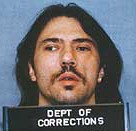
Eric Adam Schneider
Murderer Brian Kevin Rosenfeld
Murderer · USA · 1985
Brian Kevin Rosenfeld Brian Kevin Rosenfeld was sentenced to three concurrent l…
23 victims
Brian Kevin Rosenfeld
Murderer · USA · 1985
Brian Kevin Rosenfeld Brian Kevin Rosenfeld was sentenced to three concurrent l…
23 victims
 Marvin Gray
Murderer · USA · 1975
Marvin Gray was convicted killer who claimed responsibility for 23 slayings and…
23 victims
Marvin Gray
Murderer · USA · 1975
Marvin Gray was convicted killer who claimed responsibility for 23 slayings and…
23 victims
 Yahweh ben Yahweh
Murderer · USA · 1980
Yahweh ben Yahweh was born and legally named Hulon Mitchell Jr. (October 27, 19…
23 victims
Yahweh ben Yahweh
Murderer · USA · 1980
Yahweh ben Yahweh was born and legally named Hulon Mitchell Jr. (October 27, 19…
23 victims
 Russell Ellwood
Murderer · USA · 1991
Russell Ellwood was a former taxi driver. Authorities suspected him of killing…
20 victims
Russell Ellwood
Murderer · USA · 1991
Russell Ellwood was a former taxi driver. Authorities suspected him of killing…
20 victims
 Marcus Wesson
Mass murderer · USA · 2004
Marcus Delon Wesson was born August 22, 1946. He was an American man convicted…
9 victims
Marcus Wesson
Mass murderer · USA · 2004
Marcus Delon Wesson was born August 22, 1946. He was an American man convicted…
9 victims
 Suleiman Khater
Mass murderer · Egypt · 1985
Suleiman Mohammed Abdul-Hamid Khater (Arabic سليمان خاطر, also transcribed Sole…
7 victims
Suleiman Khater
Mass murderer · Egypt · 1985
Suleiman Mohammed Abdul-Hamid Khater (Arabic سليمان خاطر, also transcribed Sole…
7 victims
 Linda Henning
Murderer · USA · 1999
Linda Henning was convicted of felony murder and kidnapping in connection with…
1 victim
Linda Henning
Murderer · USA · 1999
Linda Henning was convicted of felony murder and kidnapping in connection with…
1 victim
 Linwood Earl Briley
Serial killer · USA · 1971
Linwood Earl Briley (capital murder defendant; executed) Briley was executed by…
12 victims
Linwood Earl Briley
Serial killer · USA · 1971
Linwood Earl Briley (capital murder defendant; executed) Briley was executed by…
12 victims
 Bobby Marion Francis
Murderer · USA · 1975
Bobby Marion Francis (also referred to as Bobby Marion Francis) · August 16, 19…
1 victim
Bobby Marion Francis
Murderer · USA · 1975
Bobby Marion Francis (also referred to as Bobby Marion Francis) · August 16, 19…
1 victim
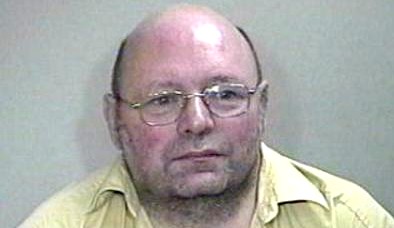 Ronald Castree
Murderer · United Kingdom · 1975
Ronald Charles Edward Castree was convicted for the murder of Lesley Molseed. H…
1 victim
Ronald Castree
Murderer · United Kingdom · 1975
Ronald Charles Edward Castree was convicted for the murder of Lesley Molseed. H…
1 victim
- Gender
- male
- Country
- USA
- Location
- Jefferson County, Missouri, USA
- Date of birth
- December 7, 1961
- Age at first offence
- 24
- Characteristics
- robbery, abuse
- Victim profile
- Richard Schwendemann and Ronald Thompson
- Method of murder
- St abbing with knife / Shooting ( .22 caliber rifle)
- Date(s) of murder
- January 12, 1985
- Years active
- 1985
- Date of arrest
- 2 days after
- Status
-
Executed
Executed by lethal injection in Missouri on January 29, 1997
Case overview
Eric Adam Schneider was executed by lethal injection in Missouri on January 29, 1997.
Schneider’s case was styled as State of Missouri v. Eric Schneider, 736 S.W. 2d 392.
Timeline
- January 27, 1981 — Schneider was arrested for two counts of Burglary Second degree in City of St. Louis.
- May 15, 1981 — Schneider was placed on two years probation on each count.
- January 7, 1983 — Schneider’s probations were revoked; he was sentenced to the Missouri Department of Corrections to three years on each count to be served concurrently.
- May 24, 1984 — Schneider was arrested in the City of St. Louis for Assault Third Degree.
- August 27, 1984 — Schneider was sentenced to 15 days in the St. Louis Medium Security Institution; execution of the sentence was suspended and Schneider was placed on two years probation.
- May 24, 1982 — Schneider was arrested in the City of St. Louis for Possession of Marijuana.
- September 9, 1982 — Schneider was fined $100.00 and court costs.
- September 23, 1982 — Schneider was arrested in the City of St. Louis for two counts of Burglary Second Degree, two counts of Stealing Over $150 and Possession of a Controlled Substance.
- January 7, 1983 — Schneider was sentenced to three years in the Missouri Department of Corrections on each count to run concurrently.
- October 8, 1984 — Schneider was released from prison by statute; this term of conditional release expired on October 8, 1985.
- January 14, 1985 — Eric Schneider was arrested for the murders of Richard Schwendemann and Ronald Thompson in their home located in House Springs, Missouri two days after the crime was committed.
- January 12, 1985 (after 7:30 p.m.) — Schneider, David Morgan, and Charles Palmer went to the home of Richard Schwendemann and Ronald Thompson in House Springs, Missouri.
- January 13, 1985 — Schneider and Morgan told a friend of Herrick about the previous night; Morgan described breaking into the house by kicking in the front door; Schneider stated he shot Richard Schwendemann in the back of the head after the victim had gotten “tough.”
- January 7, 1985 — Schneider and two friends, David Morgan and Charles Palmer, visited the home of Roland Johnson; Schneider, carrying a sawed-off .22 caliber rifle, said that he “had to do a job or rob somebody.”
- January 11, 1985 — Schneider borrowed twenty dollars from Johnson; he told Johnson he was “planning something” and would repay Johnson on January 13.
- January 12, 1985 — Schneider, Palmer, and Morgan were seen leaving Palmer’s apartment in the afternoon; they returned later that night carrying personal property that had belonged to Richard Schwendemann and Ronald Thompson.
- January 29, 1997 — Schneider was executed by lethal injection.
Background
Eric Adam Schneider carried a sawed-off .22 caliber rifle at least by January 7, 1985, when he visited the home of Roland Johnson.
Roland Johnson testified that Schneider said: “had to do a job or rob somebody.”
Schneider borrowed twenty dollars from Johnson on January 11, 1985 and told Johnson: “planning something” and would repay Johnson on January 13.
Patricia Woodside commented that Schneider had “made a killing.” Schneider responded: “Yes. A couple of them.”
The offence
On January 12, 1985 sometime after 7:30 p.m., Eric Schneider, David Morgan, and Charles Palmer went to the home of Richard Schwendemann and Ronald Thompson in House Springs, Missouri. The trio broke into the victims’ home, robbed and killed the two men.
Following the murders and robbery, the three men returned to Schneider’s and Palmer’s apartment in south St. Louis with items taken in the robbery.
Palmer returned to the apartment alone in the automobile of one of the victims.
The jury found Schneider guilty of:
- two counts of first-degree murder,
- two counts of armed criminal action,
- first-degree robbery,
- first-degree burglary.
The jury recommended two sentences of death. The jury found the murders were committed for the purpose of receiving money or some other thing of monetary value, that the murders involved torture or depravity of mind, and that Schneider committed the murders while carrying out a first-degree burglary.
Investigation
After the murders and robbery, Schneider and Morgan discussed the crime with a friend of Herrick’s the next morning, January 13, 1985.
Morgan described how he had broken into the house by kicking in the front door.
Schneider stated that he shot Mr. Schwendemann in the back of the head after the victim had gotten “tough.”
Morgan discussed how he was supposed to hold Mr. Thompson’s head while Palmer cut the victim’s throat, but he did not want to participate so Palmer did it alone.
Morgan stated that Mr. Thompson was later found staggering on the pool side patio and he fell into the pool.
Police approached a car where Morgan was sitting and observed Morgan nervously trying to hide a brown box containing jewelry taken in the robbery. Morgan was taken into custody and questioned.
Following Morgan’s interrogation, police went to the victims’ home and discovered the two murdered men.
Police found Mr. Schwendemann’s body in the basement of the home. His hands and feet were bound with cords, wires and a string of Christmas lights, and there was a dog chain around his neck. He had been shot in the back and the forehead.
Mr. Thompson’s body was found in the swimming pool. He was also bound and had suffered 15 stab wounds to the neck, scalp, chest, side and back.
Subsequent investigation connected Schneider, Morgan and Palmer with the articles and property missing from the victims’ house.
Ballistics evidence indicated the shots that killed Mr. Schwendemann were fired from a .22 caliber rifle that belonged to Eric Schneider.
Police recovered a knife that had been used in the crime and which further implicated Schneider to the murders of the two victims.
Arrest
Schneider was arrested for the murders of Richard Schwendemann and Ronald Thompson. He was arrested on January 14, 1985 in their home area in House Springs, Missouri, two days after the crime was committed.
Trial
At trial, the jury found Schneider guilty of two counts of first-degree murder, two counts of armed criminal action, first-degree robbery, and first-degree burglary.
The jury recommended two sentences of death based on findings that the murders were committed for the purpose of receiving money or some other thing of monetary value, that the murders involved torture or depravity of mind, and that Schneider committed the murders while carrying out a first-degree burglary.
A detailed account of the events during trial was included in the Eighth Circuit opinion summarizing the facts. That included testimony and argument about how Schneider and the other men carried out and coordinated the attack, including the binding and movement of the victims and the discovery of the bodies in the basement and swimming pool.
Verbatim closing-argument quotation (as reproduced)
During his guilt-phase closing argument, the prosecutor said:
“After they left [Thompson] with the wound not being fatal he was able to get up.
The knife was either still sticking in his neck or laying there.
He picked it up as a defensive weapon and walked out to the rear basement window, dropped the knife down, climbed out the window.
Because of the one wound.
He couldn't have done that with all of the other wounds in his body.
He goes out to the pool.
David Morgan comes downstairs and, according to Patrick, as soon as David finds he's gone yells out for who?
He yells out for Eric.
He goes, "Eric, he's gone."
Why does he yell for Eric? Because Eric is in control of everything. He's in charge.
And then, Eric goes out and they find Mr. Thompson out by the pool and he takes, ladies and gentlemen, this particular knife and he's finished off at the pool.
That's the only way the murder could have happened.
It would have been impossible for just the one wound -- with all of those wounds for him to have been able to get out of the house, climb out that window and get out to the pool.
Tr. 1813-14.”
Sentencing
On January 12, 1985, after the conviction at trial, Schneider received death sentences.
The record states: “12/4-Schneider is sentenced to death.”
Appeals
Schneider’s conviction and sentence were affirmed by the Missouri Supreme Court in State v. Schneider, 736 S.W.2d 392 (Mo. 1987) (en banc), cert. denied, 484 U.S. 1047 (1988). It also states: “Schneider's conviction is affirmed” on September 15, 1987.
The U.S. Supreme Court denied certiorari on January 25, 1988.
Schneider filed a post-conviction motion in the Circuit court of Jefferson County on February 4, 1988.
The Circuit Court of Jefferson County denied Schneider’s postconviction motion on June 27, 1989.
The Missouri Supreme Court affirmed the Circuit Court’s denial of the post-conviction motion on April 17, 1990.
The U.S. Supreme Court denied certiorari on October 1, 1990.
Schneider filed a petition for writ of habeas corpus in the U.S. District Court for the Eastern District of Missouri on October 17, 1990.
The petition for writ of habeas corpus was denied by the U.S. District Court for the Eastern District of Missouri on June 8, 1995.
On May 30, 1996, the U.S. Court of Appeals for the Eighth Circuit affirmed the District Court’s denial for habeas corpus in:
- U.S. COURT OF APPEALS, EIGHTH CIRCUIT, No. 95-2969EM
- Eric Adam Schneider, Appellant, v. Paul Delo, Appellee
- Appeal from the United States District Court for the Eastern District of Missouri
- Submitted: April 8, 1996
- Filed: May 30, 1996
- Before RICHARD S. ARNOLD, Chief Judge, WOLLMAN and HANSEN, Circuit Judges
- Opinion by RICHARD S. ARNOLD, Chief Judge
The U.S. Supreme Court denied certiorari on December 2, 1996.
The Missouri State Supreme Court set January 29, 1997 as the date for Eric Schneider’s execution.
Aftermath
Charles Palmer received two consecutive life sentences for Murder Second Degree and was confined in the Jefferson City Correctional Center.
David Morgan received two concurrent 30 year sentences for Murder Second Degree and was confined in the Missouri Department of Corrections.
During the federal habeas appeal, Schneider argued multiple claims, including ineffective assistance of counsel and improper statements in closing argument. He also argued that the trial court unconstitutionally excluded relevant mitigating evidence during the penalty phase. The Eighth Circuit affirmed the District Court’s judgment denying habeas corpus.
Ineffective assistance claim (described in appellate analysis)
Schneider claimed his lawyer failed to have him examined by a psychiatrist and that, at the penalty phase, presented only limited testimony regarding Schneider’s social history.
A forensic psychiatrist, Dr. A. E. Daniel, examined Schneider during state post-conviction proceedings. Dr. Daniel concluded that Schneider’s speech, comprehension, thinking, and reasoning abilities were normal. Dr. Daniel diagnosed Schneider as suffering from attention-deficit disorder (formerly known as “hyperactivity”), described as a “failure to sustain attention on a given task, particularly for children, school tasks.”
Dr. Daniel testified using the following quoted description:
“failure to sustain attention on a given task, particularly for children, school tasks.”
Schneider argued that the attention-deficit disorder and insomnia meant he did not have the capacity to commit first-degree murder, described by reference to Mo. Rev. Stat. SS 565.020(1) as “knowingly [to] cause[] the death of another person after deliberation upon the matter.”
Schneider also argued his counsel should have called additional family witnesses at the penalty phase and that counsel did only a superficial job examining Mrs. Schneider. The analysis described that Schneider’s mother was his only witness and that the defense counsel explained that after interviewing several family members, he determined they would not have been effective witnesses because they were too upset with the verdict of guilt.
The federal appellate analysis stated that the family testified in a state post-conviction hearing where the court observed the family members’ testimony was “weak and offered little.”
Verbatim description of family testimony in post-conviction hearing
“Family members that testified in this proceeding were weak and offered little.”
Procedural-bar discussion and closing-argument allegations (described in appellate analysis)
Schneider argued the prosecutor made improper statements during closing argument at the penalty phase, including that the prosecutor had knowledge of facts outside the record, personally believed the death penalty was appropriate, and that executing Schneider would deter crime.
Schneider also argued that the prosecutor’s closing statement that Schneider killed Thompson was misleading because David Morgan had told the prosecution that Charles Palmer was the only person who had stabbed Ronald Thompson. The appellate analysis addressed that claim and quoted Schneider’s admission to the Missouri Supreme Court regarding an inference from the evidence.
Verbatim admission referenced in appellate analysis
Schneider admitted to the Missouri Supreme Court that:
“it was possible for [the conclusion that Schneider had killed Thompson] to be inferred from the evidence.”
Evidentiary rulings regarding mitigating evidence (described in appellate analysis)
Schneider asserted the trial court should have allowed evidence that David Morgan entered into a plea bargain with the state agreeing to recommend a sentence of 30 years. The appellate analysis stated Schneider did not articulate why Morgan’s sentence was relevant mitigating evidence and that the plea agreement was not relevant as a means to impeach Morgan’s credibility because Morgan did not testify.
Schneider also asserted he should have been permitted to introduce evidence that Morgan told the prosecution Schneider did not kill Ronald Thompson; the appellate analysis stated that Schneider objected only to exclusion of evidence that the state agreed to recommend that Morgan receive a 30-year sentence and did not raise a claim regarding Morgan’s statement.
Other details
Schneider’s prior arrests and sentences included:
- Arrest on May 24, 1984 for Assault Third Degree and a 15-day St. Louis Medium Security Institution sentence on August 27, 1984, with execution suspended and two years probation.
- Arrest on May 24, 1982 for Possession of Marijuana and a $100.00 fine and court costs on September 9, 1982.
- Arrest on September 23, 1982 for two counts of Burglary Second Degree, two counts of Stealing Over $150 and Possession of a Controlled Substance.
- The record stated that Schneider’s probations were revoked on January 7, 1983, with a sentence to the Missouri Department of Corrections to three years on each count to be served concurrently.
The federal appellate analysis included references to legal standards and procedural default principles, including citations to Strickland v. Washington and Penry v. Lynaugh, and discussed whether certain claims were procedurally barred or lacked merit.
Spotted an error, or have more information about this case?