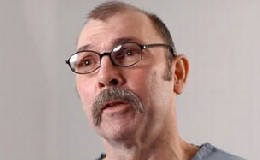
Michael Selsor
Murderer Ervil LeBaron
Murderer · USA · 1972
Ervil Morrell LeBaron (1925 to August 16, 1981) was the leader of a polygamous…
35 victims
Ervil LeBaron
Murderer · USA · 1972
Ervil Morrell LeBaron (1925 to August 16, 1981) was the leader of a polygamous…
35 victims
 Brian Kevin Rosenfeld
Murderer · USA · 1985
Brian Kevin Rosenfeld Brian Kevin Rosenfeld was sentenced to three concurrent l…
23 victims
Brian Kevin Rosenfeld
Murderer · USA · 1985
Brian Kevin Rosenfeld Brian Kevin Rosenfeld was sentenced to three concurrent l…
23 victims
 Marvin Gray
Murderer · USA · 1975
Marvin Gray was convicted killer who claimed responsibility for 23 slayings and…
23 victims
Marvin Gray
Murderer · USA · 1975
Marvin Gray was convicted killer who claimed responsibility for 23 slayings and…
23 victims
 Yahweh ben Yahweh
Murderer · USA · 1980
Yahweh ben Yahweh was born and legally named Hulon Mitchell Jr. (October 27, 19…
23 victims
Yahweh ben Yahweh
Murderer · USA · 1980
Yahweh ben Yahweh was born and legally named Hulon Mitchell Jr. (October 27, 19…
23 victims
 Nannie Doss
Serial killer · USA · 1954
Nannie Doss Nannie Doss pleaded guilty on May 17, 1955, and was sentenced to li…
11 victims
Nannie Doss
Serial killer · USA · 1954
Nannie Doss Nannie Doss pleaded guilty on May 17, 1955, and was sentenced to li…
11 victims
 David Allen Castillo
Murderer · USA · 1983
David Allen Castillo was executed by lethal injection in Texas on September 23,…
1 victim
David Allen Castillo
Murderer · USA · 1983
David Allen Castillo was executed by lethal injection in Texas on September 23,…
1 victim
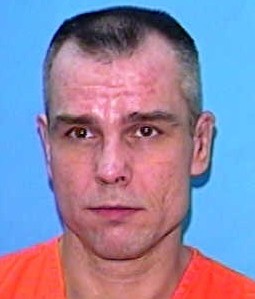 Marshall Lee Gore
Murderer · USA · 1988
Marshall Lee Gore (also known as Mars; W/M; DC# 401256; DOB: 08/17/63) was sent…
2 victims
Marshall Lee Gore
Murderer · USA · 1988
Marshall Lee Gore (also known as Mars; W/M; DC# 401256; DOB: 08/17/63) was sent…
2 victims
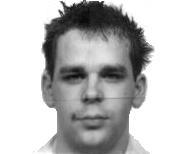 Alvin Goodwin
Murderer · USA · 1986
Defendant: Alvin Goodwin Alvin Urial Goodwin III Status: Executed by lethal inj…
1 victim
Alvin Goodwin
Murderer · USA · 1986
Defendant: Alvin Goodwin Alvin Urial Goodwin III Status: Executed by lethal inj…
1 victim
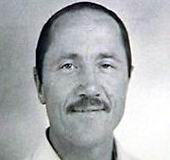 Patrick Tissier
Murderer · Franc e · 1971
Patrick Tissier was born on 24 August 1952 in Bourges. He was one of six childr…
3 victims
Patrick Tissier
Murderer · Franc e · 1971
Patrick Tissier was born on 24 August 1952 in Bourges. He was one of six childr…
3 victims
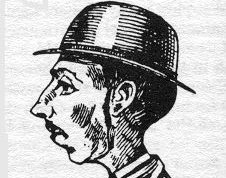 Percy Mapleton
Murderer · 1881
Percy Mapleton (real name Percy Mapleton; also given as Percy Lefroy Mapleton a…
1 victim
Percy Mapleton
Murderer · 1881
Percy Mapleton (real name Percy Mapleton; also given as Percy Lefroy Mapleton a…
1 victim
- Gender
- male
- Country
- USA
- Location
- Tulsa County, Oklahoma, USA
- Date of birth
- September 26, 1954
- Age at first offence
- 21
- Characteristics
- crime spree, robbery
- Victim profile
- Clayton Chandler, 55 (convenience store manager)
- Method of murder
- Shooting
- Date(s) of murder
- September 15, 1975
- Years active
- 1975
- Date of arrest
- 7 days after
- Status
-
Executed
Executed by lethal injection in Oklahoma on May 1, 2012
Case record: Michael Bascum Selsor
Background
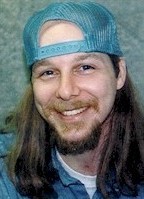
Michael Bascum Selsor was held as an Oklahoma death row inmate with inmate ID ODOC# 91854. Selsor’s birth date was 09/26/1954, race was White, sex was Male, height was 5 ft. 10 in., weight was 200 pounds, hair was Brown, and eyes were Brown.
Selsor was one of two defendants in a series of 1975 robberies involving convenience stores in the Tulsa area. The crime spree began Sept. 4, 1975, and continued through robberies over the following week.
People involved
- Michael Bascum Selsor — defendant; accomplice in robberies with Richard Eugene Dodson.
- Richard Eugene Dodson — accomplice and co-defendant.
- Frank Danyeur — convenience store clerk shot in the back; survived.
- Naomi Wilson — store clerk in Jenks; stabbed.
- Clayton Chandler — convenience store manager; shot and killed; age given as 55 and described as having died after being shot during an armed robbery.
- Ina Morris — store clerk; shot multiple times; survived.
- Debbie Huggins — daughter of Clayton Chandler.
- Cathy Durham — described as 15 years old at the time of her father’s murder.
- Anne Chandler — widow of Clayton Chandler.
- Naomi Wilson — identified during the spree.
- Chuck Jordan — Tulsa Police Chief at the time of later reporting; described as a lead investigator of the robberies in 1975 and as having been a detective in 1975 for his first homicide investigation.
- Detective John Evans — Santa Barbara Police Department; interviewed Dodson and later interviewed Selsor.
- Officer Evans — Santa Barbara Police Department; testified about interviews and confessions.
- Officer Roberts — Tulsa Police Department; testified about a conversation with Dodson at the Tulsa County Jail.
- Detective Martin — Santa Barbara interview participant with Officer Evans in the testimony recounted.
- Sergeant Williams — Santa Barbara interview participant with Officer Evans in the testimony recounted.
- William W. Means — district judge who sentenced Selsor following the 1976 trial.
- E.R. Turnbull — district judge at retrial in 1998.
- Randy Workman — warden.
- Justin Jones — Department of Corrections Director.
- ClarkProsecutor.org — referenced in relation to meal and last words.
- Oklahoma Pardon and Parole Board — voted on clemency.
- Oklahoma Attorney General Scott Pruitt — referenced regarding the clemency denial.
The offence
Selsor and accomplice Richard Eugene Dodson committed robberies of convenience stores and used firearms during the offences. The spree included multiple incidents in north Tulsa, Jenks, and west Tulsa.
Sept. 4, 1975 — north Tulsa convenience store robbery
The spree began Sept. 4, 1975, when Selsor and Dodson robbed a convenience store in north Tulsa and shot clerk Frank Danyeur in the back. Danyeur survived.
Sept. 6, 1975 — Jenks store robbery
On Sept. 6, Selsor stabbed Naomi Wilson, a store clerk in Jenks, more than 20 times after she screamed for help. During the trial, Wilson identified Selsor as the man who stabbed her.
Subsequent robberies before the Chandler murder
Two more stores were robbed over the next week before Selsor and Dodson robbed another store in west Tulsa.
West Tulsa — Clayton Chandler killing and Ina Morris shooting
In the west Tulsa robbery, Ina Morris was shot seven times and Clayton Chandler was shot to death. Morris testified in court that she saw Dodson with the gun and saw him pull the trigger. During the robbery:
- At approximately 11:00 p.m. on September 15, 1975, Selsor and Dodson robbed the U-TOTE-M convenience store at 5950 33rd West Avenue in Tulsa.
- Selsor approached employee Clayton Chandler at the cash register, pulled his gun, and demanded the contents of the register.
- Dodson located employee Ina Morris who was restocking the walk-in cooler, pointed a gun at her, ordered her to get down, and Morris replied, “You've got to be kidding me.”
- Dodson then fired a shot striking Morris in the shoulder.
- Chandler loaded a sack with money and handed it to Selsor.
- Selsor shot Chandler several times in the chest, killing him.
- Morris was shot in the head, neck and shoulder, but survived; Dodson emptied his weapon through the cooler door at her.
- Morris survived the attack and did not implicate Selsor as the shooter at trial; she identified Dodson as the man who shot her.
During the trial evidence and confessions were presented involving Selsor’s admission and Dodson’s statements, including “leave no witnesses” agreement before entering the store.
Investigation
The investigation involved interviews after the arrests in California and testimony about confessions presented through officers.
Arrest location and interviews in Santa Barbara, California
On Sept. 22, 1975, Selsor and Dodson were arrested in Santa Barbara, California.
Officer Evans testified that on September 22, 1975, he and a Sergeant Williams interviewed Dodson at the Santa Barbara Police Department.
- Dodson stated that he and Selsor were driving a green “'67 Pontiac,” that they had been together on the evening of September 15 around 11:00 P.M., and that they passed the U-TOTE-M store which he thought was located at 66th and 33rd in that vicinity.
- Dodson stated that they both were armed.
- Dodson was armed with a nine shot .22 caliber revolver, black and silver; Selsor was armed with a .22 automatic Lugger Blackhawk.
- Dodson stated that prior to entering the store there was discussion of taking these people out; later in the conversation taking them out meant killing them.
- Officer Evans testified that Selsor stated after that interview that Selsor and Dodson had approached the U-Tote-M store at 61st and 33rd Street and that they were in a green “'67 Pontiac” which belonged to Selsor.
- Officer Evans testified that Selsor stated they “didn't intend to have any witnesses around and had planned on killing the proprietors after the robbery.”
- Officer Evans also testified to Selsor’s description of the robbery, including demanding money in a sack and firing several shots into the elderly man with the .22 automatic.
- Officer Evans testified that Selsor stated “that all the bullets went into the chest area and it [sic] must have hit the heart.”
Officer D.A. Roberts testified about a conversation he had with Dodson at the Tulsa County Jail on September 30, 1975. Officer Roberts testified:
We started the conversation off, I advised him I'd like to know how it went down and the order that it happened. He related it started with a conversation between himself and Selsor, that Selsor had said, We got to take out the witnesses involved in this case. .... At that time I asked him if he felt Selsor really meant that. He said, Well, he convinced me of it. He said, I thought he did, he looked serious.
The state introduced spent shell casings recovered from the crime scene which an expert testified came from an automatic weapon. The state introduced the .22 caliber revolver used by Dodson; the .22 caliber automatic allegedly used by Selsor was not introduced. Officer Roberts testified that Dodson told him Selsor threw the gun into some body of water along Interstate 80.
Trial
1976 trial and sentencing (after 1975 charges)
Selsor was tried conjointly with co-defendant Richard Eugene Dodson. The 1976 trial proceeded in the District Court, Tulsa County.
Selsor was charged in Tulsa County District Court with:
- Armed Robbery (Case No. CRF—75—2183)
- Shooting With Intent to Kill (Case No. CRF—75—2182)
- Murder in the First Degree (Case No. CRF—75—2181)
The record reflected that a guilty verdict was returned on all three charges, with punishment being assessed at:
- death for Murder in the First Degree
- twenty (20) years’ imprisonment for Shooting With Intent to Kill
- twenty-five (25) years’ imprisonment for Armed Robbery
On appeal, the Court of Criminal Appeals affirmed as modified, modifying the death sentence to life imprisonment and affirming the other judgments and sentences.
Concerning joint representation and related proceedings
During the 1976 proceedings, defense counsel sought severance or outside counsel due to alleged conflicting defenses between Selsor and Dodson, including anticipated insanity defense by Dodson. The motion was denied. The issue later became central in federal habeas litigation concerning joint representation and conflicts of interest.
The defense called Dr. Garcia, a forensic psychiatrist from Eastern State Hospital at Vinita, Oklahoma, who testified only about Dodson’s mental condition. The defense made no opening statement. The defense closing argument was brief, consisting of two pages of the trial transcript in essence asserting the jury should not take the defendants’ lives.
Confessions and evidence presented at 1976 trial
In the 1976 trial, the evidence against Selsor included confessions presented through testimony from officers Officer Evans and Officer Roberts.
Morris was described as the only eyewitness to the crime at trial and her testimony did not implicate Selsor as the shooter. The evidence against Selsor was based on confessions.
After the first death sentence modification
Oklahoma’s death penalty statute was ruled unconstitutional in 1976 when Oklahoma’s mandatory death penalty statute was ruled unconstitutional by the U.S. Supreme Court. Selsor’s death sentence was modified to life without the possibility of parole.
Sentencing
Original death sentence
Selsor received the death sentence for the first-degree murder conviction during the 1976 trial.
Modification to life imprisonment
After the death penalty statute ruling, his death sentence was replaced with a sentence of Life Without Parole.
1996 conviction overturned and 1998 retrial sentence
Selsor continued appeals and his murder conviction was overturned in 1996. After retrial in 1998:
- Selsor was again convicted of first-degree murder and sentenced to death.
- He was also convicted of shooting with intent to kill and sentenced to life imprisonment at the second trial as discussed in the Oklahoma direct appeal.
- He was convicted of robbery with firearms, but that conviction was later dismissed based on double jeopardy.
Accomplice Dodson was acquitted for the murder of Chandler, but was convicted of:
- robbery and shooting with intent to kill Morris, with a previous felony conviction
Dodson was sentenced to:
- 50 years for armed robbery
- 199 years for shooting with intent to kill
Appeals
Direct appeal and state habeas
The Oklahoma Court of Criminal Appeals affirmed as modified, and the death sentence was modified to life imprisonment due to the unconstitutionality of the death penalty statute.
Federal habeas and reversal on conflict-of-interest grounds
In federal habeas proceedings, the Tenth Circuit held that:
- state trial court improperly failed to either appoint separate counsel or conduct a requisite searching inquiry for potential conflict of interest
- prejudice was presumed, and there was an actual conflict that adversely affected trial counsel’s performance
The Tenth Circuit reversed and remanded with directions to enter judgment invalidating Selsor’s convictions but allowing retrial within a reasonable time.
Subsequent state proceedings after habeas
Following the remand, the prosecution filed a Bill of Particulars seeking the death penalty with aggravating circumstances. Selsor filed motions and petitions including requests to strike the Bill of Particulars and prohibit a jury trial exposing him to death or life without parole. The petition was denied and stay dissolved.
Direct appeal after 1998 retrial
On direct appeal after retrial:
- the OCCA affirmed Selsor’s first degree murder conviction and death sentence
- it reversed in part and remanded to dismiss the robbery with firearms conviction based upon double jeopardy because all elements of Robbery with Firearms were included within the elements of the First Degree Murder under the 1973 statute
- it modified the shooting with intent to kill sentence from life imprisonment to twenty (20) years' imprisonment due to ex post facto considerations related to the maximum punishment under the 1971 statute
U.S. Supreme Court
The U.S. Supreme Court rejected Selsor’s request for a stay of execution and denied his final appeal on Feb. 21 (as described in the narrative about clemency and execution).
Outcome
Selsor remained on death row until execution.
Selsor’s final words were:
“My son, my sister, I love you. ‘Till I see you again next time, be good. Eric, keep up the struggle. I’ll be waiting at the gates of heaven for you. I hope the rest of you will make it there as well. I’m ready.”
Execution
Selsor was executed by lethal injection in Oklahoma on May 1, 2012. He was pronounced dead at 6:06 p.m. The warden asked for last words and said: “Let the execution begin.”
Witnesses included members of the media, members of the victim’s family, Selsor’s son and sister, and three of his lawyers, plus Department of Corrections Director Justin Jones and law enforcement representatives including Tulsa County sheriff and Chuck Jordan.
Other details
Clemency proceedings
Clemency was denied by a 4-1 vote of the Oklahoma Pardon and Parole Board. During a teleconference hearing from OSP, Selsor asked:
“Is it too late to say I’m sorry? I am truly sorry for the suffering and damage I have caused.”
Selsor’s clemency denial was described as occurring on April 16.
Last meal
Selsor requested Kentucky Fried Chicken’s:
- crispy two breast and one wing meal
- potato wedges and baked beans
- an added thigh
- apple turnover
- two biscuits and honey
- salt, pepper and ketchup
Reported age and connections in last words
In reporting about the execution, Selsor was described as 57 at the time of execution. He addressed his son (Eric) and sister and said, “Till I see you again next time, be good. Eric, keep up the struggle.”
Additional reported execution context
Selsor was described as the third Oklahoma death row inmate executed in 2012 after Gary Welch in January and Timothy Stemple in March; Gary Allen’s April 12 execution was postponed and no other executions were scheduled. Selsor was described as the 182nd person executed by the state since 1915.
Trial and retrial charges and sentencing terms in the compiled conviction list
A convictions list associated with Selsor included:
- 75-2181 Tulsa — Murder, First Degree — conviction term start 01/30/1976 — Death sentence 05/11/1998
- 75-2182 Tulsa — Shooting With Intent To Kill — conviction term start 01/30/1976 — 20 years
- 75-2113 Tulsa — Robbery With A Dangerous Weapon — 12/09/1977 — 10 years
- 75-2114 Tulsa — Assault And Battery With A Dangerous Weapon — 12/09/1977 — 10 years
- 75-2169 Tulsa — Robbery With A Firearm — 12/09/1977 — 10 years
- 85-0026 CLEV — Attempted Escape From A Penal Institution — 04/24/1985 — 18 months
Details included in proceedings about victim impact evidence and sentencing-stage issues
In the 2000 Oklahoma direct appeal after federal habeas, issues were addressed including admission of victim impact evidence, jury instructions related to aggravating circumstances, and prosecutorial misconduct arguments, along with ineffective assistance of counsel claims.
The jury found two aggravating circumstances:
- knowingly created a great risk of death to more than one person
- committed the murder to avoid or prevent lawful arrest
Twelve mitigating factors were instructed upon at the second-stage trial in the Oklahoma direct appeal after retrial, and evidence included statements by Department of Corrections employees and witnesses concerning Selsor’s behavior in prison.
Investigatory and trial transcript quotations preserved
The record included verbatim statements from witnesses, including Morris’s dialogue “You've got to be kidding me.” and testimony lines “Just that he had pointed it in the direction of the female behind the glass.” and “I just shot through.”
The record also included Morris’s described statements: “You've got to be kidding me.” and “I just looked at him” because she “couldn't believe it,” and “You've got to be kidding.” and related account described in the 1996 federal habeas record.
Spotted an error, or have more information about this case?