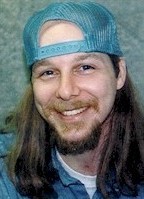
Sean Sellers
Homicide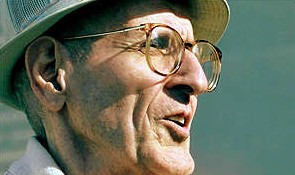 Jack Kevorkian
Homicide · USA · 1990
Jack Kevorkian (born May 26, 1928) was a controversial American pathologist. He…
130 victims
Jack Kevorkian
Homicide · USA · 1990
Jack Kevorkian (born May 26, 1928) was a controversial American pathologist. He…
130 victims
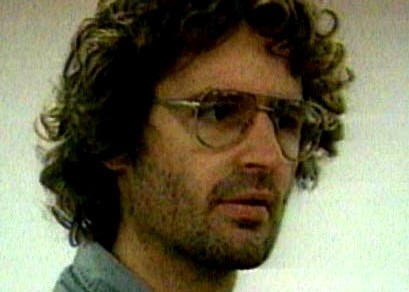 David Koresh
Homicide · USA · 1993
David Koresh (born Vernon Wayne Howell; August 17, 1959 – April 19, 1993) led t…
79 victims
David Koresh
Homicide · USA · 1993
David Koresh (born Vernon Wayne Howell; August 17, 1959 – April 19, 1993) led t…
79 victims
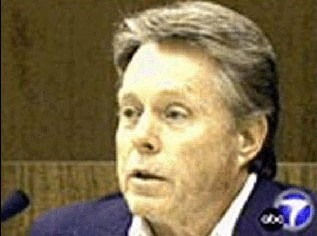 Edward Charles Allaway
Homicide · USA · 1976
Edward Charles Allaway Edward Charles Allaway was found not guilty by reason of…
7 victims
Edward Charles Allaway
Homicide · USA · 1976
Edward Charles Allaway Edward Charles Allaway was found not guilty by reason of…
7 victims
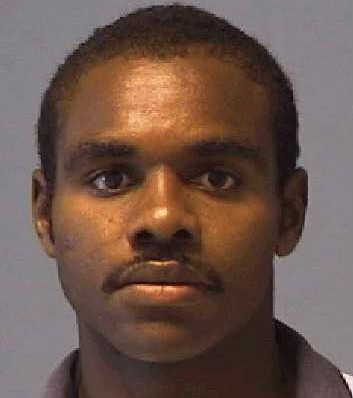 Clinton Bankston
Homicide · USA · 1987
15 August 1987 — Ann Morris (63), her sister Sally Nicholson (59), and Sally’s…
5 victims
Clinton Bankston
Homicide · USA · 1987
15 August 1987 — Ann Morris (63), her sister Sally Nicholson (59), and Sally’s…
5 victims
 Donta Page
Murderer · USA · 1999
Donta Page came to Colorado from Maryland as part of a court order to participa…
1 victim
Donta Page
Murderer · USA · 1999
Donta Page came to Colorado from Maryland as part of a court order to participa…
1 victim
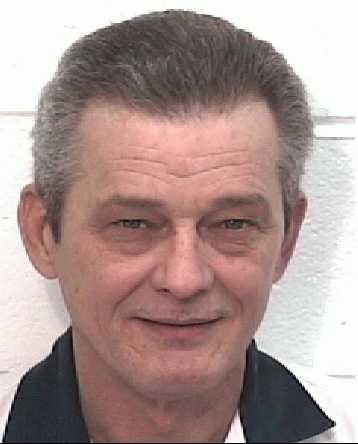 Eddie Albert Crawford
Murderer · USA · 1983
Eddie Albert Crawford was a white male, born 02/09/1947, with hair color brown,…
1 victim
Eddie Albert Crawford
Murderer · USA · 1983
Eddie Albert Crawford was a white male, born 02/09/1947, with hair color brown,…
1 victim
 Lee Doon
Murderer · United Kingdom · 1922
Sing Lee was 33-years-old. He owned a chain of laundries and lived over the pre…
1 victim
Lee Doon
Murderer · United Kingdom · 1922
Sing Lee was 33-years-old. He owned a chain of laundries and lived over the pre…
1 victim
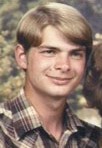 Robert Bryant
Mass murderer · USA · 2002
Robert Bryant lived in California before moving to Oregon. He was described as…
5 victims
Robert Bryant
Mass murderer · USA · 2002
Robert Bryant lived in California before moving to Oregon. He was described as…
5 victims
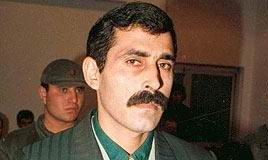 Adnan Çolak
Serial killer · Turkey · 1992
Adnan Çolak was born in 1952 and was known as the "Artvin Monster". He was a Tu…
11 victims
Adnan Çolak
Serial killer · Turkey · 1992
Adnan Çolak was born in 1952 and was known as the "Artvin Monster". He was a Tu…
11 victims
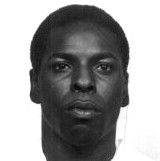 Karl Hammond
Murderer · USA · 1986
Karl Hammond was convicted of capital murder involving the rape and murder of D…
1 victim
Karl Hammond
Murderer · USA · 1986
Karl Hammond was convicted of capital murder involving the rape and murder of D…
1 victim
- Gender
- male
- Country
- USA
- Location
- Oklahoma County, Oklahoma, USA
- Date of birth
- May 18, 1969
- Age at first offence
- 16
- Characteristics
- juvenile (16), parricide
- Victim profile
- Robert Bower (convenience store clerk) / Vonda Bellofatto (his mother) and Leo Bellofatto (his stepfather)
- Method of murder
- Shooting (handgun)
- Date(s) of murder
- September 7, 1985 / March 4, 1986
- Years active
- 1985–1986
- Date of arrest
- March 6, 1986
- Status
-
Executed
Executed by lethal injection in Oklahoma on February 4, 1999
Case overview
Sean Sellers was executed by lethal injection in Oklahoma on February 4, 1999.
People
- Sean Sellers (American murderer)
- Robert Bower (convenience store clerk; victim)
- Richard Howard (Sean Sellers’ best friend; present at the murder of Robert Bower; initial co-defendant whose first degree murder charge was dismissed and who testified against Sellers)
- Vonda Bellofatto (Sean Sellers’ mother; victim)
- Lee Bellofatto (Sean Sellers’ stepfather; victim)
- Noelle Terry (stepsister of Sean Sellers)
- Dianna Craun (juror who sentenced Sellers to death; spoke on his behalf at clemency)
- Harold D. Niles (jury foreman)
- Richard Ramirez (appears as a referenced figure in materials describing Satanism; not otherwise described)
- Drew Edmondson (Oklahoma Attorney General)
- Frank Keating (Governor)
- Robert Macy (Oklahoma County District Attorney)
- Charles Owens (retired Oklahoma County District Judge)
- Steve Presson (lead attorney)
- Richard Howard (again noted as the best friend; initial charge dismissed; testified)
- Henry Smith (other death row prisoner Sellers reportedly intervened to protect)
- Tuan Nguyen (scheduled for execution before Sellers; appears in the description of high-max lockdown cell transfers)
- John Duvall (scheduled for execution before Sellers; appears in the description of high-max lockdown cell transfers)
- John Walter Castro (scheduled for execution before Sellers; appears in the description of high-max lockdown cell transfers)
- Terry (not explicitly named beyond “Tutu” below)
- Desmond Tutu (Archbishop Desmond Tutu; sought clemency; quoted writing to the Governor)
- Bianca Jagger (sought clemency; referenced)
- American Bar Association (sought clemency; referenced)
- Bill Mason (minister who prayed with Sellers and protested the execution)
- Dr. Dorothy Lewis (examined Sellers; described psychiatric findings)
- Kevin Acers (state Coalition to Abolish the Death Penalty; quoted)
- Jackie Dahlgren (mother of Brent Ullery; quoted)
- Pat Ratterman (board president of NAMI state chapter; quoted)
- Harold D. Niles (again, juror foreman quoted regarding deliberations)
- Dr. Herman Jones (State’s psychological expert witness; discussed in appellate analysis)
- Dr. Krimsky (Sellers’ expert; discussed in appellate analysis)
- Ms. Betsey Payne (executive secretary of the Oklahoma Pardon and Parole Board; barred from testifying about parole eligibility details)
- Dr. Dorothy Lewis (again, psychiatric examination; referenced)
- Tuan Nguyen / John Duvall / John Walter Castro (referenced as death row men scheduled for execution before Sellers in the described cell-transfer sequence)
Timeline
- September 8, 1985 — Sean Sellers was 16 when he shot and killed Robert Bower, a convenience store clerk in Oklahoma City.
- March 5, 1986 — Sean Sellers shot and killed his mother, Vonda Bellofatto, and his stepfather, Lee Bellofatto, while they slept in their Oklahoma City home.
- February 14, 1995 — Sean Sellers married in prison.
- 1997 — The marriage of Sean Sellers was annulled.
- 1999 (executed by lethal injection) — Sean Sellers was executed by lethal injection in Oklahoma on February 4, 1999.
- 12:17 a.m. (execution time given) — Sean Sellers was executed at 12:17 a.m. on February 5, 1999 in one narrative; the status given states execution by lethal injection on February 4, 1999.
- May 18, 1969 — Sean Sellers’ birthdate appears in the case materials.
- February 5, 1999 — Sean Sellers’ deathdate appears in the case materials.
Background
Sean Sellers was a practicing satanist at the time of the murders. He later became a Christian while in prison and campaigned for clemency based on religious conversion, age, and involvement in Satanism.
His best friend Richard Howard testified about what Sellers said after the Robert Bower killing and initially had been charged with first degree murder; the state dismissed that charge and recommended a five-year suspended sentence in exchange for testimony.
At trial, Sellers’ defense argued that he was addicted to the game “Dungeons and Dragons” and had no control over his actions. Sellers later contended he was the victim of a multiple personality disorder.
During clemency, a juror who sentenced Sellers to death described the sentencing options as life sentence with the possibility of parole or the death penalty.
Sellers’ case drew worldwide attention due to his age, his religious conversion, and his claim that demonic possession made him innocent of his crimes.
The offence
September 8, 1985 — murder of Robert Bower
On September 8, 1985, Sean Sellers shot and killed Robert Bower, a convenience store clerk, in Oklahoma City, Oklahoma.
In testimony attributed to Richard Howard, Sellers said he killed Robert Bower because he “wanted to see what it feels like to kill somebody.”
Sellers later admitted he killed Bower because the man refused to sell him beer and because he wanted to see “what it felt like” to kill someone. It was described that Sellers surprised the clerk while drinking coffee, pursued the wounded man across the store, and shot him again (killing him).
A statement attributed to Sellers described laughing and giggling after shooting Bower and framed the act as a “fantastic prank” given the circumstances described.
March 5, 1986 — killings of Vonda Bellofatto and Lee Bellofatto
On March 5, 1986, Sean Sellers killed his mother Vonda Bellofatto and his stepfather Lee Bellofatto while they slept in their Oklahoma City home.
Richard Howard testified that Sellers came to his house and told him that he had killed his parents soon after the murders.
Sellers tried to disguise his guilt by arranging the crime scene to look as if an intruder had committed the killings.
At his trial, Sellers claimed he was a practicing Satanist at the time of the murders and that demonic possession made him murder his victims.
In one quoted narrative of Sellers’ statement, he described using his father’s .44 revolver, dressing in black underwear, crept into his parents’ room, fired multiple shots, felt relieved, then experienced further “blinking” and described recalling the murders afterward.
Investigation and evidence
The state’s evidence in the Robert Bower murder depended on Richard Howard’s testimony, including Howard’s claim that Sellers told him he killed Bower because he wanted to see what it felt like to kill somebody.
In the materials describing the trial record, it was stated that in the absence of forensic evidence linking Sellers to either crime, Howard provided the prosecution’s main evidence for both the Bower killing and the parents’ killings.
The description also stated that police investigation showed that the guns described by Howard were used to fire the fatal shots.
Trial
Charges and verdict
Sean Sellers was tried for all three murders.
The jury convicted Sellers of three charges of Murder in the First Degree, and the jury recommended a sentence of death for each count. The District Court entered judgments and sentences accordingly.
Prosecution and sentencing arguments
For the parents’ double homicide, the state alleged that the killings were “especially heinous, atrocious, or cruel,” that Sellers constituted a continuing threat to society, and that Sellers knowingly created a great risk of death to more than one person when he committed the double homicide.
For the Robert Bower murder, the state alleged and the jury found the “heinous, atrocious, or cruel” and continuing threat aggravators.
One juror later described the jury’s reasoning that they feared a life sentence would result in parole in “7 to 14 years” and that the prison term was not lengthy enough, with some jurors denying it was part of deliberations.
Defense arguments
Sellers’ defense portrayed him as the victim of Satanism and occult worship.
The defense also argued that Sellers’ addiction to “Dungeons and Dragons” dictated his actions and disconnected him from any consciousness of wrongdoing or responsibility.
A psychiatric expert testified Sellers was “legally unconscious” at the time of all three killings and therefore incapable of forming intent required of first degree murder.
The trial jury was not instructed that Sellers’ age of 16 at the time of the crime was a mitigating circumstance; instead, jurors were asked to decide whether his age was a mitigating factor.
A judge refused to allow the defense to introduce expert testimony about juveniles being developmentally different, stating that jurors would already know this anyway.
The trial judge did not permit expert testimony about the meaning of a life sentence in Oklahoma in terms of time without parole.
The defense sought an option of first-degree manslaughter if there were doubts about Sellers’ ability to form the requisite intent; the judge refused, leaving jurors two options: find guilty of first-degree murder or acquit.
Decision to impose death
The materials state that jurors concluded Sellers was guilty and a continuing threat to society, and on 2 October 1986 they decided he should die.
Sentencing
Sellers was sentenced to death in 1986 for the murders committed on:
- September 8, 1985: Robert Bower
- March 5, 1986: Vonda Bellofatto and Lee Bellofatto
Appeals
Direct appeal
In Sellers v. State, 809 P.2d 676 (Okla. Cr., 1991), the Oklahoma Court of Criminal Appeals affirmed the convictions and the death sentences.
It was stated that Sellers was convicted in the District Court, Oklahoma County, of three charges of Murder in the First Degree, and that the District Court imposed the death sentence after the jury recommended death.
The court described the state’s evidence and concluded that after discarding the invalid aggravating circumstance of “especially heinous, atrocious or cruel,” and weighing remaining aggravating circumstances against mitigating evidence, it found the death sentence to be factually substantiated and appropriate.
Later state post-conviction proceedings
In Sellers II, 889 P.2d 895 (Okla. Crim. App. 1995), it was stated that Sellers asserted he had recently discovered evidence of a childhood brain injury and multiple personality disorder (MPD), and also contended he received ineffective assistance of counsel.
The Oklahoma Court of Criminal Appeals rejected the claims, holding evidence of then-existing but not yet presented physical brain damage and MPD presented a valid ground for post-conviction relief under the statute, but was waived under the subsequent-application/waiver rule.
Federal habeas proceedings and Tenth Circuit
A 1999 appeal to the 10th U.S. Circuit Court of Appeals is described as addressing Sellers’ contentions about multiple personality disorder.
The materials quote the 10th Circuit stating that it was constrained to hold Sellers had failed to establish grounds for federal habeas corpus relief, and that even if Sellers might be able to prove factual innocence based on an alter personality, the court believed he must be left to the avenue of executive clemency.
The 10th Circuit materials also described the uncontroverted expert affidavit testimony as including:
- QEEG test showing brain damage from a closed head injury and changes with alter states indicating at least three alter personalities
- an Evoked Potential Test confirming objective changes
- interview evidence speaking to alter personalities named “Danny” and “The Controller”
- testimony that MPD existed at the time of the killings and that an alter personality “must have been in executive control”
- statements that MPD is limitedly understood in the mental health community and “hidden” and generally takes years to confirm
The court reasoned that federal habeas corpus could not reach the freestanding innocence claim and applied a high threshold.
The materials also described that the court held it could not say no reasonable juror would convict if such evidence were presented at trial, and noted that without cross-examination in a courtroom, it was difficult to conclude not one juror would disregard the opinions.
Supreme Court request
The materials state that Sellers appealed to the U.S. Supreme Court and the Court declined his appeal.
In one narrative, Sellers’ last appeal to the U.S. Supreme Court was turned down about 7 p.m. Wednesday.
Refusal of clemency board consideration
Sellers made the same insanity claim to his clemency board, but the board refused to consider the issue.
Executive clemency
Clemency petition
Two days before his execution, Sellers filed two more appeals:
- a federal district court appeal accusing the state Pardon and Parole Board of violating civil rights, arguing the board’s decisions were not impartial and capricious; the appeal was denied after being considered and rejected by state courts numerous times
- a state Court of Criminal Appeals appeal asserting that the state appellate court made a mistake by ruling Sellers had waived his insanity claim at trial; the state appellate court admitted it used the wrong legal justification but nevertheless rejected Sellers’ appeal after reconsidering on the merits
Oklahoma Pardon and Parole Board vote and hearing details
On January 27, the Oklahoma Pardon and Parole Board voted 5-0 to deny clemency to Sean Sellers.
The hearing was held in the chapel of the Jackie Brannon Correctional Center (JBCC) in McAlester, Oklahoma.
Dianna Craun, a juror who sentenced Sellers to death, spoke on his behalf at the clemency hearing. She stated the jury had been given two sentencing choices (life sentence with possibility of parole or the death penalty), and that she believed jurors thought life would mean around 7–15 years in prison and was too lenient for the murders. She also said she believed jurors did not honestly expect that Sellers would be executed because Oklahoma had not executed anyone for 20 years at the time of the trial, and that the jury chose death to ensure a long prison sentence. She also stated that if the jury had been aware of Sellers’ mental illness, it would have changed the sentence.
Craun told the parole board:
"It is very obvious that he's found God, and God has changed his life," she told the parole board. "I was touched...and I truly don't want him executed."
After her testimony ended and Sellers was taken from the chapel, all five board members voted to deny clemency.
The materials state prison officials cast doubt on Sellers’ mental illness and that prison officials said Sellers rehearsed evidence of mental illness and received coaching from his attorneys.
They also included a statement attributed to Richard Howard in which he wrote:
"The only thing that worried him was getting caught",
in connection with Sellers’ clemency and mental-illness statements.
Execution
Sean Sellers was executed by lethal injection. The materials give an execution time of 12:17 a.m.
One narrative states:
- Sellers was executed at 12:17 a.m. on February 5, 1999 and the status field states execution by lethal injection in Oklahoma on February 4, 1999.
Spoken statements
Sellers spoke to his step-siblings and said:
"All the people who are hating me right now and are here waiting to see me die, when you wake up in the morning, you aren't going to feel any different."
Sellers did not mention his mother or apologize for what he had done.
Noelle Terry later said:
"He basically addressed the fact that we would still feel the same. It is very presumptuous that he would know how we would still feel."
Sellers’ last words were:
"Set my spirit free that I might praise Thee. Set my spirit free that I might worship Thee."
Sellers’ statement included references to multiple murders and to his claimed beliefs, and the materials include extended written statements attributed to Sellers describing his killings and his “blinking” account of dissociation and later recollection.
Aftermath
Notable execution claims and later constitutional change
The materials state that Sellers was the first and remains the only person executed for a crime committed under the age of 17 since the reinstatement of the death penalty in 1976.
It also states he was the first person executed by the state of Oklahoma since 1966.
The materials state that the U.S. Supreme Court ruling in Roper v. Simmons, 542 U.S. 551 (2005) later decided it was unconstitutional to execute an individual for a crime committed under the age of 18.
Prison writing and religious ministry
While in prison, Sellers authored a book titled Shuladore, described as a self-published love stories and poems book sold via his website.
A Christian book publisher issued Sellers’ autobiography, titled Web of Darkness, in 1999 shortly before his death.
The materials state an Oklahoma grand jury investigated whether Sellers or his friends received profits from the sale of Shuladore; no indictment was forthcoming.
Sellers became a Christian while in prison, and his friends started a website and he campaigned for clemency based on his religious conversion, age and involvement in Satanism.
Sellers made numerous media appearances, including on The Oprah Winfrey Show, and on a segment of Geraldo about Satanism, as well as documentaries about Satanism and serial killers for 48 Hours, MSNBC, and A&E Network.
Marriage in prison
The materials state Sellers married in prison on February 14, 1995, and the marriage was annulled in 1997.
Cleansing of state procedure / parole ineligibility testimony dispute
The materials state that Petitioner argued the jury should have been informed that a person sentenced to life imprisonment could not be considered for parole for at least fifteen calendar years, and that the jury also should not be eligible for good-time or other credits, but that a witness, Ms. Betsey Payne, the executive secretary of the Oklahoma Pardon and Parole Board, was prevented from testifying about these details.
Cell transfer and executions preceding Sellers
The materials describe that after Sellers’ execution date was set, he was transferred to solitary confinement in special double-doored “high-max” cells, and that three other men scheduled for execution before him occupied high-max cells already:
- Tuan Nguyen
- John Duvall
- John Castro
The sequence described included:
- On 8 December, Tuan Nguyen moved into the death cell adjacent to the execution chamber and Sellers was later moved into a vacated high-max cell after subsequent transfers of John Duvall and John Castro.
It also described that on 10 December, Human Rights Day, Tuan Nguyen was executed.
Other details
Defense and jury deliberation accounts
One juror later said the jury felt Sellers would be paroled in 7 to 14 years if given a life sentence, and this prison term was not lengthy enough.
Other jurors denied it was part of deliberations.
Perceptions of prison officials and behavior around visitors
The materials include that prison officials monitored Sellers and cast doubt on his sincerity or mental illness, including statements that Sellers was a manipulator on his best behavior when visitors from the Christian community were around.
People who opposed or supported clemency / execution watch arrangements
Seven relatives of Paul Bellofatto were to watch the execution, and seven witnesses were to be present, including two spiritual advisers.
Oklahoma County District Attorney Robert Macy declined a chance to watch, stating:
"I've carried out my responsibilities in the case. My duty was to prosecute the case, get the conviction and get the death penalty."
Retired Oklahoma County District Judge Charles Owens declined a chance to watch, stating:
"I just refereed it, and I trust I gave him a fair trial.... I don't have any interest in watching him die."
Attorney statements
Oklahoma Attorney General Drew Edmondson was quoted as saying:
"Sean Sellers' case is an aberration because Sean Sellers is an aberration. He committed multiple murders, the 1st one out of some sort of curiosity,"
and also said at a press conference about the debate over juvenile executions:
"it is such a serious matter."
He also said:
"However, that is not our role here tonight. Our role here tonight is to see that the laws of Oklahoma are carried out,"
In a description of a prosecutor’s attempt to persuade jurors, the materials quote:
"You and only you have the power to stop Sean Sellers from killing again.... You don't kill anyone. What you do, you go out and you deliberate, and you decide, and if death is the appropriate verdict, you bring it back in this courtroom. That's all you do."
A prosecutor in a 1998 context was quoted as saying:
"I think this is just another one of his attempts to escape the death penalty. I guess we should have anticipated he'd come up with something like this multiple personality thing."
Quotations included from Sellers’ written materials
The materials include the following quotations attributed to Sellers:
- Sellers’ statement on the 1985 murder of Robert Bower, including:
- his own account of shooting Bower and laughing/giggling and describing desire to see what it felt like
- Sellers’ statement beginning with:
- Sellers’ statement beginning:
- Sellers’ statement regarding his mother and stepfather murders, including:
- Sellers’ statement expressing responsibility:
- Sellers’ “Who I Am” written statement, beginning:
- Sellers’ “Who I Am” includes his signing line:
"Sean Sellers, 24 August 1998"
"If you know who I am you've probably heard and read a lot of things about me."
"I was not in any way trying to pass blame to any other person. There are reasons why I did what I did, but I’m still the one who did it, and the responsibility, no matter the reasons, is still MINE."
"I had taken my father’s .44 revolver and shot both my parents in the head as they slept."
"My next clear memory is a jail cell two days later."
"My life stunk. I was angry with my parents. I continually thought about suicide. I just wanted out. I was more out of speed. Tonight I would get some sleep. I drove home, did some homework, performed a ritual, and slept."
Quotation by juror Harold D. Niles
When responding to claims about jury concern over parole likelihood, materials quote:
"I don't recall that being an issue. No, I don't recall that conversation."
Cleansing content attributed to external observers (record includes requested quotations)
The materials include a statement attributed to Bill Mason:
"He wants to make up for what he's done," and a statement about death row: Sellers said Oklahoma's death row is filled with such people, who "give nothing and stand for nothing. They don't think or care about what they did."
It also includes a Sellers quotation:
"It's not good enough to repent the day you die," he wrote.
Tutu’s letter quotation to the Governor
The materials state that Desmond Tutu wrote:
"neither capital punishment nor life imprisonment without possibility of release shall be imposed for crimes committed by persons below 18 years of age."
Spotted an error, or have more information about this case?