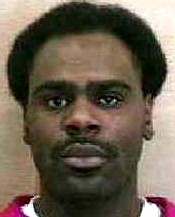
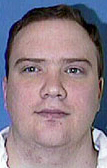
Michael Earl Sexton
Murderer Brian Kevin Rosenfeld
Murderer · USA · 1985
Brian Kevin Rosenfeld Brian Kevin Rosenfeld was sentenced to three concurrent l…
23 victims
Brian Kevin Rosenfeld
Murderer · USA · 1985
Brian Kevin Rosenfeld Brian Kevin Rosenfeld was sentenced to three concurrent l…
23 victims
 Yahweh ben Yahweh
Murderer · USA · 1980
Yahweh ben Yahweh was born and legally named Hulon Mitchell Jr. (October 27, 19…
23 victims
Yahweh ben Yahweh
Murderer · USA · 1980
Yahweh ben Yahweh was born and legally named Hulon Mitchell Jr. (October 27, 19…
23 victims
 Russell Ellwood
Murderer · USA · 1991
Russell Ellwood was a former taxi driver. Authorities suspected him of killing…
20 victims
Russell Ellwood
Murderer · USA · 1991
Russell Ellwood was a former taxi driver. Authorities suspected him of killing…
20 victims
 Robert Martines Perez
Murderer · USA · 1994
Name: Robert Martines Perez · Other name used in proceedings: Robert Martinez P…
15 victims
Robert Martines Perez
Murderer · USA · 1994
Name: Robert Martines Perez · Other name used in proceedings: Robert Martinez P…
15 victims
 Vincent Johnson
Serial killer · USA · 1999
Vincent Johnson was an American homeless crack addict. He was born January 6, 1…
6 victims
Vincent Johnson
Serial killer · USA · 1999
Vincent Johnson was an American homeless crack addict. He was born January 6, 1…
6 victims
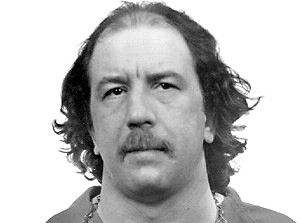 Charles E. Barker
Murderer · USA · 1993
Defendant: Charles E. Barker. · May 25, 2004 — The Indiana Supreme Court issued…
2 victims
Charles E. Barker
Murderer · USA · 1993
Defendant: Charles E. Barker. · May 25, 2004 — The Indiana Supreme Court issued…
2 victims
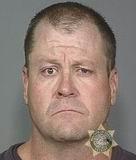 David Hebbert Hard
Homicide · USA · 1984
Dorothy Biggs was a resident of the tiny Lincoln County community of Eddyville.…
1 victim
David Hebbert Hard
Homicide · USA · 1984
Dorothy Biggs was a resident of the tiny Lincoln County community of Eddyville.…
1 victim
 Scott Robin Roston
Murderer · USA · 1988
Scott Robin Roston was convicted of second-degree murder on the high seas after…
1 victim
Scott Robin Roston
Murderer · USA · 1988
Scott Robin Roston was convicted of second-degree murder on the high seas after…
1 victim
 David McGreavy
Murderer · United Kingdom · 1973
David McGreavy was born in 1950 or 1951. He was an English convicted murderer w…
3 victims
David McGreavy
Murderer · United Kingdom · 1973
David McGreavy was born in 1950 or 1951. He was an English convicted murderer w…
3 victims
 Craig Price
Juvenile serial killer · USA · 1987
Craig Price was a juvenile serial killer from the Buttonwoods neighbourhoods of…
4 victims
Craig Price
Juvenile serial killer · USA · 1987
Craig Price was a juvenile serial killer from the Buttonwoods neighbourhoods of…
4 victims
- Gender
- male
- Country
- USA
- Location
- Wake County, North Carolina, USA
- Date of birth
- August 31, 1966
- Age at first offence
- 24
- Characteristics
- kidnapping, rape
- Victim profile
- Kimberly Crews (female, 29)
- Method of murder
- Strangulation
- Date(s) of murder
- August 8, 1990
- Years active
- 1990
- Date of arrest
- —
- Status
-
Executed
Executed by lethal injection in North Carolina on November 9, 2000
Case details
Michael Earl Sexton was executed by lethal injection in North Carolina on November 9, 2000.
The offence
Kimberly Crews worked as a social worker/counselor at a pediatric clinic at Wake Medical Center in Raleigh, North Carolina. Her office was located in the Wake Area Health Education Center, which was part of the Wake County Medical Center (WCMC) in Raleigh.
On August 8, 1990, Sexton kidnapped Crews from the hospital parking lot. He took her in her mini-van to a wooded area where she was raped and strangled. Crews was found dead in her van several hours later.
Crews’s autopsy, performed by Chief Medical Examiner Dr. John Butts, revealed that she died as a result of ligature strangulation, which obstructs the flow of blood to the brain. The autopsy also revealed that Crews’s body was battered. Crews had facial injuries, two burn-like ligature marks on her neck, two bruises on the back of her left hand, a deep bruise on one of her forearms, and scrapes on both of her knees and on her right elbow.
Background
Sexton worked at WCMC and had a previous assault conviction. He was described as a death row inmate, and he had been on death row since September 1991.
In a confession played to the jury, Sexton stated that Crews saw him trying to start his girlfriend's car and offered him a ride to the security office at the front of the WCMC. Sexton stated that he asked Crews to drive him to Galahad Street because his cousin's car was there and he could use his cousin’s jumper cables to start Perry’s car. Sexton further stated that he asked Crews if she wanted to go to the back of the minivan, and that, in response, Crews got up and went to the back without saying anything. Sexton stated that he asked Crews to take off her clothes and that she did so. Sexton stated that Crews changed her mind about having sex with him and that he wrapped her pantyhose around her neck and tightened them because she was attempting to scream and get out of the minivan. Sexton further stated that when he left the minivan he thought Crews had passed out and would later wake up. Sexton also denied having sex with Crews in his confession.
At trial, Sexton’s testimony was consistent with his confession except that he admitted having sex with Crews and testified the encounter was consensual.
Investigation
Shortly before 6:00 p.m. on August 8, 1990, Crews telephoned her husband, Alan Crews, who was at home with their daughter. Crews asked her husband if the family needed anything from the store, and Alan Crews replied in the negative. Crews then told her husband that she had just finished with her last client and was on her way home.
Kaye Johnson, a prenatal educator at WCMC, telephoned her husband at 5:45 p.m. on August 8, 1990, and told him that she needed to work one more hour. When Johnson realized it was raining heavily, she decided to leave and take her work home. As she left WCMC, she walked through several parking lots to Parking Lot 4. As she approached her car, she noticed an open umbrella in good condition in front of the car; the umbrella was lying upside down with water in it.
Robert McCoy, the supervisor of WCMC’s laundry, where Sexton was employed, testified that Sexton was at work when McCoy arrived at 2:00 p.m. on August 8, 1990. At 3:30 p.m., when the laundry room shift changed, Sexton was missing. McCoy testified that the next time he saw Sexton was after everybody had punched out. Sexton came running in through the back ramp and was soaking wet. Sexton said to McCoy, "I got to go. I got to go. I was out there fixing my young lady's car and that was the only thing I was out there doing." Sexton left, and his time card indicated that he left at 6:30 p.m.
By 8:00 p.m., Crews had not returned home, and Alan Crews began to worry. Alan Crews telephoned a friend with whom Crews often exercised; the friend said she and Crews had planned to exercise but changed their minds due to the stormy weather. Alan Crews then telephoned 911 and was advised to call area hospitals. Alan Crews contacted three local hospitals, but none had admitted Crews. Alan Crews again called 911. An officer of the Raleigh Police Department arrived and took a brief statement from Alan Crews. The officer was called away to a robbery but soon returned. The officer asked about possible routes used by Crews in driving home from work and then left to begin checking those routes. Later, the officer returned and informed Alan Crews that his wife had not been found.
At about midnight, Ronnie Holloway, a detective from the Raleigh Police Department, found Crews’s minivan on Galahad Street, about 200 yards from a WCMC parking deck. Holloway shined his flashlight into the minivan and saw a nude body, later identified as Crews, in the backseat. Holloway said: "was lying on her back side and her arms were down[,] the left hanging toward to [sic] the floor of the van and the right one was laying [sic] across her body and the legs were spreaded [sic] open."
Several pieces of physical evidence tied Sexton to Crews’s murder. Johnny Leonard, latent examiner for the City-County Bureau of Identification, testified that muddy footprints found in the minivan were made by Sexton’s shoes. One of Sexton’s footprints was lifted from Crews’s shoe, which was recovered near the front passenger seat.
Scott Worsham, a forensic chemist for the State Bureau of Investigation (SBI), testified that head hair consistent with Sexton’s was found on: (1) the carpet around the driver’s front seat; (2) the carpet around the passenger’s front seat; (3) the driver’s seat cushion and seat back; (4) the minivan’s middle seat; (5) the minivan’s headlining above the backseat and over Crews’s head; and (6) Crews’s chest or shoulder. Worsham also testified that pubic hair consistent with Sexton’s was found on the rear seat underneath Crews, in combings from Crews’s pubic area, and on Crews’s back.
SBI Agent John Wayne Bendure testified that fibers from Sexton’s shirt and shorts were found on Crews’s dress, and in tapings from Crews’s shoulders, arms, chest, back, abdomen, and legs. Bendure also testified that fibers from the seat covers in the minivan were found on Sexton’s clothes.
SBI Agent David Spittle testified that swabs taken from Crews’s mouth showed the presence of spermatozoa consistent with Sexton’s blood type and inconsistent with Alan Crews’s blood type. Spittle also testified that vaginal swabs from Crews showed the presence of Sexton’s spermatozoa, which was also found on the seat under her buttocks.
Crime scene investigators found Crews’s keys, employee parking lot entry card, health club membership card, and other personal items in a water-filled ditch on Old Bunch Road. Crews’s pocketbook, portfolio containing books, and her pantyhose were found beside the same road. Nearby, crime scene investigators recovered Crews’s umbrella and her checkbook, which was propped against a tree. Sexton assisted the crime scene investigators in recovering many of these items.
The state introduced evidence that at 6:50 p.m. on the evening of Crews’s murder, someone withdrew $100 from Crews’s checking account by way of an automatic teller machine (ATM) at the Centura Shopping Center on Poole Road in Raleigh. The Centura Shopping Center was approximately two miles from WCMC. Leon Turner testified that he saw Sexton at the Centura Shopping Center ATM at 6:40 p.m.
The state also introduced evidence that at 7:30 p.m., there was a withdrawal request for $200.00 from Crews’s savings account. This request, made from an ATM at the Triangle East Shopping Center in Zebulon, was denied because it exceeded the daily withdrawal limit.
Arrest
Sexton was convicted in Wake County Superior Court for the murder of Kimberly Crews. He later became a death row inmate.
Trial
Sexton was convicted Sept. 24, 1991 in Wake County Superior Court for the murder of Kimberly Crews.
The record in the case included the execution-related materials and the confession played to the jury. Sexton’s trial testimony was consistent with his confession except that he admitted having sex with Crews, and he testified the encounter was consensual.
Sentencing
A request for clemency was denied by Governor Jim Hunt on Nov. 8, 2000.
Sexton was sentenced to death by a jury composed of 11 whites and one African-American.
Appeals
The case included a United States Court of Appeals For the Fourth Circuit opinion 98-9 Summary.
The full Supreme Court rejected two petitions for a stay of execution filed on Sexton’s behalf. There was no dissent.
Outcome
Sexton was executed by lethal injection in North Carolina on November 9, 2000.
Warden Robey Lee pronounced Sexton dead at 2:34 a.m. on Nov. 9, 2000. The body was transported to Wake Medical Center.
Sexton, 34, was executed Thursday Nov. 9, 2000 shortly after 2 a.m. at Central Prison in Raleigh.
Sexton requested a last meal consisting of a Philly cheese steak sub and a Pepsi. He did not make a final statement.
Aftermath
The execution was witnessed by four members of the victim's family: Alan Crews, her husband; Clayton and Cleon Futrelle, her parents; and Randy Futrelle, her brother. Media witnesses included Andrea Weigl of the News & Observer, Andrea Leatherman of the Lincoln Times News, and Estes Thompson of the Associated Press. Members of Sexton's family did not wish to witness the execution.
Governor Jim Hunt met with prosecutors, the victim's family, Sexton’s attorney, and death penalty opponents before denying clemency. Hunt said: "Mr. Sexton acted with premeditation in ending the life of a woman who had done nothing to deserve her fate, and who had devoted her life to helping others in need, especially children who had been abused and mistreated," and he said his review left him "absolutely certain that there is no question here concerning the guilt of the convicted individual, or of his mental capacity. "
Stephen Dear, executive director of People of Faith Against the Death Penalty, said: "Death penalty opponents said they were disappointed with the governor's action because of a growing public sentiment to halt executions while the fairness of the death penalty is studied. A legislative study commission looking into capital punishment already had asked Hunt to stop Sexton's execution." Dear also said: "Some of the most important political leaders in North Carolina urged Gov. Hunt to not grant clemency, but simply delay this execution while our state's lawmakers review the evident problems with the death penalty," and he said: "Dear said studies show a racial bias against blacks in administration of the death penalty and the number of people on death row." Dear said: "Dear said Sexton had one black on his jury." Dear said: "There is evidence of institutional racism and what Gov. Hunt is saying is I don't care," and "The system is broken and it is not fair. "
About 100 people protested Sexton’s death outside Central Prison early Thursday in a vigil leading up to the execution.
Sexton spent his last day visiting with half brother David Sheppard and his godmother, Myrtle Sheppard, in the death watch area at Central Prison in Raleigh.
Other details
Sexton assisted crime scene investigators in recovering items from the scene.
A United States Court of Appeals For the Fourth Circuit opinion 98-9 Summary was associated with the case.
ProDeathPenalty.com materials described Sexton as a death-row inmate since September 1991 for the rape and murder of Kimberly Crews on August 8, 1990 and said she was kidnapped from the hospital parking lot and taken in her mini-van to a wooded area where she was raped and strangled, and that she was found dead in her van several hours later.
ProDeathPenalty.com materials also described Kimberly Crews as a social worker at a pediatric clinic at Raleigh's Wake Medical Center.
A Campaign to End the Death Penalty section described Michael Sexton as executed 11/9/00 and said he was scheduled for execution at 2 a.m., Thursday, November 9, 2000 at Central Prison in Raleigh. It included claims about jury composition and timing and referenced a N.C. Legislative Study Commission studying racial disparities in the application of the death penalty in North Carolina. It also contained information about Michael’s childhood, including that his father died when Michael was five, that he was abused and abandoned by an alcoholic mother and violent boyfriends, and that he was placed in foster homes and sent to training school because DSS could not find a foster home, and that he was admitted to Central Orphanage about a year later. It said a DSS social worker recommended that Michael be placed in the Willie M program but he was rejected because he was "not violent enough." It stated that Michael was convicted by a jury composed of 11 whites and one African-American and discussed peremptory strikes and reasons given by a prosecutor.
Spotted an error, or have more information about this case?