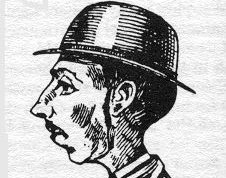
Percy Mapleton
Murderer Ned Kelly
Murderer · Australia · 1878
Edward “Ned” Kelly (June 1854 or 1855 – 11 November 1880) was an Irish Australi…
6 victims
Ned Kelly
Murderer · Australia · 1878
Edward “Ned” Kelly (June 1854 or 1855 – 11 November 1880) was an Irish Australi…
6 victims
 Charles Peace
Murderer · United Kingdom · 1876
Charles Peace was executed by hanging in Leeds on February 25, 1879. Charles Pe…
2 victims
Charles Peace
Murderer · United Kingdom · 1876
Charles Peace was executed by hanging in Leeds on February 25, 1879. Charles Pe…
2 victims
 Hendrik Jut
Murderer · Netherlands · 1872
Hendrik Jut (July 19, 1851 – June 12, 1878) was a murderer from The Hague. He k…
2 victims
Hendrik Jut
Murderer · Netherlands · 1872
Hendrik Jut (July 19, 1851 – June 12, 1878) was a murderer from The Hague. He k…
2 victims
 Joseph LaPage
Murderer · USA · 1874
Joseph LaPage was described as a French-Canadian trapper who donned a bearskin…
2 victims
Joseph LaPage
Murderer · USA · 1874
Joseph LaPage was described as a French-Canadian trapper who donned a bearskin…
2 victims
 Wilson Henry Boyd
Murderer · 1940
Wilson Henry Boyd was a native of Tennessee and was 44 years of age. Wilson Hen…
2 victims
Wilson Henry Boyd
Murderer · 1940
Wilson Henry Boyd was a native of Tennessee and was 44 years of age. Wilson Hen…
2 victims
 Seiji Katagiri
Mass murderer · Japan · 1982
Seiji Katagiri (片桐 清二 Katagiri Seiji) served as Captain of Japan Airlines Fligh…
24 victims
Seiji Katagiri
Mass murderer · Japan · 1982
Seiji Katagiri (片桐 清二 Katagiri Seiji) served as Captain of Japan Airlines Fligh…
24 victims
 Michael Robert Ryan
Spree killer · United Kingdom · 1987
Michael Robert Ryan was an unemployed local labourer. He lived in Hungerford, B…
16 victims
Michael Robert Ryan
Spree killer · United Kingdom · 1987
Michael Robert Ryan was an unemployed local labourer. He lived in Hungerford, B…
16 victims
 Shaun Thrower
Murderer · United Kingdom · 1994
Shaun Thrower was convicted of the murder of 17-year-old Amanda Wagg and was se…
1 victim
Shaun Thrower
Murderer · United Kingdom · 1994
Shaun Thrower was convicted of the murder of 17-year-old Amanda Wagg and was se…
1 victim
 Lee Andrew Taylor
Murderer · USA · 1999
Name: Lee Andrew Taylor · Prison number: #765153 · Other identifiers mentioned:…
1 victim
Lee Andrew Taylor
Murderer · USA · 1999
Name: Lee Andrew Taylor · Prison number: #765153 · Other identifiers mentioned:…
1 victim
- Gender
- male
- Country
- —
- Location
- —
- Date of birth
- February 23, 1860
- Age at first offence
- 21
- Characteristics
- robbery, motive unknown
- Victim profile
- Isaac Frederick Gold, 64 ( coin dealer )
- Method of murder
- Stabbing with knife - Shooting Loca tion : In a train London to Brighton, England, United Kingdom
- Date(s) of murder
- June 27, 1881
- Years active
- 1881
- Date of arrest
- July 8, 1881
- Status
-
Executed
Executed by hanging at Lewes on November 29, 1881
Overview
Percy Mapleton (real name Percy Mapleton; also given as Percy Lefroy Mapleton and Percy Mapleton Lefroy) was convicted of murder and was executed by hanging at Lewes on November 29, 1881.
Timeline
- 27 June 1881 — Passengers on the London to Brighton train heard gunshots as the train entered Merstham Tunnel.
- 27 June 1881 — At Preston Park just outside Brighton, a ticket collector saw a man getting off who had bloodstained clothing and a watchchain dangling from his shoe; the man gave his name as Percy Mapleton Lefroy and later complained he had been attacked and had been knocked unconscious.
- 27 June 1881 — The body of Isaac Frederick Gold was found near the entrance to Balcombe Tunnel; Gold had been stabbed and shot, and had been robbed of his watch and chain and a large sum of money.
- 29 June 1881 — An inquest on Isaac Gold was opened by Coroner Wynne Edwin Baxter and lasted several days.
- 8 July 1881 — Mapleton/Lefroy was located in a house at 32, Smith Street in Stepney, lodging under the name “Park”; he was found after a telegram he had sent to his employer requested that his wages be forwarded to that address.
- November 1881 — Percy Mapleton Lefroy appeared at Maidstone Assizes for trial; he was tried and convicted of murder and sentenced to death.
- 29 November 1881 — Mapleton was hanged at Lewes by executioner William Marwood.
- 1881 — Mapleton confessed to the murder of Lt. Percy Roper R.E. but later withdrew the confession.
Background
Isaac Frederick Gold was a 64-year-old retired coin dealer who lived in Brighton. Gold had got on the train at London Bridge Station to return to his home in Brighton.
Percy Mapleton was a 22-year-old journalist who gave the name Percy Mapleton Lefroy after the killing and was later identified by his real name as Percy Mapleton.
The offence
On the afternoon of Monday 27 June 1881, Isaac Frederick Gold, described as an elderly man and later identified as a retired coin dealer, was murdered on the express train going from London Bridge Station to his home in Brighton.
Gold entered a first-class smoking compartment in the third carriage and was later joined in the compartment by 21-year-old Percy Lefroy Mapleton.
When the train arrived at Preston Park Station just outside Brighton, Mapleton was observed getting out of the carriage in a distressed state and covered in blood. He had lost his hat, collar and tie, and had a gold watch-chain hanging from his shoe. A ticket collector accompanied Mapleton to the Police Station and later to Brighton.
Mapleton claimed that during the journey two men attacked him, hitting him on the head and knocking him unconscious; he said he remembered nothing more until the train reached Preston Park. Mapleton complained that he had been attacked just before the train entered Merstham Tunnel and gave a description of two men who had travelled in the same compartment.
When asked about the gold chain seen hanging from his shoe, Mapleton replied that he had put it there for safety. He later made an official complaint about his attackers and offered a reward for their capture.
Investigation
After the train arrived at Preston Park, an observant ticket collector noticed that a man getting off had bloodstained clothing and a watchchain dangling from his shoe. The station master arranged for the platform inspector to take the injured man to the Police Station at the Town Hall, while the collector was sent to advise the Railway Police.
Mapleton was taken to the local police station and then to the County Hospital for treatment. The examining doctor wanted to detain him, but Mapleton said he had an urgent appointment in London. Mapleton returned to the police station for further interviews and then, buying a new collar and tie, went to Brighton Station. He was taken into an office and searched, and two Hanoverian medals were found in his pockets; he denied all knowledge of them.
Meanwhile, the carriage was shunted into a siding and examined. The examination revealed three bullet marks and other signs of a fierce struggle, including blood on the carriage’s footboard, mat, and door handle, as well as on a handkerchief and newspaper left in the compartment by one of its occupants. Coins similar to those found on Mapleton were also found in the compartment.
A search of the line between London Bridge Station and Preston Park Station was organised, and Balcombe Tunnel railway staff found the body of Isaac Gold near the entrance to Balcombe Tunnel. Gold had been shot and stabbed and a knife smeared with blood was found near his body.
Gold had been robbed of his watch and chain and a large sum of money.
The Station Master at Balcombe immediately sent a telegram stating: “Man found dead this afternoon in tunnel here. Name on papers "I Gold". He is now lying here. Reply quick.”
Detective Sergeant George Holmes received instructions by telegram from Brighton police not to let Lefroy/Mapleton out of his sight.
Arrest and escape attempt
After arriving at a boarding house at Cathcart Road in Wallington, Surrey, Mapleton persuaded Holmes to wait outside. Mapleton wanted to change his clothes, left the house, and disappeared.
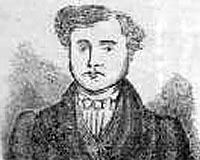
A country-wide search was made for Mapleton, and his description was published in the papers. The Daily Telegraph published a description of Mapleton and also an artist’s impression created using a description provided by someone who knew Mapleton. This composite picture was the first time a newspaper used such an impression created this way, and it resulted in Mapleton being spotted erroneously all over the country.
Mapleton was located on July 8, 1881, at 32, Smith Street in Stepney, lodging under the name “Park.” He was found because of a telegram he had sent to his employer requesting that his wages be forwarded to that address. Police found still bloodstained clothing in his room.
When arrested by Detective Inspector Donald Swanson, Mapleton said: “I am not obliged to say anything and I think it better not to make any answer.” Swanson wrote this down in his note book and read it back to Mapleton, who added: “I will qualify that by saying I am not guilty.”
Mapleton was identified as the man who had exchanged some counterfeit coins and “pawned” a revolver.
Trial
Mapleton appeared at Maidstone Assizes in November 1881. He was tried before Lord Chief Justice Coleridge.
The jury found Mapleton guilty after retiring for only ten minutes. Evidence against him was given by railway witnesses including Detective Sergeant Holmes, the booking clerk who had sold the ticket to Mapleton, the train’s guard, and the ticket collector at Preston Park Station. Evidence was also given by a woman living at Horley who saw two men struggling violently in a train as it passed her cottage.
During his trial, it was revealed that at the time of the murder Mapleton was desperately short of money and had gone to London Bridge with the intention of robbing a passenger. He had hoped to find a female victim, but finding none suitable, had settled on Isaac Gold.
Mapleton asked for permission to wear full evening dress in court because he thought it would impress the jury. He was allowed to take his silk hat and took more interest in this than in the legal proceedings.
While awaiting execution, Mapleton confessed to the murder of Lt. Percy Roper R.E., who was shot in his rooms in the Army’s Brompton Barracks near Chatham Dockyard in 1881, but he later withdrew the confession.
Sentencing
Mapleton was convicted of murder and sentenced to death.
Appeals
No appeals were stated.
Outcome
Mapleton was hanged at Lewes on November 29, 1881 by executioner William Marwood.
Aftermath
The Coroner at Mapleton’s inquest was Wynne Edwin Baxter, who had previously presided at Isaac Gold’s inquest.
Mapleton was the godson of Sir John Lefroy, the Governor of Tasmania at the time of Mapleton’s trial and execution.
A telegram from the Station Master at Balcombe stated: “Man found dead this afternoon in tunnel here. Name on papers "I Gold". He is now lying here. Reply quick.”
Inquest on Isaac Gold
The inquest on Isaac Gold was opened on June 29, 1881 by Coroner Wynne Edwin Baxter and lasted for several days. Detective Sergeant Holmes and other police officers involved in the case’s preliminary stages were mauled in the witness box for their inefficiency. A verdict of wilful murder against “Lefroy” was returned.
The Railway Company then offered a substantial reward for information leading to his arrest.
Public description and composite picture
A meeting was held at London Bridge Station and railway staff involved were questioned by detective officers.
The Daily Telegraph published a description of Mapleton, including: “Age 22, middle height, very thin, sickly appearance, scratches on throat, wounds on head, probably clean shaved, low felt hat, black coat, teeth much discoloured ... He is very round shouldered, and his thin overcoat hangs in awkward folds about his spare figure. His forehead and chin are both receding. He has a slight moustache, and very small dark whiskers. His jawbones are prominent, his cheeks sunken and sallow, and his teeth fully exposed when laughing. His upper lip is thin and drawn inwards. His eyes are grey and large. His gait is singular; he is inclined to slouch and when not carrying a bag, his left hand is usually in his pocket. He generally carries a crutch stick.”
Execution details
Mapleton was executed at Lewes jail on November 29, 1881, with William Marwood as the executioner. The execution proceeded with a rope described as “two and a half inches round” and “the running noose,” with “a thimble that fits under the chin.” The pit was described as new, consisting of two pits connected, one broad and one a narrow oblong, with a trapdoor and a lever connected with the vault below the trapdoor. After the lever was pulled, the trap doors opened and Mapleton fell; he dropped down 10ft and the body weight fell upon the neck such that his vertebrae were said to be broken, and he was described as dying without convulsive shuddering.
An inquest after the execution was held on the body of the dead man. The governor gave evidence of the identity of Lefroy, and the surgeon deposed to the effect that the deceased met his death by hanging.

Spotted an error, or have more information about this case?