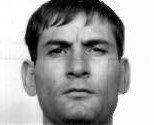
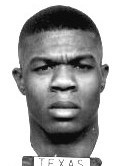
Michael Eugene Sharp
Murderer Ervil LeBaron
Murderer · USA · 1972
Ervil Morrell LeBaron (1925 to August 16, 1981) was the leader of a polygamous…
35 victims
Ervil LeBaron
Murderer · USA · 1972
Ervil Morrell LeBaron (1925 to August 16, 1981) was the leader of a polygamous…
35 victims
 Brian Kevin Rosenfeld
Murderer · USA · 1985
Brian Kevin Rosenfeld Brian Kevin Rosenfeld was sentenced to three concurrent l…
23 victims
Brian Kevin Rosenfeld
Murderer · USA · 1985
Brian Kevin Rosenfeld Brian Kevin Rosenfeld was sentenced to three concurrent l…
23 victims
 Marvin Gray
Murderer · USA · 1975
Marvin Gray was convicted killer who claimed responsibility for 23 slayings and…
23 victims
Marvin Gray
Murderer · USA · 1975
Marvin Gray was convicted killer who claimed responsibility for 23 slayings and…
23 victims
 Yahweh ben Yahweh
Murderer · USA · 1980
Yahweh ben Yahweh was born and legally named Hulon Mitchell Jr. (October 27, 19…
23 victims
Yahweh ben Yahweh
Murderer · USA · 1980
Yahweh ben Yahweh was born and legally named Hulon Mitchell Jr. (October 27, 19…
23 victims
 Russell Ellwood
Murderer · USA · 1991
Russell Ellwood was a former taxi driver. Authorities suspected him of killing…
20 victims
Russell Ellwood
Murderer · USA · 1991
Russell Ellwood was a former taxi driver. Authorities suspected him of killing…
20 victims
 Raymont Hopewell
Serial killer · USA · 1999
Raymont Hopewell was a 35-year-old defendant who was accused of killing five pe…
5 victims
Raymont Hopewell
Serial killer · USA · 1999
Raymont Hopewell was a 35-year-old defendant who was accused of killing five pe…
5 victims
 Mary Runkle
Murderer · USA · 1847
Mary Runkle was convicted of first-degree murder for the death of her husband,…
1 victim
Mary Runkle
Murderer · USA · 1847
Mary Runkle was convicted of first-degree murder for the death of her husband,…
1 victim
 Darrell Eston Lee
Murderer · USA · 1991
Darrell Eston Lee Darrell Lee and Karen Thompson were described as approaching…
1 victim
Darrell Eston Lee
Murderer · USA · 1991
Darrell Eston Lee Darrell Lee and Karen Thompson were described as approaching…
1 victim
 Vernon Lee Evans
Murderer · USA · 1983
Vernon Lee Evans was a Maryland Death Row inmate. In 1984, he was convicted and…
2 victims
Vernon Lee Evans
Murderer · USA · 1983
Vernon Lee Evans was a Maryland Death Row inmate. In 1984, he was convicted and…
2 victims
 Preston Hughes
Murderer · USA · 1988
Preston Hughes III was convicted of capital murder for the killing of fifteen-y…
2 victims
Preston Hughes
Murderer · USA · 1988
Preston Hughes III was convicted of capital murder for the killing of fifteen-y…
2 victims
 Richard Cottingham
Serial killer · USA · 1967
Richard Francis Cottingham was a serial killer from New Jersey who operated in…
6 victims
Richard Cottingham
Serial killer · USA · 1967
Richard Francis Cottingham was a serial killer from New Jersey who operated in…
6 victims
- Gender
- male
- Country
- USA
- Location
- Crockett County, Texas, USA
- Date of birth
- April 24, 1954
- Age at first offence
- 28
- Characteristics
- kidnapping, rape
- Victim profile
- Brenda Kay Broadway, 31, and her daughter Christy Elms , 8
- Method of murder
- St abbing with knife
- Date(s) of murder
- June 11, 1982
- Years active
- 1982
- Date of arrest
- 5 days after
- Status
-
Executed
Executed by lethal injection in Texas on November 19, 1997
Case record
Offender
Michael Eugene Sharp (#740), a Texas death row inmate.
Victims
Brenda Kay Broadway (32); Salina Elms (14); Christy Elms (8).
Timeline
- June 10, 1982 — Sharp forcibly abducted Brenda Kay Broadway and her two daughters, Selena Elms (14) and 8-year-old Christy Elms, from a car wash near Kermit, Texas.
- June 11, 1982 — Sharp took Brenda Broadway and her daughters from the car wash in Kermit; the victims were sexually assaulted during the drive; Brenda Broadway and Christy Elms were stabbed to death.
- June 16, 1982 — Sharp was arrested.
- June 19, 1982 — Sharp was placed in a police line-up and Selena identified him as the murderer of her mother and sister.
- June 21, 1982 — A Winkler County grand jury returned three indictments charging Sharp with the capital murders of Brenda Kay Broadway and Christy Elms and the aggravated kidnaping of Selena Elms.
- May 19, 1983 — Sharp was found guilty of murdering Broadway; the punishment phase began; the jury returned affirmative answers to two special issues and Sharp was sentenced to death.
- February 26, 1997 — The United States Court of Appeals for the Fifth Circuit panel issued its decision in Michael Eugene Sharp v. Gary L. Johnson, Director, Texas Department of Criminal Justice, Institutional Division, affirming the district court’s denial of habeas corpus relief.
- November 17, 1982 — A Winkler County grand jury returned a new indictment charging Sharp with the capital murder of Brenda Kay Broadway.
- January 21, 1997 — Brown v. Cain was decided (noted within the appellate opinion).
- November 19, 1997 — Sharp was pronounced dead at 6:21 p.m., eight minutes after a lethal dose of drugs was released into his arms.
The offence
Late in the evening on Friday, June 10, 1982, Sharp forcibly abducted Brenda Kay Broadway and her two daughters, Selena Elms and 8-year-old Christy Elms, from a car wash near Kermit, Texas.
Sharp offered to help wash a car with the truck driven by Michael Eugene Sharp pulling up behind them; Brenda agreed. After the car had been washed, the girls got inside. Salina heard Brenda suggest to Sharp that they all get something to eat at a nearby deli. Sharp then grabbed Salina by the hair on the back of her head, took a knife, and stuck it into her throat, telling her to tell the kids to get into his pickup truck. Salina did not do so, but Salina and her sister got into the truck while Sharp kept the knife at Brenda’s throat.
Sharp then pushed Brenda into the passenger side of the truck, climbed into the driver’s side, and drove away. As Sharp drove away, he made Christy get into the back of the cab behind the front seat. Sharp threatened to kill the victims if anybody saw them or if they tried anything. At one point Sharp made Brenda and Salina get down on the floor board and covered them with a parka.
After allowing them to get off the floor and sit on the seat, Sharp forced them to undress, ostensibly so that they would not run away. Sharp eventually turned off the highway onto a dirt road. When he reached a gate, he stopped the truck, removed the keys, and used a hammer from the back of the truck to loosen the gate. He opened it, replaced the hammer, and drove through. A couple of minutes later, Sharp stopped the truck.
Sharp took rope from the glove compartment and tied Salina’s arms behind her back above the elbows and at the wrists, and also tied her feet. He used up that rope and obtained more from the back of the truck; he used this rope to similarly bind Brenda. Sharp restarted the truck and drove approximately two miles to a cattle watering tank. He turned on the interior light and stared at Brenda and Salina with a “funny little grin.”
Salina testified that Sharp sexually molested the two women and forced them to perform various sexual acts on each other. Christy watched from the floor board behind the seat of the truck and whimpering almost continuously.
After Sharp allowed them to stop, he retied Brenda’s legs. He took off his shirt and placed it behind the seat. Sharp had Salina get out of the truck, and he got out and used the bathroom at the water tank. When he returned, he retied Salina’s legs. Sharp dragged Brenda out of the truck, threw her on the ground, and stabbed her two or three times. After Brenda cried out to God, Sharp pulled Christy from behind the seat. Sharp stabbed Christy Elms to death as charged.
At this point Salina escaped. Salina worked loose the ropes that bound her feet. She ran into a barbed wire fence, which knocked her down. She crawled under the fence and ran some more, then hid behind a big bush, trying to cover herself with tumbleweeds and dirt. She saw Sharp driving around and was afraid he had seen her when the lights shone directly on her. Sharp turned away, and Salina ran and hid behind another bush. Because she heard coyotes getting closer, she climbed the biggest tree she could find using her feet.
Later, Salina got down and began walking. It was daylight when she reached the safety of a drilling rig. She was naked, with her mother’s bra tied around her neck, and her arms bound so tightly behind her back that her elbows almost touched. She was dragging a mesquite branch to ward off coyotes. Oil field workers discovered Selena the next morning unclothed and suffering from exposure; she spent the night alone in the woods.
The bodies of Brenda and Christy were found in shallow graves.
Investigation
Physical evidence was consistent with Salina Elms’ testimony that Sharp was the perpetrator. The blue truck Sharp was driving contained hairs consistent with the hairs of all three victims. Mud left at the scene of the crime was consistent with mud at the oil rig where Sharp worked. Traces of blood, which could have been human blood, were found on Sharp’s knife, and that knife could have inflicted fatal wounds to Brenda.
Sharp also resembled a composite drawing prepared from Salina’s description of the man who abducted them. Sam Cubine, who had done welding work on Sharp’s rig, recognized Sharp when the composite drawing was shown on television. Members of Sharp’s drilling crew stated the composite drawing looked like Sharp.
Sharp’s conduct after the offence was consistent with guilty knowledge and desire to avoid apprehension. On the Sunday after the offence, Sharp acted nervous and in a hurry. He wore tennis shoes, which the crew noticed because Sharp and the others normally wore boots for safety reasons. Joe Tienda, a crew member, saw Sharp leave the rig that afternoon with a pile of clothes. Sharp never returned to the rig and fled to a friend’s house without a vehicle, discussing moving to Louisiana.
Sharp attempted to get rid of incriminating evidence by buying new tires for the truck he had been driving, despite having purchased new tires only two months earlier. The truck was unusually clean for one used around an oil rig, and there were no fingerprints in it at all.
Sharp was arrested within a week at a bus stop after a description of Sharp and his winged horse tattoo was available.
Arrest
Sharp was arrested on June 16, 1982. A police line-up occurred on June 19, 1982, at which Selena identified him.
Trial
Charges and venue changes
On June 21, 1982, a Winkler County grand jury returned three indictments charging Sharp with the capital murders of Brenda Kay Broadway and Christy Elms and the aggravated kidnaping of Selena Elms.
Upon motion for change of venue, Sharp’s trial was moved to Lubbock, Texas. Sharp was tried and convicted of the murder of Christy Elms. Because of a defect in the indictment, the death penalty could not be imposed and Sharp was sentenced to life imprisonment.
On November 17, 1982, a Winkler County grand jury returned a new indictment charging Sharp with the capital murder of Brenda Kay Broadway. The defence moved for change of venue and the case was transferred to Crockett County.
Punishment phase evidence
At Sharp’s trial for Broadway’s murder, the state presented testimony from several women that Sharp attempted to lure them into his truck on the evening of the murders. The state presented the testimony of Selena Elms identifying Sharp as the murderer of her mother.
The state also offered evidence that Sharp’s truck contained hairs matching those of the three victims, that mud at the scene was consistent with mud at the oil rig where Sharp worked, and that traces of human blood were found on Sharp’s knife.
Detective Jerry Smith of the Odessa Police Department testified regarding Sharp’s involvement in the disappearance of Blanca Arreola, a pregnant Odessa woman missing since May 1982. The record was unclear whether Sharp admitted to murdering Arreola, but Sharp led authorities to her buried body in a remote location in Ector County. The position and location of 18-year-old Arreola’s naked body were exactly as described in Sharp’s statement to Smith.
Sharp’s trial counsel objected to the Detective Smith testimony on the grounds of surprise and its nature as an extraneous offense, and the objection was overruled. The defence presented no evidence during the punishment phase.
The jury returned affirmative answers to the two special issues on May 19, 1983, and Sharp was sentenced to death.
Victim accounts and physical details
Salina Elms testified about being abducted at knifepoint, being bound with rope, being forced to undress, and being sexually molested by Sharp. The account described forced sexual acts between Sharp’s captives, Christy’s continuous whimpering, and stabbing of Brenda Broadway and Christy Elms.
Christy Elms was described as whimpering almost continuously, watching from behind the front seat.
Direct appeal
Sharp’s conviction and death sentence were affirmed on direct appeal by the Court of Criminal Appeals.
Sentencing
Sharp was sentenced to death for Brenda Kay Broadway’s death on May 19, 1983. In the earlier trial for Christy Elms, the death penalty could not be imposed because of a defect in the indictment, and Sharp was sentenced to life imprisonment.
Appeals
Postconviction relief
On May 2, 1989, Sharp filed for postconviction relief in state court. The trial court denied relief, and the Court of Criminal Appeals affirmed in an unpublished order adopting the trial court’s findings and conclusions.
Sharp then filed a habeas corpus petition in federal district court. After several evidentiary hearings, the magistrate judge filed findings of fact and legal conclusions recommending dismissal; the district court granted a certificate of probable cause to appeal.
Fifth Circuit decision
Michael Eugene Sharp, Petitioner-Appellant, v. Gary L. Johnson, Director, Texas Department of Criminal Justice, Institutional Division, Respondent-Appellee, was considered by the United States Court of Appeals for the Fifth Circuit with a panel consisting of POLITZ, Chief Judge, KING and DUHÉ, Circuit Judges.
The Fifth Circuit affirmed the district court’s denial of habeas corpus relief.
The Fifth Circuit addressed several issues, including procedural default regarding evidence of Blanca Arreola’s murder (an unadjudicated prior offense) presented during the punishment phase and arguments related to effective assistance of counsel and claims concerning pretrial publicity and jury panel fairness.
The Fifth Circuit also addressed a claim concerning Texas procedural requirements about the indictment reading and the plea in the presence of the jury, the trial court’s denial of a motion for a new trial, and the appellate court’s presumption of regularity under article 44.24(a) as discussed in its analysis.
The Fifth Circuit found no merit in Sharp’s claim of ineffective assistance regarding hair evidence in the truck or blood on his knife because Sharp had not raised a cognizable constitutional issue for federal habeas review.
The Court’s judgment was “AFFIRMED.”
Outcome
Sharp was executed by lethal injection in Texas on November 19, 1997.
Aftermath / last statement
Sharp’s last statement was:
“Yes, I do. I would like to tell the surviving victims here, society, my family and friends, that I ask that they forgive me for anything I have done. I beg for your forgiveness. I would like to ask the Lord Jesus Christ for forgiveness and say that in spite of my circumstances, I have been blessed by Him. My first thought is that Jesus Christ came down and separated the humans from God. I would like to see that wall that separates these groups here tonight brought down and that we would all have love and compassion for one another and that you all build a future for all of us. There are a lot of men on the Row who need to be remembered. I love all…”
Sharp was pronounced dead at 6:21 p.m., eight minutes after a lethal dose of drugs was released into his arms.
Officials and comments
Winkler County District Attorney Mike Fostel said he was confident Sharp was responsible for killing five people and said the former oil rig tool pusher told investigators “he’d give me five more graves if I got off my high horse and quit trying to seek the death penalty.” Fostel said:
“I never negotiated with him.” “I had no regard for him then. I have no regard for him now. I’m not the kind of prosecutor that says death penalty in every case, but Mike Sharp is a cold-blooded serial killer. He would still be killing if he was out. It’s time for him to die. It’s past time for him to die.”
Additional related deaths mentioned during proceedings
While jailed, officials met with Sharp to clear up other murders. The record described deaths of oil field workers Tammy Lee Davis (20) and William Lawrence McNew (27), and the disappearance of Blanca Guerrero, a married 18-year-old expecting her first baby. Sharp led police detectives to Guerrero’s body, buried face down near water with clothes tossed in after them. Officials elected not to try Sharp with Guerrero’s murder because the death penalty was already hanging over his head.
At the time of Sharp’s arrest, he had been on parole almost three years after serving 2½ years of a 15-year term for aggravated robbery and theft in Ector County.
The appellate decision also discussed Sharp’s link to the disappearance of Blanca Arreola, missing since May 1982, and his leading authorities to Arreola’s body in Ector County. The account described the body’s position and location as matching Sharp’s statement to Detective Smith.
Other details
Sharp nodded to an adjacent witness room and to a woman whose mother and sister he had slain, and nodded toward five friends who watched from another small room a few feet away. Sharp asked that the wall separating the two witness rooms be “brought down and ... and that we put this incident in the past and behind and build a future.”
Spotted an error, or have more information about this case?