Joseph Carl Shaw
Murderer Ervil LeBaron
Murderer · USA · 1972
Ervil Morrell LeBaron (1925 to August 16, 1981) was the leader of a polygamous…
35 victims
Ervil LeBaron
Murderer · USA · 1972
Ervil Morrell LeBaron (1925 to August 16, 1981) was the leader of a polygamous…
35 victims
 Brian Kevin Rosenfeld
Murderer · USA · 1985
Brian Kevin Rosenfeld Brian Kevin Rosenfeld was sentenced to three concurrent l…
23 victims
Brian Kevin Rosenfeld
Murderer · USA · 1985
Brian Kevin Rosenfeld Brian Kevin Rosenfeld was sentenced to three concurrent l…
23 victims
 Marvin Gray
Murderer · USA · 1975
Marvin Gray was convicted killer who claimed responsibility for 23 slayings and…
23 victims
Marvin Gray
Murderer · USA · 1975
Marvin Gray was convicted killer who claimed responsibility for 23 slayings and…
23 victims
 Yahweh ben Yahweh
Murderer · USA · 1980
Yahweh ben Yahweh was born and legally named Hulon Mitchell Jr. (October 27, 19…
23 victims
Yahweh ben Yahweh
Murderer · USA · 1980
Yahweh ben Yahweh was born and legally named Hulon Mitchell Jr. (October 27, 19…
23 victims
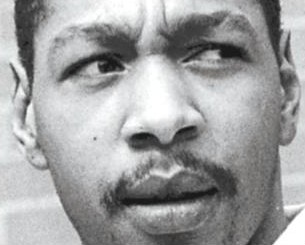 Timothy Wilson Spencer
Serial killer · USA · 1984
Name: Timothy Wilson Spencer · Alias(es) / monikers: “the Southside Slayer”; “t…
5 victims
Timothy Wilson Spencer
Serial killer · USA · 1984
Name: Timothy Wilson Spencer · Alias(es) / monikers: “the Southside Slayer”; “t…
5 victims
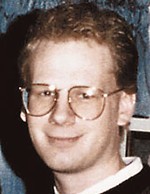 Dustin Lee Honken
Murderer · USA · 1993
Dustin Lee Honken was convicted in the slayings of two federal drug informants…
5 victims
Dustin Lee Honken
Murderer · USA · 1993
Dustin Lee Honken was convicted in the slayings of two federal drug informants…
5 victims
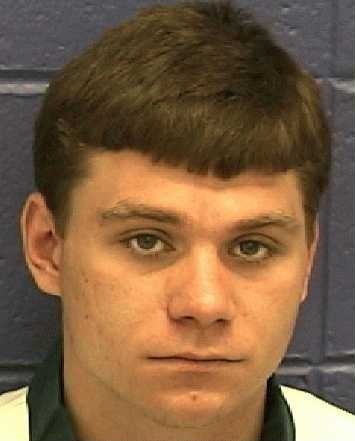 Joshua Daniel Bishop
Murderer · USA · 1994
Joshua Daniel Bishop was 22 years old when he was sentenced to death in Baldwin…
1 victim
Joshua Daniel Bishop
Murderer · USA · 1994
Joshua Daniel Bishop was 22 years old when he was sentenced to death in Baldwin…
1 victim
 Sergei Pomazun
Mass murderer · Russia · 2013
Sergey Pomazun was accused in connection with the Belgorod shooting in Belgorod…
6 victims
Sergei Pomazun
Mass murderer · Russia · 2013
Sergey Pomazun was accused in connection with the Belgorod shooting in Belgorod…
6 victims
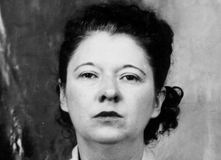 Bonnie Heady
Murderer · USA · 1953
Bonnie Emily Brown Heady — convicted under the Lindbergh Act; kidnapper and mur…
1 victim
Bonnie Heady
Murderer · USA · 1953
Bonnie Emily Brown Heady — convicted under the Lindbergh Act; kidnapper and mur…
1 victim
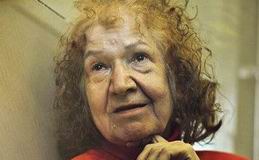 Tamara Samsonova
Serial killer · Russia · 1995
Tamara Samsonova (Russian: Тамара Самсонова; born 5 February 1947) was a Russia…
11 victims
Tamara Samsonova
Serial killer · Russia · 1995
Tamara Samsonova (Russian: Тамара Самсонова; born 5 February 1947) was a Russia…
11 victims
- Gender
- male
- Country
- USA
- Location
- Richland County, South Carolina, USA
- Date of birth
- March 31, 1955
- Age at first offence
- 22
- Characteristics
- rape, the body was never found, sexual assault, sex with corpse
- Victim profile
- Betty Swank, 22 / Thomas Scofield Taylor, 17, and Carlotta Hartness, 14
- Method of murder
- Shooting ( .22 caliber rifle)
- Date(s) of murder
- October 17/29, 1977
- Years active
- 1977
- Date of arrest
- November 3, 1977
- Status
-
Executed
Executed by electrocution in South Carolina on Janury 11, 1985
Case details
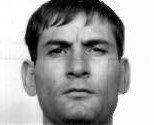
Joseph Carl Shaw (“J.C.”) was executed by electrocution in South Carolina on Janury 11, 1985. He was 29 years old when he was executed.
Background
Joseph Carl Shaw grew up in the small town of Jeffersontown, Kentucky. He attended St. Edward Catholic grade school, where he served as an altar boy and played tackle on the football team. After leaving St. Edward he moved on to Jeffersontown High School, but dropped out before graduating.
Shaw married Karen Neigrich, but the relationship did not last long. Shaw then joined the U.S. Army as a military policeman.
During the period in 1977 when he was on South Carolina’s death row, Shaw was aged 22 when he committed the crimes that landed him on death row.
Shaw spent the day of his execution with his mother, stepfather and half brother from Crestwood, Ky.
The offence
On October 29, 1977, Joseph Carl Shaw and two teenaged accomplices committed murders in Columbia, South Carolina. The first victim was Betty Swank, the wife of a fellow serviceman. Shaw raped and killed Betty Swank.
The other two victims were Thomas Scofield Taylor, 17, and Carlotta Hartness, 14. Carlotta Hartness was raped repeatedly before being killed.
Shaw allegedly returned to the scene of the crime over a period of several days to have sex with the corpse.
Investigation
The record showed that James Terry Roach, Joseph Carl Shaw, and Ronald Eugene Mahaffey spent the morning of October 29, 1977 drinking beer and taking drugs. In the early afternoon, Roach, Shaw and Mahaffey decided, in the words of Mahaffey, “find a girl to rape.”
Arrest
Roach, Shaw, and Mahaffey were arrested on November 3, 1977.
Trial
Charges and plea
Shaw and two others were indicted for two counts of murder, two counts of conspiracy, rape, kidnapping, and armed robbery.
On the advice of his court-appointed counsel, Shaw pled guilty to the crimes charged on December 12, 1977.
Sentencing
After a sentencing hearing on December 16, 1977, a state trial judge sentenced Shaw to death.
Shaw timely appealed to the Supreme Court of South Carolina, which affirmed the conviction and death sentence on May 28, 1979.
Appeals
U.S. Supreme Court
On August 24, 1979, appointed counsel petitioned the Supreme Court of the United States for writ of certiorari.
On November 13, 1979, the Supreme Court denied the petition. Appointed counsel received notice of the denial on November 15, 1979, and immediately began considering the steps to be taken in discharge of their obligations of representation.
Execution date scheduling
A state statute, S.C.Code § 17-25-370, directed setting of the execution of a death sentence on a date four weeks after affirmance of a judgment of conviction. Appointed counsel, acting under this timing, set the execution for 5:00 A.M. on December 14, 1979.
Rehearing of certiorari
On November 28, 1979, Shaw suggested a possible desire to have raised the issue of ineffectiveness of the assistance provided by those counsel.
On November 30, 1979, Shaw confirmed a specific desire to raise this issue by appropriate means.
While efforts were underway, appointed counsel filed a timely petition in the Supreme Court of the United States for rehearing of the petition for certiorari on December 8, 1979. This petition had not been acted upon at the time of the hearing before the U.S. Court of Appeals for the Fourth Circuit.
Motions regarding counsel and stay of execution
At the time Shaw raised the issue of ineffectiveness, he had employed no other counsel. Appointed counsel faced a problem of professional responsibility and, with an execution date only two weeks away, sought means to continue representation and expedite retention of other counsel to present any claim of ineffective assistance of counsel thought warranted.
Appointed counsel moved expeditiously on several fronts:
- They filed a motion and conferred on November 30, 1979, with the state trial judge whom they considered empowered to relieve them of representation responsibilities so that other counsel could take over.
- On December 4, 1979, they were advised to file their motion to be relieved as appointed counsel and for stay of execution pending retention of new counsel in the Supreme Court of South Carolina.
- They filed that motion on December 6, 1979.
- On December 10, 1979, the State Supreme Court heard the motion on the record and oral arguments and denied it on the same day without stating its reasons.
Following that denial on December 10, 1979, appointed counsel filed a petition for habeas corpus and for stay of execution in the United States District Court for the District of South Carolina.
The habeas petition was based upon a claimed denial by the State of Shaw’s present right to effective assistance of counsel due to the State’s action in denying appointed counsel’s motion to be relieved, resulting in Shaw’s practical inability to pursue, within the short time remaining, the post-conviction remedies provided by the State.
Retained counsel also filed a supplemental petition for habeas corpus and an application for stay in the district court, raising, among other issues, ineffective assistance of appointed counsel.
Following a hearing on December 12, 1979, the district judge denied the petitions and the applications for stay.
The district judge noted that no state post-conviction proceedings had been instituted by Shaw and denied relief based on a determination that Shaw had not met the burden of showing constitutionally ineffective assistance of appointed counsel. The determination was made on the basis of the state court record and judicial notice of the general competence and expertise of appointed counsel. The district judge did not address additional grounds in retained counsel’s supplemental petition and did not specifically address the claim of a present denial of effective assistance arising from the State’s refusal to relieve appointed counsel and grant a stay to allow new counsel to assume representation.
Shaw appealed to the United States Court of Appeals for the Fourth Circuit and applied for a stay of execution incident to the appeal.
Decision to grant a stay (Fourth Circuit)
The U.S. Court of Appeals for the Fourth Circuit matter was styled: “Joseph Carl Shaw, Petitioner, v. Joseph R. Martin, Warden, Central Correctional Institution, and Hon. Daniel R. Mccleod, Attorney General for South Carolina, Respondents.” The decision was dated January 2, 1980.
It was stated that the matter came before a single circuit judge at 8:00 A.M. on December 13, 1979, on Shaw’s application for an order staying execution of the death sentence scheduled for 5:00 A.M., December 14, 1979.
The order described granting a stay on certain conditions to allow expeditious pursuit of traditional avenues of post-conviction review in state and federal courts not yet exhausted and which would otherwise be foreclosed.
The court recounted that Shaw stood convicted of the “hideously brutal crimes” that occurred on October 29, 1977, and that Shaw and two others were arrested on November 3, 1977 and indicted for two counts of murder, two counts of conspiracy, rape, kidnapping, and armed robbery.
The court set out the procedural history:
- Shaw pled guilty on December 12, 1977.
- A state trial judge sentenced him to death on December 16, 1977.
- The Supreme Court of South Carolina affirmed the conviction and death sentence on May 28, 1979.
- A petition for certiorari was filed on August 24, 1979 and denied on November 13, 1979.
- Notice was received on November 15, 1979.
- The execution was set for 5:00 A.M. on December 14, 1979.
- A motion to relieve appointed counsel and seek a stay was heard and denied by the State Supreme Court on December 10, 1979.
- A petition for rehearing was filed with the Supreme Court on December 8, 1979 and had not been acted upon.
The court described that issues pending for first instance resolution included:
- a pending petition for rehearing of the denial of certiorari by the Supreme Court of the United States;
- a pending appeal in the U.S. Court of Appeals from the denial by the district court of a first petition for habeas corpus;
- a pending post-conviction proceeding in the state court system.
The court expressed concern about deliberate dilatoriness but found the record revealed an exercise of expedition that belied the suggestion. It described that the essential problem in terms of time flowed from the legislatively imposed four-week time frame between affirmance of conviction upon direct appeal and mandated execution date.
The court also considered authority of counsel and stated it was satisfied of the bona fides of the representation, stating that appointed and retained counsel conducted themselves in a “professionally exemplary manner” and that the judge declined to relieve appointed counsel, choosing joint representation under the lead of retained counsel.
The judge explained that an order staying execution had been entered for the stated and limited purpose of allowing expeditious pursuit of available avenues of post-conviction review. Jurisdiction over the order was retained in the district court, with the district court’s order denying stay vacated. The order noted willingness to entertain a motion by the state suggesting failure of expeditious pursuit, and expressed willingness to entertain a motion to dissolve the stay order if the Supreme Court of South Carolina stayed the execution pending exhaustion of post-conviction review procedures.
The order concluded with: “SO ORDERED.”
Other details
Accomplices and separate handling of Betty Swank
Shaw and two teenaged accomplices participated in the murders of three people in Columbia. The accomplices were James Terry Roach, 17, and Ronald Mahaffey, 16.
The account stated that Mahaffey, a minor, turned state’s evidence against his fellows in exchange for a life sentence.
It was stated that Shaw, along with Roach and Mahaffey, were not tried for the rape and murder of Betty Swank, who was shot outside the door of her mobile home following her release after rape by Shaw and his accomplices.
Roach was described as having noted, in the local paper The State, that it was the wealth and influence of the Taylor and Hartness families which ultimately condemned Shaw and Roach to the electric chair. It was also stated that Taylor’s uncle was a Richland County councilman.
Detailed episode at the baseball park
The record described the following in the early afternoon:
- Roach, Shaw and Mahaffey drove to a baseball park outside of Columbia, South Carolina.
- They saw a parked car occupied by Thomas Taylor, 17, and Carlotta Hartness, 14.
- Shaw pulled up beside the parked car, and Roach, sitting in the front passenger seat of Shaw’s car, aimed a .22 caliber rifle at Taylor and demanded money.
- Taylor gave them his wallet.
- Shaw and Mahaffey got out of Shaw’s car.
- Mahaffey took the keys to Taylor’s car.
- Shaw forced Miss Hartness to get into the backseat of Shaw’s car with Mahaffey.
- Shaw got back into his car and said to Roach, “OK, Now.”
- Roach fired the rifle into the parked car and killed Taylor.
The record described what happened after Taylor was killed:
- The three drove Miss Hartness to a dirt road a short distance away.
- She was forced to disrobe.
- She was repeatedly raped by all three.
- She was forced to perform oral sex with Shaw and Mahaffey.
- While Shaw was raping the girl, Roach and Mahaffey looked through Taylor’s wallet.
- The stolen wallet was later buried in the area.
- Shaw asked who would shoot the girl and Roach volunteered.
- Shaw ordered the girl to put her face to the ground but she refused.
- After pleading for her life several times, Miss Hartness finally complied and put her face to the ground.
- Roach shot her in the head several times, causing her body to convulse.
- Shaw took the rifle from Roach and again shot the girl in the head.
- The three disposed of the rifle and bullets and returned to Taylor’s body to make sure he was dead.
“Last meal” and final statements (New York Times excerpt)
The record included a reference to The New York Times and stated that Shaw, condemned to death for killing two teen-agers, asked for a last meal of pizza on January 11, 1985 and told his attorneys to file no more appeals aimed at halting his execution, scheduled for 5 A.M. Friday.
It also stated that Shaw spent that day with his mother, stepfather and half brother from Crestwood, Ky.
The record stated: He pleaded guilty to killing Carlotta Hartness, 14, and Tommy Taylor, 17, in October 1977 and was sentenced to death. He admitted raping and killing Betty Swank 12 days earlier. He received a life sentence for that crime.
It stated that Shaw’s death would be the first execution in South Carolina since 1962 and that it was the last Southern state to reinstate capital punishment since it was ruled constitutional by the Supreme Court in 1976.
Sentence for Betty Swank
Shaw received a life sentence for the crime involving Betty Swank.
Body-related note
The case materials used the phrase “the body was never found.”
Spotted an error, or have more information about this case?