
Andrew Six
Murderer Brian Kevin Rosenfeld
Murderer · USA · 1985
Brian Kevin Rosenfeld Brian Kevin Rosenfeld was sentenced to three concurrent l…
23 victims
Brian Kevin Rosenfeld
Murderer · USA · 1985
Brian Kevin Rosenfeld Brian Kevin Rosenfeld was sentenced to three concurrent l…
23 victims
 Marvin Gray
Murderer · USA · 1975
Marvin Gray was convicted killer who claimed responsibility for 23 slayings and…
23 victims
Marvin Gray
Murderer · USA · 1975
Marvin Gray was convicted killer who claimed responsibility for 23 slayings and…
23 victims
 Yahweh ben Yahweh
Murderer · USA · 1980
Yahweh ben Yahweh was born and legally named Hulon Mitchell Jr. (October 27, 19…
23 victims
Yahweh ben Yahweh
Murderer · USA · 1980
Yahweh ben Yahweh was born and legally named Hulon Mitchell Jr. (October 27, 19…
23 victims
 Russell Ellwood
Murderer · USA · 1991
Russell Ellwood was a former taxi driver. Authorities suspected him of killing…
20 victims
Russell Ellwood
Murderer · USA · 1991
Russell Ellwood was a former taxi driver. Authorities suspected him of killing…
20 victims
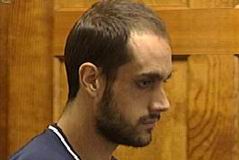 James Soares
Murderer · USA · 2008
James Soares Jr. was the son of James Soares Sr. and Marian Soares. In 2002, Ja…
2 victims
James Soares
Murderer · USA · 2008
James Soares Jr. was the son of James Soares Sr. and Marian Soares. In 2002, Ja…
2 victims
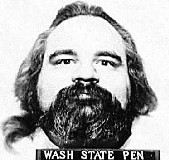 Mitchell Rupe
Murderer · USA · 1981
Mitchell Rupe (1955–February 8, 2006) was convicted of aggravated first degree…
2 victims
Mitchell Rupe
Murderer · USA · 1981
Mitchell Rupe (1955–February 8, 2006) was convicted of aggravated first degree…
2 victims
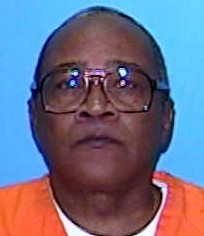 Norman Parker
Murderer · USA · 1966
Name: Norman Parker · Also known as: Nathen Parker; Shawn Vincent · Date of bir…
3 victims
Norman Parker
Murderer · USA · 1966
Name: Norman Parker · Also known as: Nathen Parker; Shawn Vincent · Date of bir…
3 victims
 Jack Harry Smith
Murderer · USA · 1978
Jack Harry Smith was sentenced to death on October 9, 1978. Jack Harry Smith ar…
1 victim
Jack Harry Smith
Murderer · USA · 1978
Jack Harry Smith was sentenced to death on October 9, 1978. Jack Harry Smith ar…
1 victim
 Eric Hanson
Mass murderer · USA · 2005
Eric Hanson — defendant; self-employed mortgage broker of Naperville; convicted…
4 victims
Eric Hanson
Mass murderer · USA · 2005
Eric Hanson — defendant; self-employed mortgage broker of Naperville; convicted…
4 victims
 Bathsheba Spooner
Murderer · USA · 1778
Bathsheba Ruggles Spooner (February 15, 1746 – July 2, 1778) was executed by ha…
1 victim
Bathsheba Spooner
Murderer · USA · 1778
Bathsheba Ruggles Spooner (February 15, 1746 – July 2, 1778) was executed by ha…
1 victim
- Gender
- male
- Country
- USA
- Location
- Wapello County, Iowa / Schuyler County, Missouri, USA
- Date of birth
- May 14, 1965
- Age at first offence
- 19
- Characteristics
- kidnapping, rape
- Victim profile
- J ustin Hook Jr., 20; Hook's fiancee, Tina Lade, 19; and Hook's mother, Sara Link, 41 / Kathy Allen (female, 13)
- Method of murder
- Bludgeoning / St abbing with knife
- Date(s) of murder
- April 12, 1984 / April 10, 1987
- Years active
- 1984–1987
- Date of arrest
- April 11, 1997
- Status
-
Executed
Executed by lethal injection in Missouri on August 20, 1997
Case identification
Andrew Six
STATUS / legal outcome
Andrew Wessel Six was executed by lethal injection in Missouri on August 20, 1997.
Background
In 1984, a triple homicide was committed involving Justin Hook Jr., Sara Link, and Tina Lade. The bodies of Sara Link, Justin Hook, and Tina Lade were found within days of each other in April 1984. The case was unresolved until DNA evidence later linked Andrew Six to the triple homicide.
Andrew Wessel Six was also involved in the abduction and murder of Kathy Allen from the Ottumwa area in 1987. Six was convicted of Murder in the First Degree and was given a death sentence, and he was executed in 1997.
The offence
1984 triple homicide (Hook, Link, Lade)
On April 13, 1984, the Davis County Sheriff’s Office requested assistance with a death investigation in rural Drakesville, Iowa after a deceased male was discovered and later identified as Justin Hook, Jr. It was determined that Hook had been beaten to death.
On April 14, 1984, Sara Link was reported missing to law enforcement.
On April 16, 1984, Link’s body was discovered in a farm field off of a gravel road in rural Eldon, Iowa in Wapello County. The evidence at the scene indicated that Link was taken to the area and subsequently beaten to death.
On April 18, 1984, Lade was found in the same vicinity where Link’s body had been found. Lade was also beaten to death. All three bodies had been beaten with a blunt object. Footprints found at both scenes appeared to be from the same person, and the tread pattern of the footwear impression was made by the same type of shoe.
During an investigation of the 1984 events, Andrew Six was a suspect. During a 1984 interview, Six denied knowing Lade. Investigators later pursued additional suspects involved in criminal activity that included Six.
The investigation at the time yielded no arrests.
1987 kidnapping and murder (Kathy Allen)
On April 10, 1987, Andrew Six and his uncle Donald Petary went to the home of Mr. and Mrs. Don and Stella Allen in Ottumwa, Iowa with the intent to purchase a pick-up truck that was being sold by the Allens to help pay for Mr. Allen’s open heart surgery.
During the purported test drive and after driving a distance down the highway, Six pulled the truck off the road and stopped, indicating that he wanted Petary to drive. As the two men switched places, Six pulled a knife on Mrs. Allen, threatened her with bodily harm, and bound her hands with duct tape. They then returned to the Allens’ trailer home.
Petary and Six confronted Mr. Donald Allen outside the trailer and ordered him back into the trailer home by threatening to kill Mrs. Allen. Six had a knife pointed at Mrs. Allen’s neck. Inside the trailer, Six taped and bound Mr. Allen to a chair. Six awakened the Allens’ twelve-year-old daughter, Kathy Allen, in the process of taping her mouth shut. Six then raped the Allens’ seventeen-year-old daughter, Christine Allen, who was approximately six months pregnant. Then both men tried to abduct the entire Allen family.
Petary forced the two Allen daughters out of the trailer and into his station wagon. Six forced Mrs. Allen at knifepoint out of the trailer. While Six was holding Mrs. Allen, there was a scuffle and Mr. Allen and Christine Allen escaped. Kathy Allen remained in the station wagon.
Six reacted by slashing Mrs. Allen’s throat. The wound required “approximately fifty stitches” to close.
Six and Petary abducted Kathy Allen and escaped.
On April 11, 1987, near Moscow, Texas, both men were apprehended and arrested. Kathy Allen was missing.
With information received during interrogation, law officers found Kathy Allen’s body in a ditch near a culvert on a gravel road of U.S. Highway 63 in Schuyler County, Missouri. She wore bib overalls. Her throat had been cut severing her jugular vein and carotid artery causing her to bleed to death. A hair matching that of Andrew Six was found in her underwear. Kathy Allen was found near Kirksville, Missouri on April 12, 1987. An autopsy revealed she had died from a knife wound on the right side of her neck that had severed her carotid artery.
Investigation
1984 triple homicide review and identification
The DCI contacted the Davis and Wapello County Sheriff’s Offices in August 2011 to see if they had any testable DNA evidence. The evidence was resubmitted and processed.
In March 2012, DNA from the inside of Lade’s jeans was identified as a match to Andrew Six. Investigators also said they had footprint evidence from Six in 1984, but it was not enough to bring him to trial.
Investigators made use of preserved evidence. Footwear impressions and DNA evidence were combined with interviews with people Six had been with back then, leading to the conclusion.
A full press release stated that in August 2011, the DCI Cold Case Unit, the Davis County Sheriff’s Office, and the Wapello County Sheriff’s Office started a review of the case. Evidence located at the sheriff’s office was re-examined. The evidence with the highest probability of obtaining DNA evidence was re-submitted to the DCI lab for analysis.
In March 2012, the DCI Criminalistics Laboratory received information that a DNA profile previously developed from the evidence matched that of Andrew Wessel Six. The DNA evidence was recovered from inside the jeans of murder victim Tina Lade. Six was a suspect in the investigation in 1984.
The press release also stated that the investigation yielded information indicating Six was involved in burglaries in the Ottumwa area. It also found that Six and Hook had some type of issue over a vehicle purchase. During an interview in 1984, Six denied knowing Lade.
1987 kidnapping and murder investigation
After his arrest, local law enforcement officers informed Donald Petary of his Miranda rights, and he signed a waiver of rights. He was then interviewed by Federal Bureau of Investigation agents. Before interrogating him, the FBI agents repeated the Miranda warnings.
Petary initially expressed some reluctance, but he agreed to talk about “some things and some he would not.” The FBI agents told Petary that Six was currently undergoing questioning and was talking and would probably place full blame for the crime on him. Unknown to Petary, Six refused to cooperate and did not make any statements.
The FBI agents urged Petary to reveal the nature and extent of his participation in the kidnapping and pressed him for details as to Kathy Allen’s whereabouts. Several hours later, after the FBI agents told Petary that Mrs. Allen was still alive, Petary provided additional information that enabled the authorities to locate Kathy Allen’s body.
Arrest and charging (1987 kidnapping case)
Six and his uncle Donald Petary were arrested in April 1987. On April 22, 1987, Petary and Six were indicted and charged in a single count indictment with kidnapping Kathy Allen in violation of 18 U.S.C. 1201. Petary and Six were tried separately and each was found guilty.
Trial
1987 kidnapping conviction (federal)
Petary and Six appeal from final judgments entered in the District Court for the Southern District of Iowa upon jury verdicts finding each guilty of kidnapping in violation of 18 U.S.C. Sec. 1201.
Petary and Six received identical sentences of two hundred years imprisonment with possibility of parole after sixty-six years, pursuant to 18 U.S.C. Sec. 4205(b)(1). Each was ordered to pay a special assessment of $50 and restitution in the amount of $1331.40.
Evidentiary and trial issues raised on appeal (federal)
Six argued that evidence of other criminal acts occurred before the kidnapping and that this evidence was improperly admitted, referencing restraining Mr. and Mrs. Allen with duct tape, the rape of Christine Allen, and the slashing of Mrs. Allen’s throat.
The government argued that the evidence of other crimes was not admitted under Fed.R.Evid. 404(b) but because it was “an integral part of the immediate context of the crime charged.”
Six also argued that the district court erred by denying his motion for change of venue because of prejudicial pre-trial publicity. He waived any objection by failing to question any juror about his or her knowledge of this case during voir dire.
Six also argued the district court erred in failing to declare a mistrial after the Allens shouted derogatory remarks at him from the witness stand. The district court promptly admonished the jury to disregard the remarks, and the motion for mistrial was denied.
Six also argued the district court erred in admitting a graphic photograph of Kathy Allen’s body. The district court admitted the photograph, and on appeal the judgments were affirmed, with no reason to consider cumulative effect.
Sentencing
Federal kidnapping sentencing (1987)
Andrew Wessel Six received a sentence of two hundred years imprisonment with possibility of parole after sixty-six years pursuant to 18 U.S.C. Sec. 4205(b)(1). He was ordered to pay a special assessment of $50 and restitution of $1331.40.
State sentencing for Murder in the First Degree (Kathy Allen)
Six was convicted of Murder in the First Degree and was given a death sentence.
Six was formally sentenced to death for Murder in the First Degree, and an execution date was set.
Appeals
Federal appeal (Eighth Circuit)
The judgments were affirmed by the United States Court of Appeals for the Eighth Circuit. The Eighth Circuit consolidated the appeals for purposes of appeal and affirmed the district court’s judgments.
Missouri post-conviction and direct appeal (Kathy Allen conviction)
A legal chronology included:
- 9/8/1988 — Six filed a federal petition for writ of habeas corpus in the United States District Court for the Eastern District of Missouri.
- 5/2/1995 — The United States District Court denied Six’s federal habeas corpus petition.
- 8/27/1996 — The United States Court of appeals for the Eighth Circuit affirmed the district court’s decision denying federal habeas corpus relief.
- 6/2/1997 — The United States Supreme Court declined to review Six’s federal habeas case.
- 6/13/1997 — The Missouri State Supreme Court set an execution date of August 20, 1997.
Additionally included in the legal chronology:
- 1988 7/29 — Convicted of Murder First Degree in the Schuyler County Circuit Court; the jury cannot agree as to the sentence; the trial judge assessed the death penalty as the punishment.
- 9/2 — Six was formally sentenced to death for Murder First Degree.
- 9/8 — Six appealed his conviction to the Missouri Supreme Court.
- 1989 3/13 — Six filed a motion for post-conviction relief with the Missouri Supreme Court.
- 11/28-30 — The Circuit Court of Schuyler County held an evidentiary hearing on Six’s post-conviction relief motion.
- 1990 3/13 — The Circuit Court of Schuyler County denies Six’s motion for post-conviction relief.
- 1991 3/5 — The Missouri Supreme Court affirmed Six’s conviction and sentence and the denial of post-conviction relief.
- 10/7 — The United States Supreme Court declined to review Six’s case.
Outcome
On January 10, 2014, DNA evidence resolved the 1984 triple homicide of Justin Hook Jr., Sara Link, and Tina Lade by linking Andrew Six to the murders.
Six remained executed in 1997 and did not go to trial for the 1984 triple homicide.
Aftermath
At a press conference, investigators stated that the preservation of evidence allowed DNA and footwear evidence to connect Six to the deaths.
Cathy Francis, Tina Lade’s cousin, said:
“Just knowing that parents and grandparents and cousins have gone to their grave not knowing what happened to their child or to their grandchild, that's heartbreaking,”
At the same press conference, Mike Motsinger and Wapello County Sheriff Mark Miller stated investigators had footprint evidence from Six in 1984, but it was not enough to bring him to trial.
Investigators also stated that although Iowa’s Cold Case Unit was shut down several years earlier due to a lack of funding, investigators continue to re-open cases as they can.
Cathy Francis also said:
“Families never forget,” and “And if you can help one family, it's worth it.”
In a separate quote to the Associated Press, retired DCI supervisor Sam Swaim said:
“I regret that we didn't get that case solved. That would have saved Kathy Allen's life,”
Justin David Hook, Hook’s son, told AP:
“I've been waiting my whole life to come up here and do this,” and “At least it's something.”
Cynthia Moyes, Link’s daughter and Hook’s sister, said:
“My mom was my best friend, and I lost her at age 21,”
Motsinger said Six was “uncooperative” when investigators attempted to re-interview him about the triple homicide before his execution.
Other details
Relationship and victims (ages/counts)
The 1984 triple homicide involved:
- Justin Hook, Jr., 20
- Sara Link, 41 (mother of Justin Hook)
- Tina Lade, 19
Hook and Lade were dating at the time of the homicide.
The 1987 kidnapping and murder of Kathy Allen involved:
- Kathy Allen, 12
- Christine Allen, 17 (pregnant teenager, approximately six months pregnant during the events)
- Mr. and Mrs. Don and Stella Allen (adults)
The record also identified Justin David Hook as Hook’s son, who was 2 years old at the time his father was murdered.
Additional named individual
Andrew Six’s uncle Donald Petary was convicted of Murder in the First Degree of Kathy Allen and died in prison in 1998 while awaiting execution.
Legal procedural identifiers and citations (federal)
The federal appeals were listed as:
- Nos. 87-2485 and 87-2486
- United States Court of Appeals, Eighth Circuit
- Submitted May 13, 1988
- Decided Sept. 14, 1988
- Before HEANEY and McMILLIAN, Circuit Judges, and HILL, Senior District Judge
Footwear and DNA evidence in 1984 case
Footprints found at both scenes appeared to be from the same person, and tread pattern of footwear impression matched the same type of shoe. DNA evidence was recovered from inside the jeans of Tina Lade.
Additional prior criminal history included in chronology
The legal chronology included:
- 01/27/1984 — Six was arrested for Fifth Degree Theft in Pella, Iowa and fined $25.00.
- 12/30/1985 — Convicted of Misdemeanor Theft Fourth Degree; placed on one year probation; fined $1,295; ordered to pay court costs, restitution and attorney’s fees.
- On June 20, 1987 — probation was revoked and he was placed on court supervision until all costs were paid in full.
Clarifications about the federal trial proceedings
Petary and Six were tried at the same time but before separate judges and juries. Petary was tried before Honorable Charles R. Wolle, United States District Judge for the Southern District of Iowa, and Six was tried before Honorable Harold D. Vietor, Chief Judge, United States District Court for the Southern District of Iowa.
Spotted an error, or have more information about this case?