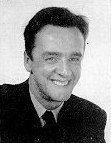
Joseph Albert Guay
Mass murderer John Gilbert Graham
Mass murderer · USA · 1955
John “Jack” Gilbert Graham was born on January 23, 1932, at Denver, Colorado. H…
44 victims
John Gilbert Graham
Mass murderer · USA · 1955
John “Jack” Gilbert Graham was born on January 23, 1932, at Denver, Colorado. H…
44 victims
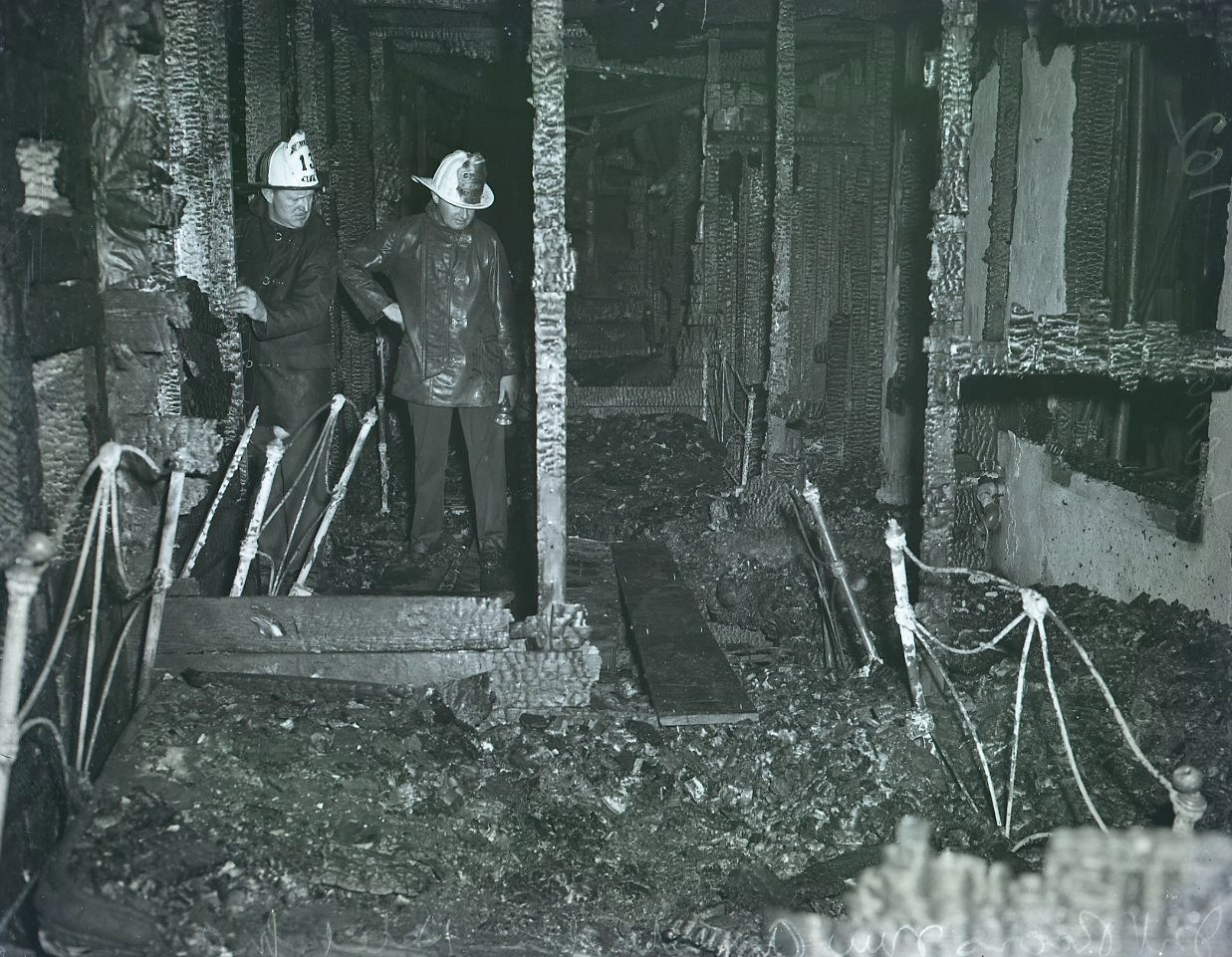 George Holman
Mass murderer · USA · 1944
George Holman was described as a pyromaniac and an arsonist blamed for a deadly…
22 victims
George Holman
Mass murderer · USA · 1944
George Holman was described as a pyromaniac and an arsonist blamed for a deadly…
22 victims
 Domingo Salazar
Mass murderer · Philippines · 1956
Domingo Salazar was resentenced to reclusion perpetua on June 30, 1959, after h…
16 victims
Domingo Salazar
Mass murderer · Philippines · 1956
Domingo Salazar was resentenced to reclusion perpetua on June 30, 1959, after h…
16 victims
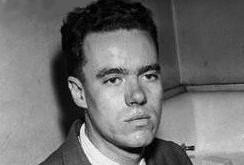 Howard Unruh
Mass murderer · USA · 1949
Howard Barton Unruh (born January 21, 1921, Camden, N.J.) carried out a shootin…
13 victims
Howard Unruh
Mass murderer · USA · 1949
Howard Barton Unruh (born January 21, 1921, Camden, N.J.) carried out a shootin…
13 victims
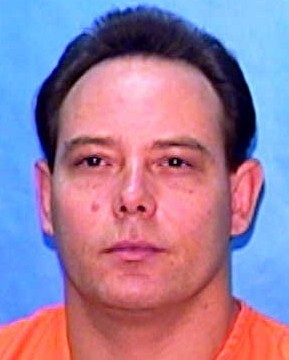 Kenneth Allen Stewart
Murderer · USA · 1984
Kenneth Allen Stewart was sentenced to death on October 3, 1986, and was resent…
2 victims
Kenneth Allen Stewart
Murderer · USA · 1984
Kenneth Allen Stewart was sentenced to death on October 3, 1986, and was resent…
2 victims
 Eugene McWatters
Murderer · 2004
Eugene Wayman McWatters Jr. was sentenced to death for killing three women in t…
3 victims
Eugene McWatters
Murderer · 2004
Eugene Wayman McWatters Jr. was sentenced to death for killing three women in t…
3 victims
 John Martin Scripps
Murderer · Singapore / Thailand · 1995
John Martin Scripps was executed by hanging in Singapore on April 19, 1996. · 8…
3 victims
John Martin Scripps
Murderer · Singapore / Thailand · 1995
John Martin Scripps was executed by hanging in Singapore on April 19, 1996. · 8…
3 victims
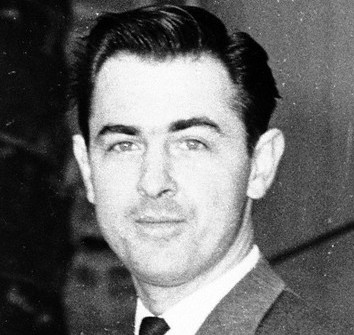 Melvin Rees
Serial killer · USA · 1957
Melvin David Rees, also known as the “Sex Beast”, was convicted and sentenced f…
9 victims
Melvin Rees
Serial killer · USA · 1957
Melvin David Rees, also known as the “Sex Beast”, was convicted and sentenced f…
9 victims
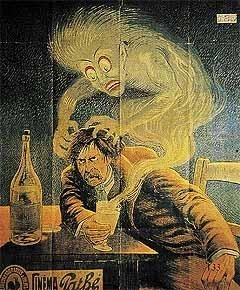 Jean Lanfray
Homicide · Switzerland · 1905
Jean Lanfray (1873/74 – February 26, 1906) was a Swiss laborer. He was convicte…
3 victims
Jean Lanfray
Homicide · Switzerland · 1905
Jean Lanfray (1873/74 – February 26, 1906) was a Swiss laborer. He was convicte…
3 victims
 George Russell Henry
Murderer · USA · 1993
George Russell Henry was 28 years old when he was sentenced to death in Cobb Co…
1 victim
George Russell Henry
Murderer · USA · 1993
George Russell Henry was 28 years old when he was sentenced to death in Cobb Co…
1 victim
- Gender
- male
- Country
- In the Air - Canada
- Location
- In the Air - Canada
- Date of birth
- 1917
- Age at first offence
- 32
- Characteristics
- parricide
- Victim profile
- 4 crew members and 19 passengers (including Rita Morel, his wife)
- Method of murder
- A bomb made of dynamite and an alarm clock
- Date(s) of murder
- September 7, 1949
- Years active
- 1949
- Date of arrest
- 14 days after
- Status
-
Executed
Executed by hanging on January 10, 1951
Overview
Joseph Albert Guay (born 1917) was a resident of Quebec City who was responsible for the in-flight bombing of a passenger airplane on September 9, 1949, killing all on board including his wife Rita (née Morel).
Background
Joseph Guay was born in Quebec in 1917. He was the youngest of 5 children.
As a young man, he sold watches and jewelry on commission and was described as a persistent salesperson. During World War II, he got a job at Canadian Arsenals Limited at St. Malo, Quebec in 1939. After the arsenal closed in 1945, he opened a jewelry and watch repair shop in Quebec City.
Guay met and married Rita Morel. The marriage began well and then became strained after their first child. Guay was described as unhappy with having a baby taking precedence and became involved with 17-year-old Marie-Ange Robitaille. Guay dated Robitaille under the assumed name of Roger Angers and set her up in a small apartment. He offered her an engagement ring.
Rita discovered the arrangement and confronted the pair. Marie-Ange left the relationship shortly thereafter citing the marriage as her reason. Guay was furious, described as both being second fiddle to a baby in his marriage and being second fiddle to his marriage with his mistress.
Guay conspired to get rid of his wife by using his frequent airplane travel to deliver or receive merchandise. His plan was to convince his wife to take one of the trips and then blow up the plane.
The offence
On September 9, 1949, the plane exploded in flight over Sault-aux-Cochons, a town located at the confluence of little St. Francis River and the St. Lawrence. All 23 persons on board were killed, including Rita Morel.
The aircraft was a Canadian Pacific Airlines DC-3 aircraft (registry CF-CUA S/N: 4518) flying from Montreal to Baie-Comeau with a stopover at L'Ancienne-Lorette, a suburb of Quebec City. It was at Quebec City that Rita Morel (Mrs. Guay) and the bomb came on board.
The bomb was made of dynamite and an alarm clock and was stashed in the forward baggage compartment. It exploded near a small locality named Sault-au-Cochon (sometimes incorrectly given as "Sault-aux-Cochons") near Saint-Joachim in the Charlevoix region. The explosion caused the plane to crash and killed all 4 crew and 19 passengers.
The flight was delayed five minutes at takeoff. This apparently thwarted Guay's desire to have the explosion take place over the Saint Lawrence River, which would have made forensic examination of the crash impossible with the technology of the day.
Apart from Rita Morel, the victims included four children and three American executives from the Kennecott Copper Corporation including the company president.
Guay took out a $10,000 insurance package on Rita (called a common practice during the time). He also had a prior $5000 policy dating from 1942. Guay asked clockmaker Généreux Ruest to manufacture a bomb using dynamite, batteries and an alarm clock.
Ruest's sister, Marguerite Pitre (also called Ruest-Pitre, wife of Arthur Pitre), purchased the dynamite at a hardware store, supposedly to be used in clearing a field. Pitre delivered the package containing the bomb to the plane for mail delivery. Pitre had also arranged secret meetings between Guay and his mistress Robitaille.
Pitre attempted suicide 10 days after the bombing and while in hospital confessed to her part in the crime. Ruest and Pitre both later maintained their innocence. Pitre claimed that Guay had told her that the package she was transporting contained a statue. Ruest claimed that he thought the bomb was to be used to clear tree stumps from a field.
Guay described himself as a jeweller and watchmaker, although at his trial it was suggested that he was more of a watch and jewellery salesman. After considering poison, he decided on the airplane bombing. The day of the flight he took out a $CAD10,000 insurance policy on his wife and attempted to collect three days later.
Guay’s plan went off with out a hitch. Witnesses were able to identify Ms. Pitre, and an investigation revealed all the events that led to the explosion of the airplane.
Investigation and arrest
Guay was arrested two weeks after the crash.
After Guay's conviction, Guay issued a statement saying that Ruest and Pitre acted knowingly to help him.
Trial
Guay was put on trial in February 1950.
He was tried and convicted and sentenced to hang.
After Guay's conviction, Ruest was arrested on June 6, 1950 and tried in November 1950. Ruest was convicted and sentenced to hang.
Marguerite Pitre was arrested on June 14, 1950. She was tried separately beginning March 6, 1951 and convicted.
Sentencing and execution
Guay was executed on January 10, 1951 by hanging at the age of 33. His last words were "Au moins, je meurs célèbre" (At least I die famous).
Ruest was hanged on July 25, 1952 at the age of 54. He was suffering from osseous tuberculosis and had to be taken to the gallows in a wheelchair.
Marguerite Pitre was hanged on January 9, 1953. She was described as the thirteenth and last woman to be hanged in Canada.
Appeals
Dollard Dansereau, author of Causes célèbres du Québec, studied the case and concluded that Ruest may not have known of Guay's intentions when Guay asked him to make the bomb; he also concluded that Pitre may have been innocent.
Some speculated that Guay's motive in denouncing his accomplices was to buy time to delay his own execution, believing that he would be called to testify at their trials. In the event, he testified at Ruest's trial but was hanged soon after and thus did not testify at Pitre's trial.
Aftermath
The incident and subsequent trials of Guay and his accomplices were notorious in Quebec and received very wide newspaper coverage.
The joint efforts of Dr. Jean-Marie Roussel and chemist Robert Péclet, both with Montreal's Laboratoire de médecine légale et de police technique [Laboratory of forensic medicine and science], made it possible to identify the causes of the explosion. Using an emission spectrograph, a device used to record visible spectra on a photographic plate, they identified various substances in the composition of the explosives samples taken at the scene of the crime.
The case captivated the Quebec public, as evidenced by the photos and newspaper clippings contained in the album "Causes célèbres" of the Laboratoire de médecine légale et de police technique.
The incident and subsequent trial and hanging of Guay and his accomplices served as inspiration for Le crime d'Ovide Plouffe, a 1982 novel by Roger Lemelin and a 1984 film of the same name by Denys Arcand. In 1949 Lemelin had been a friend and neighbor of Guay, and also served as the Quebec correspondent for Time magazine.
A later incident was the bombing of United Airlines Flight 629 on November 1, 1955, which was apparently inspired by the Albert Guay affair. It was also noted that the event was not the first in-flight airplane bombing incident in history; at least two earlier incidents had occurred, including one in the Philippines in May of that same year, a fact noted in contemporary Quebec press accounts.
Other details
Guay was described as responsible for the in-flight bombing of a passenger airplane on September 9, 1949, killing all on board including his wife Rita (née Morel).
The incident was sometimes described as the first in-flight airplane bombing incident in history, but earlier incidents were also described as having occurred.
The airline involved was sometimes stated to be "Quebec Airways", but it was also described as a name used for some Canadian Pacific Airlines flights in Quebec.
The flight did not have a flight number according to the material.
The plan involved purchasing the plane ticket for Rita and taking her to the airport in Quebec City. The flight had been scheduled to leave Montreal for Ancienne-Lorette before heading to Baie-Comeau and Sept-Îles.
Spotted an error, or have more information about this case?