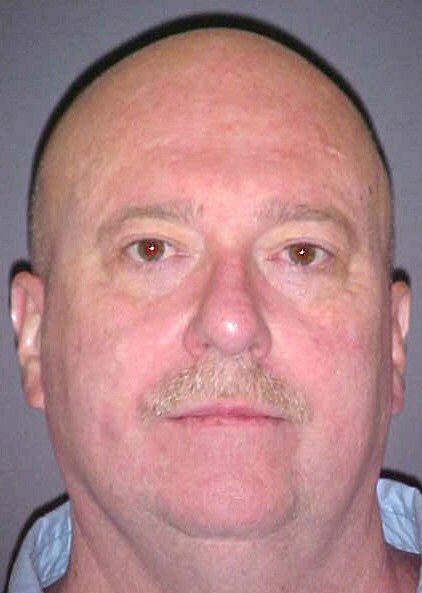
Jimmie Ray Slaughter
Murderer Brian Kevin Rosenfeld
Murderer · USA · 1985
Brian Kevin Rosenfeld Brian Kevin Rosenfeld was sentenced to three concurrent l…
23 victims
Brian Kevin Rosenfeld
Murderer · USA · 1985
Brian Kevin Rosenfeld Brian Kevin Rosenfeld was sentenced to three concurrent l…
23 victims
 Russell Ellwood
Murderer · USA · 1991
Russell Ellwood was a former taxi driver. Authorities suspected him of killing…
20 victims
Russell Ellwood
Murderer · USA · 1991
Russell Ellwood was a former taxi driver. Authorities suspected him of killing…
20 victims
 Robert Martines Perez
Murderer · USA · 1994
Name: Robert Martines Perez · Other name used in proceedings: Robert Martinez P…
15 victims
Robert Martines Perez
Murderer · USA · 1994
Name: Robert Martines Perez · Other name used in proceedings: Robert Martinez P…
15 victims
 Billy Frank Vickers
Murderer · USA · 1993
Billy Frank Vickers Vickers was executed by lethal injection in Texas on Januar…
14 victims
Billy Frank Vickers
Murderer · USA · 1993
Billy Frank Vickers Vickers was executed by lethal injection in Texas on Januar…
14 victims
 Steven Sueppel
Mass murderer · USA · 2008
Steven Sueppel (charged former Hills Bank and Trust Company executive; resident…
5 victims
Steven Sueppel
Mass murderer · USA · 2008
Steven Sueppel (charged former Hills Bank and Trust Company executive; resident…
5 victims
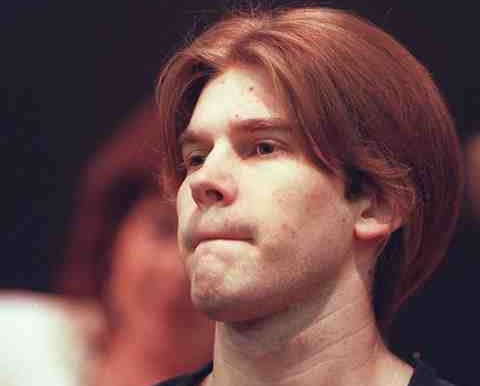 Jeremy Strohmeyer
Murderer · USA · 1997
Jeremy Strohmeyer (born October 11, 1978) was a Long Beach, California man who…
1 victim
Jeremy Strohmeyer
Murderer · USA · 1997
Jeremy Strohmeyer (born October 11, 1978) was a Long Beach, California man who…
1 victim
 Leslie Wallace
Murderer · USA · 2001
Leslie Wallace fatally shot her 6-year-old son, James, with a shotgun and attem…
1 victim
Leslie Wallace
Murderer · USA · 2001
Leslie Wallace fatally shot her 6-year-old son, James, with a shotgun and attem…
1 victim
 Clay Shrout
Mass murderer · USA · 1994
Clay Shrout Clay Shrout was a 17-year-old juvenile at the time of the May 26, 1…
4 victims
Clay Shrout
Mass murderer · USA · 1994
Clay Shrout Clay Shrout was a 17-year-old juvenile at the time of the May 26, 1…
4 victims
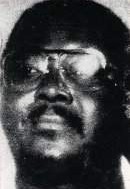 James Edward Pough
Mass murderer · USA · 1971
James Edward Pough (1948 – 18 June 1990) was an American mass murderer. On 18 J…
12 victims
James Edward Pough
Mass murderer · USA · 1971
James Edward Pough (1948 – 18 June 1990) was an American mass murderer. On 18 J…
12 victims
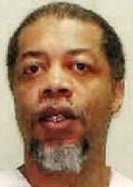 Gregory Bryant-Bey
Murderer · USA · 1992
Gregory Bryant-Bey was the owner of no store mentioned; the victims included Da…
2 victims
Gregory Bryant-Bey
Murderer · USA · 1992
Gregory Bryant-Bey was the owner of no store mentioned; the victims included Da…
2 victims
- Gender
- male
- Country
- USA
- Location
- Oklahoma County, Oklahoma, USA
- Date of birth
- J une 6, 1947
- Age at first offence
- 44
- Characteristics
- parricide, mutilator
- Victim profile
- His former girlfriend, Melody Wuertz, 29, and their daughter, Jessica Rae Wuertz, 1
- Method of murder
- Shooting
- Date(s) of murder
- July 2, 1991
- Years active
- 1991
- Date of arrest
- J uly 1991
- Status
-
Executed
Executed by lethal injection in Oklahoma on March 15, 2005
Case record: Jimmie Ray Slaughter
Status and sentence
Jimmie Ray Slaughter was executed by lethal injection in Oklahoma on March 15, 2005.
He was sentenced to death after being convicted of two counts of first-degree murder in the District Court of Oklahoma County, Case Number CF-1992-82.
Timeline
- July 2, 1991 — Melody Sue Wuertz, 29, and their one-year-old daughter Jessica Rae Wuertz were murdered in Wuertz’s Edmond home.
- July 17, 1990 — Jimmie Ray Slaughter signed an affidavit acknowledging paternity on which Jessica Rae Wuertz’s paternity was acknowledged.
- May 16, 1994 — Trial commenced in District Court of Oklahoma County (Case No. CF-92-82).
- October 7, 1994 — The jury returned its verdict on punishment.
- February 23, 1998 — Rehearing was denied.
- October 5, 1998 — The United States Supreme Court denied certiorari review.
- January 27, 2005 — Slaughter filed his third application for post-conviction relief.
- March 15, 2005 — Slaughter was executed by lethal injection.
The offence
Jimmie Ray Slaughter was convicted of the July 2, 1991, murders of his ex-girlfriend, Melody Sue Wuertz, 29, and their one-year-old daughter, Jessica Rae Wuertz.
The murders were committed in Wuertz’s Edmond home.
Melody Wuertz was shot in the head and neck, and her body was stabbed and slashed multiple times. Jessica Wuertz was shot in the head.
Jessica Wuertz was five days from her first birthday when she was shot twice in the head by a small caliber gun.
Melody Wuertz was stabbed in the chest, shot two times, and her body was mutilated. One of the marks carved into her abdomen had the appearance of the letter R.
Prosecutors contended that Slaughter shot and paralyzed Melody Wuertz before killing Jessica, then finished killing Melody Wuertz.
Prosecutors contended that Slaughter commonly went by his middle name, Ray, at the time of the murders, and that Jessica had been named after him.
Investigation
Investigative descriptions included a staged effort to throw investigators off the trail. Prosecutors contended that Slaughter left the Fort Riley military post early in the morning of July 2, 1991, drove to Edmond, killed the Wuertz family, and then returned to Kansas in time to meet his wife and two daughters at a Topeka store.
The prosecution argued that the murders occurred as part of a plan in which Melody Wuertz was surprised in the bathroom while preparing for work (the evening shift at the Oklahoma City Veterans Administration Hospital), was paralyzed by the shot to her cervical spine but not rendered unconscious, was forced to remain paralyzed and conscious while Jessica was killed, and was then dragged to the bedroom where she was killed by a shot to her head. The killer planted evidence in an attempt to throw investigators off the trail.
Investigators found no forced entry. Police described to them that this indicated either the door had been unlocked or the person who committed the crime had a key.
Medical examiners estimated time of death to be approximately between 9:30 a.m. and 12:15 p.m. on July 2, with another estimate placing death between 10:00 a.m. and 2:00 p.m., and most likely around noon.
Neighbors reported hearing what may have been gunshots between 11:30 a.m. and 12:45 p.m., and described the neighbor dog going into chaos and barking tremendously and being very scared just before the neighbors heard what may have been a gunshot.
Police found that both victims had been shot twice with Eley brand .22 caliber long-rifle, subsonic, hollow-point bullets that had not been copper washed. This imported ammunition was described as rare and difficult to purchase in American gun shops, requiring special ordering. Police found this same rare ammunition in Slaughter’s gun safe in his Oklahoma home. Metallurgical tests indicated that the Eley ammunition in Slaughter’s safe was elementally identical to the bullets that had killed the victims. The State argued this indicated the bullets had to come from the same box of Eley ammunition found in Slaughter’s gun safe.
Police could not use the bullets that had killed the victims to identify the murder weapon because those bullets were so badly damaged. The State’s ballistics expert testified this was a common phenomenon with .22 caliber ammunition, and that Slaughter owned several .22 caliber weapons.
In addition to shooting each victim twice, the State described that Slaughter’s attack included stabbing Wuertz once in the heart, deeply slashing both her breasts multiple times, scratching and cutting her abdomen including an apparently inscribed variation on the letter R, and inflicting a deep, nine-inch cut running from her vagina through her anal canal and lower back. The medical examiner testified the killer used a single-edged knife at least six inches long and one inch wide, and it was described that Slaughter had a large collection of knives.
Police described that the killer planted evidence and arranged the crime scene to look like a sexual assault, but police found no physical evidence that a sexual assault had occurred. Robbery was described as not appearing to be a motive because police found cash in plain sight near the bodies, and Wuertz’s purse contained $140 and had been left untouched.
Evidence found at the crime scene included a comb filled with Negroid hairs, underwear containing Negroid head hairs, and unused condoms and gloves near Melody’s body. A comb was described as sold for institutional use in places such as the Oklahoma City VA hospital and Fort Riley.
Cecilia Johnson admitted having collected those hairs and the underwear from a transient black man, a patient at the VA hospital, the month before the murders, and Johnson told a coworker she collected the items at Slaughter’s request and mailed them to him in Kansas. There was evidence corroborating that Johnson mailed Slaughter a small package in early June 1991. Police described that Slaughter disliked African-Americans and suggested to police and coworkers that perhaps a black man or black transient killed the victims.
At different times, Slaughter suggested a black man jumping fences in Wuertz’s neighborhood, and also suggested that Wuertz preferred to date African-American men. There was described to be no evidence supporting those contentions.
Johnson later suggested to a black coworker, J.C. Sanders, that the planted evidence was meant to implicate Sanders.
A heavily-treated head hair was found on Wuertz’s body, and it was described as microscopically consistent with one of Slaughter’s black coworkers at Fort Riley, though that coworker had never been to Oklahoma.
Two inmates, Dennis Hull and Lloyd Hunter, testified that Slaughter confessed while in jail. The case included that Slaughter did not contest perjury convictions in later proceedings.
Investigators began with a list of 10 suspects, and the evidence described pointed to Slaughter as the killer.
Arrest and pre-trial matters
Slaughter presented an alibi defense.
He claimed he was shopping with his family in Topeka, Kansas, when the mother and daughter were killed.
Trial
Charges and verdict
Slaughter was tried by a jury in the District Court of Oklahoma County, Case No. CF-92-82.
He was convicted of two counts of Murder in the First Degree (21 O.S.1991, § 701.7(A)).
The jury returned its verdict on punishment on October 7, 1994.
In the punishment phase, the prosecution sought the death penalty alleging in each count that:
- the murder was especially heinous, atrocious, or cruel (21 O.S.1991, § 701.12(4));
- there existed a probability the defendant would commit criminal acts of violence that would constitute a continuing threat to society (21 O.S.1991, § 701.12(7));
- the defendant knowingly created a great risk of death to more than one person (21 O.S.1991, § 701.12(2)).
Before the jury began second-stage deliberations, the prosecution dismissed the allegation in Count I that the murder was especially heinous, atrocious, or cruel.
For Count 1, the jury found only that the defendant knowingly created a great risk of death to more than one person; it did not find continuing threat to society.
For Count 2, the jury found both that the murder was especially heinous, atrocious, or cruel and that the defendant knowingly created a great risk of death to more than one person; the jury did not find continuing threat to society.
The trial court followed the jury’s recommendations and sentenced Slaughter to death on each count.
Perjury convictions
Slaughter was also convicted of five counts of perjury (Counts 3-7), and one perjury count resulted in a not guilty verdict. The perjury convictions were described as:
- Count 3: two years imprisonment
- Count 4: four years imprisonment
- Count 5: five years imprisonment
- Count 6: three years imprisonment
- Count 7: one year imprisonment
The jury found Slaughter not guilty on an eighth count of perjury.
Evidence and arguments during trial
The prosecution described that Slaughter was a suspect from the beginning because he and Melody had had a sexual relationship resulting in Melody becoming pregnant, and Slaughter signed an affidavit acknowledging paternity on July 17, 1990.
Prosecutors described that Slaughter’s support of the child was meager, and that Melody mentioned this more than once.
Prosecutors described Slaughter remarking to a coworker that Melody was getting “pushy,” and that if she continued to act that way, “he would have to kill her.”
Prosecutors also described Slaughter telling another coworker that Melody was causing him problems at work and that one day he would have to kill both Melody and Jessica.
The prosecution described that in the fall of 1990, Wuertz discovered Slaughter was married and called Slaughter’s wife to tell her about the infidelity.
Police described that Slaughter was furious, but managed to explain to his wife that the call must have been a prank call.
Police described that Slaughter told a coworker in Kansas that his wife did not know about Jessica and that he would do anything to keep her from finding out.
The prosecution described that Slaughter told his then girlfriend in Kansas that he wished Wuertz were dead, and that he kept tabs on Wuertz’s progress with paternity proceedings through another paramour, Cecilia Johnson.
Prosecutors described evidence about the child-support dispute and that the Department of Human Services helped collect child support.
The appellate and habeas narrative described that Slaughter’s alibi was supported by testimony from his ex-wife, Nicki Bonner, and her two daughters that Slaughter was with them all day July 2, 1991, and that a waitress at a Country Kitchen restaurant recognized Bonner and her two daughters and remembered a man who looked similar to Slaughter, though not enough to identify him.
Testimony also described that Slaughter’s family drove around a nearby lake after lunch and then traveled to Topeka to shop, including a Walmart purchase.
It was described that a sales clerk recalled Slaughter bought a T-shirt and a receipt verified the purchase, but could not pinpoint the exact date.
The evidence narrative described that one store register tape indicated a watch sale at 3:26 p.m. on July 2 and that the customer paid with a $50 bill, and another purchase occurred at 4:16 p.m. on July 2.
The prosecution described that Slaughter’s alibi did not hold up, that store employees remembered seeing Nicki Slaughter and the two girls but did not remember seeing Jimmie Slaughter.
Sentencing
Slaughter was sentenced to death for the 1991 deaths of Melody Wuertz and Jessica Wuertz.
He was pronounced dead on March 15, 2005.
Appeals and post-conviction proceedings
Direct appeal and related procedural history
After convictions and death sentences for capital murder were affirmed on direct appeal, 950 P.2d 839, denial of defendant’s initial petition for post-conviction relief was affirmed, 969 P.2d 990.
Slaughter exhausted federal habeas claims.
A second petition for post-conviction relief was denied by the Court of Criminal Appeals on the basis described in later holdings, and additional post-conviction petitions were denied.
Key post-conviction and appellate issues described
Slaughter’s post-conviction proceedings included claims about:
- brain fingerprinting as new evidence to demonstrate actual innocence;
- DNA testing of a single hair;
- comparative bullet lead analysis methodology being challenged in the relevant scientific community;
- failure to secure DNA testing of the “single hair used to convict” him of murder while appeal was pending;
- challenges to post-conviction statute and criminal appellate rule governing limitations periods.
The Court of Criminal Appeals held that Slaughter was not entitled to successive post-conviction review of the claim that new evidence of brain fingerprinting would demonstrate actual innocence, and that he was not entitled to successive post-conviction review of the claim that recent DNA testing would demonstrate actual innocence.
The Court of Criminal Appeals also held that he was not entitled to post-conviction review of the claim that comparative bullet lead analysis methodology was being challenged in the relevant scientific community.
The Court of Criminal Appeals denied post-conviction relief on claims that direct appeal counsel was ineffective for failing to secure DNA testing of “single hair used to convict” him of murder while appeal was pending, and denied post-conviction relief on claims that post-conviction statute and criminal appellate rule governing limitations periods were unconstitutional.
Federal review and denial
A federal habeas review was affirmed, including that a district court denied habeas relief and the court of appeals affirmed the denial.
Clemency and final proceedings
The Oklahoma Pardon & Parole Board denied clemency for Slaughter by a unanimous vote of members present.
Board member and former Attorney General Susan Loving recused herself from the meeting.
Slaughter, age 57, was scheduled to be executed March 15.
As part of final proceedings, Slaughter insisted he was not guilty, stating that he had been accused of murder and that it was not true, and that it was “a lie from the beginning.”
Execution
Lethal injection and time pronounced dead
Slaughter was executed by lethal injection on March 15, 2005, at Oklahoma State Penitentiary.
He was pronounced dead at 6:19 p.m.
Statements during execution
While strapped to a gurney in the Oklahoma death chamber, Slaughter said:
"I've been accused of murder and it's not true. It was a lie from the beginning,"
"You people will know it's true some day. May god have mercy on your souls."
He continued to proclaim his innocence.
During the execution, he told each of his daughters and his fiancé, whom he had met while on death row, that he loved them and “I'll be seeing you soon.”
He told his daughters:
"It's OK, it's OK, I love you."
He also told his fiancé:
Other details
Victims
- Melody Sue Wuertz, 29.
- Jessica Rae Wuertz, one-year-old; five days from her first birthday when she was shot twice in the head.
Family and associates mentioned
- Lyle Wuertz, Melody Wuertz’s father.
- Susie Wuertz, Melody Wuertz’s mother.
- Wesley Wuertz, Melody’s brother.
- Robert Jackson, an attorney representing Slaughter.
- Assistant Attorney General Seth Branham.
- Edmond police Capt. Theresa Pfeiffer.
- Former Attorney General Susan Loving, who recused herself from the clemency meeting.
- Dennis Dill, a former investigator on the case who contended that Melody and Jessica were murdered much earlier than prosecutors said.
- Dr. Larry Farwell, who conducted brain fingerprinting testing.
- U.S. Supreme Court rejection of Slaughter’s appeal on March 15, 2005 (as described in final reporting).
- Slaughter’s three daughters from an earlier marriage witnessed the execution.
- Slaughter’s fiancé, whom he had met while on death row, was described as witnessing the execution.
Claims of innocence and disputed evidence described in proceedings
Slaughter maintained he was innocent and claimed he was shopping in Topeka, Kansas with his family when the murders occurred.
Post-conviction narratives described challenges to:
- DNA testing of a hair found at the crime scene and the decision not to allow new DNA evidence to be added due to a deadline;
- comparative bullet lead analysis reliability;
- brain fingerprinting results and whether the technique was legally sufficient.
Dennis Dill contended that a falsified report and a lost or destroyed bag containing sexual aids were involved, and Edmond police Capt. Theresa Pfeiffer responded that Dill’s contention about falsified reports was a “blatant lie,” and that as for the trick bag, it was the first she had heard of it.
Assistant Attorney General Seth Branham described peas, noodles and carrots and used a time-of-death estimate in argument, including saying: “peas, noodles and carrots don't amount to a hill of beans. The evidence makes clear the time of death was appropriate. Noodles, peas and carrots? I'll tell you when the baby ate that. It was about 11:30.”
Defense arguments described “brain fingerprinting” as proving Slaughter is innocent, while Assistant Attorney General Seth Branham called brain fingerprinting “junk science” and argued that brain waves of anyone who had sat through a trial and seen crime scene photographs should show knowledge of the crime.
Prior convictions and other sentencing for perjury
Slaughter had been convicted of five counts of perjury and sentenced to consecutive terms of two, four, five, three, and one years imprisonment as described in a footnote within the case record.


Spotted an error, or have more information about this case?