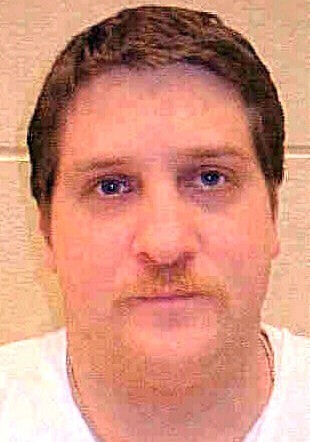
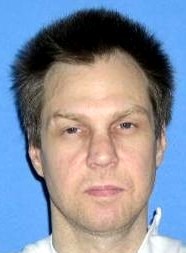
Clay King Smith
Mass murderer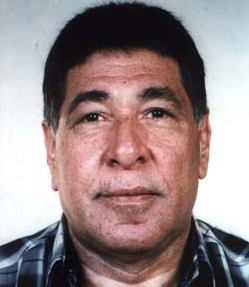 Gameel Al-Batouti
Mass murderer · USA · 1999
Gameel Al-Batouti (also rendered “Gamil ElBatouty” or “El Batouty” in U.S. offi…
216 victims
Gameel Al-Batouti
Mass murderer · USA · 1999
Gameel Al-Batouti (also rendered “Gamil ElBatouty” or “El Batouty” in U.S. offi…
216 victims
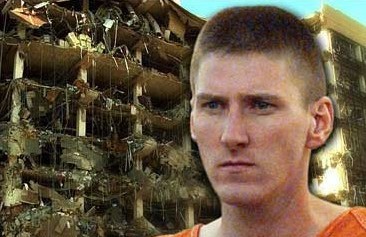 Timothy McVeigh
Mass murderer · USA · 1995
Timothy James McVeigh (April 23, 1968 – June 11, 2001) was a United States Army…
168 victims
Timothy McVeigh
Mass murderer · USA · 1995
Timothy James McVeigh (April 23, 1968 – June 11, 2001) was a United States Army…
168 victims
 Julio Gonzalez
Mass murderer · USA · 1990
Julio Gonzalez was sentenced to 174 twenty-five-year sentences (a total of 4,35…
87 victims
Julio Gonzalez
Mass murderer · USA · 1990
Julio Gonzalez was sentenced to 174 twenty-five-year sentences (a total of 4,35…
87 victims
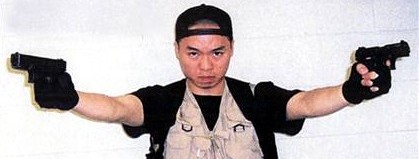 Seung-Hui Cho
Mass murderer · USA · 2007
Seung-Hui Cho was a mass murderer who shot and killed 32 people and wounded man…
32 victims
Seung-Hui Cho
Mass murderer · USA · 2007
Seung-Hui Cho was a mass murderer who shot and killed 32 people and wounded man…
32 victims
 George Jo Hennard
Mass murderer · USA · 1991
George Jo Hennard carried out a mass killing at a Luby’s Cafeteria in Killeen,…
23 victims
George Jo Hennard
Mass murderer · USA · 1991
George Jo Hennard carried out a mass killing at a Luby’s Cafeteria in Killeen,…
23 victims
 Eric Harris
Mass murderer · USA · 1999
Eric Harris committed suicide by gunshot to the roof of the mouth on April 20,…
13 victims
Eric Harris
Mass murderer · USA · 1999
Eric Harris committed suicide by gunshot to the roof of the mouth on April 20,…
13 victims
 Shannon Crawley
Murderer · USA · 2009
January 2007 — Denita Smith was shot in the back of the head and later fell dow…
1 victim
Shannon Crawley
Murderer · USA · 2009
January 2007 — Denita Smith was shot in the back of the head and later fell dow…
1 victim
 Eliseo Hernandez Moreno
Spree killer · USA · 1983
Eliseo Hernandez Moreno was executed by lethal injection in Texas on March 4, 1…
6 victims
Eliseo Hernandez Moreno
Spree killer · USA · 1983
Eliseo Hernandez Moreno was executed by lethal injection in Texas on March 4, 1…
6 victims
 Monique Robinson
Murderer · USA · 2011
Monique Robinson was a Phoenixville teenager and former Phoenixville Area High…
1 victim
Monique Robinson
Murderer · USA · 2011
Monique Robinson was a Phoenixville teenager and former Phoenixville Area High…
1 victim
 Humberto Garza
Mass murderer · USA · 2003
Name: Humberto Garza · Also known as: “Gallo” · TDCJ number: 999495 · Date of b…
6 victims
Humberto Garza
Mass murderer · USA · 2003
Name: Humberto Garza · Also known as: “Gallo” · TDCJ number: 999495 · Date of b…
6 victims
- Gender
- male
- Country
- USA
- Location
- Jefferson County, Arkansas, USA
- Date of birth
- J uly 25, 1970
- Age at first offence
- 28
- Characteristics
- revenge, drugs
- Victim profile
- His ex-girlfriend, Misty Erwin, 20; her cousin, Shelly Sorg, 24; Sorg's two children, Sean Michael, 5, and Taylor, 3; and a family friend, Samantha Rhodes, 12
- Method of murder
- Shooting ( rifle)
- Date(s) of murder
- March 25, 1998
- Years active
- 1998
- Date of arrest
- Same day (wounded by police)
- Status
-
Executed
Executed by lethal injection in Arkansas on May 8, 2001
Case overview
Clay King Smith was executed by the State of Arkansas for the March 25, 1998 murders of Misty Erwin (age 20), Shelley Sorg (24), Sean Sorg (5), Taylor Sorg (3), and Samantha Rhodes (12) at his home near Pine Bluff, Arkansas.
Timeline
- March 23, 1998 — Misty Erwin reported to the Jefferson County Sheriff’s Office that she had been battered by her boyfriend, Clay King Smith, and asked to pick up her belongings.
- March 25, 1998 — Misty Erwin, Shelley Sorg, Taylor Sorg, Sean Sorg, and Samantha Rhodes were murdered at 3105 Pinto Road in Jefferson County.
- March 26, 1998 — A felony information was filed and an arrest warrant was issued.
- March 17, 1999 — Smith’s trial began.
- March 18, 1999 — Judgment was entered reflecting that Clay King Smith had been found guilty by a jury of five counts of capital murder and sentenced to death.
- April 15, 1999 — A stay of execution was granted.
- July 8, 1999 — The Arkansas Supreme Court remanded for a hearing on Smith’s capacity to understand the choice between life and death and to knowingly and intelligently waive his right to appeal his sentence of death.
- November 1999 — A judge ruled that Smith was competent enough to waive his appeal rights.
- February 1, 2001 — The Arkansas Supreme Court opinion was delivered in Clay King Smith v. State of Arkansas (CR 99-353).
- May 8, 2001 — Smith was executed by lethal injection in Arkansas.
- May 9, 2001 — Smith was reported as executed by lethal injection Tuesday night.
Background
In early 1998, Clay King Smith and Misty Erwin lived together at 3105 Pinto Road in Pine Bluff.
A disturbance between Smith and Erwin occurred before the murders. On or about March 25, 1998, Corporal Calvin Terry of the Jefferson County Sheriff’s Office had been dispatched to a store parking lot to meet Erwin, who reported being battered by her boyfriend (Smith). Erwin asked the officer to assist her in picking up her belongings at their residence on Pinto Road. When the officer arrived, Smith was present. Smith and Erwin talked, and Erwin decided she would stay at the residence rather than go to a women’s shelter. She also decided not to press charges against Smith and signed a written statement to that effect. Corporal Terry testified that Smith and Erwin were “getting along together fine” when he left the residence.
The offence
On March 25, 1998, Misty Erwin, Shelly Sorg, Taylor Sorg, Sean Sorg, and Samantha Rhodes were murdered at the address where Smith lived, 3105 Pinto Road in Jefferson County near Pine Bluff, Arkansas.
The state presented evidence that the victims died from multiple gunshot wounds and that all were shot with a .22 caliber rifle connected to Smith.
Investigation
A missing-person report prompted police to go to the Pinto Road residence. At about 8:00 p.m. on March 25, 1998, Andy Hoots, a patrol officer with the Jefferson County Sheriff’s Office, was dispatched to a grocery store parking lot regarding a missing person report. Hoots met Misty Erwin’s mother, Lula Erwin, who reported her daughter missing. Bobbie Erwin was also at the grocery store and reported her daughter Shelly Sorg and Shelly’s two children, Sean and Taylor, missing.
To complete the report, Hoots went to Pinto Road to find the street number of the residence described by Lula Erwin and Bobbie Erwin. Hoots also searched for Misty Erwin’s vehicle, which had been reported missing.
While patrolling on Pinto Road, Hoots was flagged down by James Rhodes, the father of Samantha Rhodes. Rhodes showed Hoots the residence of Smith and Erwin at 3105 Pinto Road. Hoots knocked on the doors but received no response and could not see inside.
Shelly Sorg’s parents came to the residence and identified their daughter’s vehicle parked there. Officer Hoots left to meet with his superior and fill him in, then received another call instructing him to return to 3105 Pinto Road due to suspicious circumstances.
At approximately 10:30 p.m., Hoots returned and was met by the owner of the residence, Mark Lackey, who used his key to open the door. Hoots shined his flashlight inside and saw blood stains on the carpet. He leaned inside and saw blood splatters on the side of a washing machine or dryer. Looking toward the back bedroom, Hoots saw a deceased female stretched across a bed. He backed out, shut the door, and called his superior.
Soon afterward, several police officers and investigators arrived, including Stephen Moreau, Investigator Frank J. Moser, III, and others.
Moreau testified that he arrived at the Pinto Road scene shortly after 11:00 p.m. Moreau and Moser went inside to check for victims needing medical attention and for possible suspects. In the back door area, they found blood on the floor. In the west bedroom, they found a female and a small child lying on a bed, deceased, identified as Samantha Rhodes and Sean Sorg. In the living room, Moreau saw a foot protruding from underneath a blanket covering a couch, lifted it, and found a deceased female identified as Shelly Sorg. Moreau lifted another section of the blanket covering the couch and found another deceased female identified as Misty Erwin.
After finishing their search for other victims or suspects, investigators left and obtained a search warrant. While search warrant preparations were underway, the deputy coroner arrived, checked bodies, noted the temperature in the residence, and fixed the time of death. At that point, a fifth victim, another small child, was discovered under the blanket covering the couch; the fifth victim was Taylor Sorg. The deputy coroner pronounced death at 11:41 p.m. and estimated the victims had been dead for twenty-four to thirty-six hours.
After obtaining a search warrant, investigators reentered to videotape the scene, take photographs, and collect evidence. They discovered great amounts of blood around the bodies and throughout the residence. They also found twelve spent .22 caliber shell casings and two bullet fragments in areas where the victims’ bodies were found.
Investigators interviewed bystanders and neighborhood residents. Sandra Haynes, who lived about 300 feet away, testified she saw Smith leave the residence through the front door at about 12:05 a.m. on March 25, 1998, and that he stopped and looked at her for “a good ten seconds” before getting in his car and driving away. Becky Irons told police that she heard Smith threaten to kill Misty Erwin and her family if Erwin left him and that she saw a rifle on the couch in Erwin’s residence when the threat occurred.
Arrest
Hunting club confrontation and capture
After leaving the Pinto Road residence, investigating officers received information that Smith was at a hunting club near Star City in Lincoln County, Arkansas. Jefferson County officers went to Star City and met with officers from the Arkansas State Police and the Lincoln County Sheriff’s Office to discuss plans for arresting Smith. The officers then proceeded to the hunting club.
Smith fled on foot through a wooded area while carrying a rifle. Officers pursued him. Smith ran two to three hundred yards, stopped running, began to walk, then stopped walking and turned to confront officers when he was about fifteen yards away from an officer. For the next fifty-five minutes, Smith engaged in conversation with the officers but refused to drop his weapon. During the standoff, he made several incriminating statements, including:
- “I sent three of them to Heaven; I don't know where the other two went.”
The confrontation ended when a state trooper shot Smith in the arm, and officers took him into custody.
Trial
Smith was charged with five counts of capital murder. The trial began on March 17, 1999, with a jury selected the previous Monday and Tuesday, and a jury of twelve persons with one alternate. In the guilt phase, the state introduced testimony of eight witnesses. Witnesses included: the police officer who responded to Erwin’s domestic dispute allegation against Smith two days before the murder; the neighbor who saw Smith leave around the time of death estimated by the deputy coroner; the police officer who investigated missing person reports and found the bodies; the police officers who investigated and arrested Smith; the medical examiner who conducted the post-mortem examination; and a firearms expert who concluded that bullet fragments recovered from the bodies of Rhodes, Shelly Sorg, and Misty Erwin, as well as twelve spent .22 caliber shell casings and two bullet fragments found at the crime scene, were fired from the .22 caliber rifle taken from Smith following his confrontation with the officers.
At the close of the state’s case, defense counsel sought a directed verdict, which the trial court denied. Smith offered no witnesses but introduced several exhibits. At the close of all evidence, defense counsel renewed motions, and the trial court reaffirmed earlier rulings. The jury deliberated and found Smith guilty of five counts of capital murder.
Penalty phase
After conviction, the case proceeded to the penalty phase. Smith instructed his attorneys not to put on evidence of mitigating factors and not to cross-examine state witnesses or make closing remarks. Before allowing counsel to honor Smith’s instructions, the trial court held a hearing and questioned Smith about his decision. The trial court found that Smith voluntarily and intelligently waived his right to counsel and ordered defense counsel to respect his wishes.
The state presented victim-impact testimony of:
- Misty Erwin’s sister (the testimony of Samantha Rhodes’s mother was referenced in connection with this testimony),
- Linda Sue Clay, who was the mother-in-law of Shelly Sorg and the grandmother of Sean and Taylor Sorg.
Smith made a statement to the jury before the trial court read the penalty-phase instructions and the prosecuting attorney made the state’s final closing argument. The jury recommended a sentence of death on all five counts of capital murder.
Sentencing
Smith was sentenced to death by a Jefferson County jury. Judgment reflecting five capital murder convictions and a death sentence was entered on March 18, 1999.
Aggravating and mitigating circumstances found by the jury
The jury unanimously determined that the following aggravating circumstances existed beyond a reasonable doubt for each count of capital murder:
- Smith, in the commission of the capital murder, “knowingly created a great risk of death to a person other than the victim” or “knowingly caused the death of more than one person in the same criminal episode,” as reflected in Ark. Code Ann. § 5-4-604(4) (Repl. 1997);
- The capital murder was committed for the purposes of avoiding or preventing arrest or effecting an escape from custody;
- The capital murder was committed against a person whom Smith knew or reasonably should have known was especially vulnerable to the attack because of either a temporary or permanent or severe physical or mental disability, which would interfere with the victim’s ability to flee or defend himself.
The jury also unanimously found one mitigating circumstance:
- “Clay King Smith has no significant history of a prior criminal activity at the time of this incident.”
The jury concluded:
- (A) one or more aggravating circumstances existed beyond a reasonable doubt,
- (B) the aggravating circumstances outweighed beyond a reasonable doubt any mitigating circumstances found by any juror,
- (C) the aggravating circumstances justified beyond a reasonable doubt a sentence of death.
Appeals
Smith waived his right to appeal.
Competency to waive appeals
Following an unpublished per curiam order entered on July 8, 1999, the trial court held a hearing on whether Smith had the capacity to understand the choice between life and death and to knowingly and intelligently waive his right to appeal. In November 1999, a judge ruled Smith was competent enough to waive his appeal rights, including postconviction remedies under Ark. R. Crim. P. 37.5. At the hearing, Smith told the court he was sorry for the pain he had caused and added:
- “I don't want to do any more harm.”
Jefferson County Circuit Judge H.A. Taylor said Smith had knowingly waived his appeal and understood the implications.
Arkansas Supreme Court review
The Arkansas Supreme Court conducted an automatic review of the entire capital-murder and death-sentence record and affirmed.
The Arkansas Supreme Court delivered its opinion on February 1, 2001 in Clay King Smith v. State of Arkansas (CR 99-353). The court affirmed the trial court judgment.
The opinion addressed multiple issues including the waiver of appeal and competency to waive, jury issues involving juror misconduct allegations, suppression of statements made during the armed standoff, and appellate preservation issues regarding aggravating circumstances.
Other trial and suppression statements and quotations
During the armed standoff, the Arkansas Supreme Court’s opinion referenced statements made by Smith during Investigator Moser’s testimony. The excerpt included these quotations attributed to Smith:
- “Just shoot me. Be a man.”
- “Why? You want to send me to prison.”
- “All you want to do is send me to the penitentiary. I can't go to jail. I'd rather die for what I did.”
- “Just shoot me. Come on, man. Just shoot me. Be a man.”
- “I sent three of them to heaven. I don't know where the hell the other two went.”
- “I was high on drugs. I was high.”
- “I wish I could take a few days back. I shot them. What can I do now?”
Additional quotations attributed in the case materials included:
- “I am not guilty. You've accused me of killing the most loved person in my life, my fiancee. A very different Clay Smith speaks to the Jury.”
- “I respect your decision. You found me guilty of killing Misty and four other people. I've lost my life anyway.”
- “There is nothing more deliberate than when you walk up to a 5-year-old child and shoot him in the head.” — Deputy Prosecuting Attorney Kim Bridgforth (during closing remarks).
Execution
Smith spent his final days writing letters. Smith wrote letters to the families of each of his victims asking for forgiveness and stating he would waive his right to appeal unless they asked him to do otherwise. No one did.
In a letter dated April 22, Smith told Misty Erwin’s father, Randy; her mother Lula; and her three sisters, Tabitha, Margo, and Francis, that he was waiving his right to appeals so that they could move on with their lives. The letter included:
- “You don't need to keep reliving what happened over and over and that's what appeals would do,”
- “If you all want me to appeal you should let me know and I will. Otherwise, I'm going home to be with Jesus. I can hardly wait. I believe I am going to see Misty there...”
At the execution, Smith made a brief final statement while strapped to a gurney at the Cummins Correctional Unit, speaking to four family members of his victims watching on closed circuit television:
- “I'd like to say I'm sorry about what I did to the victims' families. I hope your hearts heal. I love my family. I love my family.”
A lethal mix of chemicals was injected into Smith at 9:03 p.m., and he was pronounced dead at 9:07 p.m.
Smith’s spiritual advisor, the Rev. Robby Mitchell, of El Dorado, said Smith appeared very calm prior to the execution and quoted him as saying:
- “He was upbeat, calm and full of peace,”
- “He told me he loved me and he had made his peace with God. He said when he took his last breath it would not be the end and he would see me again.” Mitchell also said Smith told him he lost his walk with the Lord and got involved in satanism and drugs, attributing the murders to the power of drugs.
Spotted an error, or have more information about this case?