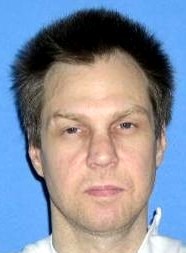
Charles Edward Smith
Murderer Brian Kevin Rosenfeld
Murderer · USA · 1985
Brian Kevin Rosenfeld Brian Kevin Rosenfeld was sentenced to three concurrent l…
23 victims
Brian Kevin Rosenfeld
Murderer · USA · 1985
Brian Kevin Rosenfeld Brian Kevin Rosenfeld was sentenced to three concurrent l…
23 victims
 Yahweh ben Yahweh
Murderer · USA · 1980
Yahweh ben Yahweh was born and legally named Hulon Mitchell Jr. (October 27, 19…
23 victims
Yahweh ben Yahweh
Murderer · USA · 1980
Yahweh ben Yahweh was born and legally named Hulon Mitchell Jr. (October 27, 19…
23 victims
 Russell Ellwood
Murderer · USA · 1991
Russell Ellwood was a former taxi driver. Authorities suspected him of killing…
20 victims
Russell Ellwood
Murderer · USA · 1991
Russell Ellwood was a former taxi driver. Authorities suspected him of killing…
20 victims
 Robert Martines Perez
Murderer · USA · 1994
Name: Robert Martines Perez · Other name used in proceedings: Robert Martinez P…
15 victims
Robert Martines Perez
Murderer · USA · 1994
Name: Robert Martines Perez · Other name used in proceedings: Robert Martinez P…
15 victims
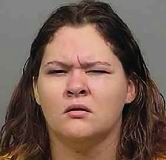 Arline Lawless
Murderer · USA · 2012
Arline Lawless, also known as Arline Seavey, was a 26-year-old Waldoboro woman…
1 victim
Arline Lawless
Murderer · USA · 2012
Arline Lawless, also known as Arline Seavey, was a 26-year-old Waldoboro woman…
1 victim
 Anthony Garcia
Murderer · USA · 2008
Anthony Garcia was a former doctor who was found guilty on all counts including…
4 victims
Anthony Garcia
Murderer · USA · 2008
Anthony Garcia was a former doctor who was found guilty on all counts including…
4 victims
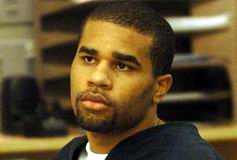 Derlyn Ray Threats
Murderer · USA · 2005
Derlyn Ray Threats was a former Camp Pendleton Marine sergeant. He was convicte…
1 victim
Derlyn Ray Threats
Murderer · USA · 2005
Derlyn Ray Threats was a former Camp Pendleton Marine sergeant. He was convicte…
1 victim
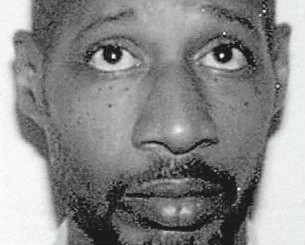 Dawud Mu'Min
Murderer · USA · 1973
Dawud Majid Mu'Min (born as David Michael Allen) was a convicted murderer execu…
2 victims
Dawud Mu'Min
Murderer · USA · 1973
Dawud Majid Mu'Min (born as David Michael Allen) was a convicted murderer execu…
2 victims
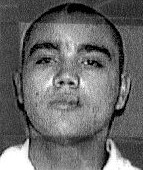 Johnnie Bernal
Homicide · USA · 1994
Aug. 19, 1994 — Johnnie Bernal spent the evening cruising Northwest Houston wit…
1 victim
Johnnie Bernal
Homicide · USA · 1994
Aug. 19, 1994 — Johnnie Bernal spent the evening cruising Northwest Houston wit…
1 victim
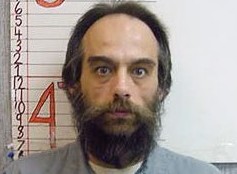 Charles Lee Mathenia
Murderer · USA · 1984
Charles Lee Mathenia · September 1983 — Louanna Bailey reported that Mathenia a…
2 victims
Charles Lee Mathenia
Murderer · USA · 1984
Charles Lee Mathenia · September 1983 — Louanna Bailey reported that Mathenia a…
2 victims
- Gender
- male
- Country
- USA
- Location
- Pecos County, Texas, USA
- Date of birth
- February 24, 1966
- Age at first offence
- 22
- Characteristics
- to avoid arrest
- Victim profile
- Tim Hudson, 61 ( Pecos County Deputy Sheriff )
- Method of murder
- Shooting ( .357 magnum pistol)
- Date(s) of murder
- August 20, 1988
- Years active
- 1988
- Date of arrest
- Same day
- Status
-
Executed
Executed by lethal injection in Texas on May 16, 2007
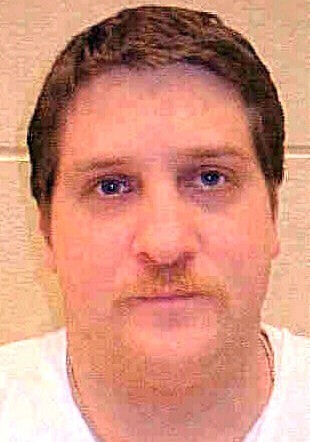
Case record: Charles Edward Smith
Status
Charles Edward Smith was executed by lethal injection in Texas on May 16, 2007.
People
- Charles Edward Smith — defendant
- Carroll Smith — Charles Smith’s cousin and co-escapee; was captured and later sentenced to life in prison
- Tim Hudson — Pecos County deputy Sheriff; was fatally wounded and killed
- Gwynn Hudson Simmons — Tim Hudson’s daughter
- Brock Jones — district judge in the 112th District Court, Pecos County
- Martin Underwood — defense attorney
- J.K. Wall — appeals lawyer for Charles Smith
- Greg Abbott — Texas Attorney General who issued information about the scheduled execution
- Jeff Miers — companion in Kansas burglary/theft case; the gun stolen by Smith and Miers was used to kill Martin Esquivel
- Sally Ann Ochoa — probation officer who prepared the presentence investigation report for Smith’s conviction for aiding a felon
- Norma Jean Jackson — correctional officer in Kansas
- Joyce Whitt — correctional officer in Kansas
- Mark Yates — incarcerated in a cell adjoining Charles Smith’s cell in the Pecos County Jail
- Cliff Harris — supervised the jailers in Pecos County
- Sam Esparza — assisted with visitation at the Pecos County Jail
- T.J. Perkins — jailer at the Pecos County Jail
- Carol Barnett — Pecos County jailer
- Darlene Archer — jailer
- Bruce Wilson — Pecos County Sheriff
- Daniel Tsongas — referenced witness in a prosecution-related claim raised on appeal
- Ricardo Dominguez — venireperson challenged for cause
- Ted White — venireperson referenced in an appeal claim
- Texas Ranger Joe Coleman — Texas Ranger whose former testimony was read into the record
- Deputy Bobby Calloway — deputy encountered Charles Smith upon arrest
- Lieutenant Johnny Hatcher — referenced in a related complaint
- Cynthia Hokit — challenged for cause
- Javier Ybarra — Mexia Police Detective referenced in connection with execution attendance
Timeline
- January 22, 1987 — Jeff Miers used a stolen rifle to kill Martin Esquivel and wound his brother, Fernando Esquivel, in Garden City, Kansas.
- 1987 — Charles Smith pled guilty to felony burglary and felony theft, admitting he and a companion, Jeff Miers, had broken into a house and stolen a rifle.
- August 19, 1988 — Charles Smith and his cousin escaped; they drove to Houston, burglarized several homes, stole credit cards, jewelry, license plates, and a .357 magnum pistol and ammunition, abandoned a stolen truck, replaced it with a stolen van, and drove west; on this date they stopped at a gas station in Bakersfield, Texas, pumped gasoline worth $22.50 into the van, drove away without paying, and deputy Sheriff Tim Hudson responded to the reported theft.
- August 24, 1988 — Charles Smith was indicted by a Pecos County grand jury for capital murder in the death of deputy Sheriff Tim Hudson.
- Saturday, August 20, 1988 — Deputy Tim Hudson was fatally shot while pursuing two robbery suspects along I-10; the suspect who was sentenced to death was executed on May 16, 2007.
- December 4, 1991 — the Texas Court of Criminal Appeals reversed Charles Smith’s conviction.
- 1992 — Charles Smith was retried, convicted, and sentenced to death again.
- September 20, 1995 — the Texas Court of Criminal Appeals affirmed Charles Smith’s conviction but remanded the case for a new punishment hearing.
- November 17, 1999 — a jury sentenced Charles Smith to death again.
- May 8, 2002 — Charles Smith’s sentence was affirmed on appeal.
- August 13, 2001 — Charles Smith filed a state application for writ of habeas corpus in the trial court.
- October 22, 2003 — the Texas Court of Criminal Appeals adopted the trial court’s findings and conclusions and denied Charles Smith habeas relief.
- October 20, 2004 — Charles Smith filed a federal habeas petition in a U.S. District Court.
- September 16, 2005 — the district court denied Charles Smith’s petition.
- November 30, 2006 — the 5th U.S. Circuit Court of Appeals affirmed the district court’s judgment.
- February 23, 2007 — Charles Smith petitioned the U.S. Supreme Court for certiorari review.
- May 16, 2007 — Charles Edward Smith was executed by lethal injection in Texas.
Background
Charles Smith was serving a sentence in a Kansas correctional facility for burglary, theft and aiding a felony when he escaped along with his cousin, Carroll Smith. At the time of the escape, Charles Smith had approximately one month left to serve before he would have been eligible for parole.
The offence
While driving after the escape, Charles Smith and Carroll Smith burglarized several homes and stole credit cards, jewelry, license plates, and a .357 magnum pistol and ammunition. They abandoned the stolen truck and replaced it with a stolen van and began driving west toward New Mexico.
On August 19, 1988, the two escapees stopped and pumped gasoline worth $22.50 into the van in Bakersfield, Texas, and drove away without paying. Pecos County deputy Sheriff Tim Hudson and other law enforcement officers responded to the reported theft.
Deputy Hudson attempted to pull over the van. Charles Smith refused to stop. When Hudson pulled alongside the van, Charles Smith fired three shots into Hudson’s car, one of which fatally wounded Hudson. Evidence showed that Hudson did nothing to provoke the shooting; his firearm was still snapped in place and he was simply attempting to determine who was in the van.
After shooting Hudson, Charles and Carroll Smith abandoned the van and stole a truck tractor. When they approached a roadblock, they made a U-turn and a chase ensued. The two men were captured, and Carroll Smith was wounded in the left arm during the chase.
Investigation and arrest
Charles Smith made two videotaped confessions while in custody. He confessed to the entire incident.
Trial
Charles Smith was convicted in the 112th District Court, Pecos County, before Brock Jones, J., of capital murder of a law enforcement officer and was sentenced to death.
In the punishment phase of trial, the jury affirmatively answered the special issues set forth in Article 37.071(b), V.A.C.C.P., and the trial judge sentenced Smith to death as required by Article 37.071(e), V.A.C.C.P.
During trial proceedings, Smith raised multiple points of error on direct appeal, including issues related to the grand jury’s adjournment and voir dire challenges.
A West Texas jury decided that Charles Edward Smith should die by lethal injection for the 1988 shooting death of a Pecos County lawman. Defense attorney Martin Underwood said he planned to appeal the sentence.
Prior criminal history and evidence of future dangerousness
In 1987, Charles Smith pled guilty to felony burglary and felony theft. He admitted that he and Jeff Miers had broken into a house and stolen a rifle.
Smith’s conviction for aiding a felon stemmed from Smith’s presence when Miers used that gun on January 22, 1987, to kill Martin Esquivel and wound his brother, Fernando Esquivel, in Garden City, Kansas. One witness testified that Smith urged Miers to commit the murder.
Sally Ann Ochoa, the probation officer who prepared the presentence investigation report, testified that Smith did not express any remorse and seemed unconcerned; she concluded Smith was not a suitable candidate for probation and recommended that he be sentenced to prison.
Norma Jean Jackson, a correctional officer in Kansas, testified that while Smith was incarcerated where she worked, he violated facility rules by shoving her as she stood in a doorway.
Joyce Whitt, another correctional officer from Kansas, testified that Smith escaped from the Kansas facility when he had approximately a month left to serve before being eligible for parole, and that Smith could have faced two years in prison if captured.
Mark Yates testified that Smith showed no remorse for the murder of Deputy Hudson and stated that he had slept like a baby the first night in jail. Yates also testified that Smith told him that by killing a police officer he had fulfilled one of the goals of his life.
Cliff Harris testified about contraband found in Smith’s cell and in the maximum security area. Harris testified that numerous problems occurred with Smith: he set his blankets on fire once; he fought with other inmates; he had a very short temper and when he lost his temper he tore things up; he intimidated other inmates and dominated the maximum security cellblock; and he was a danger to other inmates and the jailers.
Sam Esparza testified that while he was assisting with visitation at the Pecos County Jail, he broke up a fight between Smith and another inmate.
T.J. Perkins testified that Smith grabbed him through the bars and that Perkins felt his life was in danger. Perkins also testified that he heard Smith singing: “I shot the sheriff, but in my case it was the deputy.”
Carol Barnett testified that a razor blade taken from its plastic holder was taken from the sink in Smith’s cell. Barnett also testified that after a strip search and shakedown of maximum security cells, Smith got angry because his cell had been searched. Barnett testified that Smith tore up light fixtures and a television set and threw the pieces through the bars at the deputies and then started a fire with a blanket. Barnett testified that Smith was more aggressive than most of the other inmates.
Darlene Archer testified that she saw Smith hitting another inmate in the face with his fist, and that Archer heard Smith singing in a cheery manner, “I shot the sheriff, but in my case I shot the deputy.” Archer testified that in her opinion, Smith had “no good points” and “no redeeming virtues.”
Bruce Wilson testified that he came to the jail the night Smith started the fire and heard Smith say that he was going to kill the first person through the door. Wilson testified that Smith was moody, and that one day he could be docile and the next day he “he can be a raging, crazy human being.” Wilson testified that Smith was “very dangerous” and was the dominating force in the maximum security area of the Pecos County Jail.
Finally, several other witnesses testified that Smith had a bad reputation for being a peaceful and law-abiding citizen.
Appeals
Texas Court of Criminal Appeals — reversal of conviction
On December 4, 1991, the Texas Court of Criminal Appeals reversed Charles Smith’s conviction.
In Smith v. State, 907 S.W.2d 522 (Tex.Cr.App. 1995), the Court of Criminal Appeals affirmed the conviction but vacated and remanded the sentence for further proceedings. The opinion addressed, among other things, the grand jury adjournment and multiple voir dire issues, and it sustained a punishment-stage issue regarding omissions in jury instructions. The court held that the trial judge erred in not instructing the jury as required by Articles 37.071 and 37.0711, and concluded that the court received an incomplete verdict and was without authority to sentence Smith to death. The court affirmed the judgment, vacated the sentence of death, and remanded for further proceedings under Article 44.29(c).
Texas Court of Criminal Appeals — affirmation of conviction; remand for new punishment hearing
On September 20, 1995, the Texas Court of Criminal Appeals affirmed Smith’s conviction but remanded the case for a new punishment hearing.
Texas Court of Criminal Appeals — affirmation of third death sentence
In Smith v. State, 74 S.W.3d 868 (Tex.Crim.App. 2002) (Direct Appeal), the Court of Criminal Appeals affirmed and held that evidence showed future dangerousness justifying the death penalty, and it addressed claims about punishment proceedings after multiple trials. The Court of Criminal Appeals affirmed the judgment after review of a third punishment hearing.
Smith filed a state application for writ of habeas corpus in the trial court on August 13, 2001. The trial court later entered findings of fact and conclusions of law recommending that Smith be denied relief. On October 22, 2003, the Texas Court of Criminal Appeals adopted the trial court’s findings and conclusions and denied Smith habeas relief.
Federal habeas and appellate review
On October 20, 2004, Smith filed a federal habeas petition in a U.S. District Court. On September 16, 2005, the district court denied the petition. Smith appealed, and on November 30, 2006, the 5th U.S.
Smith petitioned the U.S. Supreme Court for certiorari review on February 23, 2007.
Sentencing
After the third punishment hearing, a jury sentenced Charles Smith to death on November 17, 1999. On May 8, 2002, Smith’s sentence was affirmed on appeal.
Outcome and aftermath
Charles Smith was scheduled to be executed after 6 p.m. on Wednesday, May 16, 2007.
Smith did not make a final statement. One report stated that when asked by the warden if he had a final statement from the death chamber gurney before the lethal drugs were administered, Smith replied, “No, sir.” Another report similarly stated: “No sir.” The lethal drugs began to flow, and Smith was pronounced dead at 6:41 p.m., 11 minutes after the lethal drugs began.
Reports stated that the execution was delayed slightly because of difficulty finding veins for the needles carrying the drugs.
For his last meal, Smith requested nine tacos, nine enchiladas, French fries, 16 Pepsis, salad with ranch dressing, a bowl of picante sauce, beef fajitas, a bowl of shredded cheese, a strawberry cake with strawberry frosting and six jalapeno peppers.
Following the death sentence decisions, Charles Smith’s execution occurred after multiple appeals and remands, including Texas Court of Criminal Appeals reversals of earlier death sentences and a remand for new punishment hearings.
Gwynn Hudson Simmons described the wait for her father’s execution and stated that she planned to attend. She also made additional statements about Tim Hudson’s response to the shooting and about remorse. She stated: “My dad’s last radio transmission was running the plates,” and also said: “He just thought it was a gas thief. He never knew they were escaped convicts. He lived for about 90 seconds after he was shot, and we are thankful that he didn’t suffer.”
Gwynn Hudson Simmons also said: “I will never forget that Saturday morning. I heard a knock on the door and I thought ‘Why doesn’t dad just come on in?’ But, when I got to the door, it was the sheriff and my yard was filled with officers.”
She also said: “Anyone who knew him knew the kind of man he was, and I'm sure he would want to thank all of the officers that were involved in this also,” and: “He devoted his life to the safety and welfare of others.” She also stated that Hudson had impacted her life as a teenager, including: “When he was a teenager, my dad caught him breaking into a store in Fort Stockton,” and: “Instead of taking him in and putting him in juvenile detention, he gave him the talking to of his life and made him ride in the county car for two weeks.” She added: “He told me if it hadn’t been for my dad, he might be in prison. This guy had a rough childhood, too, but he didn’t go out and kill cops, he became one.”
The reports also stated that the execution included attendance by individuals referenced in the materials, including former Pecos County Sheriff Bruce Wilson, and Mexia Police Detective Javier Ybarra.
Spotted an error, or have more information about this case?