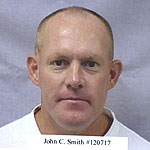
John Clayton Smith
Murderer Russell Ellwood
Murderer · USA · 1991
Russell Ellwood was a former taxi driver. Authorities suspected him of killing…
20 victims
Russell Ellwood
Murderer · USA · 1991
Russell Ellwood was a former taxi driver. Authorities suspected him of killing…
20 victims
 Robert Martines Perez
Murderer · USA · 1994
Name: Robert Martines Perez · Other name used in proceedings: Robert Martinez P…
15 victims
Robert Martines Perez
Murderer · USA · 1994
Name: Robert Martines Perez · Other name used in proceedings: Robert Martinez P…
15 victims
 Billy Frank Vickers
Murderer · USA · 1993
Billy Frank Vickers Vickers was executed by lethal injection in Texas on Januar…
14 victims
Billy Frank Vickers
Murderer · USA · 1993
Billy Frank Vickers Vickers was executed by lethal injection in Texas on Januar…
14 victims
 Azad Abdullah
Murderer · USA · 2002
Azad Abdullah Sentenced to death on November 2004 Azad Abdullah was accused of…
1 victim
Azad Abdullah
Murderer · USA · 2002
Azad Abdullah Sentenced to death on November 2004 Azad Abdullah was accused of…
1 victim
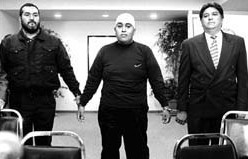 Alejandro Perez de la Rosa
Mass murderer · Mexico · 1996
December 3, 1996 — Yolanda Figueroa, her husband Fernando Balderas, and their t…
5 victims
Alejandro Perez de la Rosa
Mass murderer · Mexico · 1996
December 3, 1996 — Yolanda Figueroa, her husband Fernando Balderas, and their t…
5 victims
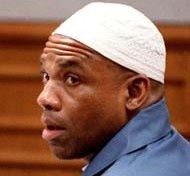 Leo Alexander Jones
Murderer · USA · 1981
Leo Alexander Jones (April 13, 1950 – March 24, 1998) was sentenced to death an…
1 victim
Leo Alexander Jones
Murderer · USA · 1981
Leo Alexander Jones (April 13, 1950 – March 24, 1998) was sentenced to death an…
1 victim
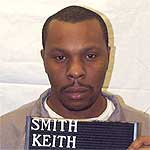 Keith Smith
Murderer · USA · 1991
Keith Smith was prosecuted in the case styled State of Missouri v. Keith A. Smi…
2 victims
Keith Smith
Murderer · USA · 1991
Keith Smith was prosecuted in the case styled State of Missouri v. Keith A. Smi…
2 victims
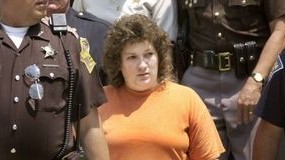 Judy Kirby
Mass murderer · USA · 2000
Judy Kirby was found guilty of murder for intentionally causing a head-on crash…
7 victims
Judy Kirby
Mass murderer · USA · 2000
Judy Kirby was found guilty of murder for intentionally causing a head-on crash…
7 victims
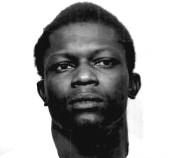 Charles Rector
Murderer · USA · 1974
Charles Rector was convicted in 1982 and sentenced to death for the murder of C…
2 victims
Charles Rector
Murderer · USA · 1974
Charles Rector was convicted in 1982 and sentenced to death for the murder of C…
2 victims
- Gender
- male
- Country
- USA
- Location
- Lewis County, Missouri, USA
- Date of birth
- March 1, 1962
- Age at first offence
- 35
- Characteristics
- revenge, alcohol, mentally ill
- Victim profile
- Brandie Kearnes, 22 (his ex-girlfriend) and Wayne Hoewing, 51 ( her step-father )
- Method of murder
- St abbing with knife
- Date(s) of murder
- July 4, 1997
- Years active
- 1997
- Date of arrest
- Same day
- Status
-
Executed
Executed by lethal injection in Missouri on October 29, 2003
Case details
John Clayton Smith was executed in Missouri by lethal injection on October 29, 2003.
Smith was a white man, and he was aged 41. He was scheduled to be executed in Missouri on 14 May 2003.
Victims
Smith murdered his former girlfriend, Brandie Kearnes, and Brandie Kearnes’s stepfather, Wayne Hoewing, in their home. Brandie Kearnes had an infant daughter, Tatum, who was found unharmed at the feet of Brandie Kearnes’s body.
Victim count: 2.
The offence
Smith attacked Brandie Kearnes and Wayne Hoewing in July 1997. Court documents stated that on July 4, 1997, Smith parked about 30 yards away from the house, entered through a basement door, took off his shoes, and went to the bedroom of Kearnes and attacked her with a knife. While she tried to run away, he grabbed and stabbed her numerous times. While she bled, Kearnes reportedly wrote “It was Joh--” on the kitchen floor.
Smith then went to the bedroom of Hoewing. He got on top of Hoewing on the bed and repeatedly stabbed him.
Hoewing’s wife, Yvonne Kurz (Brandie’s mother), managed to run into the bathroom. Meanwhile, the mortally wounded Hoewing somehow got a gun. Smith told him to shoot him, but Hoewing never fired.
After Smith left the house, Kurz called the police. Hoewing later died from loss of blood.
When police arrived, Brandie Kearnes was already dead; her child was unharmed and at her feet, court documents stated.
Medical personnel later treated Hoewing briefly, then pronounced him dead; he bled to death from stab or cut wounds inflicted on his chest, arms, leg, hand, and hip.
Court documents stated that Brandie Kearnes was stabbed or cut eight times. The wounds did not immediately cause her death; she had time to write “It was Joh-” “I Y Tatu-” and “--andi s-v- T-tum” on the kitchen floor with her own blood. The last two messages referred to Tatum.
A convenience store clerk said that Smith stopped in to purchase a 12-pack of beer before the murders.
Evidence and scene
Police noticed a trail of blood left by Smith as he left the house. One of Smith’s socks was recovered from under the body of Wayne Hoewing. Police found three beer cans outside of the residence and found the keys used by Smith to break into the house.
After being apprised several days after the murders of the messages written with blood on the kitchen floor, police seized the linoleum bearing those messages.
Police did not find any weapons at first, but later in July a worker at the farm where Smith attempted to steal a tractor found a knife hidden under some tin; the original owner identified it as the knife she had given to Smith.
Relatives of Wayne Hoewing found writing on the linoleum of the kitchen floor near where Brandie Kearnes had died. The writing read “It was Joh-” and “I Y Tatu-.”
A videotape taken during the initial police processing showed that the writing was present on the floor at that time even though investigators had not noticed it during initial processing.
Photographs of the linoleum and the messages were introduced at trial. The photographs showed the messages were present on the initial investigation.
Expert witness Don Lock testified that he had found three messages, “It was Joh-,” “I Y Tatu-,” and “--andi s-v- T-tum,” and that one message (“--andi s-v- T-tum”) was visible only when seen with the aid of laser light. Lock also testified that the messages were not written with an “assisted hand.”
Prior history and background
Court documents stated that Smith had a history of depression, bipolar disorder and anxiety.
Smith had been previously convicted of felony theft. Prosecutors stated he had a history of violence against women.
At trial, Smith’s ex-wife, Mary Smith, testified. The defense and the state discussed Smith’s mental condition and prior hospitalizations at mental health institutions.
Smith had prior hospitalizations at mental health institutions. The state cross-examined the defense expert regarding knowledge and facts surrounding prior hospitalizations, including choking his wife and fighting a co-worker.
The state also introduced certified copies of Smith’s prior convictions: felony stealing and violation of an order of protection.
Smith was highly medicated in prison. He made several suicide attempts while in prison.
Motive and disputes at the time
Smith and Brandie Kearnes had dated and made plans to live together. Smith borrowed $30,000 to buy a house for the couple to live in.
Around June 1, 1997, Brandie Kearnes terminated the relationship and chose to continue living with her mother, Yvonne Kurz, and her stepfather, Wayne Hoewing.
The court record stated that Smith contacted his former wife, Mary Smith, about visiting his children after Brandie Kearnes ended the relationship.
On the morning of July 4, 1997, Smith drove by O.C.’s Tavern in Canton and looked at Kearnes’s car parked next to the tavern since the night before. Smith telephoned Mary Smith and asked what she planned to do with the children. Smith said, “Everything.” When asked why, Smith replied, “Everything.” When asked whether he was having difficulties with Brandie, he said, “Just everything. I can’t talk about it now. I gotta go,” and hung up.
Smith telephoned Yvonne Kurz and asked whether Brandie had come home the night before; Kurz responded that she had not come home. Smith then asked, “She is seeing someone else, isn’t she?”
Later that afternoon, Smith followed Brandie to Brian Brooks’s house and pulled up behind her in the driveway. Brandie got out of her car and spoke to Smith for about three minutes, after which Smith left.
At 11:05 p.m. on July 4, 1997, Smith purchased a twelve-pack of beer at a convenience store in Canton. The store clerk said Smith was preoccupied and appeared to be in a “weird mood.”
After the killings, Smith tried to escape by stealing a tractor from a nearby farm. He went to the farm to hide the knife he used to kill. He stole a tractor, but crashed it into a flatbed trailer on the property and fled on foot. He then traveled to another nearby residence, where he stole a truck and drove away. Smith was later apprehended after crashing the truck.
Investigation and arrest
The trial evidence described police processing the residence, finding beer cans and keys used to break into the house, and noticing a blood trail as Smith left the home.
Officers later seized the linoleum bearing the blood-written messages after learning of them from investigators’ findings.
A knife used in the killings was later found at the farm under some tin.
Trial
Smith did not contest his identity as the killer. At trial, the defense presented the testimony of Dr. Michael Stacy, who testified that Smith’s capacity to deliberate before the killings was substantially impaired.
Dr. Stacy testified that Smith suffered from “Recurrent Major Depression and Personality Disorder (Not Otherwise Specified).” Dr. Stacy reviewed records of two prior hospitalizations. During cross-examination, the following exchange occurred without objection by Smith:
Q: You are aware and the records reflect the reasons why [appellant] checked himself into these units during that time, don’t they?
A: Yes, I believe so.
Q: And, in fact, one of the precipitating factors and one of the reasons why he checked himself into the hospital at that time was that his ex-wife filed for divorce and got an ex ex parte against him for choking her; isn’t that correct?
A: That’s correct.
Q: And from 1991 when he was divorced through until 1997, there were no hospitalizations, were there?
A: No, there were not.
Q: Now, doctor, it is important that the information you rely on is accurate and truthful and complete, isn’t it?
The state presented expert testimony to rebut Dr. Stacy’s diagnosis. The state called Dr. Jerome Peters, who testified that Smith was alcohol dependent and suffered from “narcissistic personality disorder with obsessive compulsive traits.” Dr. Peters testified:
It showed again the pervasive pattern throughout his life of this type of behavior where the self-centered behavior, exploiting those about them, taking advantage of them; and also coupled with that is the feeling of entitlement, the display of a great deal of entitlement, the scheduling of things. With a narcissistic personality everything revolves around them, not that they involve [sic] around the universe. They see themselves as the center of the universe. They are very self-centered and with that comes the behavior of an overwhelming arrogance, a condescension towards those about them. This is evidence by some of his behaviors in his employment records, that he exploited some workers, he displayed an arrogant behavior towards them and at times ended up in violence.
After an objection was overruled, Dr. Peters continued:
One episode is where he is standing in line to unload a truck and one person was taking a little bit too long. He ended up in physical violence towards that person. A lot of this goes to how the narcissistic personality sees things that occur and it is never his fault. It is always someone else’s fault. So, early on in development they blame others for what happens. They can never really blame themselves because this is their personality, this is how they do things. Thus, everything that isn’t right has got to be someone else’s fault. That is what occurred on the one episode when he assaulted a fellow truck driver.
A jury found Smith guilty on both counts of first-degree murder and both counts of armed criminal action.
Sentencing
During the penalty phase, the state introduced evidence of Smith’s prior violent history with women, his prior convictions for felony stealing and violating an order of protection, and the impact of the murders on the victims’ families.
Smith presented testimony in mitigation from friends and family and testimony of a mental health professional.
With respect to Brandie Kearnes, the jury found:
- the murder was committed while Smith was engaged in the commission of another unlawful homicide, and
- the murder was committed while Smith was engaged in the perpetration of a burglary.
With respect to Wayne Hoewing, the jury found the same aggravating circumstances applied. The jury also found that Wayne Hoewing’s murder involved depravity of mind in that the murder was wantonly vile, horrible, and inhuman.
The jury recommended a sentence of death on each count of murder in the first degree.
On July 6, 1999, the trial court imposed sentence in accordance with the jury’s recommendation, sentencing Smith to death on each first-degree murder count. The court also sentenced Smith to consecutive twenty-year terms in the department of corrections on the armed criminal action counts.
Appeals
Smith appealed his convictions and sentences.
Missouri Supreme Court review
The Missouri Supreme Court affirmed.
The opinion summary stated:
- The prosecutor was not disqualified based on conflict of interest. The prosecutor had defended Smith in a 1981 work permit revocation proceeding and on a 1983 felony stealing conviction. Evidence touching on both prior cases was admitted at trial, but the cases were not substantially related to the instant case. Smith conceded that if he faced any punishment but death he would not question the prosecutor’s ability to prosecute him, failing the conflict of interest standard in Rule 4-1.9. The court continued to follow its rule without creating an exception for first-degree murder cases where the death penalty is sought.
- Three jurors who could not sign a death verdict as foreperson, although they said they could consider the death penalty, were substantially impaired in considering the full range of punishment and performing their duties as jurors. They were properly stricken for cause.
- The court did not abuse its discretion when it sustained the state’s objection to defense counsel’s statements concerning the meaning of “life without parole.”
- A linoleum piece on which Brandie Kearnes wrote messages with her own blood shortly before she died, photographs of it, and testimony were admissible.
- Smith’s ex-wife’s testimony was admitted to contrast his behavior before the killing with the past to show deliberation.
- The state was permitted to cross-examine expert witnesses on knowledge of facts surrounding Smith’s prior hospitalizations, including choking his wife and fighting a co-worker. The court instructed the jury not to consider the testimony as evidence that Smith did or did not commit the acts charged against him.
- An officer’s statement that he advised Smith of his Miranda rights was not a comment that Smith failed to respond so as to warrant mistrial.
- The state’s closing arguments did not improperly suggest that jurors had to explain their decision to friends and family, did not imply a propensity to behave consistent with guilt, did not turn the prosecutor into an unsworn witness, and did not diminish jurors’ sense of responsibility.
- The court acknowledged error where the state failed to disclose non-statutory aggravating circumstances when requested, but found manifest injustice did not result.
- The record reflected the court considered only the facts and circumstances of Smith’s case in sentencing.
- The third aggravating circumstance was incorrectly drafted by directing the jury to consider whether the defendant entered the house to commit “a crime” without specifying murder; Smith was not prejudiced because only murder was evidenced and at least one other statutory aggravating circumstance supported the penalty.
- There was no error in admitting prior convictions and instructing the jury how to evaluate the evidence.
- The court properly admitted victim impact evidence without specific instruction.
- The court again rejected attacks on “depravity of mind” and “multiple murder” instructions.
- The case passed statutory proportionality review.
- The judgment of death sentences was affirmed.
The dissenting opinion summary stated that the dissent would grant a new trial because the prosecutor had a duty to disqualify himself. The dissenting opinion included the following verbatim passage:
In a fundamental way, the principal opinion damages the integrity of the legal profession. There is no dispute that the prosecutor in this case had represented Smith in two previous criminal cases as his defense attorney. Moreover, the prosecutor -- Smith's erstwhile defender -- used one of those convictions in persuading the jury to impose the death penalty on his former client. The fact is that he had a confidential relationship with Smith in which Smith was encouraged to disclose to the attorney the darkest secrets of his life. This fact, along with the fact that the death penalty was sought, makes such a dual representation unacceptable. As the principal opinion acknowledges, a defendant's previous criminal and antisocial conduct, along with the defendant's background, come into play in the prosecutor's decision as to whether to seek the death penalty. The prosecutor's failure to disqualify himself from representing the state against his former client poses a serious question, in a death penalty case, as to the integrity of the system under which Smith was tried.
Key trial claims discussed on appeal
Smith’s appeal included multiple points, including:
- the prosecutor’s alleged conflict of interest and failure to disqualify,
- the trial court’s decisions regarding juror eligibility for the death penalty,
- the trial court sustaining objections to defense counsel’s statements on “life without parole,”
- admission of the blood-written linoleum messages, photographs, and expert testimony,
- admission of Mary Smith’s testimony regarding contact with Smith’s children,
- admission of expert cross-examination references to choking his wife and fighting a co-worker,
- denial of a mistrial motion related to Officer Hall’s statement about advising Miranda rights,
- alleged improper prosecutor comments in guilt and penalty phase closing arguments,
- admission during penalty phase of testimony from Muriam Daniels and Mary Smith regarding serious violent encounters,
- victim impact testimony without instruction,
- the drafting error in the burglary aggravating circumstance instruction,
- and admission of certified copies of prior convictions during penalty phase.
Outcome
The Missouri Supreme Court affirmed Smith’s convictions and death sentences.
Smith gave up his appeals. In March 2003, the Missouri Supreme Court ruled that he was competent to volunteer for execution.
Aftermath
The state scheduled and carried out Smith’s execution by lethal injection in Missouri on October 29, 2003.
Smith had preferred death to life behind bars and had dropped further appeals against his conviction and death sentence.
Smith was seen mouthing the words “I’m sorry” to reporters and witnesses shortly after midnight as he lay in the execution room at Potosi Correctional Center.
Spotted an error, or have more information about this case?