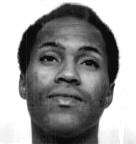
James Edward Smith
Murderer Brian Kevin Rosenfeld
Murderer · USA · 1985
Brian Kevin Rosenfeld Brian Kevin Rosenfeld was sentenced to three concurrent l…
23 victims
Brian Kevin Rosenfeld
Murderer · USA · 1985
Brian Kevin Rosenfeld Brian Kevin Rosenfeld was sentenced to three concurrent l…
23 victims
 Marvin Gray
Murderer · USA · 1975
Marvin Gray was convicted killer who claimed responsibility for 23 slayings and…
23 victims
Marvin Gray
Murderer · USA · 1975
Marvin Gray was convicted killer who claimed responsibility for 23 slayings and…
23 victims
 Yahweh ben Yahweh
Murderer · USA · 1980
Yahweh ben Yahweh was born and legally named Hulon Mitchell Jr. (October 27, 19…
23 victims
Yahweh ben Yahweh
Murderer · USA · 1980
Yahweh ben Yahweh was born and legally named Hulon Mitchell Jr. (October 27, 19…
23 victims
 Russell Ellwood
Murderer · USA · 1991
Russell Ellwood was a former taxi driver. Authorities suspected him of killing…
20 victims
Russell Ellwood
Murderer · USA · 1991
Russell Ellwood was a former taxi driver. Authorities suspected him of killing…
20 victims
 Jesse Clarence Pratt
Murderer · USA · 1986
Jesse Clarence Pratt was sentenced to death on February 22, 1988. His convictio…
1 victim
Jesse Clarence Pratt
Murderer · USA · 1986
Jesse Clarence Pratt was sentenced to death on February 22, 1988. His convictio…
1 victim
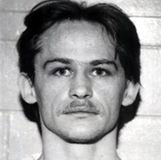 Andrew Six
Murderer · USA · 1984
Andrew Six Andrew Wessel Six was executed by lethal injection in Missouri on Au…
4 victims
Andrew Six
Murderer · USA · 1984
Andrew Six Andrew Wessel Six was executed by lethal injection in Missouri on Au…
4 victims
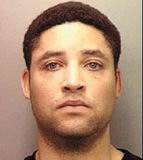 Troy Graves
Murderer · USA · 1998
Troy Graves was born May 4, 1972. He was an American serial rapist and murderer…
1 victim
Troy Graves
Murderer · USA · 1998
Troy Graves was born May 4, 1972. He was an American serial rapist and murderer…
1 victim
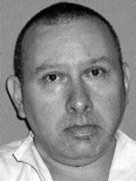 Donald Aldrich
Murderer · USA · 1993
Donald Loren Aldrich was a member of what became known as the “CB gang,” so nam…
1 victim
Donald Aldrich
Murderer · USA · 1993
Donald Loren Aldrich was a member of what became known as the “CB gang,” so nam…
1 victim
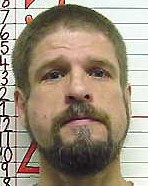 Jeffrey Tokar
Murderer · USA · 1992
March 11, 1992 — Jeffrey Tokar picked up his girlfriend, Sandra Stickley, share…
1 victim
Jeffrey Tokar
Murderer · USA · 1992
March 11, 1992 — Jeffrey Tokar picked up his girlfriend, Sandra Stickley, share…
1 victim
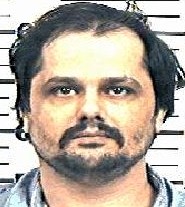 David Wayne Woodruff
Murderer · USA · 1985
David Wayne Woodruff. · July 19, 1986 — Woodruff and John Joseph Romano were ac…
2 victims
David Wayne Woodruff
Murderer · USA · 1985
David Wayne Woodruff. · July 19, 1986 — Woodruff and John Joseph Romano were ac…
2 victims
- Gender
- male
- Country
- USA
- Location
- Harris County, Texas, USA
- Date of birth
- October 19, 1952
- Age at first offence
- 31
- Characteristics
- robbery, drug addict
- Victim profile
- Larry D. Rohus ( insurance executive)
- Method of murder
- Shooting (handgun)
- Date(s) of murder
- March 7, 1983
- Years active
- 1983
- Date of arrest
- Same day
- Status
-
Executed
Executed by lethal injection in Texas on June 26, 1990
Case Overview
James Edward Smith (age 37) was executed in Texas by lethal injection on June 26, 1990. Smith fatally shot insurance executive Larry D. Rohus during a robbery inside a second-floor cashier's office near the Astrodome on March 7, 1983.
Smith waived his final appeals, but four U.S. Supreme Court justices decided there was serious doubt about his mental competency to make such a decision, and those four votes under court rules were enough to order a formal review. The justices were one vote shy of halting the execution. Justice William J. Brennan Jr. decried the situation, saying: “For the first time in recent memory, a man will be executed after the court has decided to hear his claim.”
The offence
On the afternoon of March 7, 1983, James Edward Smith entered the office of the Union Life Insurance Company armed and masked. He approached the window where Debra René Wilson was counting money from the cash drawer. Smith aimed and cocked his gun and demanded Wilson give him all of the money.
In a state of panic, Wilson ran behind a file cabinet. Larry Don Rohus proceeded to the window and handed Smith the money. Smith turned around, walked toward Wilson, and was ordered back to the window by Smith. Rohus began to plea for his life, but Smith was not satisfied. Smith shot Rohus in the upper left side of his chest, and the shot eventually killed him.
Smith began to flee the building but was tackled by an office worker, a work crew, and a business man in a nearby parking lot.
Background
Smith was a former tarot-card dealer in New Orleans working as a Houston taxi driver. He had been convicted of the capital murder of Larry Rohus and was sentenced to death by lethal injection.
Smith’s mother, Alexine Hamilton, sought to delay Smith’s execution. Six hours before the execution, Hamilton won her son a reprieve from the U.S. Supreme Court. She claimed Smith suffered from mental problems and was not competent enough to wave his own appeal. Despite Hamilton’s attempt to delay his execution, Smith insisted he was ready to die. Smith claimed he wanted to leave the material world and return to the spiritual world. He repeatedly claimed he was innocent, but he did not want to spend the rest of his life on death row. He resisted all attempts for legal help because he saw no hope that the courts would overturn his execution. He fought for his right to die.
Hamilton recalled that Smith was a loving and kind child until he began practicing black magic, voodooism and witchcraft. Smith claimed he had participated in six ritualistic killings prior to his arrest.
Smith claimed that “a corpse of a one-year-old infant was thrown on a bridge after being beheaded as a sacrifice to a voodoo god.”
In his final statement, Smith said: “I myself did not kill anyone, but I go to my death without begging for my life. I will not humiliate myself. I will let no man break me.” He then smiled, winked and said, “Hare Krishna.” Smith claimed to have been a former follower of the Hare Krishna belief as well as a former voodoo priest.
Investigation and arrest
After Smith fled the building following the shooting of Larry Don Rohus, he was tackled by an office worker, a work crew, and a business man in a nearby parking lot.
Trial
Smith was convicted of the capital murder of Larry Rohus in the Texas courts.
Smith’s conviction and sentence were affirmed by the Texas Court of Criminal Appeals in Smith v. State, 744 S.W.2d 86 (Tex.Crim.App.1987).
Sentencing
Smith was sentenced to death by lethal injection in 1984.
In March 1988, the state trial court scheduled Smith’s execution for May 11, 1988.
At the time of scheduling, Smith indicated his desire to waive further attacks on his conviction and sentence. In April 1988, he filed with the state trial court and the Court of Criminal Appeals an affidavit expressing the same desire and rejecting any attempts which might be made by third parties to try to stop his execution.
Appeals and competency litigation
Smith’s execution was addressed through multiple legal proceedings focused on the question of his mental competency to waive further remedies.
State proceedings and rescheduling
On May 5, 1988, Hamilton filed in the Court of Criminal Appeals an emergency application to stay execution and for habeas corpus as Smith’s next friend, alleging that he was incompetent. The state responded by filing evaluations of April 14, 1988 by Doctors Blevins and Morgan, psychologists at the Texas Department of Corrections, indicating that, although Smith might have suicidal tendencies, he was competent.
The Court of Criminal Appeals denied relief, and Hamilton sought certiorari in the United States Supreme Court. On May 10, 1988, the Supreme Court stayed Smith’s execution (Hamilton v. Texas, 485 U.S. 1042, 108 S.Ct. 1761, 100 L.Ed.2d 187 (1988)). The petition for certiorari was denied on April 3, 1990, and the stay dissolved (Hamilton v. Texas, --- U.S. ----, 110 S.Ct. 1958, 109 L.Ed.2d 320 (1990)). The proceedings also referenced that on June 3, 1990, the Supreme Court denied rehearing.
On May 17, 1990, Smith appeared before the state trial court, which determined that he was still adamant in his desire not to pursue any remedies in respect to his conviction and sentence and not to be represented by counsel. As a precautionary measure, the trial court ordered Smith examined by a psychologist and psychiatrist to determine his competency to make such a decision under the standards set forth by this Court in Rumbaugh v. Procunier, 753 F.2d 395, 398 (5th Cir.), cert. denied, 473 U.S. 919, 105 S.Ct. 3544, 87 L.Ed.2d 668 (1985).
Accordingly, Smith was examined on May 18 by Dr. Brown, a psychologist, and Dr. Ganc, a psychiatrist. Their letter reports, each dated May 21, 1990, were furnished to the trial court and found Smith competent under the Rumbaugh standards.
On May 23, 1990, the state trial court found Smith competent on the basis of these reports and that Smith continued in his firm position that he did not desire to challenge his conviction or sentence. Consequently, on that date, the trial court scheduled Smith’s execution for June 26, 1990.
Federal habeas application and reconsideration
On June 20, 1990, Hamilton filed in the state trial court and Court of Criminal Appeals an application for stay of execution and for habeas relief on Smith’s behalf as his purported next friend, asserting that he was incompetent. The application relied primarily on a June 1990 affidavit of a Florida psychologist, Dr. Carbonnel. She had never seen or examined Smith, but relied principally on certain May 1978 reports from Florida psychiatrists, Dr. Mutter and Dr. Corwin, and Dr. Reichenberg, a Florida psychologist.
Presumably because of those reports, in July 1978, a Florida court had found Smith not guilty by reason of insanity of the offense of robbery that had apparently been committed in February 1978. The Florida judgment directed that Smith receive out-patient psychiatric treatment at a local clinic. The Florida mental health professionals’ reports were directed to the local public defender.
Two sets of mental competency examinations were performed on order of the state trial court, each at the request of defense counsel, who was aware of the fact that Smith had been found not guilty by reason of insanity by the Florida court in 1978. The first set was conducted in June 1983 by Dr. Nottingham, a psychiatrist, and by the above-mentioned Dr. Brown; Dr. Brown and Dr. Nottingham also conducted the second set in February 1984. In each instance, each doctor found that Smith was competent.
On June 21, 1990, the state trial court, having received the state’s response to Hamilton’s habeas petition, entered written findings and conclusions recommending the Court of Criminal Appeals deny the petition because it found that Smith was competent under the Rumbaugh standards and also was sane under Ford v. Wainwright standards, 477 U.S. 399, 106 S.Ct. 2595, 91 L.Ed.2d 335 (1986). The state trial court relied on reports of Doctors Ganc, Brown, and Nottingham. It found Dr. Carbonnel’s affidavit improperly authenticated, but concluded that if it had been properly authenticated, it would not change the result because she had never seen Smith and because the reports she relied on were twelve years old. The state trial court also relied on its observations of Smith in open court on numerous occasions, most recently twice in May 1990.
On June 22, 1990, the Court of Criminal Appeals (one justice dissenting) entered a written order stating that the state trial court’s findings and conclusions were supported by the record and ordered Hamilton’s application for habeas relief dismissed.
Hamilton filed the federal habeas application with the federal district court on June 23, 1990, relying on essentially the same matters presented in the state courts. Hamilton also relied on the July 1, 1985 order denying Smith the right to dismiss his counsel in connection with the direct appeal, in which the court said Smith was incompetent to proceed pro se.
On June 24, 1990, the district court dismissed Hamilton’s application on the ground that the state court determinations that Smith was competent were fairly supported by the record and binding under Demosthenes v. Baal, --- U.S. ----, 110 S.Ct. 2223, 109 L.Ed.2d 762 (1990). Later the same day, Hamilton filed a motion for reconsideration supported by the affidavit of Dr. Brown. Dr. Brown stated he was now aware of certain information he had not previously been aware of: the May 1978 reports of Doctors Mutter, Corwin, and Reichenberg; the July 1985 finding about pro se representation on appeal; and a newspaper article.
Dr. Brown said: “may be significant to a current evaluation of Mr. Smith’s competency,” that “I cannot be certain that my recent conclusion that Mr. Smith is competent would have been the same had I been aware of the [above-described] information,” and that “in order to determine Mr. Smith’s current competency further psychological evaluation, including interviewing and testing, in light of the above information, is required.”
The district court denied reconsideration. The district court concluded that the July 1985 order was not based on mental incompetency, but rather a desire to ensure Smith had adequate legal representation on direct appeal. It also concluded that Dr. Brown’s most recent affidavit did not say that Smith was incompetent, that Dr. Brown was not the only basis for the state court’s determination of competency, and that even without Dr. Brown the determination was fairly supported by the record.
Hamilton then filed a motion for reconsideration in the Court of Criminal Appeals and in the state trial court, likewise based on Dr. Brown’s June 24 affidavit.
Additional competency re-examination and findings
On June 25, 1990, the state trial court had Dr. Brown reexamine Smith and received Dr. Brown’s affidavit concerning the results of his reexamination of Smith on June 25, 1990. In the affidavit, Dr. Brown stated: “Having now re-evaluated James Edward Smith in light of the foregoing information, I have concluded that Mr. Smith does not exhibit any signs of mental illness or mental defect, that he is capable of making a rational choice among his legal options, and that he is fully aware of his legal options. Additionally, Mr. Smith is fully aware that his execution is scheduled for sometime past midnight tonight on June 26, 1990 and the reasons for his punishment or execution. Mr. Smith did not exhibit any evidence of suicidal ideation, any signs of a psychotic process and any evidence of delusional religious beliefs. Finally, I did not find any evidence of cognitive deficit that might be attributed to brain damage or organic brain syndrome.”
The state trial court, on June 25, having considered Dr. Brown’s June 25 affidavit, entered supplemental written findings of fact and conclusions of law reaffirming its original findings of June 21, 1990. It found Smith competent in all respects under the Rumbaugh standards and the Ford v. Wainwright standards. It also found no jurisdiction to entertain Hamilton’s petition and motions as next friend and recommended that the Court of Criminal Appeals dismiss Hamilton’s pleadings. The Court of Criminal Appeals dismissed Hamilton’s motion for reconsideration in a June 25, 1990 written order.
Outcome in the U.S. Court of Appeals for the Fifth Circuit
United States Court of Appeals For the Fifth Circuit, 905 F.2d 825.
The case caption listed Alexzene HAMILTON, As Natural Mother and Next Friend to James Edward Smith, Petitioner-Appellant, v. James A. COLLINS, Director, Texas Department of Criminal Justice, Institutional Division, Respondent-Appellee.
On June 25, 1990, the order addressed Hamilton’s motion for a stay of Smith’s execution, presently set for 12:01 a.m., June 26, 1990, and Hamilton’s appeal from the district court’s orders of June 24, 1990 dismissing Hamilton’s habeas petition for lack of standing and denying reconsideration. The order noted that on June 25, 1990, the district court granted Hamilton’s request for certificate of probable cause but denied the request for stay of execution.
The Court of Appeals concluded that the district court correctly determined that Hamilton lacked standing, denied the request for stay of execution, affirmed the dismissal of Hamilton’s habeas petition, denied certificate of probable cause, and held that the district court erred in granting the certificate of probable cause. It affirmed the district court’s dismissal and denied Hamilton’s motion for a stay of execution.
The order stated: “We conclude that the district court was clearly correct in dismissing Hamilton’s application because the state court findings of June 21, June 22, and June 25, 1990 that Smith was and is competent in the relevant legal sense are fairly supported by the record and are hence binding on us under Baal.” It also stated the affidavit of Dr. Carbonnel did not require a different conclusion because she had never examined Smith and relied primarily on May 1978 reports.
The order additionally stated that one of the 1978 reports of Dr. Mutter clearly found Smith competent to stand trial, and that this view was accepted by the Florida court because it tried Smith and acquitted him by reason of insanity at the time of the offense. The order further noted the Florida court did not order Smith committed to an in-patient institution, but only to out-patient care.
The order noted defense counsel in the present case was aware of the Florida court order and had competency examinations ordered by the trial court and performed in 1983 and 1984, with Smith found competent to stand trial. The order stated that in the direct appeal, though counsel raised several points, there was no complaint that Smith was not competent. It also stated that the state court conducting Smith’s trial considered him competent.
The order stated that the 1988 reports of Doctors Morgan and Blevins supported the finding of competency. It held that the July 1985 order concerning representation on appeal was not based on any determination of mental incompetency in the sense of Rumbaugh or Ford v. Wainwright, but was an effort to ensure Smith was represented by counsel on appeal, and that no medical evidence was considered for that order.
The order concluded: “Under Baal, it is clear there are no grounds for a stay of execution or a certificate of probable cause.” It further stated: “The district court clearly erred in issuing a certificate of probable cause. See Johnson v. Cabana, 818 F.2d 333 (5th Cir.), cert. denied, 481 U.S. 1061, 107 S.Ct. 2207, 95 L.Ed.2d 861 (1987).” It stated that “The district court’s dismissal of Hamilton’s habeas application is AFFIRMED. Hamilton’s motion for a stay of execution is DENIED.”
Timeline
- March 7, 1983 — Smith entered the office of the Union Life Insurance Company armed and masked; he demanded money from Debra René Wilson and fatally shot Larry Don Rohus during the robbery near the Astrodome.
- 1984 — Smith was sentenced to death by lethal injection.
- 1987 — Smith’s conviction and sentence were affirmed by the Texas Court of Criminal Appeals in Smith v.
- March 1988 — The state trial court scheduled Smith’s execution for May 11, 1988.
- April 1988 — Smith filed affidavits expressing his desire to waive further attacks on his conviction and sentence and rejecting attempts by third parties to stop his execution.
- May 5, 1988 — Hamilton filed an emergency application to stay execution and for habeas corpus in the Court of Criminal Appeals as Smith’s next friend, alleging Smith was incompetent.
- April 14, 1988 — Doctors Blevins and Morgan evaluated Smith and indicated he was competent despite possible suicidal tendencies.
- May 10, 1988 — The Supreme Court stayed Smith’s execution in Hamilton v. Texas, 485 U.S. 1042.
- July 1, 1985 — The state trial court denied Smith the right to dismiss his counsel in connection with direct appeal and said Smith was incompetent to proceed pro se.
- May 10, 1988 — Hamilton v. Texas stayed Smith’s execution.
- April 3, 1990 — The petition for certiorari was denied and the stay dissolved in Hamilton v. Texas, --- U.S. ----, 110 S.Ct. 1958, 109 L.Ed.2d 320 (1990).
- June 3, 1990 — The Supreme Court denied rehearing.
- May 17, 1990 — Smith appeared before the state trial court; the court found him adamant about waiving remedies and not being represented by counsel.
- May 18, 1990 — Smith was examined by Dr. Brown and Dr. Ganc.
- May 21, 1990 — Dr. Brown and Dr. Ganc issued letter reports finding Smith competent under Rumbaugh standards.
- May 23, 1990 — The state trial court found Smith competent and scheduled execution for June 26, 1990.
- June 20, 1990 — Hamilton filed applications for stay and habeas relief as Smith’s next friend, asserting incompetence, relying on Dr. Carbonnel’s June 1990 affidavit and earlier Florida reports.
- June 21, 1990 — The state trial court entered written findings and conclusions recommending denial of Hamilton’s habeas petition.
- June 22, 1990 — The Court of Criminal Appeals dismissed Hamilton’s application for habeas relief.
- June 23, 1990 — Hamilton filed the federal habeas application in the district court.
- June 24, 1990 — The district court dismissed Hamilton’s application; the district court denied reconsideration.
- June 25, 1990 — The state trial court reexamined Smith via Dr. Brown, entered supplemental findings of fact and conclusions of law, and the Court of Criminal Appeals dismissed Hamilton’s motion for reconsideration.
- June 26, 1990 — Smith was executed by lethal injection in Texas.
Other details
Six hours before the execution, Hamilton won a reprieve from the U.S. Supreme Court. After the Supreme Court action, the justices were one vote shy of halting the execution, leaving the execution to proceed.
Smith received yogurt as his last meal on June 25, 1990. He originally asked for rhaeakunda dirt, described as often associated with voodoo rituals, which he said he would use to mark his body so that the spirit would move on and not become a ghost.
The execution was carried out despite the Supreme Court’s decision to hear Smith’s claim due to serious doubt about his mental competency to waive further appeals. Before he died, Smith warned prison officials that his ghost would haunt over Huntsville for another 300 years.
Spotted an error, or have more information about this case?