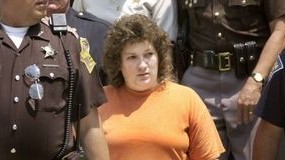
Judy Kirby
Mass murderer Jennifer San Marco
Mass murderer · USA · 2006
Jennifer San Marco (December 6, 1961 – January 30, 2006) was a former US Postal…
7 victims
Jennifer San Marco
Mass murderer · USA · 2006
Jennifer San Marco (December 6, 1961 – January 30, 2006) was a former US Postal…
7 victims
 Khoua Her
Mass murderer · USA · 1998
Khoua Her pleaded guilty and received a sentence of 50 years in prison with no…
6 victims
Khoua Her
Mass murderer · USA · 1998
Khoua Her pleaded guilty and received a sentence of 50 years in prison with no…
6 victims
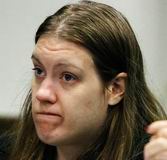 Michele Anderson
Mass murderer · USA · 2007
Michele Kristen Anderson was charged in connection with the Carnation Massacre,…
6 victims
Michele Anderson
Mass murderer · USA · 2007
Michele Kristen Anderson was charged in connection with the Carnation Massacre,…
6 victims
 Susan Hendricks
Mass murderer · USA · 2006
Susan Hendricks was accused of killing four members of her own family in order…
5 victims
Susan Hendricks
Mass murderer · USA · 2006
Susan Hendricks was accused of killing four members of her own family in order…
5 victims
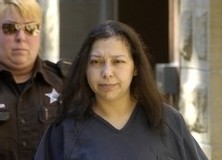 Angelica Alvarez
Mass murderer · USA · 2006
Angelica Alvarez was 27 years old. She was described as an Elkhart County mothe…
4 victims
Angelica Alvarez
Mass murderer · USA · 2006
Angelica Alvarez was 27 years old. She was described as an Elkhart County mothe…
4 victims
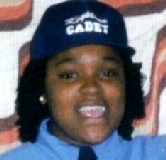 Leisa Jones
Mass murderer · USA · 2010
Leisa Jones died in a fire that she set intentionally in a second-floor apartme…
4 victims
Leisa Jones
Mass murderer · USA · 2010
Leisa Jones died in a fire that she set intentionally in a second-floor apartme…
4 victims
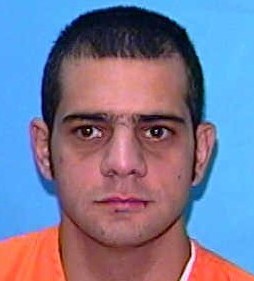 Anthony Farina
Murderer · USA · 1992
Anthony Farina (born 11/20/73) was tried in the Seventh Judicial Circuit, Volus…
1 victim
Anthony Farina
Murderer · USA · 1992
Anthony Farina (born 11/20/73) was tried in the Seventh Judicial Circuit, Volus…
1 victim
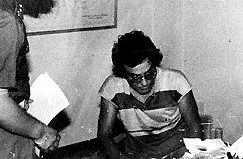 Giancarlo Giudice
—
Defendant: Giancarlo Giudice · Victim profile: Prostitutas italianas (incluyend…
Giancarlo Giudice
—
Defendant: Giancarlo Giudice · Victim profile: Prostitutas italianas (incluyend…
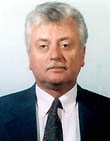 Bennie Lawson
Murderer · USA · 1994
Bennie Lawson was a “street thug” who was described as having been concerned ab…
3 victims
Bennie Lawson
Murderer · USA · 1994
Bennie Lawson was a “street thug” who was described as having been concerned ab…
3 victims
 Phillip Lee Ingle
Murderer · USA · 1991
Defendant: Phillip Lee Ingle (34) · Victims (Rutherford County murders): Willia…
4 victims
Phillip Lee Ingle
Murderer · USA · 1991
Defendant: Phillip Lee Ingle (34) · Victims (Rutherford County murders): Willia…
4 victims
 Robert Alton Harris
Murderer · USA · 1978
Robert Alton Harris was an American career criminal and murderer who was execut…
2 victims
Robert Alton Harris
Murderer · USA · 1978
Robert Alton Harris was an American career criminal and murderer who was execut…
2 victims
- Gender
- female
- Country
- USA
- Location
- Martinsville, Morgan County, Indiana, USA
- Date of birth
- November 14, 1968
- Age at first offence
- 32
- Characteristics
- murder for hire, torture, the bodies were never found
- Victim profile
- T hree of her children: Jacob, 5, Joney, 9, Jordan, 12; Kirby's nephew, Jeremy Young, 10; Thomas Reel, 40; his son Bradley, 13, and daughter, Jessica, 14
- Method of murder
- Intentionally head-on crash
- Date(s) of murder
- March 25, 2000
- Years active
- 2000
- Date of arrest
- April 14, 2000
- Status
-
Imprisoned
Sentenced to 215 years in prison on June 13, 2001
Case overview
Judy Kirby was found guilty of murder for intentionally causing a head-on crash that killed seven people. The conviction covered seven counts of murder, along with convictions for neglect of a dependent resulting in serious bodily injury and aggravated battery.
Kirby drove her car toward the collision that took the lives of seven people. The verdict came May 10, 2001 after a 12-day trial in which 114 witnesses were called. On June 13, she was sentenced to 215 years in prison.
People
- Judy Kirby — defendant
- Jacob Kirby — child killed (age 5)
- Joney Kirby — child killed (age 9)
- Jordan Kirby — child killed (age 12)
- Jeremy Young — Kirby’s nephew; killed (age 10)
- Thomas Reel — van driver; killed (age 40)
- Bradley Reel — child killed (age 13)
- Jesica Reel — child killed (age 14)
- Richard Miller — van passenger; injured and suffered permanent impairment of his back and right foot (age 13)
- Jeannetta Scott — Kirby’s sister (Greenwood residence)
- Tinnie Kirby — Kirby’s ex-husband; testified about statements Kirby made
- Tom Reel — referenced as “Tom Reel”
- Louise Reel — Tom Reel’s widow; made statements outside the courthouse
- Morgan Superior Court Judge Jane Spencer Craney — presided over the trial; ruled on evidentiary issues and instructed the jury
- Defense counsel Jennifer Auger — represented Kirby
- Defense attorney Tom Jones — represented Kirby
- Prosecutor Terry Iacoli — deputy prosecutor
- Deputy Prosecutor Terry Iacoli — described in trial account as presenting closing argument
- Detective Rick Lane — State Trooper referenced in relation to a tape-recorded police statement
- Detective Rick Lang — Indiana State Police (in appellate discussion of separation of witnesses)
- Detective Scott Hamilton — Morgan County Sheriff’s Department (in appellate discussion of separation of witnesses)
- Prosecutor Terry Iacoli — referenced again in appellate account as well
- State of Indiana — appellee in appeal
- Steve Carter — Attorney General of Indiana (appellate)
- James B. Martin — Deputy Attorney General (appellate)
- Jennifer Jones Auger — attorney for appellant listed in appellate caption
Timeline
- March 25, 2000 — Kirby entered Ind. 67 from the wrong direction; her car eventually collided head-on with a van driven by Thomas Reel; seven people died at the scene.
- April 14, 2000 — Police arrested Judy Kirby and charged her with seven counts of murder, four felony counts of child neglect causing serious bodily injury, and one count of aggravated battery.
- April 23, 2001 — Kirby’s trial began in Morgan Superior Court; Judge Jane Spencer Craney presided.
- May 10, 2001 — Final arguments concluded and the verdict was murder on all seven counts.
- June 13, 2001 — Kirby was sentenced to an aggregate two hundred and fifteen year term of incarceration.
- March 16, 2001 — The jury selection process began in Dearborn County.
- August 29, 2002 — The Court of Appeals of Indiana issued an opinion affirming the convictions and sentences in Kirby v. State (No. 55A01-0109-CR-335).
The offence
Kirby had four of her children in her 1989 Pontiac Firebird. On March 25, 2000, she entered Ind. 67 going in the wrong direction and traveled southbound motorists off the highway. Witnesses said she appeared to make no attempt to stop or turn around.
Witnesses described Kirby’s driving as continuing wrong-way travel and accelerating as she met oncoming traffic. Multiple motorists described having to take evasive action to avoid colliding with Kirby. Several “wrong way” traffic signs and “do not enter” signs were passed by Kirby, and an emergency lane was available for getting out of the way.
Eventually, Kirby’s car collided head-on with a van driven by Thomas Reel of Martinsville. The impact on a divided highway shattered both vehicles. Emergency workers described being stunned by the extent of damage.
Victims and fatalities
- In Kirby’s car:
- Jacob Kirby (5) — killed
- Joney Kirby (9) — killed
- Jordan Kirby (12) — killed
- Jeremy Young (10) — killed (Kirby’s nephew)
- In the Reel van:
- Thomas Reel (40) — killed
- Bradley Reel (13) — killed
- Jesica Reel (14) — killed
- The van passenger Richard Miller (13) — was taken to Methodist Hospital in Indianapolis; he was injured and suffered permanent impairment of his back and right foot.
Kirby was thrown from her car and suffered a closed head injury and various orthopedic injuries.
Investigation
Investigators pieced together Kirby’s activities leading to the wreck through interviews with family members and others who encountered Judy Kirby on March 25, 2000.
Events on the day of the crash (investigative sequence)
- 11:30 a.m. — Kirby, accompanied by nephew Jeremy Young celebrating his 10th birthday, left her Southside Indianapolis home for her sister’s home in Acton to pick up children Joney Kirby (9), Jacob Kirby (5), and Jordan Kirby (12).
- Noon — arrived at the home of sister Jeannetta Scott; left about 2 p.m. with all four children.
- Scott followed as they drove to Toys R Us in Greenwood to buy a present for Jeremy’s birthday.
- 2:30 p.m. — Scott lost track of Kirby when Kirby stopped in traffic on Southport Road; Scott turned around to go back and was unable to find her.
- 3 p.m. to 3:30 p.m. — a man working in his yard on Ralston Road, west of Mann Road, saw Kirby when she stopped her car in front of his house; he reported she stared at him for a few minutes and then left.
- 3:30 p.m. to 4 p.m. — two women saw Kirby’s car stop in traffic at High School and Thompson roads; they asked if there was a problem and loaned Kirby a cell phone; Kirby drove off and returned about two minutes later with the phone; she left driving on High School Road toward Kentucky Avenue.
- 4 p.m. — Kirby showed up at a baby shower in the clubhouse at Valley Brook Mobile Home Park on High School Road just west of Kentucky Avenue; witnesses said Kirby stated: “I need help.” When asked what type of help, she replied: “I need a birthday party.” People at the shower thought Kirby might be looking for a gathering at the park’s other clubhouse and gave directions there.
- 4:10 p.m. to 4:45 p.m. — no reported sightings as Kirby drove 21.5 miles to Martinsville.
- 4:45 p.m. — Kirby arrived at a Speedway gas station at the edge of Martinsville; store security video showed Kirby and four children enter the station, pay for $3 in gasoline, and buy candy bars; an attendant reported Kirby sat in the car for several minutes before going inside to pay, and she was unable to activate the gas pump, so the attendant assisted her.
- 4:55 p.m. — witnesses began reporting a white car entered southbound lanes of Ind. 67 at the exit ramp on Pumpkinvine Hill Road, driving the wrong way on the highway; it was reported to be traveling at high speed with estimates varying between 55 mph and 100 mph; one witness described seeing: “a small boy in the front seat who looked to be on his knees, his hands outstretched to the dash as if he was holding on, and the driver's blond hair was blowing in the wind.” Other witnesses reported Kirby did not appear to slow or take evasive action as she met oncoming vehicles.
- 4:57 p.m. — Kirby’s car collided head-on with a van driven by Thomas Reel (40) of Martinsville; witnesses described the collision as a “horrific, spectacular explosion.”
A later investigation of Kirby’s car indicated brake lights were not “on” at the time of impact. It was also noted that nine motorists had to take evasive action and one motorist continually blew her horn to alert Kirby.
In the appellate account, additional details were described about motorists stopping Kirby, providing a cordless telephone, calling 9-1-1, and observing Kirby sitting in a driveway staring straight ahead for approximately five minutes before driving off.
Arrest and charges
On April 14, 2000, police arrested Judy Kirby and charged her with:
- seven counts of murder
- four felony counts of child neglect causing serious bodily injury
- one count of aggravated battery
The State of Indiana charged Kirby with 7 counts of murder, 4 counts of neglect, and 1 count of aggravated battery in connection with the March 25 incident when she drove north on the southbound lane of Ind. 67 in Morgan County and ran head-on into a van driven by Tom Reel traveling with two children and family friend Richard Miller.
Trial
Trial dates and forum
- Jury selection began March 16 in Dearborn County.
- Trial began April 23, 2001 in Morgan County Superior Court, presided over by Judge Jane Spencer Craney.
Jurors were taken to view the site where the crash occurred. Witnesses described carnage at the scene, including rescue workers who were stunned.
Defence and prosecution theories
The defense did not deny that Kirby drove the wrong way, but disputed the motivations for the fatal journey. The defense argued Kirby had an undiagnosed thyroid problem that made her lose touch with reality. The defense attorney argued she was a “very sick woman” who was misdiagnosed and improperly treated, and that she loved her children and would never have intentionally harmed them.
Prosecutors argued Kirby was suicidal and made a conscious decision to drive her car into oncoming traffic. Prosecutors presented testimony and expert evidence that Kirby’s strange behavior before the crash would not have been the result of a thyroid disorder.
Evidence disputes and rulings
On March 6, 2001, Judge Jane Spencer Craney ruled that the prosecution would not be allowed to present evidence that Kirby may have been involved in interstate drug trafficking. The judge did allow use of information about Kirby’s hospitalization for depression.
In the appellate decision, the central contested issue was described as Kirby’s state of mind on March 25, 2000.
Witness and counsel statements / quotations
During closing argument, Deputy Prosecutor Terry Iacoli used a dramatic pause lasting 87 seconds to illustrate time Kirby had to pull over after turning the wrong way.
In the closing argument account, the following quotations were included:
- Prosecutor Terry Iacoli said: “Back on March 25, ” and later: “Judy Kirby was in control and held nine lives in her hands.”
- Prosecutor Terry Iacoli said: “She had nerves of steel,” and: “Imagine that for 87 seconds... cars coming at you, swerving, trying to get you to stop. Nine vehicles. (Kirby) knows they can't all avoid her, so she goes faster and faster. She nails it.”
- Prosecutor Terry Iacoli said: “We are confident that when you look at the evidence... you will find that on March 25, 2000 Judy Kirby did exactly what all her friends and family were afraid she would set out to do: commit suicide,”
The defense closing also included:
- Defense attorney Tom Jones described Kirby as “a very sick woman who was misdiagnosed and improperly treated.”
- Defense attorney Tom Jones said Kirby loved her children and would never have intentionally harmed them.
- Defense attorney Jennifer Auger told the jury: “Justice demands that she is not guilty of murder, neglect and battery.”
- Jennifer Auger told the jury: “If you think at the end of the day (Kirby) was unable to process information,”
A tape-recorded police statement was described as part of the defense’s closing:
- Kirby told police (in an emotional, tape-recorded police statement to State Trooper Rick Lane) : “I want to know why,” “I want to know why. I love my babies. I wouldn't do nothing to hurt my babies. I swear to God in Heaven I wouldn't. I wouldn't. I swear to God that is all I love. None of my babies.”
Jury deliberation and verdict
The jury deliberated ten hours that evening and the next morning before coming to a verdict of murder on all seven counts.
Judge Craney instructed the jury on deliberation and reiterated Indiana laws requiring voluntary killing to be guilty of murder, described as behavior that is an act of choice. The judge ordered the jury not to be swayed by graphic photos and that deliberation was beyond a reasonable doubt, and stated: “Prepare yourself for a long, serious deliberation,” and “I am prepared to allow several days for deliberation before I take steps to declare a mistrial.”
After both sides finished arguments, Tom Reel’s widow Louise told reporters: “She took my family from me,” and “I hope they're not going to let her go because she did something horrible.”
Final arguments and verdict timing
Final arguments concluded on May 10, 2001 in Morgan County Superior Court, after two weeks of arguments in the multiple murder trial. Kirby was on trial for an incident occurring March 25, when she drove her white Firebird north on the southbound lane of Ind. 67 in Morgan County and ran head-on into a van driven by Martinsville resident Tom Reel. The jury convicted her of murder on all seven counts.
Sentencing
At sentencing, Judge Jane Spencer Craney merged the four convictions of neglect of a dependent resulting in serious bodily injury as class B felonies into the murder convictions of the Children.
The trial court sentenced Kirby to:
- sixty-five years each for the three murders of the Reels
- fifty-five years each for the four murders of the Children
- twenty years for aggravated battery of Miller
The trial court ordered that:
- the sentences for the murders of the Reels be served consecutively to each other and to the sentence for aggravated battery of Miller
- the sentences for the murders of the Children be served concurrently to each other and to all other sentences
This produced an aggregate two hundred and fifteen year term of incarceration.
In the appellate decision, the trial court’s aggravating circumstances included:
- the “horrific” nature and circumstances of the crimes
- several victims being less than twelve years of age
- Kirby being in a position of trust to four of the victims
The trial court also considered a requested minimum sentence and found as an aggravator that the imposition of a reduced sentence would depreciate the seriousness of the offenses.
The appellate opinion also described the mitigating circumstances that the trial court considered:
- the crimes were the result of circumstances unlikely to recur
- Kirby was suffering from mental health issues
- Kirby acted under strong provocation of another
- Kirby’s imprisonment would result in undue hardship to her dependents
Appeals
Kirby appealed her convictions for:
- seven counts of murder as felonies
- four counts of neglect of a dependent resulting in serious bodily injury as class B felonies
- one count of aggravated battery as a class B felony
She also appealed her sentences for seven counts of murder and one count of aggravated battery.
Appellate court
The Court of Appeals of Indiana decided Kirby v. State, No. 55A01-0109-CR-335, and issued an opinion affirming.
Issues raised and rulings in appeal
Kirby raised seven issues, consolidated and restated as: I. whether the trial court erred by denying her motion to dismiss under Ind. Criminal Rule 4(B) for failure to bring her to trial within seventy days II. whether the trial court abused its discretion by admitting prior bad acts under Ind. Evidence Rule 404(b) III. whether the trial court abused its discretion by denying two motions for mistrial based on prosecutorial misconduct IV. whether the trial court abused its discretion by failing to give a circumstantial evidence instruction V. whether the trial court abused its discretion by allowing two officers to remain in the courtroom despite a separation of witnesses order VI. whether her sentence was manifestly unreasonable in light of the offenses and the character of the offender
The appellate opinion stated: “We affirm.”
Summary of contested points
- The appellate court found no error in denial of the motion to dismiss under Rule 4(B), concluding the delay from a continuance was properly attributed.
- The appellate court found the Rule 404(b) admission claim waived due to lack of contemporaneous objection; it also stated it would not reverse on the merits, citing relevance to state of mind.
- The appellate court addressed prosecutorial misconduct claims, including:
- an alleged comment about Kirby’s right not to testify and the court’s determination it did not place her in grave peril
- an alleged “evidentiary harpoon” in opening statement and the trial court’s admonishment limiting consideration
- The appellate court found no abuse of discretion in refusing the circumstantial evidence instruction portion, noting direct evidence of collision and driver status.
- The appellate court found no abuse of discretion in allowing both Detective Rick Lang and Detective Scott Hamilton to remain at the State’s table under separation-of-witnesses principles.
- On sentence reasonableness, the appellate court affirmed and stated it found no manifest unreasonableness, relying on aggravating circumstances and mitigation considerations.
Verbatim quotation included in appellate discussion
The appellate discussion quoted testimony language from the prosecution’s opening statement:
- “․ [A]nd he will testify that he purchased Dalotta [sic], which is a prescription form of morphine from [Kirby] for years and the last time being a few weeks before the crash.”
- The trial court’s admonishment was quoted:
All right. Ladies and Gentlemen, any evidence of wrongdoing by [Kirby], other than what she is charged with, is being allowed only to go to show proof of intent, motive, plan, lack of accident, by [Kirby]. It's very unusual, but I have ruled that it can come in. However, you are only to consider recent evidence, within one year of the crash concerning [Kirby.] [The Prosecutor] made a statement concerning a time period outside of that. The only evidence that is relevant and will be admissible is within one year of the time of the crash. So from March 25th 1999 on. All right. You may continue.
Other details
Vehicle and highway details
Kirby’s car was a 1989 Pontiac Firebird. The crash occurred on Ind. 67 in Morgan County and was described as a head-on collision on a divided highway. A later investigation indicated Kirby’s brake lights were not “on” at the time of impact.
The crash was described as occurring after nearly two miles following drivers being run off the highway.
Kirby was taken to Methodist Hospital in Indianapolis, and Richard Miller was taken there as well.
Mental health and hospitalization
Family members said Kirby had been suffering from depression, particularly since the birth of a child five months before the accident. On March 2, she was admitted to a hospital for treatment, but chose to leave before the scheduled three-day stay was over.
In the appellate decision, Kirby was involuntarily committed on March 2, 2000 to the psychiatric unit at St. Francis Hospital, where she was diagnosed with psychosis and given Risperdol, and was also diagnosed with hyperthyroidism. On March 4, 2000, she was released after her mental condition improved.
Defence contentions about suicide and intent
The appellate opinion described:
- the State’s theory was that Kirby intended to commit suicide because of her relationship with boyfriend Tinnie Kirby and fear of being arrested due to drug involvement or losing her children
- the defense’s position was that Kirby suffered from hyperthyroidism causing psychosis and paranoia
- the defense also argued that a badly designed highway ramp and poor medical treatment contributed to the fatal collision
Prior bad acts and drug dealing
In the appellate decision, the court discussed evidence of Kirby’s prior drug dealing activities in the year prior to the collision, describing it as highly relevant to the State’s theory about state of mind.
Citation/structure from appellate caption
The appellate caption listed parties and attorneys:
- Judy D. Kirby, Appellant-Defendant, v. State of Indiana, Appellee-Plaintiff.
- No. 55A01-0109-CR-335
- August 29, 2002 as the opinion date
- Jennifer Jones Auger — attorney for appellant
- Steve Carter, James B. Martin — attorneys for appellee
Charges details reflected in appellate discussion
The appellate discussion stated that Kirby was convicted of:
Outcome
The Court of Appeals of Indiana affirmed Kirby’s convictions and her two hundred and fifteen year sentence.


Spotted an error, or have more information about this case?