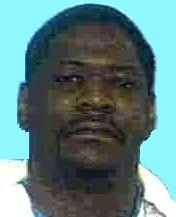
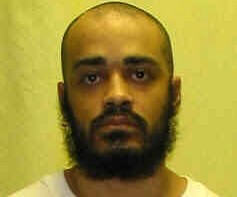
William Henry Smith
Murderer Brian Kevin Rosenfeld
Murderer · USA · 1985
Brian Kevin Rosenfeld Brian Kevin Rosenfeld was sentenced to three concurrent l…
23 victims
Brian Kevin Rosenfeld
Murderer · USA · 1985
Brian Kevin Rosenfeld Brian Kevin Rosenfeld was sentenced to three concurrent l…
23 victims
 Yahweh ben Yahweh
Murderer · USA · 1980
Yahweh ben Yahweh was born and legally named Hulon Mitchell Jr. (October 27, 19…
23 victims
Yahweh ben Yahweh
Murderer · USA · 1980
Yahweh ben Yahweh was born and legally named Hulon Mitchell Jr. (October 27, 19…
23 victims
 Russell Ellwood
Murderer · USA · 1991
Russell Ellwood was a former taxi driver. Authorities suspected him of killing…
20 victims
Russell Ellwood
Murderer · USA · 1991
Russell Ellwood was a former taxi driver. Authorities suspected him of killing…
20 victims
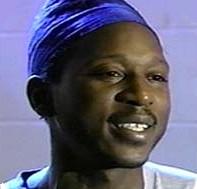 Larry Griffin
Murderer ? · USA · 1980
Larry Griffin — defendant; executed in Missouri on June 21, 1995 · Quintin Moss…
1 victim
Larry Griffin
Murderer ? · USA · 1980
Larry Griffin — defendant; executed in Missouri on June 21, 1995 · Quintin Moss…
1 victim
 Larry Kenneth Jackson
Murderer · USA · 1985
Larry Kenneth Jackson was an inmate at the Joseph Harp Correctional Center. He…
2 victims
Larry Kenneth Jackson
Murderer · USA · 1985
Larry Kenneth Jackson was an inmate at the Joseph Harp Correctional Center. He…
2 victims
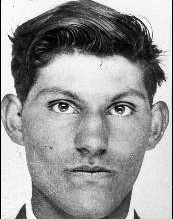 Edwin Albert Bush
Murderer · United Kingdom · 1961
Edwin Albert Bush was convicted of murder and was executed by hanging at Penton…
1 victim
Edwin Albert Bush
Murderer · United Kingdom · 1961
Edwin Albert Bush was convicted of murder and was executed by hanging at Penton…
1 victim
 Errol Dehaney
Murderer · USA · 1995
Errol Dehaney was sentenced to life in prison on December 8, 1999. He was charg…
3 victims
Errol Dehaney
Murderer · USA · 1995
Errol Dehaney was sentenced to life in prison on December 8, 1999. He was charg…
3 victims
- Gender
- male
- Country
- USA
- Location
- Hamilton County, Ohio, USA
- Date of birth
- October 28, 1957
- Age at first offence
- 30
- Characteristics
- rape, drugs
- Victim profile
- Mary Bradford (female, 47)
- Method of murder
- St abbing with knife
- Date(s) of murder
- September 26, 1987
- Years active
- 1987
- Date of arrest
- 2 days after
- Status
-
Executed
Executed by lethal injection in Ohio on March 8, 2005
Case record: William Henry Smith
STATUS
William Henry Smith was executed by lethal injection in Ohio on March 8, 2005.
The offence
William H. Smith met Mary Bradford at the Race Inn in Cincinnati, Ohio. The group later went to the Queen Anne Café and then Smith dropped Janice Echols off at another bar. Smith then went to Mary Bradford’s residence with her, where they engaged in sexual intercourse after drinking and allegedly using cocaine that belonged to him.
Smith eventually left the apartment, but returned when he discovered that some of his cocaine was missing. Upon returning, he confronted the victim, but she denied taking any of the cocaine. Smith then proceeded to stab the victim approximately 10 times in the neck, right breast, and right chest. While the victim was laying on the bed bleeding to death, Smith proceeded to have intercourse with her again. Smith stole 2 televisions and a stereo system belonging to the victim and left the apartment.
Mary Bradford was found by her boyfriend at her apartment after he entered through an unlocked door. She was found lying in a pool of blood on her bed. The victim’s death was ruled a homicide due to multiple stab wounds to the heart, aorta, and lungs. A rape examination showed that the victim had vaginal intercourse. Through investigation, homicide detectives determined that William H. Smith was the last person to be seen with the victim.
Police tracked the murder to Smith. Smith was subsequently arrested at 1:30 pm on 9/28/87. He initially denied any involvement in the offense but later admitted to stabbing the victim in the neck and having sex with her after stabbing her 8 more times. At the time, he claimed that this was the result of an argument over missing cigarettes and cocaine. During the argument, he claimed that the victim retrieved the knife, and he took it from her after striking her in the stomach.
The case involved:
- Aggravated Murder w/ specification — Principal Offender during a Rape Offense
- Aggravated Murder w/ specification — Principal Offender during an Aggravated Robbery
- Rape
- Aggravated Robbery
Timeline
- September 26, 1987 — William H.
- September 27, 1987 — The group left the Queen Anne Café at approximately 1:30 am; Smith went to the victim’s residence and the stabbing and rape occurred after an argument over missing cocaine.
- September 27, 1987 — Around 4:00 pm, the victim was found at her apartment after her door was found unlocked; police were contacted.
- September 28, 1987 — Homicide detectives determined Smith was the last person to be seen with the victim; Smith was apprehended and arrested at 1:30 pm.
- April 15, 1988 — Smith was admitted to the institution.
- February 8, 2005 — The Adult Parole Authority held a special meeting to consider clemency.
- February 9, 2005 — An interview was rescheduled and held with Parole Board Member Peter Davis interviewing Smith at the Mansfield Correctional Institution.
- February 14, 2005 — The Adult Parole Authority reconvened to discuss the case.
- March 8, 2005 — Smith was executed by lethal injection in Ohio.
Investigation
A rape examination showed that Mary Bradford had vaginal intercourse. Police later determined that Smith was the last person to be seen with the victim.
One color television, one black and white television, and a stack stereo with two speakers were missing from Bradford’s apartment. Subsequent forensic analysis revealed that Smith’s shirt and shoes bore traces of human blood.
On September 28, 1987, homicide detectives went to where Smith lived, the home of Bertha Reid, Smith’s mother, about four blocks from Bradford’s house. When police arrived, Smith was not at home and Reid let the officers in. While at Reid’s home, police noticed a television set matching the description of one of the two sets missing from Bradford’s home. Police secured a warrant, found the missing two televisions in Reid’s home, and seized them.
Reid testified that when her son came home around 2:00 a.m. on September 27, he did not act unusual, and did not appear to be drunk, high, or upset. Reid said Smith carried into her home the two televisions along with a large stereo system and two speakers. Reid asked where he got the televisions and stereo, and Smith replied that his girlfriend Carolyn gave them to him. Reid told him he would “have to explain to me a little more about what’s going on.” Later that morning, Smith and his cousin, Greg, took the stereo and two speakers away but left the televisions. Reid also showed police clothing that her son had worn on September 26 and 27, which police seized.
At police headquarters on September 28, 1987, after being advised of his rights, Smith agreed to talk to police. Smith initially asserted that he had driven Bradford home that night but had just dropped her off. He later admitted that he had been in her apartment but had left when her boyfriend arrived. Smith told police he met Bradford at the Race Inn, later drove her and her girlfriend to another bar, and then drove Bradford home. Smith claimed that someone he thought to be Bradford’s boyfriend arrived and Smith decided to leave quickly. Smith said that after he left, he realized he left a packet of cocaine, worth $2,500, at Bradford’s house. After he returned, Smith said Bradford’s boyfriend and the cocaine were both gone. Smith then talked with Bradford.
“we talked about restitution, you know. She said she'd give me some of that body. I said okay, it's good enough for me, you know, but then after I got that [had sex with her] it wasn't good enough, you know, so I asked her like you got any money and stuff, you know. She said she ain't have no money. So we start arguing and stuff and next thing you know she slid over to the kitchen and got [a] little blade--[small carving knife].”
According to Smith, Bradford was stabbed in the stomach during the struggle and fell onto a chair. He removed the knife from her stomach; she dragged or walked by herself to the bedroom. Smith recalled stabbing her in the neck in the bedroom after she called him a motherfucker, but he did not admit inflicting the other stab wounds. Smith stated that when she was lying on the bed, he took her clothes off and got back on top of her and had sex again.
Police asked:
“Q. * * * [A]fter you had sex with her the second time, after she was stabbed, then what'd you do? ” “A. I gathered up my things together and started taking her stuff downstairs. ”
Police asked:
“Q. What'd you take out of there? ” “A. Her two TVs and her stereo.”
Smith said he made four trips carrying her things down to his car and that he took her things to sell them. Although Smith initially claimed that he did not know whether Bradford had stopped breathing, he later admitted he decided to have sex with her again because “she was still breathing then.”
Smith stated that he pulled his penis out as he started to climax and finished ejaculating on her stomach, and he did this because he was thinking about getting out of the apartment. Smith claimed he threw the knife into the Ohio River and sold Bradford’s stereo in Dayton; however, police recovered her stereo in Cincinnati. When police interviewed Smith, they also seized a pair of undershorts from him stained with blood of the same type as Bradford’s.
Arrest
Smith was arrested at 1:30 pm on 9/28/87. He initially denied any involvement but later admitted to stabbing the victim and having sex with her after stabbing her additional times.
Trial
Smith was indicted on October 21, 1987, on two counts of aggravated murder, one count of rape, and one count of aggravated robbery.
- Counts I & II: aggravated murder under Ohio Rev.Code § 2903.01(B), each containing two death penalty specifications—one alleging aggravated murder during rape and the other alleging murder during aggravated robbery.
- Count III: rape.
- Count IV: aggravated robbery.
Smith initially entered a plea of not guilty by reason of insanity as to all charges. As a result, the trial court ordered that Smith be evaluated with respect to his mental state at the time of the alleged offense. Smith was evaluated by three experts:
- Nancy Schmidtgoessling, Ph.D., a clinical psychologist of the Court Psychiatric Center
- Roger H. Fisher, Ph.D., a clinical psychologist
- Glenn Weaver, M.D., a psychiatrist
Nancy Schmidtgoessling evaluated Smith on November 27, 1987 and on December 12, 1987. On December 14, 1987, Schmidtgoessling filed a report concluding that Smith currently showed no sign of major psychological disorder and that he was sane at the time of the alleged offense.
Counts 1, 2, 3, and 4 and both specifications in Counts 1 and 2 resulted in a verdict of guilty by three judge panel as charged. Smith withdrew his insanity plea after initially entering the plea.
Sentencing
After a hearing, a panel sentenced Smith to the death penalty on each murder count. He also received prison terms for the rape and aggravated robbery counts:
- Count 1: Death
- Count 2: Death
- Count 3: 10–25 years CRC, with 10 years actual incarceration time
- Count 4: 10–25 years CRC, with 10 years actual incarceration time
Counts 1 and 2 ran concurrently. Counts 3 and 4 ran consecutively and were consecutive with Counts 1 and 2.
In the clemency meeting record, the sentence is listed as:
- Count 1 – Death
- Count 2 – Death
- Count 3 – 10-25 years CRC, with 10 years actual incarceration time
- Count 4 – 10-25 years CRC, with 10 years actual incarceration time with specified concurrency and consecutiveness as described in the record.
Appeals
Direct appeal (Ohio Supreme Court)
In State v. Smith, 61 Ohio St.3d 284, 574 N.E.2d 510 (Ohio 1991), the Supreme Court affirmed the convictions and death sentences. The Supreme Court held that:
- evidence indicated Smith’s confession was voluntary;
- Smith’s confession and physical evidence supported finding that he raped, robbed, and murdered the victim; and
- the aggravating circumstances of rape and robbery of a helpless woman in her own home outweighed mitigating factors in Smith’s upbringing.
Federal habeas (Sixth Circuit)
In Smith v. Mitchell, 348 F.3d 177 (6th Cir. 2003), the Court of Appeals affirmed the judgment denying habeas corpus relief. The principal holding was that trial counsel was not ineffective and that other raised claims did not warrant habeas relief. The record also included a dissenting opinion by Judge Guy Cole, Jr. on narrow grounds related to psychiatric assistance at sentencing, with the dissenting view cited in the clemency materials.
Outcome
Smith’s sentence was executed by lethal injection in Ohio on March 8, 2005.
Clemency process (Adult Parole Authority)
A special meeting of the Adult Parole Authority was held at 1030 Alum Creek Drive, Columbus, Ohio 43205. The meeting was in the matter of WILLIAM H. SMITH, MANCI #202-636, subject to Death Sentence Clemency.
The case included that clemency was initiated by the Governor of the State of Ohio and pursuant to specified Ohio Revised Code provisions and Parole Board Policy. A previous clemency report had been sent to then-Governor George V. Voinovich on April 24, 1995, and the Parole Board recommendation against clemency had been unanimous.
On January 26, 2005, inmate’s counsel Jennifer Kinsley declined an opportunity to be interviewed by the Parole Board at Mansfield Correctional Institution on behalf of Smith. The Parole Board later met on February 8, 2005, and the case was considered upon application by Smith’s counsel H. Louis Sirkin, Jennifer M. Kinsley, and Laurence E. Komp. Testimony in support of clemency was presented by Kinsley and Komp and by Smith’s cousin Mr. Gary Dorsey representing the Smith, Dorsey, Reid, Carter, Butts & Ward families. Testimony in opposition was presented by Assistant Hamilton County Prosecutor Ronald W. Springman and by Assistant Attorneys General Henry Appel and Greg Perry.
During the hearing, it was determined that Smith had in fact desired to be interviewed by the Parole Board. The interview was rescheduled and held on February 9, 2005 with Parole Board Member Peter Davis interviewing Smith at Mansfield Correctional Institution. The clemency meeting record states that Smith was interviewed by teleconference witnesses at Parole Board Central Office in Columbus including:
- Smith’s counsel Laurence Komp
- Assistant Attorneys General Henry Appel and Greg Perry
- Parole Board Executive Assistant Judy Coakley
On February 14, 2005, the Board reconvened and voted. The Board voted unanimously to provide an UNFAVORABLE recommendation to the Honorable Bob Taft, Governor of the State of Ohio, both as to commutation and as to reprieve.
Applicant’s statement and interview details
Smith was interviewed on February 9, 2005. In the interview, Smith’s version of events was stated as not differing in substantial detail from the official version. Smith admitted to meeting Ms. Bradford in a bar; accompanying her home; ingesting beer, vodka, marijuana and cocaine; arguing with Ms. Bradford; wrestling the knife away from Ms. Bradford and stabbing her four times; watching her lay bleeding; carrying her to the bedroom; removing her underpants and engaging in vaginal sex as she lay bleeding from multiple stab wounds; leaving her in the bedroom for three trips to steal her stereo and two televisions; and leaving the apartment still not knowing whether she was dead or alive.
The clemency record described that Smith tearfully stated he took full responsibility for his inexcusable behavior, repeatedly remarked about opportunities to leave before and after the stabbing, and addressed his inability to explain why he raped Bradford after the stabbing. The record also described Smith’s statements about stealing Bradford’s stereo and televisions for his mother’s house, his characterization of his conduct as “stupid and dumb,” and his statement about sending a fabricated letter during his first year of incarceration falsely asserting his innocence and accusing “Ricky Johnson” as Bradford’s killer.
The clemency record included an account that Smith stated that after Death Row was moved from Lucasville to Mansfield in late 1994, he began to “come clean” and tell the truth about sole responsibility for Ms. Bradford’s murder, rape, and robbery.
Aftermath
Final meal
Smith requested nacho cheese doritos chips and a pepsi for his “special meal.” He did not eat it. He did eat a ham, turkey and bologna sandwich Monday night. He did not eat breakfast or have a shower Tuesday.
Final statement
In a final statement that lasted four minutes, Smith took responsibility for the crime and said he had given himself to the Lord. Smith’s statement addressed the victim’s grandson, Timmy Bradford, who watched with his hands clutched in front of his face.
“I hope you have the capacity to forgive,”
“I cannot control anything from this day. Find the right way. Be a better person than I was,”
Background
Victim
- Victim: Mary Bradford (age 47)
Date and place of crime
- Date of crime: September 26, 1987
- Place of crime: Cincinnati, Ohio
- County: Hamilton
- Case number: B-874498
Admission and incarceration details (from clemency meeting record)
- Received at DOC: 04/15/98
- Admitted to institution: April 15, 1988
- Time served: 16 years, 10 months
- Age at admission: 30 years old
- Current age: 47
- Jail time credit: 200 Days
Offence and institutional labels (from DOC and clemency record)
- Inmate: WILLIAM H SMITH
- Inmate number: 202636
- Race: Black; Gender: Male
- DOB: 10/28/57
- Offenses: AGGRAVATED MURDER, AGGRAVATED RAPE, AGGRAVATED ROBBERY
- Institution: Mansfield Correctional Institution
- Ohio Adult Parole Authority: Columbus, Ohio
Prior record and other adjudications
Juvenile record
- 1/26/73 — Robbery Juvenile Court Official probation (Age 15)
- 7/29/1973 — Breaking & Juvenile Court Official probation, restitution (Age 15)
- 12/27/73 — Burglary Juvenile Court Restitution (Age 16); referred to Job Corps.
- 7/2/74 — Unauthorized Use of Vehicle Juvenile Court Official probation, $20 fine and court costs (Age 16)
Other adjudications
- In 1973, Smith was arrested for being incorrigible.
- In 1974, Smith was arrested for being unruly and questionable conduct.
- The record states that these convictions resulted in court costs being remitted or a continuance of probation.
Adult record
The clemency meeting record lists multiple entries, including:
- 11/14/75 — Breaking & Entering, Cincinnati, Ohio; suspended; fines, costs, restitution and 2 years probation (B753893), concurrent with date of arrest for 5/5/76 (Age 18)
- 8/7/78 — Guilty of probation violation; restored and continued on probation for an additional 3 years
- 3/26/79 — Declared an Absconder due to whereabouts being unknown
- 7/29/80 — Guilty of probation violation; sentenced to 6 months to 5 years, OSR
- 8/20/80 — Admitted to OSR #112-988; paroled
- 3/21/82 — District One Police observed Smith and an accomplice removing copper pipe from a building at 1332 Race Street, which belonged to the Estate of Vincent Westerdorf
- Theft Cincinnati, Ohio; 4/19/76 — 10 days workhouse (Age 18) (Under $150) and court costs; details include removal of copper pipes from a building at 1625 Republic Street
- 5/5/76 — Breaking & Entering, Cincinnati, Ohio; 8/19/76 — 6 months–5 years; entering suspended; 2 years probation (B761494) concurrent with date of arrest of 11/14/75
- 3/26/79 — Entry declaring Smith an absconder from probation due to whereabouts unknown
- 7/31/80 — Details: Smith broke into an apartment of Fred Wright, 1614 Elm Street, Cincinnati, Ohio
- 5/18/77 — Assault, Cincinnati, Ohio; 6/17/77 — 180 days workhouse (Age 19) with 15 days suspended; details include following Charles Bishop to his residence at 1216 Race Street, asking the victim for ten cents, and beginning to beat the victim on the left side of his face when the victim said he had no money
- 8/26/85 — Breaking & Entering, Cincinnati, Ohio; 10/28/85 — 1 year Ohio Penitentiary (Age 27); 6/27/86 — Released; details: Smith broke into a residence at 3248 Glendora Avenue and removed two stained glass windows
- 9/28/87 — Aggravated Murder w/ specification (2 counts), cs/w Rape, cs/w Aggravated Robbery, Cincinnati, Ohio (Age 29)
Other convictions
The record lists:
- Four other convictions:
- In 1979, arrested for Engaging in Gambling resulting in fines and being ordered to pay court costs.
- In 1984, charged with No Driver’s License on two occasions; fines and ordered to pay court costs.
- In 1987, arrested for Possession of a Dangerous Drug; resulted in five days at the Hamilton County Criminal Justice Center and costs remitted.
Dismissed/nolled and/or unknown disposition charges
The clemency meeting record lists:
- In 1978, arrested in Hamilton County for Aggravated Burglary; charge ignored by the Grand Jury.
- In 1984, arrested for Criminal Damaging; dismissed.
- In 1985, arrested by Fulton County Police Department in Atlanta, Georgia on two charges of Simple Battery and Disturbing a Lawful Gathering; both dismissed.
Institutional adjustment and clemency arguments
The clemency meeting record states Smith spent approximately 17 years on Death Row. It described good institutional conduct with two relatively minor disciplinary tickets and none during the past ten years. It also states that Smith maintained good job evaluations, enjoyed good rapport with correctional officers and other institutional staff, and that institutional adjustment was exemplary.
The clemency record then listed counsel’s arguments for clemency, including:
- Poor Representation of Trial Counsel During Penalty Hearing
- Organic Brain Damage and related discussion of assessments and imaging
- Deprived Childhood
- Good Institutional Adjustment
- Sixth Circuit Court of Appeals Dissenting Opinion
- Racial Discrimination in Grand Jury Process
The clemency record’s conclusion stated that the Board acknowledged certain mitigating factors, including:
- abysmal childhood of deprivation and abuse,
- sincere, genuine and strong expression of remorse,
- personality disorder at the time that may have manifested in a loss of impulse control with regard to the killing,
- exemplary conduct and adjustment.
The Board found that these mitigating factors did not outweigh non-impulsive aggravating circumstances including raping the victim as she lay bleeding and near death from multiple stab wounds and then making multiple trips to steal her stereo and televisions. The record also stated that this continued into the first year of incarceration by a deceptive, self-serving letter to the victim’s daughter falsely asserting innocence and accusing “Ricky Johnson” as the killer. The record described that impulsivity alone did not explain the aggravating circumstances, and stated that a sufficient justifiable basis for mercy could not be found, and that there was no manifest miscarriage of justice in the imposition of sentence. The Board voted unanimously to provide an UNFAVORABLE recommendation to the Honorable Bob Taft, Governor of the State of Ohio.
Spotted an error, or have more information about this case?