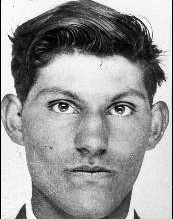
Edwin Albert Bush
Murderer Harry Maurice Roberts
Murderer · United Kingdom · 1966
Name: Harry Maurice Roberts Birth year: 1936 Birthplace: Kennington, London, En…
3 victims
Harry Maurice Roberts
Murderer · United Kingdom · 1966
Name: Harry Maurice Roberts Birth year: 1936 Birthplace: Kennington, London, En…
3 victims
 Ronald Jebson
Murderer · United Kingdom · 1970
Ronald Jebson (born 1939) was a convicted pedophile who was also known as Ronal…
3 victims
Ronald Jebson
Murderer · United Kingdom · 1970
Ronald Jebson (born 1939) was a convicted pedophile who was also known as Ronal…
3 victims
 Albert Goozee
Murderer · United Kingdom · 1956
Albert William Goozee was a British murderer and paedophile. His crimes inspire…
2 victims
Albert Goozee
Murderer · United Kingdom · 1956
Albert William Goozee was a British murderer and paedophile. His crimes inspire…
2 victims
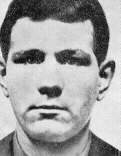 Alfred Charles Whiteway
Murderer · United Kingdom · 1953
Alfred Charles Whiteway was a serial rapist. Both girls had very deep stab woun…
2 victims
Alfred Charles Whiteway
Murderer · United Kingdom · 1953
Alfred Charles Whiteway was a serial rapist. Both girls had very deep stab woun…
2 victims
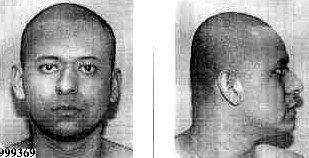 Bernardo Tercero
Murderer · USA · 1997
Bernardo Aban Tercero was born on 8/20/1977. He was a 23-year-old at the time o…
1 victim
Bernardo Tercero
Murderer · USA · 1997
Bernardo Aban Tercero was born on 8/20/1977. He was a 23-year-old at the time o…
1 victim
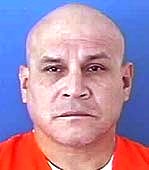 Edward Castro
Murderer · USA · 1987
Edward Castro was condemned for the choking and stabbing death of 56-year-old A…
3 victims
Edward Castro
Murderer · USA · 1987
Edward Castro was condemned for the choking and stabbing death of 56-year-old A…
3 victims
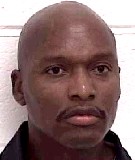 Warren Lee Hill
Homicide · USA · 1985
Warren Lee Hill was 36 when he was sentenced to death in September 1991 in Lee…
2 victims
Warren Lee Hill
Homicide · USA · 1985
Warren Lee Hill was 36 when he was sentenced to death in September 1991 in Lee…
2 victims
 Mary Ellen Samuels
Murderer · USA · 1988
Mary Ellen Samuels was convicted of arranging the murders of her husband, Rober…
2 victims
Mary Ellen Samuels
Murderer · USA · 1988
Mary Ellen Samuels was convicted of arranging the murders of her husband, Rober…
2 victims
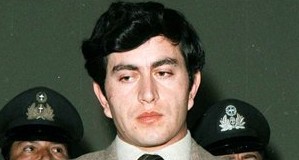 Kyriakos Papaxronis
Serial killer · Greece · 1981
Kyriakos Papaxronis (Κυριάκος Παπαχρόνης) was a serial rapist and murderer, kno…
3 victims
Kyriakos Papaxronis
Serial killer · Greece · 1981
Kyriakos Papaxronis (Κυριάκος Παπαχρόνης) was a serial rapist and murderer, kno…
3 victims
 Caleb Carrothers
Murderer · USA · 2009
July 11, 2009 — Caleb Carrothers shot and killed Frank Clark and his son, Taylo…
2 victims
Caleb Carrothers
Murderer · USA · 2009
July 11, 2009 — Caleb Carrothers shot and killed Frank Clark and his son, Taylo…
2 victims
- Gender
- male
- Country
- United Kingdom
- Location
- London, England, United Kingdom
- Date of birth
- 1940
- Age at first offence
- 21
- Characteristics
- robbery
- Victim profile
- Elsie May Batten (antique shop assistant)
- Method of murder
- St abbing with knife
- Date(s) of murder
- March 2, 1961
- Years active
- 1961
- Date of arrest
- 4 days after
- Status
-
Executed
Executed by hanging at Pentonville Prison on July 6, 1961
Case record
Edwin Albert Bush was convicted of murder and was executed by hanging at Pentonville Prison on July 6, 1961.
Timeline
- 2 March 1961 — Edwin Bush, aged 21, entered an antique shop in Cecil Court just off Charing Cross Road in WC2 and spoke to the antique dealer, Louis Meier, saying he was looking for a present for his girlfriend; he took an interest in a curved dress sword costing £15 and several daggers.
- 2 March 1961 — Bush returned to the shop shortly afterwards and spoke to Elsie May Batten, who worked for Mr Meier at Cecil Court.
- 3 March 1961 — Elsie May Batten was found dead in the Cecil Court antique shop; she was later identified by Mark Batten as his wife.
- 4 March 1961 — Detective Sergeant Raymond Frederick Dagg interviewed Louis Meier and compiled a facial picture of the suspect using the 'Identikit', and also interviewed Paul Roberts; Divisional Detective Superintendent Pollard directed photographs of the two witness likenesses be circulated internally and released to the media.
- 8 March 1961 — P.C. Arthur John Hilton Cole saw an Indian answering the description of the suspect in Old Compton Street and detained him with a female companion; the detained man was Edwin Bush.
- 8 March 1961 — Divisional Detective Superintendent Pollard and Detective Inspector Howlett interviewed Bush; Bush initially denied involvement and said his mother’s account supported his alibi.
- 8 March 1961 — An identification parade at Bow Street Police Station took place with Edwin Bush in the line-up; Paul Roberts identified Bush; Divisional Superintendent Pollard charged Edwin Bush with the murder.
- 10 May 1961 — Edwin Bush was committed to stand trial at the Central Criminal Court.
- 12 May 1961 — The case was concluded; the verdict of "Guilty " was delivered and Bush was sentenced to death.
- 6 July 1961 — Edwin Bush was executed at Pentonville Prison.
Background
Edwin Bush came from a troubled family. In 1953 the National Society for Prevention of Cruelty to Children had enquired into the family’s living conditions, finding 2 adults and 6 children living in 3 rooms. Edwin had firstly been sent to a home and then in 1955 was sent to a training farm near Uckfield in Sussex. He then had spells in Borstal following a string of breaking and entering and stealing cases.
The offence
On 2 March 1961 Edwin Bush entered Louis Meier’s antique shop in Cecil Court just off Charing Cross Road in WC2. He told Mr Meier he was looking for a present for his girlfriend. He took an interest in a curved dress sword costing £15 and several daggers, and said that his father was an Indian and that it was a common thing to carry a dagger in India.
Elsie May Batten worked for Mr Meier at Cecil Court. Bush spoke to her shortly afterwards. On the circumstances of the killing, the case record described that on 3 March 1961 Elsie May Batten was found dead in the antique shop where she worked.
The pathologist Dr Keith Simpson attended the scene and discovered Elsie Batten with three major stab wounds: one in the back, one in the neck, and another in the chest. The wounds were described as very deep, with the dagger blade almost completely buried in the neck (about 9 inches). An ivory handled dagger remained in the chest wound with its blade buried to a depth of 8 inches.
During interviews and later court evidence, Bush stated that he had killed Elsie Batten. In his statement he admitted killing Mrs Batten in order to steal the sword. He was said to have been charged with murder in the course or furtherance of theft, and the case record stated that under the Homicide Act 1957 this type of murder carried the death sentence. In mitigation later in court, it was said that he claimed she had made an offensive remark about his colour, and the case record stated that the jury did not believe that should have resulted in such a brutal attack.
Bush’s statement included the following verbatim account:
"I went back to the shop and started looking through the daggers, telling her that I might want to buy one, but I picked one up and hit her in the back. I then lost my nerve and picked up a stone vase and hit her with it. I grabbed a knife and hit her once in the stomach and once in the neck."
Bush’s statement also included the following verbatim sentiment:
"I am sorry I done it I don't know what came over me. Speaking personally the world is better off without me."
The case record also included Bush’s court claim that Mrs Batten had said:
"You niggers are all the same. You come in and never buy anything."
Investigation
On Wednesday 8 March 1961, the case record described the use of the Identikit system. Detective Sergeant Raymond Frederick Dagg interviewed Louis Meier on 4 March 1961 and compiled a facial picture of the suspect using the 'Identikit'. Dagg also interviewed Paul Roberts, the son of a gun dealer in St Martin’s Lane, and built up another facial likeness of the suspect from Roberts’s interview. Divisional Detective Superintendent Pollard decided the similarity of the two witness recollections was outstanding, and directed the pictures be photographed side by side, circulated internally to all Police forces and also released to the media in the hope the youth could be identified.
On 8 March 1961, P.C. Arthur John Hilton Cole was on duty in Old Compton Street when he saw an Indian answering the description of the suspect wanted in connection with the murder of Elsie Batten. Cole detained the man and his female companion. The detained man was Edwin Bush.
The case record also described an earlier moment when Bush was linked to the Identikit: it stated that within 4 days of the picture being issued, PC John Cole recognised the person and arrested him on his beat in the Soho area of London, and that he was then placed in an identity parade and was picked out by two of the nearby shopkeepers. The case record also said that faced with this evidence Bush made a statement confessing the killing of Mrs Batten to steal a sword.
The detective in charge of the investigation gave the following verbatim statement about the case’s significance:
"This case is of particular interest because the arrest of the murderer was achieved as a direct result of the use of an American system, known familiarly as " Identikit ", for building up the facial likeness of a suspect. This was the first time this equipment had ever been used in this country, but so skilfully was it operated and so effective was the resultant 'picture', that a ' C' Division Police Constable , P.C. 341 ' E ' Cole was able to recognise the wanted man Bush and detain him...."
Arrest
On 8 March 1961 P.C. Arthur John Hilton Cole detained the man answering the description in Old Compton Street; it was Edwin Bush. Bush’s girlfriend, Janet Wheeler (aged 17), was also interviewed and quickly eliminated from police enquiries.
Bush’s mother was interviewed and stated that on the morning of the murder she thought Edwin had left for work at 7.30am.
On the same day, Divisional Detective Superintendent Pollard and Detective Inspector Howlett interviewed Bush at 7.40pm. Bush initially denied any involvement in the murder, claiming his mother as an alibi, but the case record stated that the statement his mother had given earlier contradicted this.
Trial
Edwin Bush had been committed to stand trial at the Central Criminal Court on 10 May 1961. The case record stated that he was found guilty.
The case was tried before Judge Stevenson and concluded on 12 May 1961. A verdict of "Guilty " was delivered and Bush was sentenced to death.
Sentencing
Bush received a death sentence following the verdict of "Guilty " delivered on 12 May 1961.
Appeals
No appeal information was provided.
Outcome
Edwin Bush was executed on 6 July 1961 at Pentonville Prison.
Aftermath
The case record described the case as notable as the first in the UK involving the use of the Identikit System. It also stated that if no item had been stolen from the premises, then the murderer could not have been sentenced to death under the Act. The case record reiterated that on 3 March 1961 Mrs Elsie May Batten was found dead in the antique shop where she worked, that she was an assistant in Louis Meier’s Cecil Court antique shop, and that when she was discovered she had an antique dagger sticking out of her chest and another one in her neck. It also stated that witnesses recalled seeing a young coloured man enter the shop and that the police constructed an Identikit picture after taking descriptions of the suspect.

Spotted an error, or have more information about this case?