
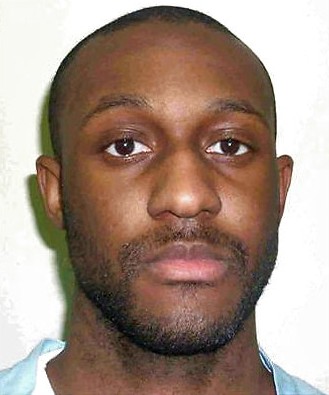
Larry Kenneth Jackson
Murderer Brian Kevin Rosenfeld
Murderer · USA · 1985
Brian Kevin Rosenfeld Brian Kevin Rosenfeld was sentenced to three concurrent l…
23 victims
Brian Kevin Rosenfeld
Murderer · USA · 1985
Brian Kevin Rosenfeld Brian Kevin Rosenfeld was sentenced to three concurrent l…
23 victims
 Marvin Gray
Murderer · USA · 1975
Marvin Gray was convicted killer who claimed responsibility for 23 slayings and…
23 victims
Marvin Gray
Murderer · USA · 1975
Marvin Gray was convicted killer who claimed responsibility for 23 slayings and…
23 victims
 Yahweh ben Yahweh
Murderer · USA · 1980
Yahweh ben Yahweh was born and legally named Hulon Mitchell Jr. (October 27, 19…
23 victims
Yahweh ben Yahweh
Murderer · USA · 1980
Yahweh ben Yahweh was born and legally named Hulon Mitchell Jr. (October 27, 19…
23 victims
 Russell Ellwood
Murderer · USA · 1991
Russell Ellwood was a former taxi driver. Authorities suspected him of killing…
20 victims
Russell Ellwood
Murderer · USA · 1991
Russell Ellwood was a former taxi driver. Authorities suspected him of killing…
20 victims
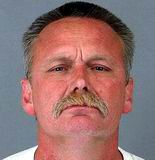 Shelby Shamblin
Homicide · USA · 1980
Shelby Glenn Shamblin was a Homeland man. He was convicted in June of first-deg…
1 victim
Shelby Shamblin
Homicide · USA · 1980
Shelby Glenn Shamblin was a Homeland man. He was convicted in June of first-deg…
1 victim
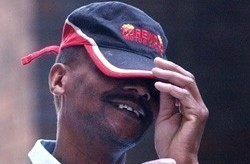 Jimmy Maketta
Serial killer · South Africa · 2005
Jimmy Maketta was born in 1964 or 1965. He was a South African rapist and seria…
16 victims
Jimmy Maketta
Serial killer · South Africa · 2005
Jimmy Maketta was born in 1964 or 1965. He was a South African rapist and seria…
16 victims
 Nehemiah Griego
Mass murderer · USA · 2013
Nehemiah Griego was a 15-year-old male. · January 19, 2013 — Police found five…
1 victim
Nehemiah Griego
Mass murderer · USA · 2013
Nehemiah Griego was a 15-year-old male. · January 19, 2013 — Police found five…
1 victim
 David Renz
Murderer · USA · 2013
March 14, 2013 — David Renz carjacked Liverpool librarian Lori Ann Bresnahan an…
1 victim
David Renz
Murderer · USA · 2013
March 14, 2013 — David Renz carjacked Liverpool librarian Lori Ann Bresnahan an…
1 victim
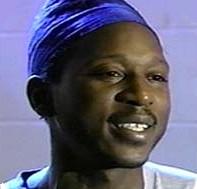 Larry Griffin
Murderer ? · USA · 1980
Larry Griffin — defendant; executed in Missouri on June 21, 1995 · Quintin Moss…
1 victim
Larry Griffin
Murderer ? · USA · 1980
Larry Griffin — defendant; executed in Missouri on June 21, 1995 · Quintin Moss…
1 victim
- Gender
- male
- Country
- USA
- Location
- Oklahoma, USA
- Date of birth
- November 7, 1962
- Age at first offence
- 23
- Characteristics
- parricide, domestic dispute, domestic violence
- Victim profile
- Freda Laverne Washington (his common law wife) / Wendy Cade (his new girlfriend)
- Method of murder
- Shooting / Stabbing with box cutter knife
- Date(s) of murder
- 1985 / 1994
- Years active
- 1985–1994
- Date of arrest
- September 7, 1994
- Status
-
Executed
Executed by lethal injection in Oklahoma on April 17, 2003
Case record: Larry Kenneth Jackson
Background
Larry Kenneth Jackson was an inmate at the Joseph Harp Correctional Center. He was serving a 30-year prison term for second-degree murder at the time of the slaying of his girlfriend, Wendy Cade.
Jackson met Wendy Cade while he was serving his sentence for the 1985 shooting death of his common-law wife, Freda Washington. Jackson was also serving a five-year sentence for shooting Lynwood Smith the same day; Smith survived the shooting.
Jackson and Cade had an ongoing relationship while Jackson was incarcerated at Joseph Harp Correctional Institution. Cade visited Jackson at the prison on Sundays, and she visited him at least twice outside the prison when he was with a prison work crew. Jackson believed they would marry after his release.
Cade was engaged to Victor Dizer, the father of some of her children, and she was attempting to change her relationship with Jackson. The materials described ongoing arguments between Jackson and Cade about this relationship change.
The offence
On September 6, 1994, Cade died in a room at the Oklahoma City Motel 6. The cause of death was a laceration to her neck that severed her jugular veins. Jackson killed Cade.
Cade and Jackson left together in Cade’s Jeep Cherokee. They began their day with a stop at a convenience store and later at a liquor store for alcoholic drinks. The materials described Jackson purchasing a quart of beer and cigarettes, while Cade purchased a fifth of liquor called Alize, a mixed drink of passion fruit juice and cognac. Jackson drank all of the Alize and half of the quart of beer and had two puffs on a marijuana cigarette before entering the motel room.
At the motel, they had sexual intercourse and then fought. Jackson later described that he “blimped out” and left the motel in Cade’s Jeep. He got as far as the entrance ramp to the Turner Turnpike north of 122nd and I-35, where he had an accident disabling the Jeep.
Cade was found with over thirty slash and stab wounds, and the throat slashing severed both jugular veins. A box-cutting knife was found wrapped in a wash cloth and stuck between the mattress and box springs of the bed. Witness/prosecutorial descriptions in the materials indicated the knife used was a utility knife or box cutter that prison officials had given Jackson to open boxes of furniture.
Prosecutors said Cade was killed because she was ending her relationship with Jackson and was not going to help his effort to win parole.
Investigation and evidence
After the Jeep accident, later that day at about 3:30 p.m., the Jeep was found by a highway patrol trooper.
After abandoning the Jeep, Jackson next remembered waking up in a field and hitching a ride to the Ambassador Court apartments at 1634 South Phillips, where he believed his sister worked. He arrived about 6:00 to 6:30 p.m., and Dorothy Leffette, the sister of one of the men, let him stay with her until morning.
On September 7, 1994, at around 9:00 a.m., Victor Dizer and Martha Gulley, Cade’s fiance and mother, went to the area where the Jeep was found to search for Cade. They went to the Motel 6 at N.E. 122nd and I-35 and learned Cade had rented a room.
Police checked the room and found Cade’s body lying nude against the bed. The bathroom floor, apart from the shower, was covered with blood. It appeared a struggle had occurred in the bathroom, and Cade had been moved from the bathroom to the bedroom. There was blood on the bedroom carpet but little blood on Cade’s nude body. The police found the box cutting knife wrapped in a wash cloth and stuck between the mattress and box springs of the bed.
Police located Jackson at Leffette’s apartment and took him into custody. In the room where Jackson was arrested, police found Cade’s jewelry, watch, and keys to her Jeep.
Jackson admitted to police that if Cade was dead, he did it. He did not intend to kill her, did not want to talk about the details of the killing, and did not remember much about what happened in the motel room. At his trial, Jackson testified that he and Cade hit one another in several bouts in the room and Cade fell to the floor; when he went to the bathroom and returned to sit on the bed, he saw Cade lying on the floor with blood on her.
One wound slashed Cade’s jugular vein(s).
Arrest and confinement events
The materials described that shortly after Jackson and Cade left together, Jackson was discovered missing and the Department of Corrections placed Jackson on escape status. After the murder, Jackson drove the victim’s Jeep away from the motel but crashed it at the entrance ramp of the Turner Turnpike. The materials also described that Jackson had an escape and an escape a week earlier of convicted killer Randolph Franklin Dial, which prompted then-Gov. David Walters to order the state corrections department to transfer all murderers from minimum security.
Trial
Jackson was convicted by an Oklahoma trial court of the first degree murder of his girlfriend Wendy Cade and sentenced to death. The Oklahoma Court of Criminal Appeals (OCCA) affirmed the conviction and sentence. Jackson v. State, 964 P.2d 875 (Okla. Crim. App. 1998) (per curiam), cert. denied, 526 U.S. 1008 (1999). The OCCA also denied post-conviction relief. Jackson v. State, No. PC-97-1349 (Okla. Crim. App. Nov. 20, 1998).
Charges and aggravating circumstances
Appellant Larry Kenneth Jackson was charged in the District Court of Oklahoma County with first degree malice murder in violation of 21 O.S.1991, § 701.7, in Case No. CF-94-6070.
The State filed a Bill of Particulars alleging three aggravating circumstances. A jury trial was held before the Honorable Daniel L. Owens, District Judge. The jury found Jackson guilty of first degree murder and found the existence of two aggravating circumstances:
- that the murder was especially heinous, atrocious, or cruel
- that Jackson was previously convicted of a felony involving the use or threat of violence to the person
The State also alleged that Jackson posed a continuing threat.
The jury sentenced Jackson to death.
Intoxication-related issues
At trial, Jackson’s defense was that he killed Cade without malice aforethought because he had blacked out due to intoxication and being upset. Rejecting the lesser included offense of manslaughter, the jury found Jackson guilty of first degree murder.
On appeal, Jackson argued the trial court denied him due process and his Sixth, Eighth, and Fourteenth Amendment rights by refusing to instruct the jury, as he requested, on voluntary and involuntary intoxication. Jackson claimed jury instructions did not reflect his intoxication defense, despite evidence offered to support the defense.
The appellate materials described that the jury instructions did not include the requested intoxication instructions, and the jury nonetheless found guilt for first degree murder. The appellate materials described that prospective jurors were presented testimony about Jackson’s drunkenness that day, and it also described that the intoxication issue was alive in the guilt phase and in the penalty phase.
The Oklahoma Court of Criminal Appeals held that the test for determining whether an instruction on voluntary intoxication should be given was no different from the test used for any other defense, and it also found sufficient evidence of malice aforethought.
Appeals
Direct appeal (state)
The Oklahoma Court of Criminal Appeals affirmed the conviction and sentence. Jackson v. State, 964 P.2d 875 (Okla. Crim. App. 1998) (per curiam), cert. denied, 526 U.S. 1008 (1999).
The Oklahoma Court of Criminal Appeals also addressed procedural and evidentiary issues, including:
- whether a prospective juror who was a convicted felon was subject to challenge for cause
- whether there was sufficient evidence of malice aforethought
- whether police properly obtained consent to search an apartment where defendant had been sleeping
- whether evidence supported imposition of death penalty
- the intoxication-instruction test
- dissents and concurrence by named judges: Lumpkin, J., concurred in results and filed opinion; Lane, J., dissented and filed opinion in which Strubhar, V.P.J., joined
Federal habeas
Jackson filed a federal habeas petition. The federal district court denied relief. The district court granted a certificate of appealability (COA) on the issue: whether the trial court’s refusal to instruct on the defenses of voluntary and involuntary intoxication violated Jackson’s constitutional rights.
At a case management conference, the federal appellate court granted a COA on an additional issue: whether the trial court’s refusal to allow voir dire concerning the prospective jurors’ attitudes toward intoxication defenses violated Jackson’s constitutional rights.
The habeas petition named respondent Mike Mullin, Warden Oklahoma State Penitentiary. The case was before Circuit Judge EBEL, Senior Circuit Judge BRORBY, and Circuit Judge MURPHY. The court affirmed the denial of habeas relief on both issues. It also described the relevant judgment of the United States District Court for the Western District of Oklahoma as affirmed.
Sentencing
Jackson was sentenced to death by the District Court of Oklahoma County.
The jury found first degree murder and found two aggravating circumstances, as described above:
- murder especially heinous, atrocious, or cruel
- Jackson previously convicted of a felony involving the use or threat of violence to the person
The materials described the State also alleged Jackson posed a continuing threat.
Outcome
Jackson was executed by lethal injection in Oklahoma on April 17, 2003.
At the execution, Jackson was pronounced dead at 6:08 p.m. at the Oklahoma State Penitentiary.
Jackson told his family he loved them and apologized for his victim’s family before he was executed.
The materials included verbatim statements attributed to Jackson:
- “Take care of my mama”
- “I want to say I'm sorry, that's all I can say. I just want to apologize”
- “I guess I'm going to go now. Bye, y'all”
- “I want to ask for forgiveness from Martha Cade”
- “I'm sorry for everything I brought upon her. I'm sorry for the pain, sorrow I brought on her and her family and kids.”
- “I'm sorry to all of you for the same thing. I guess I'm going to go now. 'Bye y'all.”
Aftermath and related proceedings
The materials described clemency and pardon/parole board decisions and statements by family members of Wendy Cade and Freda Washington.
Clemency hearing and parole board
Jackson refused to attend his April 7 clemency hearing. The Oklahoma Pardon and Parole Board voted not to recommend clemency. The state Pardon and Parole Board voted not to recommend clemency for convicted murderer Larry Kenneth Jackson at a meeting at the Oklahoma State Penitentiary.
Statements by Wendy Cade’s family
Wendy Cade’s sister, Anita Taylor, said she was ready for Wendy Cade’s killer to die and that justice would be served when Jackson was put to death. The materials included verbatim statements attributed to Taylor:
- “Larry took a star out of our family”
- “I have to forgive him, but I'll never forget”
- “If we can get this (the execution) out of the way, then we can get on with our lives.”
- “He took something very precious from us, but if my mother can forgive him, I have to.”
- “That's between him and God.”
- “This has been a closure for our family so we can get on with our lives.”
- “That's between him and God,” regarding what she wanted Jackson to say
The materials attributed additional statements to Martha Gulley, Cade’s mother:
- “I forgive him, but I can't forget the pain he caused. I've forgiven him but I ask that God would help him and his family.” The materials also included a statement that Taylor was not satisfied with Jackson’s apology but stated: “That's between him and God.”
Statements by Freda Washington’s family
Relatives of Jackson’s other slaying victim, Freda Washington, spoke to board members. Sharyl Washington, Freda Washington’s sister, said:
- “Larry did wrong ... and he should have to pay for it.”
Final meal
Jackson had a final meal that included fried fish with tartar sauce and hot sauce, a fried chicken sandwich, a steak sandwich with french fries, ice cream and a 7UP.
Spotted an error, or have more information about this case?