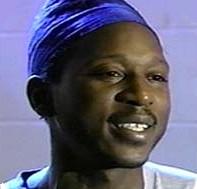
Larry Griffin
Murderer ? Ellis Wayne Felker
Murderer ? · USA · 1981
Ellis Wayne Felker (c. 1948 – November 15, 1996) was convicted of murder and re…
1 victim
Ellis Wayne Felker
Murderer ? · USA · 1981
Ellis Wayne Felker (c. 1948 – November 15, 1996) was convicted of murder and re…
1 victim
 John Kogut
Murderer ? · USA · 1984
John Kogut was a 21-year-old high school dropout and unemployed landscaper. In…
1 victim
John Kogut
Murderer ? · USA · 1984
John Kogut was a 21-year-old high school dropout and unemployed landscaper. In…
1 victim
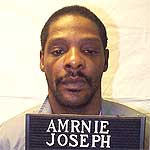 Joseph Amrine
Murderer ? · USA · 1985
Joseph Amrine was a death row inmate in Missouri. He was housed with the victim…
1 victim
Joseph Amrine
Murderer ? · USA · 1985
Joseph Amrine was a death row inmate in Missouri. He was housed with the victim…
1 victim
 Lendell Hunter
Murderer ? · USA · 1975
Lendell Hunter carried out a string of violent rapes that shocked Augusta, Geor…
1 victim
Lendell Hunter
Murderer ? · USA · 1975
Lendell Hunter carried out a string of violent rapes that shocked Augusta, Geor…
1 victim
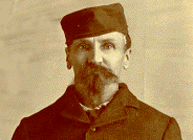 Alfred Packer
Murderer ? · USA · 1874
Alfred Packer was convicted of cannibalism after killing and eating five compan…
5 victims
Alfred Packer
Murderer ? · USA · 1874
Alfred Packer was convicted of cannibalism after killing and eating five compan…
5 victims
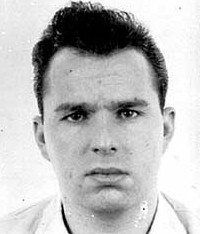 Gary Krist
Murderer ? · USA · 1959
Gary Krist Gary Steven Krist (born April 29, 1945) lived part of his childhood…
4 victims
Gary Krist
Murderer ? · USA · 1959
Gary Krist Gary Steven Krist (born April 29, 1945) lived part of his childhood…
4 victims
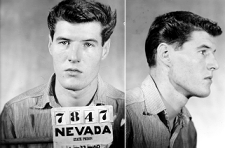 Thayne Archibald
Murderer · USA · 1959
Thayne Archibald was executed at the Nevada State Prison on August 23, 1961. He…
1 victim
Thayne Archibald
Murderer · USA · 1959
Thayne Archibald was executed at the Nevada State Prison on August 23, 1961. He…
1 victim
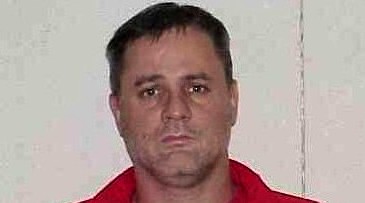 Karu White
Murderer · USA · 1979
Karu White was sentenced to death on March 29, 1980 in Powell County for the mu…
3 victims
Karu White
Murderer · USA · 1979
Karu White was sentenced to death on March 29, 1980 in Powell County for the mu…
3 victims
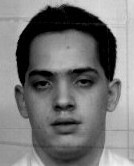 Steven Brian Alvarado
Homicide · 1991
Steven Brian Alvarado was a juvenile aged 17 at the time of the crimes. Alvarad…
2 victims
Steven Brian Alvarado
Homicide · 1991
Steven Brian Alvarado was a juvenile aged 17 at the time of the crimes. Alvarad…
2 victims
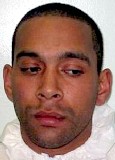 Wayne Edwards
Murderer · United Kingdom · 2009
Wayne Edwards was 33 years old and lived with his grandfather, Paul Peters, in…
1 victim
Wayne Edwards
Murderer · United Kingdom · 2009
Wayne Edwards was 33 years old and lived with his grandfather, Paul Peters, in…
1 victim
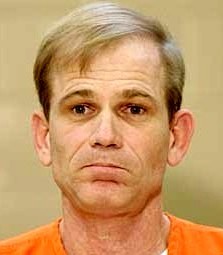 Paul Jennings Hill
Murderer · USA · 1994
Paul Jennings Hill was executed by lethal injection in Florida on September 3,…
2 victims
Paul Jennings Hill
Murderer · USA · 1994
Paul Jennings Hill was executed by lethal injection in Florida on September 3,…
2 victims
- Gender
- male
- Country
- USA
- Location
- St. Louis City, Missouri, USA
- Date of birth
- September 23, 1954
- Age at first offence
- 26
- Characteristics
- drugs, revenge
- Victim profile
- Quinton Moss, 19 ( drug dealer )
- Method of murder
- Shooting (.30 caliber semi-automatic carbine)
- Date(s) of murder
- June 26, 1980
- Years active
- 1980
- Date of arrest
- 4 days after
- Status
-
Executed
Executed by lethal injection in Missouri on June 21, 1995
Parties
- Larry Griffin — defendant; executed in Missouri on June 21, 1995
- Quintin Moss — victim; drug dealer; 19 years of age when killed
- Wallace Connors (also spelled Wallace Conners / Conners) — wounded bystander shot in the attack
- Dennis Griffin — Larry Griffin’s brother; killed months earlier; Quintin Moss was arrested in connection with that earlier death
Background
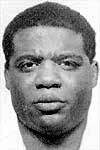
Larry Griffin was born on September 23, 1954 and was 25 years of age at the time of the June 26, 1980 crime. He was Black. At the time of the case, his address was Potosi Correctional Center (deceased). He was later executed by lethal injection.
Quintin Moss was killed in a drive-by shooting while allegedly dealing drugs on a street corner in St. Louis, Missouri on June 26, 1980. The alleged motive described in the case involved revenge for the killing of Griffin’s brother, Dennis Griffin, several months earlier. Larry Griffin was arrested, tried, and convicted for the murder.
After Larry Griffin’s execution, a post-execution investigation was conducted by the NAACP Legal Defense and Educational Fund, led by Samuel Gross, a professor at the University of Michigan Law School.
The offence
On June 26, 1980 at approximately 4:25 p.m., gun shots were fired from a moving car at the intersection of Sarah and Olive in the City of St. Louis, Missouri. The shots struck two men: Quinton Moss and Wallace Connors.
According to the coroner’s report, Mr. Moss died of 13 gunshot wounds in various parts of his body including his shoulders, left lung, heart and head.
The shooting was described as a drive-by attack. The car used in the shooting was described by a witness, and police later located the car.
Investigation
A witness gave police a description of the car and also identified Larry Griffin from a group of police photos as the man in the front passenger seat who fired the shots.
Later that day, police located the car and found:
- a .30 caliber semi-automatic carbine capable of holding a clip of 31 cartridges
- a .38 Smith and Wesson revolver in the trunk
- several .30 caliber carbine shell casings
Fragments of bullets found at the scene were positively identified as having been fired from the semi-automatic carbine.
Police also found some papers with the names of several individuals.
The investigation revealed that Quinton Moss had been arrested on January 2, 1980 in connection with the death of Dennis Griffin, Larry Griffin’s brother.
Arrest and charges
On June 30, 1980, police arrested and charged Larry Griffin with the murder of Quinton Moss.
An indictment was filed in St. Louis City charging Larry Griffin with capital murder for the shooting death of Quintin Moss.
Timeline
- 1974-05-06 — Griffin was remanded to the Missouri Department of Corrections from the City of St. Louis for three years and two years on two Burglary Second Degree charges to run concurrently.
- 1977-05-11 — Griffin was arrested in the City of St. Louis for Stealing Under $50,000; he was granted probation for six months on the first sentence and remanded to the St. Louis Medium Security Institution for 30 days on the second charge.
- 1977-06-04 — Griffin was arrested in the City of St. Louis for felony possession of a controlled substance, misdemeanor assault, and possession of marijuana; he was sentenced to three years for the felony charge to run concurrently with a three-year sentence for Stealing Over $50,000 charge of November 10, 1975, and 30 days in St. Louis Medium Security Institution for the misdemeanor charges.
- 1979-04-11 — Griffin was sentenced to ten years in the Missouri Department of Corrections for Robbery First Degree and Felony Possession of a Controlled Substance; he also received five years for Burglary Second Degree and Carrying a Concealed Weapon; all sentences were concurrent.
- 1980-04-26 — Quintin Moss was shot to death in a drive-by-shooting in St Louis City.
- 1980-01-02 — (Investigation detail) Moss had been arrested in connection with the death of Dennis Griffin.
- 1980-06-26 — Gun shots were fired from a moving car at the intersection of Sarah and Olive in St. Louis; Quinton Moss and Wallace Connors were shot.
- 1980-06-30 — Griffin was arrested and charged with the murder of Quintin Moss.
- 1981-04-04 — An indictment was filed charging Larry Griffin with capital murder for the shooting death of Quintin Moss.
- 1981-06-22 — Griffin was tried in the Circuit Court of St. Louis City and was found guilty of capital murder.
- 1981-06-27 — The jury recommended a sentence of death.
- 1981-08-07 — A motion for new trial was denied, and Griffin was sentenced to death for killing Quintin Moss.
- 1981-08-11 — Notice of appeal was filed.
- 1983-12-20 — The Missouri Supreme Court affirmed Griffin’s conviction and sentence.
- 1984-10-01 — The United States Supreme Court denied certiorari.
- 1984-11-16 — Griffin filed a Rule 27.26 motion for post-conviction relief in the Circuit Court of St. Louis City.
- 1987-02-23 — The motion for post-conviction relief was denied.
- 1988-02-16 — The Missouri Court of Appeal, Eastern District, affirmed the denial of post-conviction relief.
- 1988-06-03 — Griffin filed a petition for writ of habeas corpus in the United States District Court for the Eastern District of Missouri.
- 1990-07-16 — The petition for writ of habeas corpus was denied.
- 1991-10-11 — The United States Court of Appeals for the Eighth Circuit affirmed the District Court’s order and denied the petition for writ of habeas corpus.
- 1992-07-16 — Rehearing was granted by the United States Court of Appeals for the Eighth Circuit and the case was remanded to the District Court for further proceedings.
- 1992-10-05 — The United States Supreme Court denied respondent’s petition for writ of certiorari.
- 1993-10-06 — The District Court conducted an evidentiary hearing.
- 1993-10-25 — The petition for writ of habeas corpus on remand was denied.
- 1994-02-24 — The United States Court of Appeals for the Eighth Circuit remanded the case to the district court for further proceedings.
- 1994-04-25 — The petition for writ of habeas corpus on remand was again denied.
- 1994-08-23 — The United States Court of Appeals for the Eighth Circuit affirmed the District Court denial.
- 1995-05-15 — The United States Supreme Court denied certiorari.
- 1995-05-19 — The Missouri Supreme Court set June 21, 1995 as Griffin’s execution date.
- 1995-06-21 — Griffin was executed by lethal injection in Missouri.
Trial
The Circuit Court of St. Louis City tried Larry Griffin and found him guilty of capital murder for the shooting death of Quintin Moss. The jury recommended a sentence of death.
Eyewitness testimony
The eyewitness testimony was described as an unreliable photo identification by sole eyewitness Robert Fitzgerald, who later recanted his in-court identification of Griffin.
Forensic testimony
No of Griffin’s fingerprints were found:
- on the car
- on the murder weapons
Confession and accomplice testimony
No confession was reported. No accomplice testimony was reported.
Defense testimony and evidence
- Griffin did not testify.
- Principal exculpatory evidence included testimony of Kerry Caldwell, described as an actual participant in the killing, that Griffin was not involved.
- A new eyewitness identified as Jimmy Massey stated Griffin not involved.
Jailhouse snitch
Jailhouse snitch information was listed as N/A.
Sentencing
The sentencing authority referenced a statutory aggravating factor:
- “The circumstances of the shooting created a risk of danger to other persons.”
Non-statutory aggravating factor was listed as N/A.
Mitigating factors were described as including:
- Actual innocence
- Death penalty disproportionate sentence for drive-by shooting
- Defendant did not receive a fair trial
Evidence of mental illness, retardation, or neurological damage was listed as N/A.
Criminal history (as described)
Shoplifting and burglary were listed in criminal history, with details not known.
Appeals and post-conviction proceedings
State appeals
- The Missouri Supreme Court affirmed Griffin’s conviction and sentence on December 20, 1983.
- A motion for new trial was denied on August 7, 1981.
- The U.S. Supreme Court denied certiorari on October 1, 1984.
Post-conviction relief (Rule 27.26)
- Griffin filed a Rule 27.26 motion for post-conviction relief on November 16, 1984.
- The motion was denied on February 23, 1987.
- The Missouri Court of Appeal, Eastern District affirmed denial on February 16, 1988.
Federal habeas corpus
- Griffin filed a petition for writ of habeas corpus in the Eastern District of Missouri (listed as June 3, 1988 in the chronology).
- The petition was denied on July 16, 1990.
- The Eighth Circuit affirmed and denied relief on October 11, 1991.
- Rehearing was granted on July 16, 1992, and the case was remanded.
- The U.S. Supreme Court denied certiorari on October 5, 1992.
- The District Court conducted an evidentiary hearing on October 6, 1993.
- The petition was denied on October 25, 1993.
- The Eighth Circuit remanded for further proceedings on February 24, 1994, and the petition was again denied on April 25, 1994.
- The Eighth Circuit affirmed the denial on August 23, 1994.
- The U.S. Supreme Court denied certiorari on May 15, 1995.
Issues raised in federal habeas decisions (as included in the record)
Threat testimony
Griffin argued he was denied due process by admission of testimony from the victim’s mother regarding telephone threats received prior to her son’s death. The threats were described as never directly or indirectly linked to Griffin. The federal appellate discussion included procedural default and lack of cause and prejudice.
Ineffective assistance of counsel
Griffin argued ineffective assistance of counsel in multiple respects, including alleged failures relating to the threats testimony and a witness identified as Robert Campbell. The federal appellate discussion addressed Strickland standards and included references to motions in limine and strategic decisions.
Confrontation clause / hearsay
Griffin argued denial of the right to confront an adverse witness when hearsay testimony was admitted. The federal appellate discussion addressed procedural bar due to differences from the direct appeal theory.
Prosecutorial use of perjured testimony / due process
Griffin argued due process violations based on knowing use of testimony allegedly known to be false and asserted Campbell’s testimony would contradict police officers’ testimony. The appellate discussion found no denial of due process on the claims as presented.
Photo identification (suggestive police misconduct)
Griffin asserted that a pretrial photo identification was tainted by suggestive police misconduct and that it irreparably tainted any subsequent in-court identification. The federal appellate discussion found no error in the district court’s findings regarding reliability and a lack of improper police conduct affecting the pretrial identification.
Actual innocence / newly discovered evidence
Griffin asserted actual innocence based on newly discovered evidence and described an “actual innocence exception” used as a gateway. The record included testimony and evaluations of credibility relating to Kerry Caldwell, Robert Fitzgerald, and a private investigator Terrence McDonough. The federal appellate discussion described the district court’s factual findings on credibility and denial of habeas relief.
Penalty phase instruction
Griffin claimed Eighth and Fourteenth Amendment violations based on a penalty phase instruction requiring the jury to “first unanimously agree that a mitigating circumstance or circumstances existed” before weighing mitigating evidence against aggravating circumstance(s). The federal appellate discussion quoted jury instruction language and concluded the instructions did not violate McKoy or Mills.
Prosecutor’s closing arguments
Griffin asserted constitutional violations regarding remarks about Griffin’s failure to testify and an erroneous definition of reasonable doubt, among other allegations. The federal appellate discussion concluded no constitutional violation.
Other details
Trial participants and roles (as listed)
- Trial judge: Gallagher
- Trial attorney: Frederick Steiger
- Prosecutors: Gordon Ankney
- Trial by judge and jury: listed
- Trial attorney for direct appeal: Frederick Steiger
- Appellate counsel: Kent E. Gipson (federal habeas)
- Appellate counsel also listed: Larry Griffin (as part of procedural/counsel listing)
- Jurors: “Convicted of Capital murder” is listed; “Trial By Judge and Jury Race of Jurors” appears but no explicit race details are separately stated in the record beyond the presence of “Race of Jurors Convicted of Capital murder” and “Race of Jurors” headings.
Victim details and relationship
- Quintin Moss was 19 years of age and was described as a drug dealer.
- The relationship to defendant was described as suspected murderer of Griffin’s brother, Dennis.
Alternate accounts and later investigations
The record includes multiple assertions and criticisms of the trial, including that there was no physical evidence against Griffin except the testimony of Robert Fitzgerald, that Fitzgerald was a professional criminal with felony charges pending at the time, and that Fitzgerald later admitted perjury and described suggestive police identification processes. The record also includes descriptions of claims of additional eyewitnesses supporting Griffin’s innocence, including Kerry Caldwell and Jimmy Massey.
The record also includes mentions of a state prosecutor deciding to reopen the murder investigation and discussions of evidence discussed as insufficient or inconclusive, as well as statements attributed to individuals involved in those post-execution developments.
Decisions and quotations (verbatim quotations included)
“The only eyewitness to the murder had a seriously flawed background, and his ability to observe and identify the gunman was also subject to question.”
(Attributed in the record to a Missouri Supreme Court justice.)
“We know this man is involved.”
(Quoted as spoken to Robert Fitzgerald, attributed in the record to an investigating officer.)
Additional quotations attributed in the record (verbatim)
“I just want to see the truth.”
(Quoted as said by Jennifer Joyce.)
“I wanted to take an independent look at it, and if mistakes were made, do what I can to rectify them, recognizing that there may not be much I could do.”
“If they prove that he was innocent, that would be the gold standard,”
(Quoted as said by Joshua Marquis.)
“I'm not sure opponents of the death penalty would start prevailing, but they'd be able to say to people like me, 'What about Mr. Griffin?' "
“People say, 'Will this make citizens trust the criminal justice system less?' "
“I hope it makes them trust it more."
Additional federal appellate instruction quotes (verbatim)
Jury instruction number twenty-two:
If you unanimously decide that a sufficient mitigating circumstance or circumstances exist which outweigh
Spotted an error, or have more information about this case?