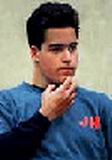
Larry Jenkins
Murderer Brian Kevin Rosenfeld
Murderer · USA · 1985
Brian Kevin Rosenfeld Brian Kevin Rosenfeld was sentenced to three concurrent l…
23 victims
Brian Kevin Rosenfeld
Murderer · USA · 1985
Brian Kevin Rosenfeld Brian Kevin Rosenfeld was sentenced to three concurrent l…
23 victims
 Russell Ellwood
Murderer · USA · 1991
Russell Ellwood was a former taxi driver. Authorities suspected him of killing…
20 victims
Russell Ellwood
Murderer · USA · 1991
Russell Ellwood was a former taxi driver. Authorities suspected him of killing…
20 victims
 Robert Martines Perez
Murderer · USA · 1994
Name: Robert Martines Perez · Other name used in proceedings: Robert Martinez P…
15 victims
Robert Martines Perez
Murderer · USA · 1994
Name: Robert Martines Perez · Other name used in proceedings: Robert Martinez P…
15 victims
 Billy Frank Vickers
Murderer · USA · 1993
Billy Frank Vickers Vickers was executed by lethal injection in Texas on Januar…
14 victims
Billy Frank Vickers
Murderer · USA · 1993
Billy Frank Vickers Vickers was executed by lethal injection in Texas on Januar…
14 victims
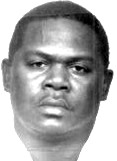 Tony Lee Walker
Murderer · USA · 1978
Tony Lee Walker was convicted of capital murder for the killing of Virginia Sim…
3 victims
Tony Lee Walker
Murderer · USA · 1978
Tony Lee Walker was convicted of capital murder for the killing of Virginia Sim…
3 victims
 Arnfinn Nessett
Serial killer · Norway · 1980
Arnfinn Nesset was born October 25, 1936, in Norway. He was a Norwegian nurse a…
22 victims
Arnfinn Nessett
Serial killer · Norway · 1980
Arnfinn Nesset was born October 25, 1936, in Norway. He was a Norwegian nurse a…
22 victims
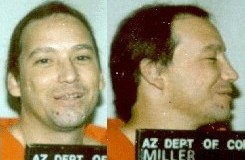 Donald Jay Miller
Murderer · USA · 1992
June 12, 1992 — Jennifer Geuder went out with her married boyfriend, Jose Luna,…
1 victim
Donald Jay Miller
Murderer · USA · 1992
June 12, 1992 — Jennifer Geuder went out with her married boyfriend, Jose Luna,…
1 victim
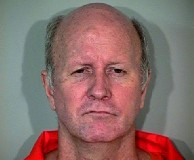 Graham Saunders Henry
Murderer · USA · 1986
Graham Saunders Henry was a Caucasian defendant. · Roy Estes was a Caucasian vi…
1 victim
Graham Saunders Henry
Murderer · USA · 1986
Graham Saunders Henry was a Caucasian defendant. · Roy Estes was a Caucasian vi…
1 victim
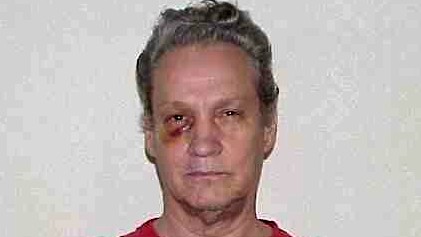 John Roscoe Garland
Murderer · USA · 1997
John Roscoe Garland (DOB 7-22-42) was sentenced to death on February 15, 1999 i…
3 victims
John Roscoe Garland
Murderer · USA · 1997
John Roscoe Garland (DOB 7-22-42) was sentenced to death on February 15, 1999 i…
3 victims
- Gender
- male
- Country
- USA
- Location
- Wayne County, Georgia, USA
- Date of birth
- ???
- Characteristics
- kidnapping, robbery
- Victim profile
- Terry Ralston, 37 (owner of a laundry) and her son Michael, 15
- Method of murder
- Shooting
- Date(s) of murder
- January 8, 1993
- Years active
- 1993
- Date of arrest
- Next day
- Status
-
Sentenced to death
Sentenced to death on September 30, 1995
Case identification
Larry L. Jenkins Jr. was convicted of the malice murders and kidnappings with bodily injury and armed robbery of Terry Ralston and her 15-year-old son Michael Ralston, and theft of $600 in coins.
Background
Terry Ralston, 37, and her 15-year-old son Michael left their home in a white Chevy Lumina van to drive to their family-owned laundromat in Jesup to collect coins from the machines and otherwise close the store.
The offence
At 8:30 p.m. on January 8, 1993, Terry Ralston and her son left their home to drive to their family-owned laundromat in Jesup. After they failed to return home, a family member went to the laundromat and discovered the establishment locked but only partially cleaned.
On the next day, the bodies of Terry and Michael Ralston were found lying face down in a ditch near the railroad tracks. Michael had been shot six times from behind at close range, including once in the back of the head. Terry’s mother was shot once at the base of the skull.
A piece of fresh onion was found next to the bodies.
Larry Jenkins accosted Terry and Michael Ralston on Jan. 8, 1993. He kidnapped the mother and son and shot them both to death in a rural area.
Investigation
A witness residing in the vicinity where the bodies were discovered testified that she heard shots fired between 9:00 and 10:00 p.m. on January 8.
Witnesses testified that they observed Jenkins driving Terry Ralston’s white van after 10:30 p.m. on the night of January 8 as he drove around Jesup picking up some friends to go to a club. Jenkins picked up David Wilkerson at 11:30 p.m. after Wilkerson’s job shift ended and picked up Burnies Durden shortly thereafter from an apartment where Durden had been playing cards since 5:00 p.m.
Jenkins informed his friends that the van belonged to his mother.
Jenkins carried a .22 Grendel magnum pistol and the van contained a duffle bag holding over $600 in quarters. Jenkins drove his friends to a nearby town in the van where they went to a club and spent the night at a woman’s house.
The next day, Jenkins discussed the incident with Durden, telling him that he had robbed a laundromat and shot and killed a lady and her son with a .22 along some railroad tracks after the boy “started to buck” and the woman began screaming.
Jenkins drove the van back to Jesup where he, Durden and Wilkerson placed the quarters in coin wrappers. Jeramon Campbell joined the others and, after being told by Durden about Jenkins’ admission to robbing and killing two people, asked Jenkins if it was true. Jenkins replied that he was “just kidding,” but he later showed Campbell and Durden Michael Ralston’s learner’s permit.
Thereafter, the four men drove around Jesup and tried to cash in the quarters. At one store that Campbell entered, the cashier refused the coins because some people had been robbed the night before and were missing. When questioned by Campbell about this comment, Jenkins did not answer and told Wilkerson, who was driving, to back out so the cashier could not see the van’s license plate number.
The police subsequently spotted the van and pulled it over; the passengers escaped on foot, but Wilkerson turned himself in to police at a nearby police station.
Rolls of quarters, a clip from a .22 automatic weapon, a sportsbag, a box of .22 cartridges and two onion peels were found in the van.
Jenkins threw the murder weapon into some bushes when he ran from the van and dropped a backpack which contained $142 in quarters.
When he was arrested later that day, the police discovered Michael Ralston’s learner’s permit in his pocket.
Durden, Wilkerson and Campbell were interrogated separately, and each gave corroborating statements about Jenkins’ actions and comments on January 8 and 9.
The police were able to establish that none of the men had been with Jenkins or in the white van before 11:30 p.m. on the night of the murders.
During the time Jenkins was incarcerated prior to conviction, inmate Curtis Mathis saw and heard Jenkins arguing with another prisoner. According to the inmate, Jenkins told the other prisoner that he had “already killed two [people] and it wouldn’t bother him again if he killed another one.”
Arrest
Jenkins was arrested later that day after the police pulled over the van.
Trial
Charges and verdict
Jenkins was indicted by the Wayne County grand jury for malice murder (two counts), felony murder (two counts), kidnapping with bodily injury (two counts), armed robbery, burglary, theft by receiving and theft by taking (two counts) on January 25, 1993.
On September 29, 1995, the jury found Jenkins guilty of the malice murders, kidnappings, armed robbery, and theft counts; the trial court directed a verdict of acquittal on the burglary charge.
The trial court merged one count of theft by taking into the armed robbery and merged the theft by receiving into the remaining count of theft by taking.
On the following day, the jury returned its recommendation of a death sentence for each murder count.
The trial court imposed that sentence, plus three life sentences for the kidnappings and armed robbery and ten years for the theft by taking, all sentences to be served consecutively.
Evidence at trial
The trial evidence included testimony that at 8:30 p.m. on January 8, 1993, Terry Ralston and her son left their home in Ms. Ralston’s white Chevy Lumina van to drive to their family-owned laundromat in Jesup.
The trial evidence included the post-midnight activities in which Jenkins picked up David Wilkerson and Burnies Durden, carried a .22 Grendel magnum pistol, and had the van contain over $600 in quarters, along with the subsequent club outing, overnight stay at a woman’s house, the next-day discussion with Durden about robbing a laundromat and shooting Terry and Michael Ralston, the showing of Michael Ralston’s learner’s permit, and the attempts to cash in the quarters.
The trial evidence included the police recovery of rolls of quarters, a clip from a .22 automatic weapon, a sportsbag, a box of .22 cartridges and two onion peels in the van.
The trial evidence included that Jenkins threw the murder weapon into bushes when he ran from the van and dropped a backpack containing $142 in quarters.
The trial evidence included Durden, Wilkerson and Campbell’s separate interrogations and corroborating statements about Jenkins’ actions and comments on January 8 and 9, and that the police found that none of the men had been with Jenkins or in the white van before 11:30 p.m. on the night of the murders.
Pretrial and trial rulings
Jenkins contested the trial court’s actions on multiple pretrial and trial issues, including:
- Jenkins argued that the trial court erred in denying his motion to preclude the State from seeking the death penalty due to the alleged unconstitutionality of the prosecutor’s criterion for determining when to seek it. The record reflected the district attorney’s position to seek the death penalty in every murder case with a statutory aggravating circumstance except cases involving “outrageously or wantonly vile, horrible or inhuman circumstances,” evaluated individually under OCGA 17-10-30 (b) (7).
- Jenkins contended the trial court erred in changing venue to Glynn County due to pretrial publicity in Wayne County. The court changed venue under OCGA 17-7-150 (a) (1).
- The trial court denied Jenkins’ request for access to the State’s juror files.
- Jenkins filed a “Motion to Bar Unreliable Testimony of an Informant” before trial, claiming Curtis Mathis was unreliable; the trial court refused to hold a hearing on Mathis’ credibility and allowed Mathis to testify.
- The trial court denied Jenkins’ request for a separate trial on the issue of mental retardation, with OCGA 17-7-131 (c) (3) requiring jury determination during the guilt/innocence phase.
- The trial court did not err by excusing a prospective juror due to a hearing disability after the juror said “I can't hardly hear you,” admitted to having a hearing problem, and stated that her hearing disability would be a problem for her as a juror.
- Jenkins contended the State violated Batson v. Kentucky and J.E.B. v. Alabama in jury selection; the trial court ruled the disparity did not establish a prima facie case of race or gender discrimination and allowed the State to provide reasons. The prosecutor provided reasons including jurors’ reservations about imposing the death penalty, relatives prosecuted by the district attorney’s office, and mental retardation being an issue where the State said it struck jurors because they had children who were mentally impaired.
- The trial court refused to grant a directed verdict on the issue of Jenkins’ mental retardation because the evidence regarding mental ability was disputed and conflicting under OCGA 17-9-1 (a).
- Jenkins asserted Brady v. Maryland violations regarding deputy’s notes and other investigative notes and statements; the court found no Brady violation.
- Jenkins asserted Giglio v. United States violations regarding alleged deals with witnesses Mathis, Durden, Wilkerson and Campbell; the court found no evidence to support Jenkins’ assertion and found no Giglio violation.
Jury selection disputes
Jenkins argued that:
- The trial court erred by failing to strike six prospective jurors predisposed to the death penalty; the decision depended on whether their views would prevent or substantially impair their duties in accordance with instructions and oath.
- Jurors Hall, Griffin and Watson were improperly not struck; the trial court found those jurors’ views would substantially impair performance of their duties in accordance with instructions and oath.
- The trial court improperly restrict voir dire scope; Jenkins argued he was prevented from certain lines of questioning but the court found he could elicit information by rephrasing and held the voir dire scope was broad enough to ascertain fairness and impartiality.
- The trial court erred by allowing the State to ask questions to prospective jurors that would prejudge the case; the court found no abuse of discretion regarding the first juror’s voir dire and found the second juror issue waived for lack of trial objection.
The decision addressed individual prospective jurors:
- Juror Hardwick responded about religion or personal convictions for or against the death penalty by saying: “Either way I'd make my own mind up, an eye for an eye, a tooth for a tooth, something like that.”
- Juror Cope stated he would listen to evidence from both sides, consider age and mental condition as mitigating factors, and could vote for life even if the defendant was convicted of murder; Cope said he would require guilt beyond a “shadow of a doubt” before imposing the death penalty.
- Juror Wendel stated he had no personal conviction for or against the death penalty, could recommend either life or death, and would consider mitigation evidence if instructed by the judge.
- Prospective jurors Hooten, Phillips and Pierce were discussed in relation to whether they would give consideration to mitigation evidence.
Sentencing
During the sentencing phase:
- The trial court refused to instruct the jury on the meaning of a life sentence.
- The trial court did not err by denying Jenkins’ pretrial motions requesting permission to address the jury prior to deliberation or to take the stand with limited cross-examination; Isaacs v. State and OCGA 24-9-20 (b) applied.
- The jury based its recommendation of two death sentences on nine statutory aggravating circumstances.
Aggravating circumstances and appellate adjustments
The jury recommended two death sentences for the murders, finding nine aggravating circumstances including:
- The murder of Michael Ralston was committed during the commission of a kidnapping and in the commission of the murder, kidnapping, and armed robbery of Terry Ralston.
- The murder of Terry Ralston was committed during the commission of a kidnapping and in the commission of the murder and kidnapping of Michael Ralston.
- Each murder was committed for the purpose of receiving money. OCGA 17-10-30 (b) (2), (4).
On appeal, the court set aside the statutory aggravating circumstance that the murder of Michael Ralston occurred during the murder of Terry Ralston due to the doctrine of mutually-supporting aggravating circumstances. No reversal of either death sentence was required because the death sentences remained based on other valid statutory aggravating circumstances.
The appellate court also:
- Addressed Jenkins’ argument against submitting statutory aggravating circumstances when some were mutually supporting and rejected it.
- Addressed Jenkins’ argument that kidnapping was listed on the verdict form rather than “kidnapping with bodily injury,” concluding the record supported kidnapping with bodily injury as to the supporting offense for each OCGA 17-10-30 (b) (2) aggravating circumstance.
- Addressed Jenkins’ argument that OCGA 17-10-30 (b) (4) circumstances were subsumed by armed robbery under OCGA 17-10-30 (b) (2), rejecting it under Simpkins.
Mercy, residual doubt, and jury instructions
Jenkins requested instructions on mercy and residual doubt:
- The trial court instructed jurors they could consider mitigating evidence, return a life sentence for any reason or no reason at all, and consider “feelings of sympathy and mercy that flow from the evidence.” The appellate court held the trial court sufficiently instructed the jury on mercy and mitigation.
- The appellate court held the trial court was not required to identify mitigating circumstances offered by Jenkins.
- The trial court refused to instruct the jury that they could consider residual doubt of Jenkins’ guilt as a mitigating factor; the appellate court found no error.
- The appellate court held the trial court did not err by refusing several requested sentencing charges.
Closing argument disputes in penalty phase
The appellate court addressed three challenged statements during closing argument in the penalty phase:
- The State argued that sentencing Jenkins to death “tells any-body that wants to follow in his footsteps that we will not stand for that in this community or any other community.”
- A former judge quote was used at the start of opening statement and repeated at the start of closing argument and again at the end with an added request:
- The quote attributed to a former judge was: “When I go to bed at night, I dream that life is beauty, and when I wake up in the morning, I find that life is duty.”
- The prosecutor added: [the quote] illustrates where we are and what we are here to do today, and that is to do our duty. We are to discuss and think about and decide on something for everyone in this courtroom. So deep, and serious, and important that it requires all our best effort.
- At the conclusion, the prosecutor added: “I ask you to do your duty.”
- Jenkins also challenged argument on lack of remorse, which the appellate court treated as permissible.
Other constitutional challenge
Jenkins argued execution by electrocution was unconstitutional under federal or state constitutions; the appellate court held the issue had been previously resolved adversely to him.
Review of death sentence arbitrariness and proportionality
The appellate court determined the death sentence was not imposed under the influence of passion, prejudice, or any other arbitrary factor and was not excessive or disproportionate. The court referenced similar cases in an appendix involving deliberate, unprovoked killings during a kidnapping with bodily injury and/or armed robbery and noted juries were willing to impose the death penalty under those circumstances.
Appeals
The case was reviewed as “JENKINS v. THE STATE. S97P1474. (269 Ga. 282) (498 SE2d 502) (1998) HUNSTEIN, Justice. Murder. Wayne Superior Court. Before Judge Taylor.” The appellate disposition affirmed the judgment.
The record reflected that:
- Jenkins’ motion for new trial, filed October 30, 1995 and amended on July 6, 1996 and October 9, 1996, was denied on January 16, 1997.
- Jenkins filed a notice of appeal on February 11, 1997.
- The case was orally argued on October 20, 1997.
- The case was decided February 23, 1998, and reconsiderations were denied April 2, 1998.
Dissent
FLETCHER, Presiding Justice, dissented to divisions 6 and 17, stating that requiring a capital defendant to prove mental retardation beyond a reasonable doubt in the guilt-innocence phase was fundamentally unfair and should be resolved in a pre-trial hearing with “preponderance of the evidence” as the burden of proof.
The dissent also stated it dissented to division 23 (d) because, under the facts of the case, it was neither logical nor fair to charge both the (b) (4) and (b) (2) aggravating circumstances since they referred to identical aspects of the crime. Chief Justice Benham joined the dissent.
Outcome
The appellate court affirmed. Jenkins was sentenced to death on September 30, 1995.
Timeline
- January 8, 1993 — Terry Ralston and her 15-year-old son Michael left home in the white Chevy Lumina van to drive to the family-owned laundromat in Jesup; Jenkins accosted, kidnapped, and shot Terry and Michael Ralston to death.
- January 25, 1993 — Jenkins was indicted by the Wayne County grand jury for malice murder (two counts), felony murder (two counts), kidnapping with bodily injury (two counts), armed robbery, burglary, theft by receiving and theft by taking (two counts).
- June 9, 1993 — The State filed a notice of intent to seek the death penalty.
- September 29, 1995 — The jury found Jenkins guilty of the malice murders, kidnappings, armed robbery, and theft counts; the trial court directed a verdict of acquittal on the burglary charge.
- September 30, 1995 — The jury returned its recommendation of a death sentence for each murder count; the trial court imposed the death sentence.
- October 30, 1995 — Jenkins filed a motion for new trial.
- January 16, 1997 — Jenkins’ motion for new trial was denied.
- February 11, 1997 — Jenkins filed a notice of appeal to the Court.
- October 20, 1997 — The case was orally argued.
- February 23, 1998 — The case was decided.
- April 2, 1998 — Reconsiderations were denied.
Other details
- Jenkins was 21 years old when he was sentenced to death in Wayne County.
- The jury recommended two death sentences for the murders.
- The trial court imposed three life sentences for the kidnappings and armed robbery and ten years for the theft by taking, all sentences to be served consecutively.
- The State and defense disputed multiple matters in appellate division headings, including venue, juror access, informant credibility, mental retardation procedures, juror qualification, Batson/J.E.B. strikes, voir dire scope, subpoenas relating to psychological testing (Dr. William Dickinson), directed verdict on mental retardation, Brady and Giglio issues, admission of seven photographs of the bodies of Terry and Michael Ralston, meaning of a life sentence, jury instructions regarding mercy and residual doubt, and arguments made during closing in the guilt/innocence phase and penalty phase.

Spotted an error, or have more information about this case?