
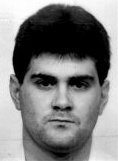
Robert Lee Willie
Murderer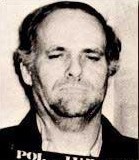 Ervil LeBaron
Murderer · USA · 1972
Ervil Morrell LeBaron (1925 to August 16, 1981) was the leader of a polygamous…
35 victims
Ervil LeBaron
Murderer · USA · 1972
Ervil Morrell LeBaron (1925 to August 16, 1981) was the leader of a polygamous…
35 victims
 Brian Kevin Rosenfeld
Murderer · USA · 1985
Brian Kevin Rosenfeld Brian Kevin Rosenfeld was sentenced to three concurrent l…
23 victims
Brian Kevin Rosenfeld
Murderer · USA · 1985
Brian Kevin Rosenfeld Brian Kevin Rosenfeld was sentenced to three concurrent l…
23 victims
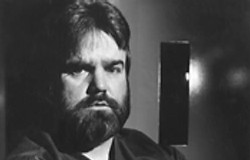 Marvin Gray
Murderer · USA · 1975
Marvin Gray was convicted killer who claimed responsibility for 23 slayings and…
23 victims
Marvin Gray
Murderer · USA · 1975
Marvin Gray was convicted killer who claimed responsibility for 23 slayings and…
23 victims
 Yahweh ben Yahweh
Murderer · USA · 1980
Yahweh ben Yahweh was born and legally named Hulon Mitchell Jr. (October 27, 19…
23 victims
Yahweh ben Yahweh
Murderer · USA · 1980
Yahweh ben Yahweh was born and legally named Hulon Mitchell Jr. (October 27, 19…
23 victims
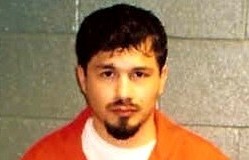 Tedor Davido
Murderer · USA · 2000
Tedor Davido was convicted of the murder of 20-year-old Angelina C. Taylor and…
1 victim
Tedor Davido
Murderer · USA · 2000
Tedor Davido was convicted of the murder of 20-year-old Angelina C. Taylor and…
1 victim
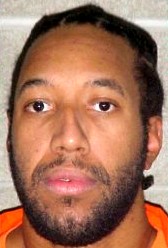 Kevin Miles
Murderer · USA · 1992
Kevin Miles was sentenced to death on July 6, 1993. On December 7, 1992, Miles…
1 victim
Kevin Miles
Murderer · USA · 1992
Kevin Miles was sentenced to death on July 6, 1993. On December 7, 1992, Miles…
1 victim
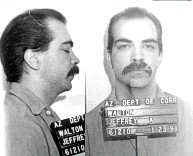 Jeffrey Alan Walton
Murderer · USA · 1986
Jeffrey Alan Walton was sentenced to death for the first-degree murder of Thoma…
1 victim
Jeffrey Alan Walton
Murderer · USA · 1986
Jeffrey Alan Walton was sentenced to death for the first-degree murder of Thoma…
1 victim
 Erik Hollie
Murderer · USA · 2009
Erik Hollie was sentenced to death on March 16, 2010, for a capital murder in W…
1 victim
Erik Hollie
Murderer · USA · 2009
Erik Hollie was sentenced to death on March 16, 2010, for a capital murder in W…
1 victim
 Michael Nicholaou
Murderer · USA · 2005
Michael Nicholaou (56) was Aileen Nicholaou’s husband. · Aileen Nicholaou (47)…
2 victims
Michael Nicholaou
Murderer · USA · 2005
Michael Nicholaou (56) was Aileen Nicholaou’s husband. · Aileen Nicholaou (47)…
2 victims
 Reginald Love Powell
Murderer · USA · 1986
Reginald Love Powell was the defendant. Freddie Miller and Lee Miller were the…
2 victims
Reginald Love Powell
Murderer · USA · 1986
Reginald Love Powell was the defendant. Freddie Miller and Lee Miller were the…
2 victims
- Gender
- male
- Country
- USA
- Location
- Washington Parish, Louisiana, USA
- Date of birth
- 1958
- Age at first offence
- 22
- Characteristics
- kidnapping, rape
- Victim profile
- Faith Hathaway (female, 18)
- Method of murder
- Stabbing with knife
- Date(s) of murder
- May 28, 1980
- Years active
- 1980
- Date of arrest
- —
- Status
-
Executed
Executed by electrocution in Louisiana on December 28, 1984
Overview
Robert Lee Willie (died December 28, 1984) was a man convicted in Louisiana of the murder of Faith Hathaway and sentenced to death. He was executed in Louisiana by electrocution on December 28, 1984.
Background
Willie was convicted in a Louisiana court of the murder of Faith Hathaway and sentenced to die. After exhausting state remedies, Willie filed an application for federal habeas relief. The federal habeas proceedings concerned multiple claims about his conviction and resentencing.
Willie also became associated with Sister Helen Prejean through her work Dead Man Walking. The material describes that Willie was reached out to by Sister Helen Prejean, and that her book Dead Man Walking was based on him. It also states that Willie provided inspiration for the Sean Penn character, Matthew Poncelet, in the film Dead Man Walking.
The offence
On May 28, 1980, Willie and Joseph Vaccaro offered a ride to Faith Hathaway outside of the Lakefront Theatre, a discotheque in Mandeville, Louisiana. Hathaway was described as an eighteen-year-old woman who had been celebrating her last night as a civilian before entering the United States Army.
Rather than taking Hathaway home as she had asked, Willie and Vaccaro took her to Fricke’s Cave, a heavily wooded, secluded gorge south of Franklinton, Louisiana. The material states that Willie or Vaccaro, or both, raped Hathaway and then one of the men repeatedly stabbed her in the throat while the other held her hands. The federal habeas account also described that Hathaway’s clothes and purse were found approximately one hundred and fifty yards from her body and that her body was discovered on June 4, 1980.
Following the murder, the material states that on June 3, 1980, Willie and Vaccaro were arrested in Hope, Arkansas for unrelated crimes. On June 10, 1980, while still in custody in Arkansas, they confessed to Louisiana police officers that they had abducted Hathaway, with each accusing the other of raping her and slashing her throat.
The material also includes a broader account of related crimes described around the same time, including kidnaping and rape, and additional violent crimes Willie was convicted of. It states that Willie said he had committed other murders as well.
Investigation
The material describes that Louisiana police officers received confessions from Willie and Joseph Vaccaro on June 10, 1980 while both were in custody in Arkansas. It also describes that FBI agents asked Willie why he had not killed Debbie as well.
Arrest
On June 3, 1980, Willie and Joseph Vaccaro were arrested in Hope, Arkansas for unrelated aggravated crimes described in the federal habeas account. Their later June 10, 1980 confessions to Louisiana police officers are described as occurring while they remained in custody in Arkansas.
Trial
Louisiana conviction and sentencing
Willie was convicted in the Twenty-Second Judicial District Court of Washington Parish, Louisiana, of the murder of Faith Hathaway and received the death sentence.
The Louisiana Supreme Court conditionally affirmed the conviction but vacated the sentence. The material states that the case was remanded to determine whether a printed note found near the murder scene created a reasonable doubt about Willie’s guilt. It then describes that an evidentiary hearing was held, that the trial court found that the note had no significance and therefore did not create a reasonable doubt about Willie’s guilt, and that a new penalty hearing was held. The material states that Willie was again sentenced to death and that on appeal the Louisiana Supreme Court affirmed his conviction and sentence.
The material also states that the United States Supreme Court denied Willie’s petition for a writ of certiorari.
Federal habeas proceedings
The record describes that on March 29, 1984 the federal district court denied Willie’s application for federal habeas relief and denied a certificate of probable cause to appeal. On March 30, 1984, the federal court of appeals granted a certificate of probable cause and stayed Willie’s scheduled execution to allow opportunity to address the merits of his appeal. The appeals court then affirmed the district court’s denial of habeas corpus relief and vacated the stay.
Sentencing
The material describes multiple sentencing developments in Louisiana:
- Willie received the death sentence after his murder conviction.
- The Louisiana Supreme Court conditionally affirmed the conviction but vacated the sentence and remanded for further proceedings relating to a note found near the murder scene.
- After the new penalty hearing, Willie was again sentenced to death.
- The material describes that the jury found two aggravating circumstances at the second penalty hearing:
- that the defendant was engaged in the perpetration or attempted perpetration of aggravated rape; and
- that the offense was committed in an especially heinous, atrocious, or cruel manner.
- The material states that the jury recommended the death penalty.
The federal habeas account also describes evidence presented at the second penalty hearing, including a tape recorded admission that Willie and Vaccaro had abducted Hathaway and that Vaccaro had stabbed her in the throat, testimony and documentary evidence about the position in which Hathaway was found dead, and autopsy testimony that she was raped and had extensive wounds in her neck and throat.
The material states that Willie took the stand at the penalty hearing and testified about the stabbing as described, and also testified about prior convictions and sentences he was serving, including that he was serving three consecutive life sentences for kidnaping and conspiracy to kidnap.
Appeals
United States Supreme Court
The material states that the United States Supreme Court denied Willie’s petition for a writ of certiorari.
Federal Court of Appeals (habeas)
The material describes that Willie filed an appeal after the district court denied habeas relief. Willie presented nine issues for review:
- Four issues related to the guilt phase:
- that four jurors who convicted Willie participated in the voir dire held during the trial of his codefendant Vaccaro;
- that Willie was required to exercise two peremptory challenges against jurors who should have been excused for cause;
- that Willie’s confession should have been suppressed because it was obtained in violation of Edwards v. Arizona; and
- that the trial court’s exclusion of jurors unambiguously opposed to imposing the death penalty resulted in a biased and unfair jury.
- Five issues related to the resentencing proceeding:
- that the trial court failed to change the venue;
- that the trial court improperly excused a juror who did not unambiguously state that he was incapable of voting to impose the death penalty;
- that the prosecutor’s closing argument was so prejudicial that Willie was denied a fundamentally fair trial;
- that Willie received ineffective assistance of counsel at his second penalty hearing; and
- that Willie was not given the opportunity to prove that Louisiana imposes the death penalty in an invidiously discriminatory manner.
The appeals court concluded that Willie was not entitled to habeas relief and affirmed the district court’s denial of the writ of habeas corpus. It also vacated the stay of execution.
Outcome
Robert Lee Willie was executed in Louisiana by electrocution on December 28, 1984.
Aftermath
Witnesses and execution details
The material states that Willie was executed after telling the victim’s parents, Vern and Elizabeth Harvey, that he hoped they would get relief from his death. It includes Willie’s last words addressed to Mr. and Mrs. Harvey and describes the context of the execution, including that multiple individuals witnessed the execution.
The material describes that, when the hood was placed over Willie’s head, Willie asked that it be removed and winked at Sister Helen Prejean, who was present as his spiritual advisor. It further describes that Prejean was praying and said, “Forgive those who collaborate.” It also describes the sequence of the electrocution and that West Feliciana Parish Coroner Alfred Gould examined Willie at 12:13 and pronounced him dead at 12:15.
Willie's last words (verbatim)
“I would just like to say, Mr. and Mrs. Harvey, that I hope you get some relief from my death. Killing people is wrong. That's why you've put me to death. It makes no difference whether it's citizens, countries, or governments, killing is wrong.”
“Forgive those who collaborate.”
Additional related individuals and events mentioned
The material also includes accounts involving Faith Hathaway’s sister, Lizabeth, and describes demonstrations outside the prison and elsewhere. It also describes the victim’s surviving relatives and other events connected to the broader case narrative, including references to Debbie Morris (described as kidnapped and raped in related events) and Joseph Vaccaro, who is described as serving life sentences.
The material states that Beard described as paralyzed from the waist down survived the incident in which he was kidnapped, and that a trial involved testimony in which Willie mocked the victims by blowing kisses at the woman he raped and drawing his finger across his throat in a menacing fashion when Brewster took the stand.
It also states that after Willie pleaded guilty to a 1978 killing of Dennis Hemby near Covington, Taylor pleaded guilty to manslaughter and was serving a 21-year sentence, and that Willie was given six life sentences stemming from those crimes.
The material further states that John Willie, Willie’s father, served 27 years at Angola for cattle theft, aggravated battery, and manslaughter, and that he said Willie and Vaccaro both deserved to die.
Other details
Federal habeas procedural background
The material describes that Willie filed two habeas petitions in state district court, both denied without issuing any opinion. It also states he sought habeas relief in the Louisiana Supreme Court, with his petition denied without opinion. It describes an evidentiary hearing in the district court and an oral ruling from the bench denying Willie’s petition and refusing a certificate of probable cause to appeal.
Summary of specific guilt-phase and penalty-phase disputes discussed in the federal decision
The material includes extensive discussion of specific claims, including:
- the presence of four jurors at Vaccaro voir dire and their later service on Willie's jury,
- the use of peremptory challenges regarding jurors Mrs. Erroll Jenkins and Mrs. Bobby Sue Thomas,
- issues involving alleged Edwards v. Arizona violations regarding interrogation after invocation of counsel,
- the denial of a claim about the method of excluding jurors unwilling to vote for capital punishment,
- a claim about change of venue before the second penalty trial,
- a Witherspoon challenge regarding excusal of Robert Magee,
- analysis of prosecutorial argument during closing,
- ineffective assistance of counsel claims, including failure to move for venue change, failure to object to prosecutorial remarks, and alleged failure to produce mitigating evidence,
- a conflict of interest allegation considered without a finding that it affected performance,
- a claim about discriminatory application of the death penalty without evidence.
Quote from Debbie Morris
The material includes a quotation used to frame the account:
"... if you do not forgive men their sins, your Father will not forgive your sins."
The material attributes this quote to Debbie Morris and identifies it as quoting the Bible (Matthew 6:15).
Spotted an error, or have more information about this case?