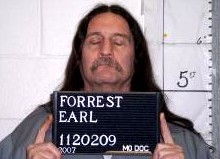
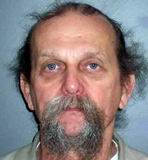
Earl Mitchell Forrest
Murderer Robert Martines Perez
Murderer · USA · 1994
Name: Robert Martines Perez · Other name used in proceedings: Robert Martinez P…
15 victims
Robert Martines Perez
Murderer · USA · 1994
Name: Robert Martines Perez · Other name used in proceedings: Robert Martinez P…
15 victims
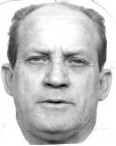 Billy Frank Vickers
Murderer · USA · 1993
Billy Frank Vickers Vickers was executed by lethal injection in Texas on Januar…
14 victims
Billy Frank Vickers
Murderer · USA · 1993
Billy Frank Vickers Vickers was executed by lethal injection in Texas on Januar…
14 victims
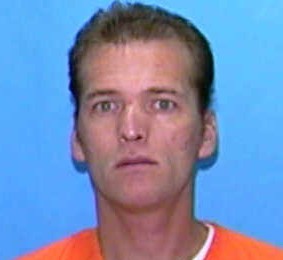 Robert Beeler Power
Murderer · USA · 1987
Robert Beeler Power · 10/06/87 — Frank Miller drove to the Bare family’s house;…
1 victim
Robert Beeler Power
Murderer · USA · 1987
Robert Beeler Power · 10/06/87 — Frank Miller drove to the Bare family’s house;…
1 victim
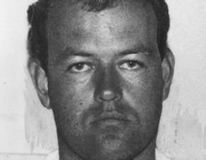 Colin Pitchfork
Murderer · United Kingdom · 1983
Colin Pitchfork was born in 1961 in Bristol, England. He was described as a loc…
2 victims
Colin Pitchfork
Murderer · United Kingdom · 1983
Colin Pitchfork was born in 1961 in Bristol, England. He was described as a loc…
2 victims
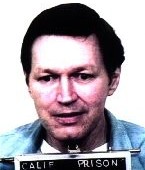 Robert Lee Massie
Murderer · USA · 1965
Defendant: Robert Lee Massie · Status/Outcome: Executed by lethal injection in…
2 victims
Robert Lee Massie
Murderer · USA · 1965
Defendant: Robert Lee Massie · Status/Outcome: Executed by lethal injection in…
2 victims
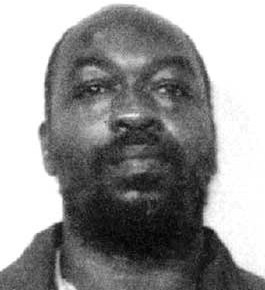 Durlin Eddmonds
Murderer · USA · 1977
Name: Durlyn Eddmonds Legal status: Executed by lethal injection in Illinois on…
1 victim
Durlin Eddmonds
Murderer · USA · 1977
Name: Durlyn Eddmonds Legal status: Executed by lethal injection in Illinois on…
1 victim
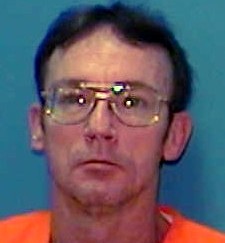 Norman Mearle Grim
Murderer · USA · 1998
Norman Mearle Grim was indicted in First Judicial Circuit, Santa Rosa County, u…
1 victim
Norman Mearle Grim
Murderer · USA · 1998
Norman Mearle Grim was indicted in First Judicial Circuit, Santa Rosa County, u…
1 victim
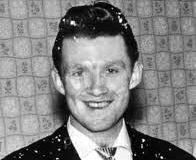 Ronald Henry Marwood
Homicide · United Kingdom · 1958
Ronald Henry Marwood was a 25-year-old scaffolder. He was executed by hanging a…
1 victim
Ronald Henry Marwood
Homicide · United Kingdom · 1958
Ronald Henry Marwood was a 25-year-old scaffolder. He was executed by hanging a…
1 victim
- Gender
- male
- Country
- USA
- Location
- Platte County, Missouri, USA
- Date of birth
- J uly 12, 1949
- Age at first offence
- 53
- Characteristics
- drugs, robbery
- Victim profile
- Michael Wells, Harriet Smith , and Sharon Joann Barnes (Deputy)
- Method of murder
- Shooting
- Date(s) of murder
- December 9, 2002
- Years active
- 2002
- Date of arrest
- Same day
- Status
-
Sentenced to death
Sentenced to death on December 22, 2004
Case record: State of Missouri, Respondent v. Earl M. Forrest (SC86518)
Background
Earl M. Forrest was drinking in December 2002 when he went to Harriet Smith's home and demanded that she fulfill her part of a bargain. The bargain involved Forrest buying a lawn mower and a mobile home in exchange for Forrest introducing Smith to a source for methamphetamine.
Forrest and his girlfriend, Angelia Gamblin (also spelled Angela Gamblin), drove to Harriett Smith's home. Appellant and Smith had a falling out over a dishonored agreement with Smith to purchase a lawn mower and a mobile home for Appellant in exchange for Appellant introducing Smith to a source for methamphetamine. Appellant demanded that Smith fulfill her part of the bargain.
The offence
During the ensuing melee at Harriet Smith's home, Forrest shot Michael Wells, a visitor at the Smith residence, in the face, killing him.
Forrest also shot Smith six times, killing her.
Forrest removed a lockbox from Smith's home containing approximately $25,000 worth of methamphetamine and returned to his home with Gamblin.
A shootout with the police ensued at Forrest's home.
Forrest shot Sheriff Bob Wofford in the abdomen wounding him.
Forrest shot and killed Deputy Sharon Joann Barnes. He shot Barnes once in her chest and a second time in the back of her head.
Gamblin was shot twice, once in her shoulder and once in her back.
Forrest finally surrendered and was charged with three counts of first-degree murder for the deaths of Smith, Wells and Barnes.
The jury found Forrest guilty on all three counts of first-degree murder.
During the penalty phase, the jury found the presence of multiple statutory aggravators to support its unanimous recommendation for a death sentence for each of the three murders.
With regard to the murder of Harriett Smith, the jury found:
- her murder was committed while Forrest was engaged in the commission of another unlawful homicide, that of Michael Wells; and
- Forrest murdered Smith for the purpose of receiving something of monetary value.
The statutory aggravator found in relation to Michael Wells's murder was that he too was murdered for pecuniary gain.
The murder of Joann Barnes carried the statutory aggravator of being committed against a peace officer while engaged in the performance of her official duty.
Trial
Forrest was charged with three counts of first-degree murder. The jury found him guilty on all three counts.
The jury subsequently recommended a death sentence for each of the three murders.
Appeals
Forrest appealed.
The Missouri Supreme Court affirmed. The court en banc held the following on Forrest's claims:
The court properly admitted the testimony of two police officers. Although their testimony about the shootout at Forrest's home was hearsay, it was not so prejudicial as to require reversal. Forrest offered nothing other than speculation in his claim of prejudice, and there was no evidence to support the contention that the statements affected the trial's outcome. The court also held that Forrest did not prove that statements, even if improper bolstering, would have prejudiced his case in light of the overwhelming evidence of his guilt.
The court properly admitted evidence of Forrest's alleged possession and distribution of illegal drugs in California. Although Forrest was not charged with any crimes for this alleged conduct, the state was permitted to introduce it during the penalty phase trial as evidence of Forrest's character. The court also properly admitted victim impact testimony during the penalty phase trial. It did not constitute impermissible hearsay because it was not offered for the truth of the matter, and there was no evidence that these statements prejudiced the jury or rendered Forrest's trial fundamentally unfair. The trial court properly instructed the jury how to consider the victim impact testimony.
The trial court sustaining the state's objection to certain arguments Forrest made during the penalty phase did not deprive the jury of evidence in mitigation and did not prejudice Forrest's case. Certain statements the prosecutor made during closing arguments were within the scope of a party's latitude in drawing inferences from the record, were appropriate inferences based on the record and did not constitute prejudicial misconduct.
The information charging Forrest with first-degree murder was not defective. The court properly instructed the jury using instructions patterned after model approved instructions that in no way shift the burdens of proof to the defense or preclude the jury from giving proper effect to the burden of proof.
The trial court did not err for not admonishing the prosecutor and for not declaring a mistrial after the prosecutor objected to recognizing two of Forrest's witnesses as experts. The court certified both witnesses as experts for their testimony and properly instructed the jurors that objections are not evidence.
The evidence was sufficient to support the jury's statutory aggravator finding that Smith's murder was committed during Wells' murder without also finding that Wells' murder was committed during Smith's murder. Wells was murdered first. It was reasonable for the jury to find that Smith's murder was committed during that unlawful homicide. The court held that Forrest offered no authority to support his proposition that multiple murders must be committed simultaneously as opposed to during the same criminal transaction to establish this statutory aggravator.
A full review of the transcript showed that the court did not abuse its discretion in striking from the jury pool two potential jurors who objectively appeared to be unable to consider the full range of punishment, including the death penalty.
The prosecutor did not define or argue the issue of Forrest's deliberation improperly. The record showed that the prosecutor did not make the determination of deliberation in place of the jury but rather argued that the evidence of multiple victims, multiple wounds and the timing between gunshots warranted a proper inference that Forrest deliberated.
The court repeatedly rejected claims that section 565.021, RSMo, was unconstitutionally vague because it does not distinguish adequately first-degree murder from second-degree murder.
In its independent proportionality review of Forrest's death sentences, the court concluded there was no evidence to suggest that the jury imposed the punishment as a product of passion, prejudice or any other arbitrary factor. The evidence supported, beyond a reasonable doubt, the jury's finding of three statutory aggravating factors as a basis for considering the death sentence, which was neither excessive nor disproportionate to the penalty imposed in similar cases.
Outcome
The Supreme Court of Missouri affirmed the judgment. The court en banc voted to affirm, and all concur.
Aftermath
Forrest was sentenced to death on December 22, 2004.

Spotted an error, or have more information about this case?