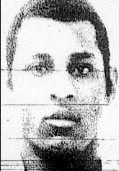
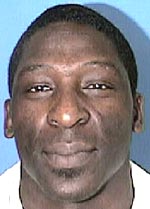
Alpha Stephens
Murderer Ervil LeBaron
Murderer · USA · 1972
Ervil Morrell LeBaron (1925 to August 16, 1981) was the leader of a polygamous…
35 victims
Ervil LeBaron
Murderer · USA · 1972
Ervil Morrell LeBaron (1925 to August 16, 1981) was the leader of a polygamous…
35 victims
 Marvin Gray
Murderer · USA · 1975
Marvin Gray was convicted killer who claimed responsibility for 23 slayings and…
23 victims
Marvin Gray
Murderer · USA · 1975
Marvin Gray was convicted killer who claimed responsibility for 23 slayings and…
23 victims
 Yahweh ben Yahweh
Murderer · USA · 1980
Yahweh ben Yahweh was born and legally named Hulon Mitchell Jr. (October 27, 19…
23 victims
Yahweh ben Yahweh
Murderer · USA · 1980
Yahweh ben Yahweh was born and legally named Hulon Mitchell Jr. (October 27, 19…
23 victims
 Charles Manson
Murderer · USA · 1969
Charles Milles Manson (born November 12, 1934) was an American criminal and mus…
9 victims
Charles Manson
Murderer · USA · 1969
Charles Milles Manson (born November 12, 1934) was an American criminal and mus…
9 victims
 Dean Phillip Carter
Spree killer · USA · 1984
Dean Phillip Carter was sentenced to death in 1985. He was an inmate at San Que…
5 victims
Dean Phillip Carter
Spree killer · USA · 1984
Dean Phillip Carter was sentenced to death in 1985. He was an inmate at San Que…
5 victims
 William Horncy
Mass murderer · United Kingdom · 2003
William Horncy (born 1954) was a British murderer. He was convicted of murderin…
5 victims
William Horncy
Mass murderer · United Kingdom · 2003
William Horncy (born 1954) was a British murderer. He was convicted of murderin…
5 victims
 Dexter Alonzo Levingston
Mass murderer · USA · 2000
Dexter Levingston was accused of five bloody murders in October 2000 and pleade…
5 victims
Dexter Alonzo Levingston
Mass murderer · USA · 2000
Dexter Levingston was accused of five bloody murders in October 2000 and pleade…
5 victims
 David Carl Duncan
Murderer · USA · 1981
Defendant: David Carl Duncan Victim: Ruby Evelyn Burgess, cashier at the Short…
1 victim
David Carl Duncan
Murderer · USA · 1981
Defendant: David Carl Duncan Victim: Ruby Evelyn Burgess, cashier at the Short…
1 victim
 Augusta Fullam
Murderer · India · 1911
Augusta Fullam Augusta Fullam was sentenced to death in 1913. Her sentence was…
2 victims
Augusta Fullam
Murderer · India · 1911
Augusta Fullam Augusta Fullam was sentenced to death in 1913. Her sentence was…
2 victims
 Bobby Marion Francis
Murderer · USA · 1975
Bobby Marion Francis (also referred to as Bobby Marion Francis) · August 16, 19…
1 victim
Bobby Marion Francis
Murderer · USA · 1975
Bobby Marion Francis (also referred to as Bobby Marion Francis) · August 16, 19…
1 victim
- Gender
- male
- Country
- USA
- Location
- Beckley County, Georgia, USA
- Date of birth
- 1945
- Age at first offence
- 29
- Characteristics
- fugitive, robbery, escape attempt
- Victim profile
- Roy Asbell (male)
- Method of murder
- Shooting ( .357 magnum pistol)
- Date(s) of murder
- August 21, 1974
- Years active
- 1974
- Date of arrest
- Next day
- Status
-
Executed
Executed by electrocution in Georgia on December 12, 1984
Case overview
Alpha Otis O'Daniel Stephens was convicted of murder in the Superior Court of Bleckley County and sentenced to death. Stephens was executed by electrocution in Georgia on December 12, 1984.
Background
In August of 1974, Stephens escaped from jail where he was serving sentences for earlier burglary convictions. Sometime thereafter, on August 21, 1974, Stephens went to the home of Charles Asbell in Twiggs County, Georgia, allegedly accompanied by another man.
The offence
Stephens broke into the house while Charles Asbell was not at home at the time of the burglary. Stephens located a .357 magnum pistol, loaded it, and obtained a number of other weapons. He placed the weapons in a 1972 Dodge.
While the burglary was proceeding, Roy Asbell, Charles Asbell’s father, drove up in his Ford Ranchero. Stephens later told officers that Asbell said: “What are you ******* doing in my house?”, and that seeing rifles in Stephens’ automobile caused Asbell to pull his gun.
Stephens ran to Asbell’s car, jerked Asbell out of the car, and hit him in the face several times. Asbell begged not to be hit any more. Stephens was 6 feet 2 inches tall, while Asbell was 5 feet 6 inches tall, and at that time Asbell was crippled as a result of a tractor accident.
Asbell usually carried several hundred dollars on his person. When Asbell offered Stephens money in exchange for his life, Stephens took the offered money and kicked Asbell again. Stephens hit Asbell with the pistol, knocking him back into the Ranchero, and told his alleged partner to kill him if he moved.
Stephens and his alleged partner drove approximately three miles to a pasture, where they stopped. Asbell got out of the car and tried to escape. He hobbled to an abandoned building being used as a barn, but Stephens ran after him. Stephens took more money from Mr. Asbell, placed the pistol in his ear, and fired twice. Both bullets passed through Asbell’s skull and exited at his right temple, causing his death.
An autopsy showed that Roy Asbell sustained a broken jaw and several skull fractures.
Investigation
A trail of evidence connected Stephens to the crime. In pre-trial statements to police, he confessed the Asbell murder fully and also confessed to a string of other serious crimes committed after his escape and before the Asbell murder.
Arrest and custody
Stephens escaped from the Houston County, Georgia, jail. He was apprehended shortly thereafter.
Trial
Charges and plea in Twiggs County
Stephens was indicted by the Twiggs County grand jury for motor vehicle theft, armed robbery and kidnapping with bodily injury. He pleaded guilty in Twiggs Superior Court. He was sentenced to ten years for motor vehicle theft and to life sentences for armed robbery and kidnapping.
The kidnapping indictment recited that he killed the kidnap victim. The third count was stated as follows:
COUNT III
And the aforesaid Grand Jurors . . . charge and accuse Alpha Otis O'Daniel Stephens . . . with the offense of KIDNAPPING for that the said Alpha Otis O'Daniel Stephens . . . in the county aforesaid . . . did unlawfully and with force and arms abduct and steal away Roy Asbell, a person, without lawful authority, and held Roy Asbell against his will and did physically abuse and did inflict and cause bodily injury to the body of Roy Asbell by beating, hitting and kicking Roy Asbell and did threaten to kill Roy Asbell and then did kill Roy Asbell by shooting Roy Asbell, contrary to the laws of said State ....
Murder trial in Bleckley County
Stephens was indicted in Bleckley County for the murder of Roy Asbell. He was found guilty and sentenced to death.
At trial, Stephens presented no defense. During the hearing on sentence, however, he testified that his partner fired the fatal shots.
During sentencing, the trial judge permitted the jury to consider four statutory aggravating circumstances:
- The offense was committed by one who had escaped from lawful custody, Ga. Code Ann. § 27-2534.1(b)(9).
- The offense was committed by one having a prior conviction for a capital felony, id. § 27-2534.1(b)(1).
- The offense was committed by one having a substantial history of serious assaultive criminal convictions, id.
- The offense was outrageously or wantonly vile, horrible or inhuman, id. § 27-2534.1(b)(7).
The jury found the first three aggravating circumstances to be present but did not find the fourth.
The trial judge instructed the jury in the sentencing phase. The judge instructed on malice in the murder trial as follows:
I further charge you that on the trial of a defendant for the offense of Murder the burden is on the State to prove malice, either expressed or implied, and unless the State proves malice beyond a reasonable doubt there can be no verdict of guilty of Murder, and you should acquit of that charge. For as I said, there can be no Murder without malice.
Sentencing
Stephens received the death penalty for the murder conviction.
After trial and before petitioner's case was reviewed by the Supreme Court of Georgia, that court declared aggravating circumstance (3), commission by one having a substantial history of serious assaultive criminal convictions, to be unconstitutionally vague. The decision cited was Arnold v. State, 236 Ga. 534, 224 S.E.2d 386 (1976).
After eliminating that circumstance from consideration on appeal, the Georgia court found the evidence supported the jury’s findings of the other statutory aggravating circumstances and held that the sentence was not impaired.
Appeals
Direct appeal to the Georgia Supreme Court
Stephens’ conviction and sentence were affirmed on direct appeal to the Georgia Supreme Court. The decisions cited were:
- Stephens v. State, 237 Ga. 259, 227 S.E.2d 261, cert. denied, 429 U.S. 986, 97 S.Ct. 508, 50 L.Ed.2d 598 (1976).
- Stephens’ state petition for a writ of habeas corpus was denied in Stephens v. Hopper, 241 Ga. 596, 247 S.E.2d 92, cert. denied, 439 U.S. 991, 99 S.Ct. 593, 58 L.Ed.2d 667 (1978).
Federal habeas proceedings in the Fifth Circuit
Stephens sought a writ of habeas corpus in federal court, alleging constitutional flaws raised in state court. The district court denied relief. Stephens appealed, and his execution was stayed pending appeal.
In the federal appellate decision in 631 F.2d 397, the court addressed Stephens’ contentions. Stephens asserted four errors:
- Jeopardy for the murder charge attached when he pleaded guilty to the kidnapping charge, and his subsequent murder trial was allegedly barred.
- The court failed to transcribe closing arguments and voir dire.
- The jury instruction allegedly did not adequately charge that it could recommend a life sentence if it found aggravating circumstances that would justify the death sentence.
- When one of three aggravating circumstances found by the jury was later declared unconstitutionally vague, the sentence allegedly should not have been affirmed on the basis of the other two.
The appellate court rejected other contentions but held that because the jury considered an unconstitutional aggravating circumstance, the death sentence could not stand. The court reversed the denial of habeas corpus relief insofar as it left standing the death sentence and remanded for further proceedings. The disposition stated: REVERSED AND REMANDED.
A separate opinion by THOMAS A. CLARK stated he concurred in the relief granted and all of the opinion except Part I. In that portion, he disagreed with the holding that there was no double jeopardy. That opinion included discussion of Potts v. State and the venue provisions of Georgia law.
Subsequent proceedings on remand and further appeals
On remand to the Fifth Circuit, the prior judgment was described as reversed by the United States Supreme Court. The Fifth Circuit then affirmed the district court’s denial of habeas corpus relief. The decision stated that the district court’s denial of habeas corpus relief was AFFIRMED without remand.
Later appellate proceedings in the Eleventh Circuit and the U.S. Supreme Court
The Eleventh Circuit decision dated Dec. 9, 1983 described that Stephens was scheduled to be executed by the state of Georgia on December 14, 1983, and that he presented an emergency application for a certificate of probable cause and for a stay of execution. The district court had denied relief by judgment entered Nov. 21, 1983, and this was described as Stephens’ third occasion in which that court considered pleas since his death sentence.
The Eleventh Circuit described extensive prior procedural history:
- Direct appeal affirmed by the Georgia Supreme Court in Stephens v. State, 237 Ga. 259, 227 S.E.2d 261, cert. denied, 429 U.S. 986, 97 S.Ct. 508, 50 L.Ed.2d 599 (1976).
- State habeas corpus ultimately denied by the Georgia Supreme Court in Stephens v. Hopper, 241 Ga. 596, 247 S.E.2d 92, cert. denied, 439 U.S. 991, 99 S.Ct. 593, 55 L.Ed.2d 667 (1978).
- Federal habeas corpus petition was denied on May 11, 1979.
- On appeal, relief was reversed in Stephens v. Zant, 631 F.2d 397, modified on rehearing, 648 F.2d 446 (5th Cir.1981).
- Review by the United States Supreme Court resulted in reversal of the fifth circuit, with a certified question to the Georgia Supreme Court, and after response, the U.S. Supreme Court reversed and remanded.
- On remand, the Fifth Circuit rendered a decision affirming the district court’s denial of habeas relief, Stephens v. Zant, 716 F.2d 276 (5th Cir.1983).
The Eleventh Circuit also described that Stephens filed a second state habeas petition dismissed by the Georgia superior court on November 10, 1983, and that his application for a certificate of probable cause was denied.
The Eleventh Circuit described a hearing in the district court on Nov. 15, 1983 and an order entered six days later denying relief. It also described the appointment and expedited proceeding before the panel.
Stephens presented seven constitutional claims described as:
- Denial of effective assistance of counsel resulting in conviction, death sentence and denial of adequate appellate and habeas corpus review.
- Sentence to death without a jury instruction or finding that he must have killed, attempted to kill or intended to kill to receive the death penalty.
- Conviction by an unconstitutionally selected all white, male jury chosen from an array excluding and underrepresenting blacks and women.
- Conviction based on an involuntary and patently unreliable confession affected by significant alcohol and drug use.
- Trial judge failure to hold a hearing on competency to stand trial despite evidence he did not communicate with counsel or the court and was unable to assist in his own defense.
- Georgia death penalty statute administered in an arbitrary and discriminatory manner based on the race of the defendant and race of the victim.
- Appellate procedures in Georgia did not provide adequate proportionality review.
The Eleventh Circuit characterized the petition as second or successive and applied Rule 9(b), concluding that the district court did not err in holding the writ had been abused and denying the emergency application. The decision stated: The emergency application ... is therefore DENIED.
U.S. Supreme Court stay of execution
The U.S. Supreme Court issued a memorandum with docket line: 464 U.S. 1027. It stated that the application for a stay of execution of the sentence of death set for Wednesday, December 14, 1983, was granted pending a decision in Spencer v. Zant or until further order.
The U.S. Supreme Court memorandum stated the application was referred to the Court by Justice POWELL and granted a stay.
The memorandum also included a dissent by Justice POWELL, with the Chief Justice, Justice REHNQUIST, and Justice O’CONNOR joining.
Other proceedings and issues raised but not considered
The Fifth Circuit noted that in a brief filed by amicus curiae, NAACP Legal Defense and Educational Fund, the Court’s attention was invited to additional issues:
- Whether the trial judge should have ordered a competency hearing.
- Whether petitioner was denied effective assistance of counsel due to counsel’s inability to communicate with him.
- Whether petitioner’s uncounseled confession was knowing and voluntary given allegations he was under the influence of drugs.
The Fifth Circuit stated that those issues were indicated as not considered by the district court and referenced procedural limits on considering issues not raised in the district court, and it held that it would not consider those issues. It affirmed the district court’s denial of habeas corpus relief.
Outcome
Stephens’ death sentence was overturned in the course of federal habeas review based on the jury’s consideration of an unconstitutional aggravating circumstance, with a reversal and remand ordered. The subsequent federal proceedings ultimately affirmed the district court’s denial of habeas corpus relief.
Chronology
- August 1974 — Stephens escaped from jail where he was serving sentences for earlier burglary convictions.
- August 21, 1974 — Stephens went to the home of Charles Asbell in Twiggs County, Georgia, allegedly accompanied by another man.
- During the kidnapping/burglary proceeding (same episode) — Roy Asbell drove up in his Ford Ranchero; Stephens forced him out of the car, assaulted him, and later drove him approximately three miles to a pasture where Stephens shot him twice.
- January 20-21, 1975 — Stephens was convicted of murder in the Superior Court of Bleckley County.
- January 21, 1975 (described in later proceedings) — Stephens received the death sentence for the murder of Roy Asbell in Bleckley County, Georgia in 1974.
- May 11, 1979 — A federal district court denied Stephens’ habeas corpus petition.
- Nov. 26, 1980 — Fifth Circuit decision in 631 F.2d 397 was issued.
- 1983 (Sept. 19) — Eleventh Circuit described Stephens as scheduled to be executed on December 14, 1983 and considered his emergency application.
- Dec. 13, 1983 — The U.S. Supreme Court granted a stay of execution pending decision in Spencer v. Zant.
- Dec. 12, 1984 — Stephens was executed by electrocution in Georgia.

Spotted an error, or have more information about this case?