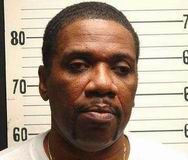
Charles Walton Wright
Murderer Brian Kevin Rosenfeld
Murderer · USA · 1985
Brian Kevin Rosenfeld Brian Kevin Rosenfeld was sentenced to three concurrent l…
23 victims
Brian Kevin Rosenfeld
Murderer · USA · 1985
Brian Kevin Rosenfeld Brian Kevin Rosenfeld was sentenced to three concurrent l…
23 victims
 Marvin Gray
Murderer · USA · 1975
Marvin Gray was convicted killer who claimed responsibility for 23 slayings and…
23 victims
Marvin Gray
Murderer · USA · 1975
Marvin Gray was convicted killer who claimed responsibility for 23 slayings and…
23 victims
 Yahweh ben Yahweh
Murderer · USA · 1980
Yahweh ben Yahweh was born and legally named Hulon Mitchell Jr. (October 27, 19…
23 victims
Yahweh ben Yahweh
Murderer · USA · 1980
Yahweh ben Yahweh was born and legally named Hulon Mitchell Jr. (October 27, 19…
23 victims
 Russell Ellwood
Murderer · USA · 1991
Russell Ellwood was a former taxi driver. Authorities suspected him of killing…
20 victims
Russell Ellwood
Murderer · USA · 1991
Russell Ellwood was a former taxi driver. Authorities suspected him of killing…
20 victims
 Kevin Lee Zimmerman
Murderer · USA · 1987
Defendant: Kevin Lee Zimmerman Victim: Leslie Gilbert Hooks, Jr. (33) Place: Mo…
1 victim
Kevin Lee Zimmerman
Murderer · USA · 1987
Defendant: Kevin Lee Zimmerman Victim: Leslie Gilbert Hooks, Jr. (33) Place: Mo…
1 victim
 Hai Hai Vuong
Murderer · USA · 1986
Hai Hai Vuong challenged the dismissal of his petition for a writ of habeas cor…
2 victims
Hai Hai Vuong
Murderer · USA · 1986
Hai Hai Vuong challenged the dismissal of his petition for a writ of habeas cor…
2 victims
 Brian Lee Cherrix
Murderer · USA · 1994
January 27, 1994 — Tessa Van Hart worked as a pizza delivery person on Chincote…
1 victim
Brian Lee Cherrix
Murderer · USA · 1994
January 27, 1994 — Tessa Van Hart worked as a pizza delivery person on Chincote…
1 victim
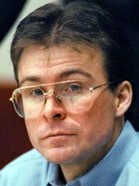 Robert James Acremant
Murderer · USA · 1995
Robert James Acremant was 29 years old when he pleaded guilty last year to aggr…
3 victims
Robert James Acremant
Murderer · USA · 1995
Robert James Acremant was 29 years old when he pleaded guilty last year to aggr…
3 victims
- Gender
- male
- Country
- USA
- Location
- Davidson County, Tennessee, USA
- Date of birth
- February 3, 1955
- Age at first offence
- 29
- Characteristics
- drugs, drug addict, drug dealer
- Victim profile
- Gerald Mitchell and Douglas Alexander
- Method of murder
- Shooting
- Date(s) of murder
- July 31, 1984
- Years active
- 1984
- Date of arrest
- —
- Status
-
Sentenced to death
Sentenced to death on April 6, 1985
Parties and case identifiers
Charles Walton Wright was convicted of two counts of premeditated first degree murder involving Gerald Mitchell and Douglas Alexander.
Timeline
- July 18, 1984 — Wright, Mitchell, and Alexander came to Nashville for the purpose of purchasing contraband narcotics with intent to traffic in them; the homicides occurred in the late afternoon, probably around 6 p.m., in a public park in Davidson County, Tennessee.
- August 8, 1988 — Supreme Court of Tennessee: Charles Walton Wright v. State of Tennessee; convictions and sentences were affirmed.
- August 29, 1988 — Petition to rehear was denied.
- October 20, 1988 — The court stated that execution would be carried out as provided by law unless stayed by further orders of this Court or other appropriate authority.
- April 6, 1985 — Wright was sentenced to death.
Background
Charles Walton Wright lived in Murfreesboro, in Rutherford County, Tennessee, along with the victims at the time of the killings, though Wright had in the past resided in Nashville.
Wright and Gerald Mitchell were, by Wright’s own admission, involved in trafficking in illegal narcotics. Alexander may also have been involved. Wright’s involvement and the involvement of the three men were such that police officials in Murfreesboro had prepared a search warrant to search Wright’s residence for possession and sale of marijuana, but the warrant was never actually issued or served because of the homicides.
The offence
On July 18, 1984, the homicides occurred in a public park in Davidson County, Tennessee, in the late afternoon, probably around 6 p.m.
Multiple persons in the park heard “Three shots.”
Wright admitted at trial that he shot and killed both victims and left the bodies of Mitchell and Alexander in the public park. Wright contended that Mitchell had previously shot Alexander. The jury concluded otherwise.
Wounds and positions found
When the bodies were found:
- Alexander had been shot twice.
- One bullet penetrated his forearm, described as apparently a defensive wound, and then penetrated his face, entering at the corner of his mouth on the right side and being found lodged in the left cheek. This shot apparently did not cause death and would not necessarily have been fatal.
- The second shot was in the left rear portion of his skull; the medical expert testified it would have produced unconsciousness instantly and death within a short time.
- Mitchell was shot once, below the left ear. The medical expert testified the shot would have produced unconsciousness immediately and death within a few minutes.
- The body of Mitchell was found face down on the top of a knoll in the park.
- The body of Alexander was some 50 to 60 feet away, downhill, and near the top of a flight of steps leading to the knoll from a small parking area below.
Vehicle and abandonment
A vehicle later identified as that belonging to Alexander was observed being driven by a single occupant away from the park. The next day the car was found in Murfreesboro. Wright admitted that he drove the vehicle from the park in Nashville to a park in Murfreesboro where he abandoned it.
Weapon and gun possession
Wright admitted borrowing a pistol from Jessie King in Murfreesboro. Ballistics showed that this was the weapon from which the fatal shots were fired. Wright admitted being in possession of the pistol after the homicide and returning it to King. Wright contended that prior to the homicide he had let Mitchell borrow the pistol; he said Mitchell shot Alexander and then Wright retrieved the pistol from Mitchell and shot Mitchell.
Investigation
The court described that Wright denied any involvement in the homicide for several days and gave highly misleading and false information to many witnesses who testified and to investigating police officials. The discrepancies in Wright’s various versions of the events of July 18, 1984 were explored in depth at trial, including introduction (at the instance of Wright’s own counsel) of a lengthy and admittedly false statement given to police.
Trial
Charges and verdicts at the guilt hearing
Following a lengthy trial in Davidson County, Tennessee, Wright was found guilty of premeditated murder in the first degree of Gerald Mitchell and Douglas Alexander.
The jury acquitted Wright of counts of murder committed in the perpetration of robbery in connection with each homicide. The jury found that each homicide was premeditated murder in the first degree.
The sufficiency of the evidence to sustain the verdicts at the guilt hearing was stated as not being questioned on appeal.
Wright’s account at trial
Wright testified to essentially this version:
- The three men came to Nashville to purchase drugs and to sell them later in Murfreesboro.
- Wright admitted his own rather extensive involvement in illicit narcotics.
- Wright said Mitchell knew the contact in Nashville from whom the marijuana was to be purchased.
- Wright testified that he did not accompany Alexander and Mitchell in making the purchase, although Wright and Mitchell supplied substantial funds for the purchase.
- Wright said he remained where they let him out of the car.
- Wright testified that when Alexander and Mitchell returned to pick him up in Alexander’s automobile, they were quarreling.
- Wright testified that the drug transaction was only partly completed and the parties would have to wait about an hour to obtain the rest of the marijuana.
- Wright testified he suggested going to the park, located not far from the residence of Wright’s mother, to bag marijuana already obtained.
- Wright testified that Mitchell and Alexander went to the top of the knoll while Wright stayed in the car.
- Wright testified he heard two shots and then ran up the steps.
- Wright testified that he found Alexander had been shot by Mitchell.
- Wright testified he took the pistol from Mitchell, struck Mitchell with his fist, and then shot Mitchell behind the ear.
The court stated that the jurors were not bound to accept Wright’s testimony because it differed markedly from Wright’s numerous previous accounts.
Jury selection
The jury examination consumed several days and comprised ten volumes of the transcript. The court stated it examined instances where Wright contended jurors were erroneously excused for cause and found no error under Wainwright v. Witt (469 U.S. 412 (1985)) or Witherspoon v. Illinois (391 U.S. 510 (1968)); it also cited State v. Williams (690 S.W.2d 517, 522-523 (Tenn. 1985)).
The court also found that the trial judge properly controlled the scope of voir dire and committed no error in exclusion or refusal to exclude individual panel members.
Depositions and witness Jackie King
During the defense case-in-chief, defense counsel discovered that Jackie King was hospitalized. Counsel sought and obtained permission from the trial judge to take his deposition pursuant to Rule 15, T.R.Cr.P.
The trial court permitted deposition testimony. The court described defense counsel’s view that the witness had “changed” his testimony and that counsel concluded not to use the deposition in the defense case-in-chief. The State then announced it would use the deposition in rebuttal. Wright objected, and the trial judge directed that the deposition be resumed and that defense counsel be permitted to examine the witness as on cross-examination.
The court stated:
- The deposition sessions were videotaped.
- The jury could see the witness’s manner and demeanor and hear his testimony.
- Jackie King, described as a homosexual partner of Wright, contradicted Wright’s testimony in several material respects and supported the State’s argument that Wright materially changed his version of the facts in significant ways.
- The court found no merit in the insistence that the State was required to retake the initial deposition in its entirety after defense counsel already did so.
- During the initial deposition, the prosecuting attorney asked King about cocaine use by Wright. The State intended to eliminate this portion when the videotaped deposition was played to the jury, but by inadvertence the operator did not totally block out each question or one of the answers. The trial judge instructed the jury to disregard the one answer given; the court found no reversible error in declining to declare a mistrial.
- The court stated the deposition was played after Wright had testified and explained his extensive involvement in illicit drug traffic and numerous transactions where he and Mitchell went to Nashville for the purpose of purchasing drugs.
- The court stated the cautionary instructions given by the trial judge were adequate and no reversible error occurred regarding the deposition.
Sentencing
Sentencing determinations
At the sentencing hearing, the State announced it would not seek the death penalty for the homicide of Mitchell.
The court described that the State’s theory for Mitchell involved a quarrel over previous drug transactions and hearsay testimony, not objected to, that some children in the park heard quarreling just before the shots were fired.
Wright was sentenced:
- to life imprisonment for the murder of Gerald Mitchell; and
- to death by electrocution for the murder of Douglas Alexander.
Aggravating circumstances
The court stated only two aggravating circumstances were relied upon by the State in pre-trial notice that the death penalty would be sought, corresponding to:
- T.C.A. § 39-2-203(i)(6) — the murder was committed for the purpose of avoiding, interfering with, or preventing a lawful arrest or prosecution of the accused or of another.
- T.C.A. § 39-2-203(i)(7) — the homicide was committed while the accused was engaged in committing, attempting to commit, or fleeing after committing another first degree murder.
The trial judge submitted both circumstances to the jury. The jury did not find sufficient evidence for the first statutory provision, but did find the second supported by the evidence. The jury found no mitigating circumstances sufficient to outweigh the aggravating circumstance and recommended the death penalty; the trial judge concurred.
Dr. Charles Harlan’s testimony and objection
The State introduced the medical examiner Dr. Charles Harlan, who had already testified at the guilt hearing about positions of the bodies, gunshot wounds, results of autopsy, and cause of death.
At sentencing, Dr. Harlan opined that the most probable sequence of events was that Mitchell was shot first, followed by the two shots that wounded, then killed, Alexander. The court stated the only real factual basis for this opinion was that Alexander’s body was found downhill and on a lower level than Mitchell’s body.
Dr. Harlan admitted other sequences could have occurred, including that Alexander was shot first and Mitchell was then shot while fleeing the scene. The court described that Dr. Harlan also testified earlier that none of the gunshot wounds was fired at point-blank range and all appeared fired from at least 24 inches or more from the victims.
Counsel for Wright strenuously objected to admission of Dr. Harlan’s opinions at sentencing about the sequence of events. The court described Dr. Harlan having told one of the attorneys that his opinion was based more on logic than anything else and “it was not anything more than a personal opinion.” The court also described Dr. Harlan agreeing that he was not an expert in reconstruction of crime scenes.
The appellate court stated it was of the opinion the trial judge erred in admitting Dr. Harlan’s opinion as to the sequence of events, describing the conclusion as speculation and noting it should not have been admitted. However, it also concluded reversible error had not been shown and that any error was harmless beyond a reasonable doubt.
Appeals
Direct appeal issues and holdings
On appeal, the court addressed multiple issues raised by counsel. It stated:
- It considered and overruled the issue regarding denial of funds to employ an expert witness in reconstruction of crime scenes.
- It found no error in the denial of the request for an instruction regarding “imperfect self-defense,” stating the requested instruction was covered by instructions on self-defense and manslaughter, both voluntary and involuntary.
- It rejected challenges to jury instructions at the sentencing phase, including:
- failure to instruct on mitigating factors not listed in the death penalty statutes;
- failure sua sponte to define “mitigating circumstances,” stating such an instruction was not mandatory in the state; and
- failure to redefine murder in the first degree at conclusion of the sentencing phase.
Rulings on other sentencing-related evidence
The court addressed the argument that the trial judge improperly excluded at the sentencing hearing evidence that before trial the State had offered to accept a life sentence in return for a plea of guilt to murder in the first degree. The court stated that there was no clear proof such an offer was ever made, and it found refusal to admit testimony was proper, citing Rule 11(e)(6), T.R.Cr.P. It also stated such evidence was irrelevant and inadmissible and not admissible evidence of a mitigating circumstance as offered by the appellant.
Constitutional and procedural arguments
The court rejected arguments that:
- T.C.A. § 39-2-203(g) was unconstitutional because it mandates the death penalty and limits jury discretion where mitigating factors do not outweigh aggravating circumstances, citing State v. Teague and State v. Dicks, and cert. denied, 454 U.S. 933 (1981).
- the trial court erred by denying a motion to prohibit “death qualification” of prospective jurors, citing Lockhart v. McCree (476 U.S. 162 (1986)) and State v. McKay.
Prosecutorial misconduct and other trial conduct
The court considered numerous issues regarding alleged prosecutorial misconduct at both guilt and sentencing hearings and found no merit. It addressed:
- the argument that prosecutors referred to the defense offered by Wright as “concocted” and stated it was legitimate in view of admitted numerous false statements given to many witnesses;
- findings of no improper reflection upon defense counsel;
- that in one instance it described counsel for the State as having erred in requesting “Jencks statements” of the defendant himself before entering cross-examination, but that the trial court sustained defense objection, instructed the jury the State would not be entitled to such statements, and monitored conduct so the court could not conclude alleged remarks or action affected results.
Felony-murder acquittal and death eligibility
The court addressed Wright’s argument that acquittal by the jury of felony-murder counts precluded the State from seeking the death penalty under the statute prescribing the single aggravating circumstance found, T.C.A. § 39-2-203(i)(7). The court rejected the argument, stating:
- The indictments charged Wright with murder in the first degree of both Mitchell and Alexander, and alternatively murder in perpetration of robbery.
- The jury acquitted Wright of the robbery charge.
- The court stated that acquittal of felony murder in the commission of robbery did not preclude proof that the murder of Alexander was committed in connection with or while attempting to escape from the murder of Mitchell.
- It cited and discussed State v. Pritchett, 621 S.W.2d 127, 140 (Tenn. 1981), including the quoted statement:
“However, we are confident that the Legislature intended that use, as an aggravating circumstance, of the crime of first degree murder listed in subsection (i)(7) would be limited to the murder or attempted murder, etc. of another person or persons while committing or attempting to commit, etc. the murder of the victim involved in the crime on trial. That is the way that this Court construes the subsection and so construed, we are of the opinion that it is constitutional.”
Mitigation versus aggravation
The court found no merit in arguments that mitigating circumstances outweighed the aggravating circumstance. It addressed that:
- Wright argued Alexander was a participant in Wright’s conduct under T.C.A. § 39-2-203(g)(3).
- The court stated that, according to Wright’s testimony, Alexander primarily furnished transportation and was not the instigator of the drug transaction.
- It stated that all circumstances urged in mitigation, including alleged remorse, lack of economic means in childhood, and lack of education, were fully presented to the jury.
- It stated evidence supported conclusions that Wright in cold blood shot both Mitchell and Alexander, escaped in Alexander’s automobile, left the victims to die and abandoned their bodies, concealed the crimes, and told numerous deceitful and misleading falsehoods.
Conclusion on the appeal
The court concluded it was convinced that:
- the verdict was fully sustained by the evidence; and
- the death penalty was not disproportionate and not the result of arbitrary or improper action by the jury.
Outcome
The appellate court sustained the convictions, and affirmed the sentences. The execution of Wright “will be carried out as provided by law on October 20, 1988,” unless stayed by further orders of the court or other appropriate authority.
Other details
Disputed sequence of killings at sentencing
The court described that Dr. Harlan’s opinion about the likely sequence was contested, and it held that the sequence remained speculative and uncertain. It stated that even under Wright’s own testimony about the killing of Mitchell, that homicide occurred within a few seconds after Alexander had been shot, and it stated no witness testified to having heard more than three shots. It stated Alexander was shot twice and Mitchell once and concluded that the second murder had to have been committed in connection with the commission of the first or while Wright was attempting to commit the first or fleeing therefrom.
Admitted quotations
The record contained these quotation fragments exactly as presented:
- “Three shots”
- “it was not anything more than a personal opinion.”
Spotted an error, or have more information about this case?