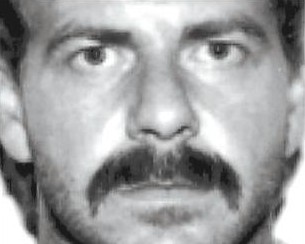
Tommy David Strickler
Murderer Brian Kevin Rosenfeld
Murderer · USA · 1985
Brian Kevin Rosenfeld Brian Kevin Rosenfeld was sentenced to three concurrent l…
23 victims
Brian Kevin Rosenfeld
Murderer · USA · 1985
Brian Kevin Rosenfeld Brian Kevin Rosenfeld was sentenced to three concurrent l…
23 victims
 Yahweh ben Yahweh
Murderer · USA · 1980
Yahweh ben Yahweh was born and legally named Hulon Mitchell Jr. (October 27, 19…
23 victims
Yahweh ben Yahweh
Murderer · USA · 1980
Yahweh ben Yahweh was born and legally named Hulon Mitchell Jr. (October 27, 19…
23 victims
 Russell Ellwood
Murderer · USA · 1991
Russell Ellwood was a former taxi driver. Authorities suspected him of killing…
20 victims
Russell Ellwood
Murderer · USA · 1991
Russell Ellwood was a former taxi driver. Authorities suspected him of killing…
20 victims
 Robert Martines Perez
Murderer · USA · 1994
Name: Robert Martines Perez · Other name used in proceedings: Robert Martinez P…
15 victims
Robert Martines Perez
Murderer · USA · 1994
Name: Robert Martines Perez · Other name used in proceedings: Robert Martinez P…
15 victims
 Charles Edward Smith
Murderer · USA · 1988
Charles Edward Smith was executed by lethal injection in Texas on May 16, 2007.…
1 victim
Charles Edward Smith
Murderer · USA · 1988
Charles Edward Smith was executed by lethal injection in Texas on May 16, 2007.…
1 victim
 Pete Russell
Murderer · USA · 2001
Pete Russell, Jr. was listed with TDCJ Number 999443 and Date of Birth 05/02/19…
1 victim
Pete Russell
Murderer · USA · 2001
Pete Russell, Jr. was listed with TDCJ Number 999443 and Date of Birth 05/02/19…
1 victim
 Kelvin Jordan
Murderer · USA · 1995
Kelvin Jordan (also known as Kelvin L. Jordan) was convicted of capital murder…
2 victims
Kelvin Jordan
Murderer · USA · 1995
Kelvin Jordan (also known as Kelvin L. Jordan) was convicted of capital murder…
2 victims
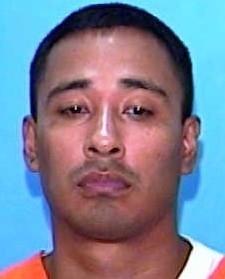 Joel Diaz
Murderer · USA · 1997
Name: Joel Diaz · Date of birth: 06/13/73 · Case citation / opinion: Supreme Co…
1 victim
Joel Diaz
Murderer · USA · 1997
Name: Joel Diaz · Date of birth: 06/13/73 · Case citation / opinion: Supreme Co…
1 victim
 Faisal bin Musaid
Assassin · Saudi Arabia · 1975
Faisal bin Musaid bin Abdul-Aziz (April 4, 1944 - June 18, 1975) was the assass…
1 victim
Faisal bin Musaid
Assassin · Saudi Arabia · 1975
Faisal bin Musaid bin Abdul-Aziz (April 4, 1944 - June 18, 1975) was the assass…
1 victim
- Gender
- male
- Country
- USA
- Location
- Augusta County, Virginia, USA
- Date of birth
- 1966
- Age at first offence
- 23
- Characteristics
- kidnapping, robbery
- Victim profile
- Leann Whitlock (female, 19)
- Method of murder
- Crushing her head with a boulder
- Date(s) of murder
- January 5, 1989
- Years active
- 1989
- Date of arrest
- —
- Status
-
Executed
Executed by lethal injection in Virginia on July 21, 1999
Overview
Tommy David Strickler was executed by lethal injection in Virginia on July 21, 1999.
Timeline
- January 5, 1990 — Leanne Whitlock was abducted from a local shopping center and robbed and murdered.
- Early January 1990 — Leanne Whitlock was kidnapped from a Harrisonburg, Virginia, mall by Strickler and an accomplice, Ronald Lee Henderson.
- January 6, 1990 — Strickler drove Ronald Henderson to Kenneth Workman’s apartment in Timberville, and Henderson went inside to get something.
- January 11, 1990 — Police identified the car as John Dean’s car and found Strickler’s and Donna Tudor’s fingerprints on both the inside and the outside of the car; a jacket containing Henderson’s identification papers was found in the car; shoe impressions matching Strickler’s shoes were found; police recovered a bag at Strickler’s mother’s house containing identification cards belonging to Whitlock and a black “tank top” shirt with human blood and semen stains.
- January 13, 1990 — A farmer called police after finding Henderson’s wallet; a search led to the discovery of Whitlock’s frozen, nude, and battered body; a 69-pound rock spotted with blood lay nearby.
- January 15, 1990 — Strickler tore up a 3x4 inch index card and put it in the bottom of a trash bag.
- January 19, 1990 — Detective Claytor made a handwritten note after his first interview with Anne Stoltzfus.
- January 20, 1990 — Detective Claytor summarized interviews with Stoltzfus conducted on January 19 and January 20.
- January 25, 1990 — Stoltzfus wrote a note to Detective Claytor dated January 25, 1990 stating she identified Whitlock “beyond a shadow of a doubt” after spending several hours with John Dean.
- March 3, 1999 — Arguments were heard in the Supreme Court case.
- June 17, 1999 — The Supreme Court decided the petition.
- July 21, 1999 — Strickler was executed by lethal injection.
The offence
Leanne Whitlock was abducted from a local shopping center and robbed and murdered. She was a 19-year-old college student and a James Madison University sophomore. Strickler and an accomplice, Ronald Lee Henderson, kidnapped her from a Harrisonburg, Virginia, mall in early January 1990.
Whitlock was found slain in a rural area of Augusta County in Virginia’s Shenandoah Valley. Her head was crushed by a 69-pound boulder. Her car, credit cards, and purse had been stolen. Forensic evidence indicated her death was caused by “multiple blunt force injuries to the head,” and the location of the rock and the human blood on the rock suggested it had been used to inflict these injuries. Based on the contents of Whitlock’s stomach, she died fewer than six hours after she had last eaten.
A number of Caucasian hair samples were found at the scene, three of which were probably Strickler’s. The prosecution argued, based on the weight and size of the rock, that one of the killers must have held the victim down while the other struck her with the murder weapon.
In addition to the abduction and murder, there was evidence and testimony related to a “hard object” under Henderson’s coat at the mall, and Strickler’s presence and conduct during the events at and after the mall.
Investigation
A security guard at the Harrisonburg mall informed police around 3:30 p.m. that two men, one of whom was identified at trial as Strickler, were attempting to steal a car in the parking lot. The guard observed them during the remainder of the afternoon but lost sight of them at about 6:45.
Witness Kurt Massie saw a blue Mercury Lynx in Augusta County about 25 miles from Harrisonburg near a short distance from the cornfield where Whitlock’s body was later found and identified Strickler as the driver. Massie observed a white woman in the front seat and another man in the back. The car was muddy and turned off Route 340 onto a dirt road.
Another witness saw the Lynx at Buddy’s Market with two men in the front seat and did not see anyone else in the car.
Police later identified the car as John Dean’s car and found Strickler’s and Donna Tudor’s fingerprints on both the inside and the outside of the car. Police also found shoe impressions matching the soles of shoes belonging to Strickler. Inside the car, police retrieved a jacket containing identification papers belonging to Henderson.
Police also recovered a bag at Strickler’s mother’s house that Tudor testified she and Strickler had left when they returned from Virginia Beach. The bag contained three identification cards belonging to Whitlock and a black “tank top” shirt later found to have human blood and semen stains.
Anne Stoltzfus was an eyewitness whose testimony at trial described the abduction. Detective Claytor interviewed Stoltzfus and showed her photographs; at that time she identified Strickler and Henderson “with absolute certainty” but stated she had a slight reservation about her identification of the blonde woman.
The withheld exculpatory materials for the federal Brady claim consisted of documents and notes prepared by Detective Claytor after interviews with Stoltzfus, and letters written by Stoltzfus to Claytor. Exhibit 1 was a handwritten note prepared after Stoltzfus’s first interview indicating she could not identify the black female victim and that the only person she apparently could identify at that time was the white female. Exhibit 2 summarized interviews conducted on January 19 and January 20 and stated that at that time she was not sure whether she could identify the white males but felt sure she could identify the white female. Exhibit 3 included a summary of the abduction. Exhibit 4 was a letter written three days after the first interview stating Stoltzfus had not remembered being at the mall until her daughter helped jog her memory, including a comment about a “very vague memory” and a question about whether memories were of the same person, and a postscript that her daughter “doesn’t remember seeing the 3 people get into the black girl's car ... .” Exhibit 5 was a note to Claytor captioned “My Impressions of `The Car,'” comparing the car size to Stoltzfus’s Volkswagen Rabbit and not mentioning the license plate number she later said she vividly recalled at trial. Exhibit 6 was a note dated January 25, 1990 stating that after spending several hours with John Dean and “looking at current photos,” she identified Whitlock “beyond a shadow of a doubt.” Exhibit 7 was a letter thanking Claytor for patience with “sometimes muddled memories,” stating that if the student at school had not called the police “I never would have made any of the associations that you helped me make.” Exhibit 8 was undated and summarized events described in her trial testimony, including the comment: “So where is the 3x4 card? ... It would have been very nice if I could have remembered all this at the time and had simply gone to the police with the information. But I totally wrote this off as a trivial episode of college kids carrying on and proceeded with my own full-time college load at JMU. ... Monday, January 15th. I was cleaning out my car and found the 3x4 card. I tore it into little pieces and put it in the bottom of a trash bag.”
Arrest
The record described police action on January 11 identifying the car and collecting fingerprints and shoe impressions; it also described police recovery of items from Strickler’s mother’s house and the later discovery of Whitlock’s body and the blood-spotted 69-pound rock on January 13 after a farmer called police about Henderson’s wallet.
Trial
Charges and convictions
Strickler was tried in Augusta County on charges of capital murder, robbery, and abduction. Because of an “open file policy” given by the prosecutor to petitioner's counsel, counsel did not file a pretrial motion for discovery of possible exculpatory evidence. In closing argument, counsel effectively conceded that the evidence was sufficient to support the robbery and abduction charges, as well as the lesser offense of first-degree murder, but argued that evidence was insufficient to prove Strickler was guilty of capital murder.
The judge instructed the jury that Strickler could be found guilty of the capital charge if evidence established beyond a reasonable doubt that he “jointly participated in the fatal beating” and “was an active and immediate participant in the act or acts that caused the victim's death.”
The jury found Strickler guilty of abduction, robbery, and capital murder. The jury made findings of “vileness” and “future dangerousness” and unanimously recommended the death sentence that the judge later imposed.
Witness testimony
A woman named Anne Stoltzfus testified in vivid detail about Whitlock’s abduction. At trial, Stoltzfus testified she saw Strickler, Henderson, and a blonde girl inside the Harrisonburg mall on January 5, and later witnessed their abduction of Whitlock in the parking lot. She described shopping for a compact disc at Music Land store in the mall and said the petitioner entered while she was waiting for assistance. She described being frightened and backed up, and thought she felt something hard in the pocket of Henderson’s coat. She testified about seeing the three again and about petitioner yelling “Donna, Donna, Donna.”
Stoltzfus described the interaction at the vehicles, including watching petitioner approach the passenger side of a pickup truck and then return to Whitlock’s car, “pounded on” the passenger window, shook the car, yanked the door open, and “jumped in.” She testified about the horn honking and petitioner “started hitting her ... on the left shoulder, her right shoulder and then it looked like to me that he started hitting her on the head.” She testified that she became concerned and upset, and described honking her own horn and then that petitioner stopped hitting and opened the door again so the blonde girl got in and “Shy Guy” followed. She described leaning over repeatedly asking if the other driver was “O.K.” and that the driver looked “frozen” and mouthed an inaudible response that Stoltzfus believed was “help.” She testified that the blue car then drove slowly around her, went over the curb with its horn honking, and headed out of the mall.
Stoltzfus identified Whitlock from a picture as the driver of the car and pointed to Strickler as “Mountain Man.” She testified she had an “exceptionally good memory,” had very close contact with Strickler, and had no doubt about her identification. The Commonwealth did not produce any other witnesses to the abduction, and Stoltzfus’s daughter did not testify.
The record also included defense witness testimony from Jay Tudor, who testified that Donna Tudor in March told him she was present at the murder scene and that Strickler did not participate in the murder. The testimony was described as inconsistent in several respects with other witnesses.
The trial record also included other evidence: Strickler’s mother testified she had driven Strickler and Henderson to Harrisonburg on January 5 and that Strickler always carried a hunting knife that had belonged to his father. Two witnesses (a friend of Henderson’s and a security guard) saw Strickler and Henderson at the mall that afternoon. Additional witnesses placed Strickler and Henderson together, described movements of the Lynx car, and described the time at Dice’s Inn, including dancing with several women including Donna Kay Tudor, Nancy Simmons, Debra Sievers, and Carolyn Brown.
Sentence
At the sentencing phase, the jury made findings of “vileness” and “future dangerousness” and unanimously recommended death. The trial court imposed the death sentence.
Appeals
State appeals and habeas
The Virginia Supreme Court affirmed Strickler’s conviction and sentence, holding that the trial court had properly instructed the jury on the “joint perpetrator” theory of capital murder and that evidence viewed most favorably in support of the verdict supported the prosecution’s theory that both Strickler and Henderson were active participants in the actual killing. Strickler v. Commonwealth, 241 Va. 482, 404 S.E.2d 227 (1991).
In December 1991, new counsel was appointed for state habeas corpus proceedings. State habeas counsel advanced an ineffective-assistance-of-counsel claim based in part on trial counsel’s failure to file a motion under Brady v. Maryland to have the Commonwealth disclose exculpatory evidence. The Commonwealth asserted such a motion was unnecessary due to the prosecutor’s open file policy. The Circuit Court dismissed the petition and the State Supreme Court affirmed, Strickler v. Murray, 249 Va. 120, 452 S.E.2d 648 (1995).
Federal habeas and Supreme Court
In March 1996, Strickler filed a federal habeas corpus petition in the Eastern District of Virginia. A sealed, ex parte order granted counsel the right to examine and copy all police and prosecution files, leading to the first examination of the Stoltzfus materials.
The District Court granted summary judgment to Strickler and granted the writ on the Brady basis that the Commonwealth had failed to disclose exculpatory materials and that Strickler had not received a fair trial. The Court of Appeals vacated in part and remanded, holding Strickler’s Brady claim was procedurally defaulted because the factual basis was available to him during state habeas proceedings. The Fourth Circuit held that without a showing of cause and actual prejudice, it could not address the Brady claim, and it concluded that the claim was without merit.
The Supreme Court granted certiorari and addressed whether the State violated Brady, whether there was acceptable cause for the failure to raise the claim earlier, and, if so, whether prejudice excused the procedural default. In its June 17, 1999 decision, the Supreme Court affirmed the judgment of the Court of Appeals. The Supreme Court held that the Commonwealth did not violate Brady by failing to disclose exculpatory evidence and that Strickler could not show prejudice sufficient to excuse his procedural default. It described that the record established two components of a Brady violation but not prejudice/materiality.
The decision included opinions and separate opinions: Justice Stevens delivered the opinion of the Court, with additional joins; Souter filed an opinion concurring in part and dissenting in part, and Kennedy joined as to Part II; additional discussion in the dissent addressed the prejudice analysis and the significance of Stoltzfus’s testimony and withheld documents.
Outcome
Strickler’s execution followed the Supreme Court’s June 17, 1999 affirmance of the denial of relief.
Statement before execution
Strickler made a statement: “I am innocent. I did not do it. I hope everyone else will find the peace that I have found,” before he was injected with a dose of lethal chemicals at the Greensville Correctional Center in Jarratt, Virginia, about 55 miles south of Richmond.
He spent his final day on death row visiting with his mother, sisters, clergy, and his attorney. Before his execution, he also said: “to all of my family, I love them dearly. I will always be with them.”
Other details
Clemency decision and executive statement
Virginia Gov. James Gilmore rejected Strickler’s clemency petition that alleged his accomplice committed the murder. Governor Jim Gilmore issued a statement regarding the execution. The statement included:
"Tommy David Strickler brutally murdered 19-year-old Leanne Whitlock. A jury convicted Strickler of abduction, robbery and capital murder and sentenced him to death. After reviewing all of the evidence, the judge imposed the death sentence. The convictions and death sentence were upheld on multiple appeals. "Upon a thorough review of the Petition for Clemency, the numerous court decisions regarding this case, and the circumstances of this matter, I decline to intervene."
Accomplice proceedings
In a separate trial, Ronald Lee Henderson was convicted of robbery, abduction and murder and sentenced to 3 life terms. Henderson would be eligible for parole on July 29, 2008.
Additional procedural and factual details in the Supreme Court record
The Supreme Court record described the Commonwealth charging petitioner with capital murder and related crimes and explained that counsel did not file a pretrial motion for discovery of possible exculpatory evidence due to an open file policy. It described that Anne Stoltzfus gave detailed eyewitness testimony about the crimes and that the prosecution failed to disclose exculpatory materials in police files, consisting of notes taken by a detective during interviews with Stoltzfus, and letters written by Stoltzfus to the detective, casting serious doubt on significant portions of her testimony.
The record described that the District Court vacated Strickler’s capital murder conviction and death sentence due to failure to disclose and lack of a fair trial, while the Fourth Circuit reversed due to procedural default and lack of prejudice on the merits.

Spotted an error, or have more information about this case?